
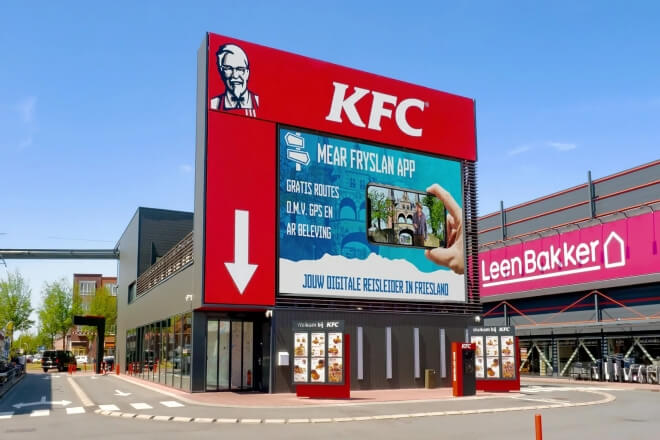
Today, the restaurant industry faces more and more new challenges. Consumers are no longer satisfied with just a delicious meal.
They have higher expectations for the overall dining experience—including service, interaction, and the restaurant’s atmosphere.
Furthermore, quickly updating menus and communicating promotional information has become a major challenge for restaurants.
Many restaurants still use traditional methods to update menus, resulting in low efficiency and missed business opportunities.
In addition, a restaurant’s brand image and in-store atmosphere have become particularly important in the competitive landscape.
And customers are becoming increasingly discerning about the environment and the overall feel of the restaurant.
It’s no longer just about the quality of the food; it’s about everything the customer experiences in the restaurant.
From the exterior to the interior, every detail can influence customer choices and experiences.
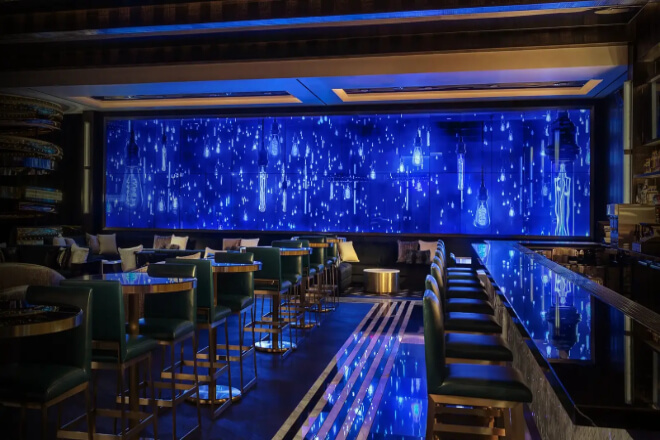
In restaurant management, choosing the right LED display can not only improve the customer experience but also increase operational efficiency.
The application of LED displays varies depending on the type of restaurant.
The following are LED display solutions for different types of restaurants, helping decision-makers quickly match their needs.
1). Fast Food/Chain Restaurants
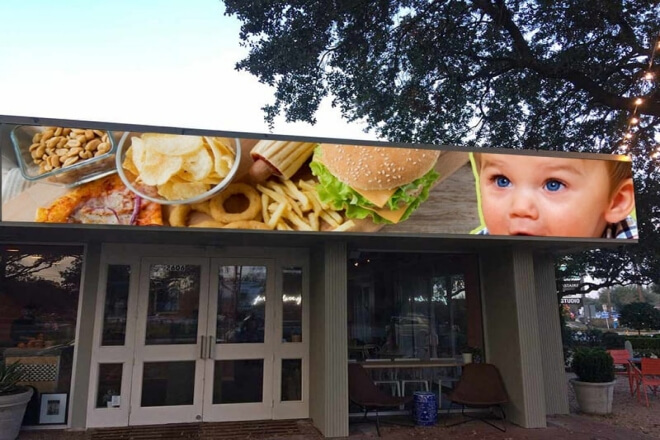
For fast food restaurants or chain restaurants, the main function of LED displays is to improve ordering efficiency and quickly convey promotional information.
Typically, fast food restaurants choose to install LED displays in the window or ordering area.
These screens can display the current menu, prices, special offers, or set meal information, helping customers make quick decisions.
For example, a chain fast-food restaurant might use LED screens in its ordering area to display meal options, recommended drinks, and snacks, allowing customers to easily choose their desired meals without waiting.
The screens can also display daily promotions to attract customers.
2) Casual Restaurants/Cafes
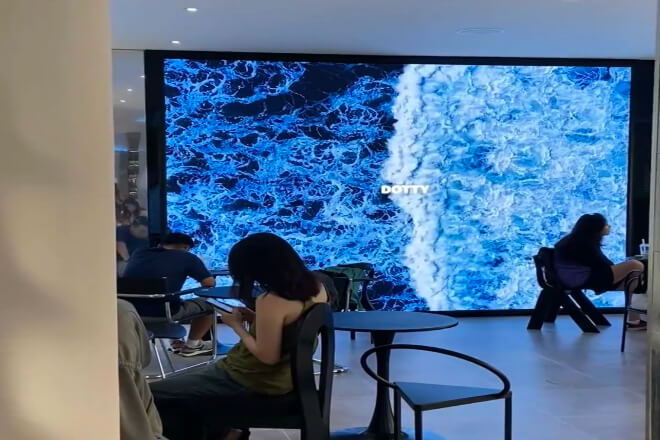
Casual restaurants or cafes focus on providing customers with a comfortable and relaxing dining environment, so LED displays are often used to enhance the restaurant’s atmosphere.
Medium-sized screens or background screens can play relaxing videos, music, or artwork to create a warm dining atmosphere.
In addition, LED screens can be used to showcase the restaurant’s signature dishes or new drinks to attract customer attention.
For example, a cafe installed an LED screen on its back wall, playing warm landscape videos accompanied by soothing background music, providing customers with a pleasant and relaxing time.
3) High-End Restaurants
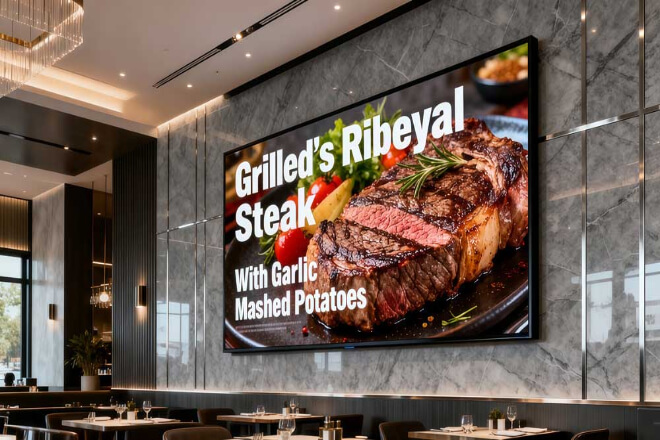
High-end restaurants can choose creative, irregularly shaped LED displays or multi-screen combinations to enhance the restaurant’s sophistication and modern feel with unique designs.
Irregularly shaped screens can be unique, curved, bent, or irregular shapes, or even special designs embedded in walls or ceilings, making the overall restaurant environment more refined and artistic.
The combination of multiple LED screens can also provide customers with an immersive dining experience, displaying dynamic menus, artwork, restaurant stories.
And other content, allowing customers to enjoy more visual experiences during their meal.
For example, a high-end restaurant installed a curved LED screen at the entrance, displaying the food preparation process and the restaurant’s history, enhancing the customer’s visual and emotional experience.
4) Buffet/Theme Restaurants
For buffet or theme restaurants, the application of LED displays is even more diverse.
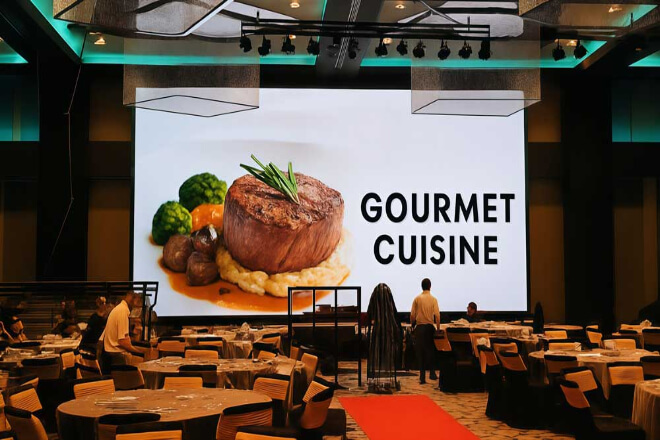
Multi-zone LED screens can be distributed in different areas of the restaurant, each serving the functions of information display, interactive promotion, and atmosphere creation.
In a buffet restaurant, LED screens can be used to display menus, ingredient information.
And food types, while also providing interactive functions, allowing customers to select their desired dishes and side dishes via touchscreen.
In a themed restaurant, LED screens can play relevant animations or videos based on the restaurant’s theme to create an atmosphere.
For example, an ocean-themed restaurant could install LED screens in various corners of the restaurant.
Displaying dynamic videos of marine life, while also displaying menu content and daily specials, allowing customers to enjoy delicious food while experiencing a strong thematic atmosphere.

Misconception 1: Focusing only on hardware, neglecting content and operational strategies
Many restaurants, when choosing LED displays, may focus too much on hardware specifications, such as screen size and 解決, while neglecting content design and updates.
In fact, the quality of the screen hardware is only the first step; the key is what content you display. If the content is not attractive, a large, high-resolution screen is useless.
For example, if a restaurant displays the same menu and promotions every day, customers will quickly get bored, and the effect will be greatly reduced.
Avoidance strategies:
Regular content updates:
Ensure that the content displayed on the LED screen is fresh, and update menus, special offers.
Or event information regularly to ensure that customers have different surprises every time they visit.
Develop an operational plan:
In addition to hardware, there should also be a content operation plan to ensure that the displayed content is consistent with the restaurant’s overall activities and festive atmosphere.
Misconception 2: Blindly pursuing large screens and affecting space layout
Many restaurants, when choosing LED displays, may only consider the size, thinking that the bigger the screen, the better, but neglecting the restaurant’s space layout.
Too large a screen may make the restaurant space feel crowded and even affect the customer’s dining experience.
If the LED screen is placed inappropriately, it may obstruct the view, disrupt the restaurant’s original sense of space, and make customers feel uncomfortable.
Avoidance strategies:
Choose the appropriate screen size based on the space:
When purchasing an LED display, consider the restaurant’s actual space and layout, and avoid blindly pursuing large screens.
The screen size should be suitable for the size and needs of the restaurant.
Reasonable placement:
Place the LED display in a suitable location to ensure that it attracts customers without affecting the overall atmosphere and spatial flow of the restaurant.
Misconception 3: Treating LED screens as one-time decorations, rather than tools for continuously enhancing the experience
Some restaurants may treat LED displays as decorations. Initially, they may seem novel, but they quickly lose their appeal due to the lack of continuous content updates.
In fact, the charm of LED displays lies in their ability to constantly change and display dynamic content, rather than remaining static.
Treating it as a one-time decoration may lead to customers finding it novel at first, but then losing interest, affecting the overall experience.
Avoidance Strategies:
Maintain content freshness:
The LED display should be an integral part of the restaurant, with continuously updated content.
It can showcase food preparation processes, special events, or interactive content, giving customers a fresh experience every time they visit.
インタラクティブ性を高める:
Add interactive features to engage customers, such as social media interaction or QR code scanning for coupons. This increases customer engagement and maximizes the value of the screen.
 English
  Español
  简体中文
简体中文  Français
  日本語
日本語  한국어
한국어  العربية