
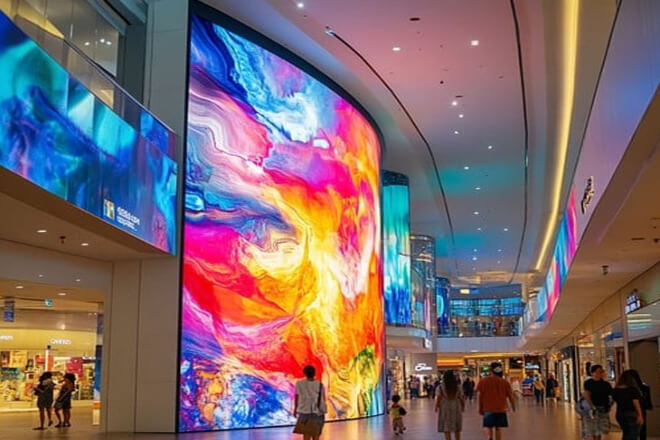
Imagine walking into a large ショッピングモール, ready to browse, when suddenly a giant LED display catches your eye.
The screen displays a rapidly changing advertisement with vibrant colors and dynamic effects that immediately grab your attention.
Compared to the ordinary static posters in the mall, the dynamic content on the LED screen is impossible to ignore.
This is the charm of LED displays – they can quickly capture your attention through high-definition large screens and smooth dynamic content.
Whether at a busy intersection on a commercial street or at a crowded 展示, LED displays can easily attract consumers’ attention, providing brands with significant exposure opportunities.
If an advertisement is just a static image or text, consumers will easily forget it after a few seconds.
However, LED displays can play dynamic videos and even incorporate creative content and visual effects. This is not just an advertisement; it can be a visual feast.
For example, you may have seen some brands playing 3D animated advertisements on LED screens, or when you touch the screen, the advertising content reacts interactively to your actions.
Such creative advertising is not just about conveying information; it’s a unique brand experience.
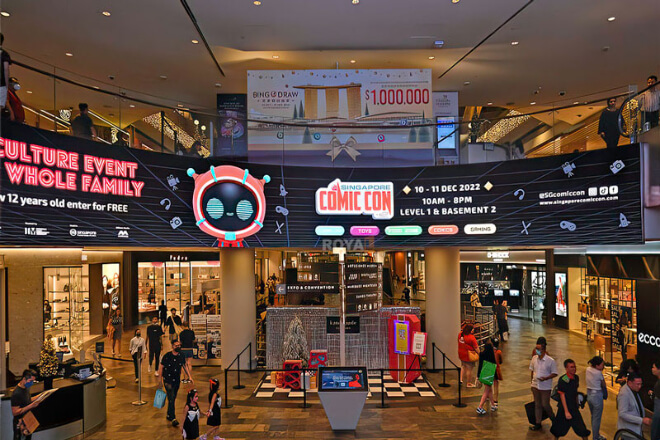
In modern marketing, increasing user engagement often leads to stronger brand loyalty and interaction, and LED displays successfully attract consumer participation through their interactivity and creative display features.
Traditional advertising is often one-way communication, where consumers passively receive information, but LED displays break this model, turning consumers into active participants.
For example, many LED displays in ショッピングモール と 展示 venues allow consumers to interact with advertisements through touch screens or QR code scanning.
Imagine walking into a shopping mall and seeing a giant LED screen displaying a gamified interactive advertisement.
You participate in the game by scanning a QR code, and after completing the tasks, you receive coupons or prizes.
This interactive experience not only makes consumers feel involved but also enhances their positive feelings and memory of the brand.
Furthermore, the combination of social media and LED displays can significantly increase user engagement.
Social media platforms are now an integral part of consumers’ lives, and many brands leverage LED screens to display content or hashtags posted by consumers on social media, thus stimulating their participation.
For example, a brand might display photos of users using their products on an LED screen in the city center, or showcase content under a specific hashtag.
This not only strengthens the interaction between the brand and consumers but also encourages more people to share their stories with the brand, creating a word-of-mouth effect and further expanding the brand’s reach.
In addition to these basic interactions, LED displays can make advertising more engaging by incorporating gamification elements.
For instance, during holidays or special events, brands can set up interactive games on LED screens, allowing consumers to win rewards or discounts by scanning a code or completing a small task.
Such gamified advertising not only allows consumers to enjoy entertainment while increasing interaction with the brand but also improves the engagement and entertainment value of the advertisement.
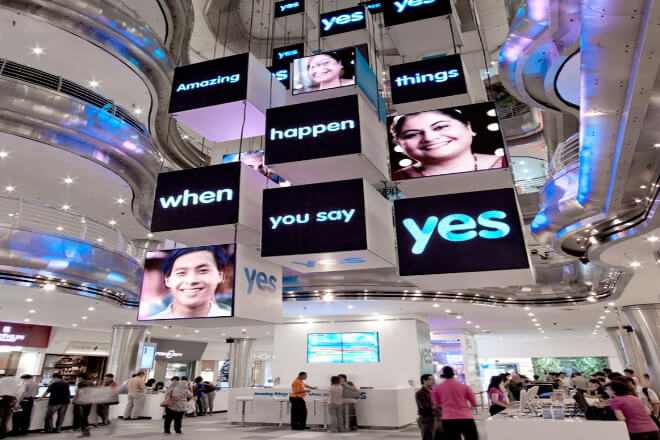
The central control system of LED displays is another significant advantage, enabling centralized management and remote control of multiple displays.
Regardless of how many LED screens a brand has in multiple locations, the central control system can update and schedule the content on each screen in real time.
This allows brands to save manpower and time while ensuring the consistency and accuracy of information.
For example, in a nationwide brand promotion campaign, the brand only needs to update the content once in the central control system.
And all relevant LED screens in different regions will be updated simultaneously, avoiding errors and delays caused by manual adjustments.
This unified management system greatly improves operational efficiency and ensures the consistency of the brand image.
Marketing campaigns often have different rhythms and content requirements, and the real-time update function of LED displays allows brands to flexibly adjust the displayed content according to the progress of the campaign or seasonal changes.
For example, during a holiday or major sales event, brands can quickly switch between promotional information, activity countdowns.
Or product recommendations on the LED screen, ensuring that the content is always synchronized with the current event.
Compared to traditional static advertising, LED displays can respond quickly to marketing rhythms, increasing the sense of urgency and engagement of events.
Brands can also push different content based on different occasions or time periods, ensuring the maximum effectiveness of each event.
 English
  Español
  简体中文
简体中文  Français
  日本語
日本語  한국어
한국어  العربية