
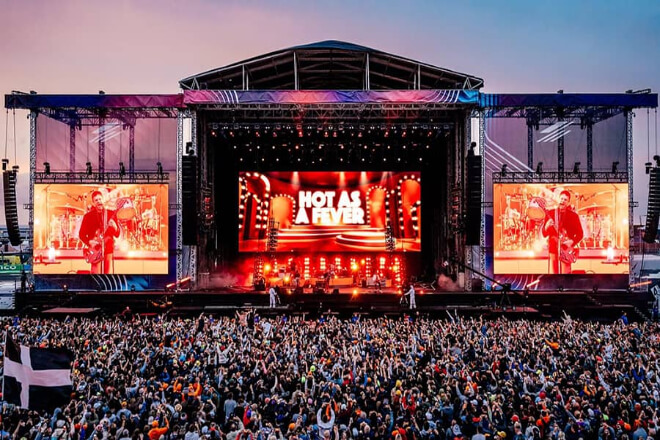
Some LED displays are not “fixed in one place for long-term use” but are repeatedly disassembled, transported, and reassembled between different projects.
This “multiple deployments” place significant demands on stability.
First, repeated disassembly and reassembly put a strain on the equipment itself.
After repeated handling, if the structure of interfaces and module splicing is not reliable enough, unstable contact or minor errors can easily occur, affecting the overall display effect.
Therefore, a durable structural design and stable connections are fundamental.
Secondly, ease of rapid assembly is also crucial. Modular and standardized design allows for more efficient on-site setup and reduces complex steps.
Simply put, it transforms installation from “requiring experience” to “being able to complete it with a process,” saving time and reducing the probability of errors.
Furthermore, controlling installation errors is equally important. During repeated disassembly and reassembly, inaccurate alignment can affect the flatness of the screen or the splicing effect.
Through auxiliary positioning designs or structural guidance, each installation can be closer to a “standard state,” reducing the impact of human differences.
Simply put, disassembling frequently is not difficult; the challenge lies in consistently reassembling with the same stability and accuracy.
When the structural design is clearer and the installation process is more standardized, even with frequent disassembly and reassembly, the LED display can maintain stable performance, making each use smoother.
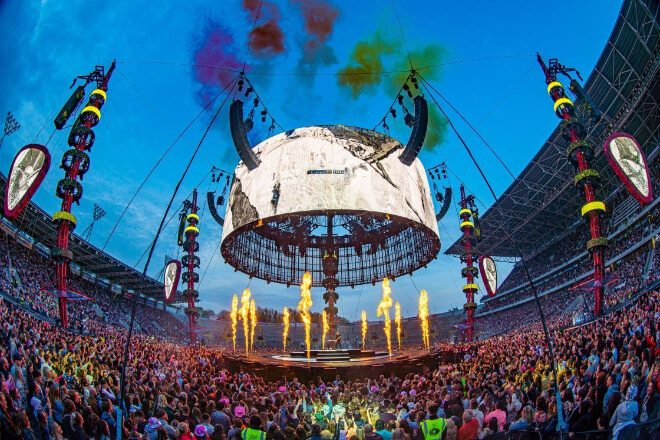
LED displays frequently “change scenes”—today in an indoor 展示 hall, tomorrow outdoors, and the day after in a completely different space.
The environment changes, but the display effect needs to remain as stable as possible, which tests its adaptability.
First, different spatial structures present varying installation conditions. Some sites have regular layouts and are easy to install.
While others may be limited by factors such as size, structure, or load-bearing capacity.
Modular and flexible structural designs allow equipment to be more easily installed, reducing on-site adjustments and making the installation process more controllable.
Second, the differences between indoor and outdoor environments are significant.
Indoor lighting is relatively stable, while outdoor environments may face strong light, shadows, and even weather changes.
Under these different conditions, the screen needs to be adapted in terms of 輝度, display parameters, etc., to ensure the image remains clear and unaffected by the environment.
Furthermore, maintaining consistency in the display effect across different locations is a key concern for many projects.
Although the venues differ, the brand presentation or information delivery needs to remain consistent.
This typically relies on the overall initial design and the coordinated operation of equipment and content.
Ensuring the screen delivers a nearly consistent visual experience in different environments.
Simply put: the location can change, but it should “look like the same system is working.”
When equipment possesses sufficient flexibility and is designed with different site variations in mind.
LED displays can quickly switch between various environments while maintaining a stable and consistent display effect.
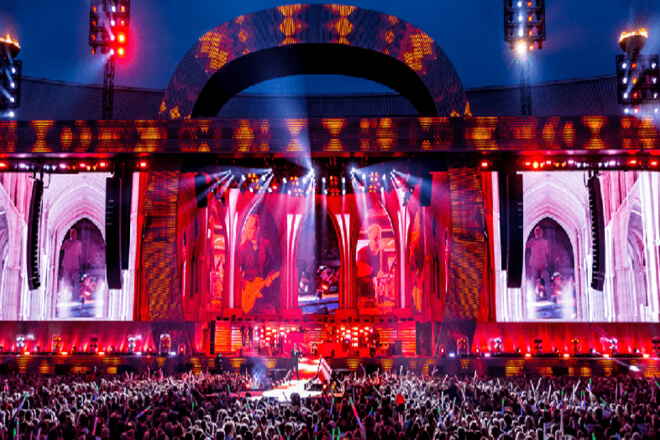
Before officially “going into service,” LED displays often undergo a challenging journey—transportation.
From warehouse to site, this may involve crossing cities and varying road conditions. If not handled properly, this process can easily affect the equipment’s condition.
First, there’s the uncertainty brought by long-distance transportation. Bumps, vibrations, and even changes in temperature and humidity during the journey can all impact the equipment.
Simply put, the more complex the transportation process, the higher the requirements for securing and protecting the equipment, needing to maintain stability during movement as much as possible.
Second, there are packaging and protective measures. Good packaging is not just about “wrapping” the equipment.
It’s more like adding a protective structure, such as shock-absorbing materials, cushioning layers, and external reinforcement, minimizing direct impacts during transportation.
It can be understood as: not keeping it stationary, but ensuring it moves safely.
Furthermore, the handling process cannot be overlooked. Improper handling during loading and unloading, such as collisions, tilting, or improper stacking, can also cause damage.
Therefore, standardized procedures and experienced operators can significantly reduce risks.
Simply put: the equipment isn’t afraid of long distances, but rather of unstable transport.
When transportation, protection, and handling are all coordinated effectively, the LED display screen will arrive at the site in good condition, ready for subsequent installation and use.
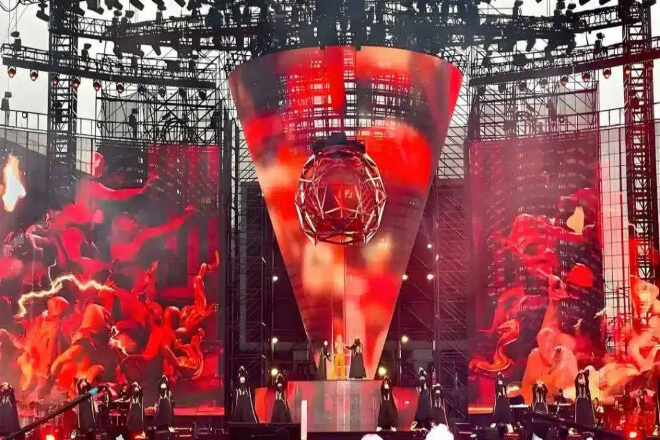
LED displays at events typically don’t just “light up briefly,” but need to operate stably from start to finish. There’s no pause button or restart buffer time, making stability paramount.
First, there’s the stability of long-term operation. The equipment needs to maintain good performance under continuous operation, including stable heat dissipation, power supply, and signal transmission.
If these fundamental aspects are reliable enough, the screen can continuously output throughout the event without malfunctioning due to “tiredness.”
Second, there are common situations that may be encountered on-site, such as unstable interface contacts, wiring problems, or the impact of environmental changes.
These problems may not occur every time, but when they do, they are often amplified at critical moments. Therefore, prevention is more important than on-site handling.
Furthermore, pre-event checks and preparations are a crucial step in mitigating risk. A complete inspection of the equipment should be conducted before official use.
This includes checking hardware connections, system operation, and content playback.
This helps identify and resolve potential problems in advance, ensuring the equipment enters the event in a more stable state.
Simply put, ensuring the event doesn’t “fail” largely depends on whether the pre-event checks were thorough.
When the equipment itself has stable operating capabilities, coupled with sufficient pre-event preparation.
The LED display can work reliably and continuously at the event, allowing attention to be focused more on the content itself rather than unexpected situations.
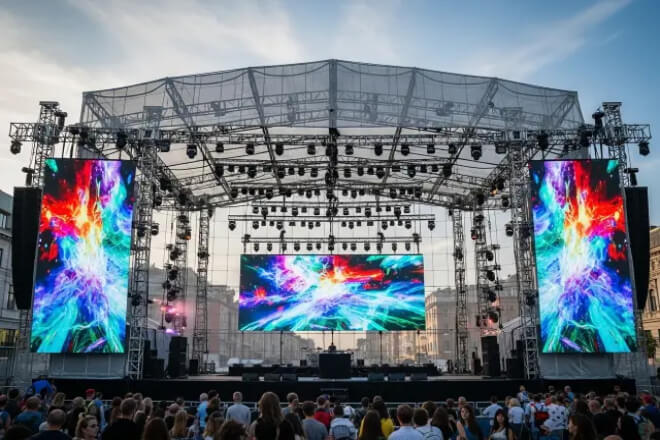
At an event, LED displays rarely operate flawlessly. The real challenge lies in: if an unexpected situation occurs.
Can the system be quickly restored, minimizing the impact to a level that the audience barely notices?
First, there’s the handling method when problems occur on-site. Usually, it’s necessary to quickly determine the source of the problem.
Whether it’s the signal, power supply, or the equipment itself—and take corresponding measures.
The faster the response and the clearer the judgment, the less impact the problem will have on the event’s rhythm.
Often, “quickly locating the problem” is more important than “solving the problem.”
Secondly, it’s crucial to have backup plans. These include backup equipment, backup lines, or pre-prepared emergency playback content.
If the main system malfunctions, a rapid switchover can be made to ensure the display continues normally.
This can be understood as: there isn’t just one “main path” on-site; in critical moments, there are “alternative routes” to take.
Furthermore, minimizing the impact on the event is a key consideration from the overall design stage.
Through advance planning, system redundancy, and on-site coordination, the impact of unexpected situations can be minimized.
Such as reducing interruptions, ensuring the continuous display of key information, and minimizing audience disruption.
Simply put, unexpected situations cannot be completely avoided, but they can be handled calmly and quickly.
With clear response mechanisms and backup strategies, LED displays can more easily achieve “rapid recovery” in the face of unexpected situations, ensuring the overall rhythm of the event proceeds smoothly.
 English
  Español
  简体中文
简体中文  Français
  日本語
日本語  한국어
한국어  العربية