
Whether on outdoor city roads or in large indoor spaces, LED displays have evolved from “devices for displaying advertisements” to “a key component of navigation systems.”
Their function is actually quite simple: to display information that you could only see on your phone in a more intuitive and eye-catching way.
Allowing people to instantly determine where to go, where there is congestion, and where it’s faster.
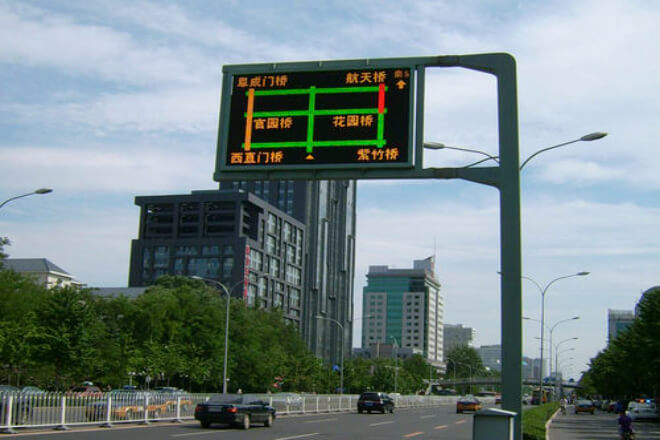
1) Real-time Traffic Display
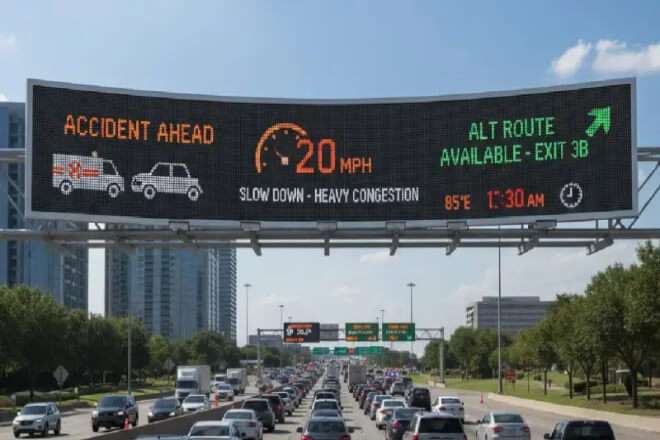
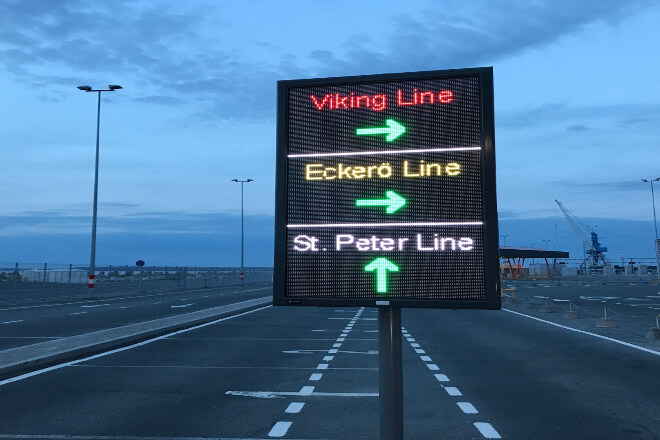
Driving in the city, the worst thing is “a terrible traffic jam ahead, and I have no idea.” LED traffic information boards solve this problem perfectly.
Many drivers glance at the LED screens beside them before entering interchanges, ramps, and expressways.
These screens typically display scrolling information such as:
Accidents ahead
Estimated congestion distance
Which route is faster?
Are there traffic restrictions or temporary road closures? This information is updated in real time; basically, the screen content changes as traffic conditions change.
You can even see very useful tips like “detour suggestions” or “current average speed.”
The most helpful aspect is that drivers don’t need to take out their phones or be distracted by other tasks; they can make route decisions solely based on the LED screen.
Some cities even integrate weather, visibility, and construction notices, essentially bringing a “little secretary” to the roadside, making your driving experience easier.
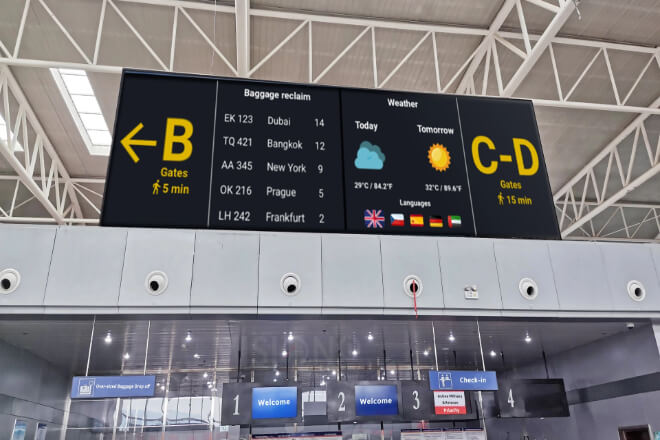
2). Indoor Navigation
What’s the most common experience when going to unfamiliar ショッピングモール, 病院、 また 空港? — “Where am I? Where do I go? Why did the entrance suddenly change direction?”
This is where the value of indoor LED navigation lies.
In many large buildings, LED screens act like “talking road signs.” Common applications include:
- Entrance Welcome Screen:
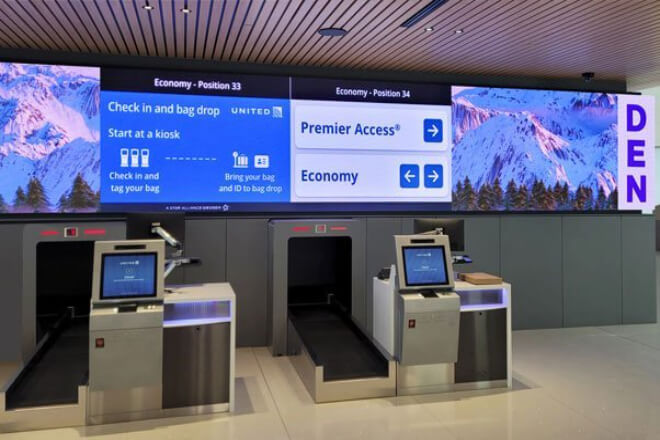
Upon entering the mall lobby, a large LED screen displays floor plans and popular store locations, allowing customers to orient themselves within seconds.
- Node Navigation Screens:
Small LED screens at elevator entrances, corners, and escalators automatically display “You are here” and “Nearby areas,” brighter and easier to recognize than traditional signs.
- Real-time Traffic Management Information:
In hospitals, airports, 展示 halls, and other similar settings, LED screens can display queue information, congested areas, and crowd flow suggestions, helping you avoid unnecessary detours.
Some malls integrate LED screens with crowd density monitoring systems. For example, if a certain area is too crowded, the screen will suggest alternative routes.
This intelligent alert is more accurate than manual announcements and encourages customers to follow the correct path.
1) Touch Interaction Function
When touch operation is added to an LED display, it transforms from a “signboard” into a “tool.”
For example, in a five-story shopping mall, you don’t need to stare blankly at a densely packed floor plan.
Just tap the LED touchscreen, and the system will display dynamic routes like a mobile map, even telling you the “fastest route.”
Some science and technology exhibition halls even use “interactive map walls.”
Visitors tap on different exhibition areas, and the screen lights up with corresponding routes and descriptions, even showing real-time queue times for exhibits.
The entire experience is significantly more fun and efficient than traditional navigation signs.
2) Multilingual support and customization
Multilingual navigation LED screens are particularly useful in popular tourist attractions or transportation hubs.
For example, at the entrance of a popular ancient town, visitors can directly switch between English, Korean, and Thai on the LED navigation screen, eliminating the need for out-of-town visitors to “guess” directions.
Some airports go even further: after passengers scan their boarding passes, the LED navigation screen automatically displays the “fastest route from your location to the boarding gate.”
Even reminding you of service points along the way, remaining walking time, etc., provides a truly “customized navigation experience.”
These features not only benefit tourists but also reduce the pressure on human assistance, making the service system smoother.
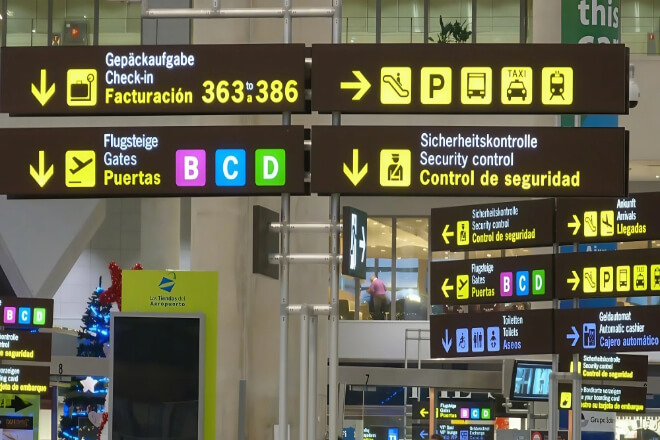
1) High 輝度 明快さと
One of the biggest advantages of LED displays is their ability to keep information clearly visible regardless of the environment.
Imagine the departure hall of Los Angeles International Airport (LAX), where sunlight streams in through the glass skylights, yet the LED flight information screens remain bright and clear.
Flight status, gate information, and delay notices are all readily available. Passengers don’t need to crowd around small paper signs or guess numbers; they can quickly find their gate.
High brightness and high 解決 make information more intuitive and unaffected by environmental interference.
Even in a crowded and chaotic hall, no important information will be missed.
This clarity directly improves navigation efficiency, allowing passengers to make quick decisions even in complex environments.
2) Data Connectivity and Intelligent Management
LED displays are not just large screens, but more like the “brain” of digital navigation.
They can connect in real-time with a central management system, updating flight, train, bus, and traffic information almost instantaneously.
For example, at Tokyo Haneda Airport, if a gate changes suddenly, all LED screens will display the new information within seconds.
Passengers don’t need to run around asking staff; they can directly see the latest arrangements, saving time and effort.
Another example is the Singapore MRT station. When a line is temporarily suspended, LED screens immediately display alternative routes and estimated resumption times.
Along with transfer instructions and exit suggestions, allowing passengers to quickly adjust their travel plans without getting lost in the station hall.
This real-time updating and intelligent management not only allows passengers to make faster and more accurate decisions. but also
But also makes the entire transportation or public space operate more smoothly, like everyone has a “personal guide.”
Whether it’s an airport, train station, or subway station, this combination of high-brightness, clear display and real-time intelligent updates makes navigation solutions both efficient and accurate, greatly improving the passenger travel experience.
1). Screen Size and Type
When choosing an LED display, the first step is to consider the usage scenario.
For example, in indoor shopping malls or train station lobbies, you might need a high-resolution, small-pitch screen to ensure text and icons are clearly visible.
Outdoor transportation hubs or highways, however, require large, high-brightness screens that resist direct sunlight, ensuring information is easily visible even from a distance.
The size and type of the screen determine whether navigation information can be quickly captured by travelers, directly impacting navigation efficiency and user experience.
Someone has experienced this in Times Square, New York—the huge LED screens, even in the brightest afternoon sunlight.
Allow you to see event information and surrounding directions at a glance, an effect that small screens simply cannot match.
2). Installation and Maintenance Considerations
Besides the screen itself, the installation method and subsequent maintenance are also important.
In indoor spaces with limited space, wall-mounted or suspended LED screens may be a good choice, saving space and making it easy for passengers to see.
In open plazas or transportation hubs, freestanding or bracket-mounted LED screens are more flexible and can be adjusted in direction according to pedestrian flow.
Before installation, factors such as power cabling, ventilation, heat dissipation, and waterproofing/dustproofing need to be considered.
At the same time, proper maintenance access should be planned for regular cleaning and content updates.
For example, Singapore Changi Airport planned for removable panels and maintenance access in advance when designing its LED flight information screens.
This allows staff to quickly inspect and repair the screens without affecting passengers, ensuring long-term efficient operation.
In general, choosing the right LED display solution involves not only considering screen size, resolution, and type, but also the installation environment and ease of maintenance.
And actual usage needs to truly realize the value of digital navigation, making information delivery smoother and passenger travel more efficient.
 English
  Español
  简体中文
简体中文  Français
  日本語
日本語  한국어
한국어  العربية