
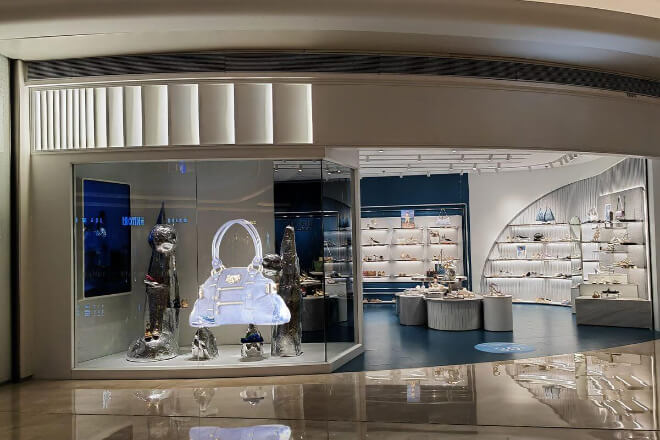
Simply put, an LED holographic display makes the image “float” in the air, creating a 3D effect without the need for glasses.
It’s not magic, but through the refraction of LED light and the superposition of multiple images, it creates a sense of space and depth on a flat image. You’ll immediately think, “Wow, this is futuristic!”
1). Core Principle: Light Refraction + Image Superposition, Creating a 3D Image
Holographic LEDs utilize transparent materials or optical films to refract and reflect the light emitted by LEDs, then superimpose these reflections to form an image.
Viewers don’t see a single-layered plane, but rather a 3D effect created by multiple images fused together.
This can be understood as follows: Ordinary LED screens are like reading a book, while holographic LEDs are like viewing a 3D model—you can feel the thickness and spatial depth of the image.
2) Display Forms Are More Than Just Flat
The charm of holographic LEDs lies in the fact that they are not just a lit screen, but also bring “images in space”:
3D Naked-Eye Effect: People and objects seem to truly emerge from the air.
Spatial Imagery: The image has depth and a sense of perspective, like a small “virtual stage.”
Interactive Holographic Projection: Combined with gesture capture or sensors, the image can interact with movements.
This effect makes viewers feel as if they are “inside the image,” rather than standing in front of a screen watching an advertisement.
3) Difference from Ordinary LEDs
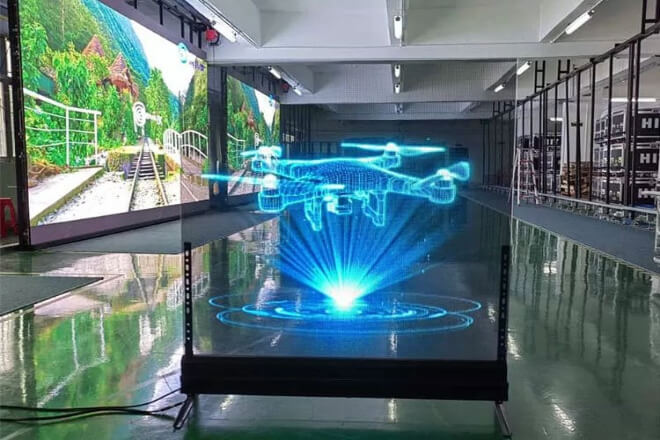
To put it simply, LED holographic displays are a technologically advanced display method that immediately grabs the audience’s attention upon their debut.
Prompting them to take photos and share them on social media. Why is it so easy to generate buzz? There are several main reasons:
LED holographic displays are not only cool but also incredibly eye-catching, making brand communication more vivid and memorable.
Specifically, they are particularly suitable for the following scenarios:
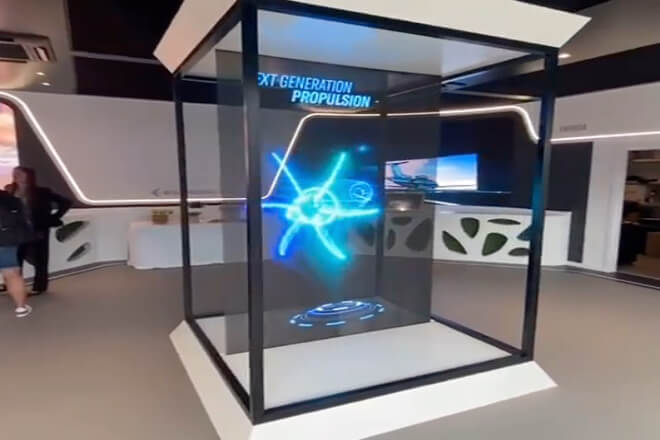
1) New Product Launches
At new product launches, holographic displays can make products “float” in the air.
Or disassemble products to showcase their internal structure, allowing everyone to immediately see the design highlights.
Compared to traditional unboxing or flat displays, this method is more technologically advanced and makes viewers want to take photos, record videos, and share them on social media.
Instantly, the launch event becomes a topic of discussion.
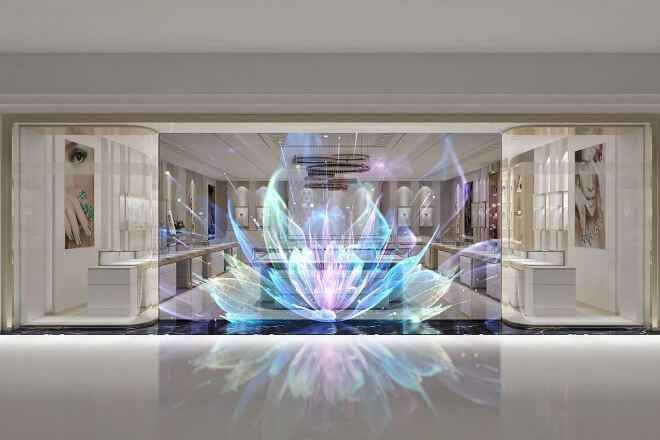
2) Commercial Showrooms and Pop-up Stores
で showrooms or pop-up stores, holographic displays can make products appear to float or combine virtual elements with physical objects to create an interactive experience.
Visitors can walk around the products, seeing the 3D effect from different angles, which is much more interesting than ordinary display cases.
Customers stay longer, have a stronger experience, and are naturally more likely to be interested in purchasing.
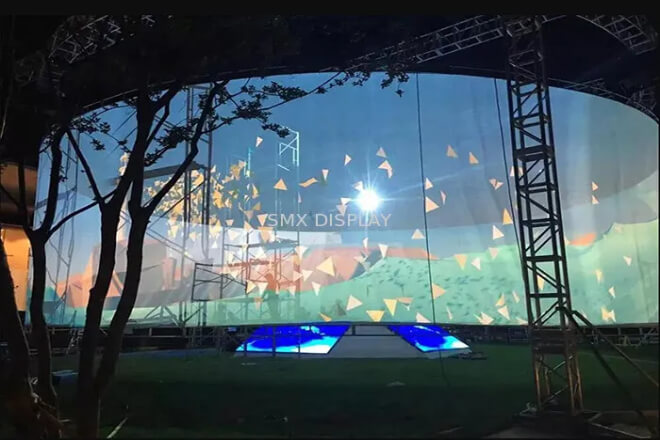
3) Large-Scale Events and Stages
At parties, concerts, or brand events, holographic displays can present virtual characters, dynamic backgrounds, or interactive effects, making the entire ステージ more futuristic.
Visitors are not only watching the performance but are also surrounded by visual effects, creating an immersive experience.
The event atmosphere is instantly enhanced, and the brand is more easily remembered.
4) Retail Store Window Displays
Store windows are the first point of contact between brands and customers.
Holographic displays can make products appear to float in the air or display 3D animation effects.
Passersby will stop to take photos and share them on social media; this naturally generated word-of-mouth is more effective than any print poster.
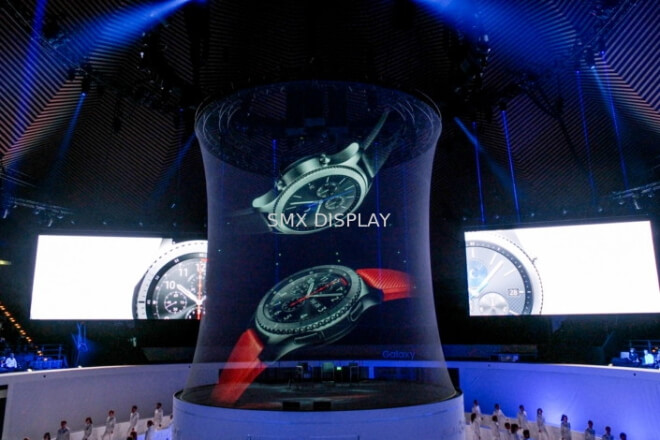
5) Brand Public Relations Activities
To make a brand event a hot topic, ordinary displays are often insufficient. Holographic displays can create stunning “visual events.”
For example, floating brand logos, 3D interactive experiences, and cool animations.
Once viewers take photos and post short videos, the topic naturally spreads.
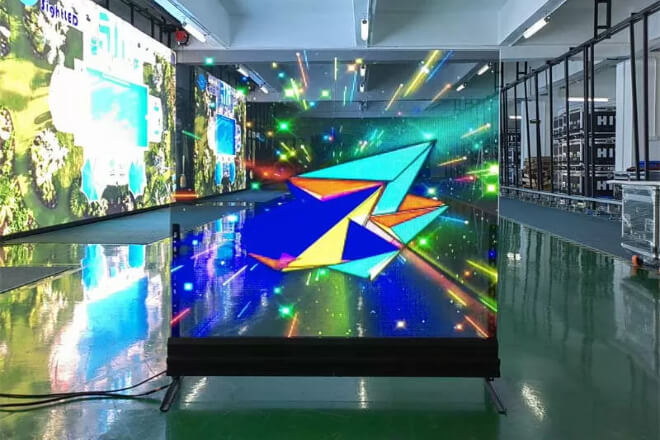
LED holographic displays are eye-catching enough, but simply displaying cool images isn’t enough for a brand to become popular.
To truly create buzz, five aspects need to be combined: content planning, interactive experiences, social media dissemination, cross-industry collaborations, and data feedback.
1) Content Planning
The most attractive aspect of holographic displays is the 3D floating visual effect, but coolness alone is not enough. The content itself must have a story to resonate with the audience.
For example, for a new product launch, holographic displays can show the “behind-the-scenes story” of the product from design to completion, allowing viewers to see the product’s unique selling points.
Visual impact is key. Floating product models, dynamic decomposition effects, and interactive virtual characters all create a striking visual experience.
With storytelling and visual impact, viewers are more likely to take photos, record videos, and share them, naturally generating buzz.
2) Interactive Experience
Holographic displays aren’t just for watching; they’re for playing. Through motion capture, touch, or AR technology, viewers can interact with the holographic content.
Virtual Spokesperson: Brand mascots or virtual characters interact with viewers, waving to trigger special effects or answering questions.
Immersive Scenes: Viewers feel as if they are in a product usage scenario or a virtual world.
The more interaction, the stronger the sense of participation, the easier it is for viewers to remember the brand, and the more willing they are to take photos and share them—this spontaneous dissemination is the most effective.
3) Social Media Marketing Strategy
The charm of holographic displays lies not only in the on-site experience but also in their ability to become social media content.
Planning shooting angles, short video materials, and hashtags allows viewers to naturally share their photos or videos on social media platforms.
Designing “check-in points” or interactive elements can encourage audiences to generate UGC (user-generated content), leading to secondary dissemination.
This way, the visual highlights of the event are no longer limited to the venue but spread rapidly through social networks.
4) Cross-Industry Collaboration
Combining holographic displays with elements of art, technology, and fashion can amplify their impact.
For example, collaborating with artists to create creative installations makes the brand more visually appealing.
Showcasing products at technology exhibitions or trendy events allows brand information to reach a wider audience.
Cross-industry collaborations not only enhance the brand’s creative image but also easily generate buzz and attract more exposure.
5) Data Tracking and Feedback
Creating buzz isn’t just about blindly being cool; it requires quantifying results.
Data such as views, shares, likes, and comments can determine the popularity of the holographic content.
Optimizing content and interactive design based on feedback makes future displays more precise and impactful.
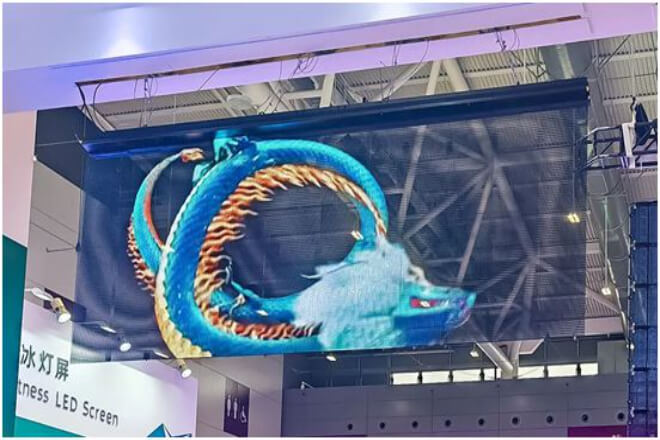
LED holographic displays may seem like high-tech, cool display equipment, but from a business perspective, their value extends far beyond just being aesthetically pleasing.
In fact, it can bring long-term returns, enhanced influence, and improved customer experience to brands. Specifically, several aspects are particularly noteworthy:
1) One-time investment, multiple scenarios for reuse
Holographic display equipment is not a disposable tool; a single investment can be reused in multiple scenarios.
Whether it’s a new product launch, brand showroom, pop-up store, stage event, or window display, the same equipment can be adapted to different events.
This way, the initial investment cost is utilized multiple times, resulting in a very high overall cost-effectiveness, while ensuring a high-quality visual effect for each display.
2) Increased brand exposure and buzz
The visual impact of holographic displays is inherently attractive, naturally prompting viewers to take photos, record videos, and share them on social media.
Each display not only has an impact on-site but also generates secondary dissemination on social media platforms such as WeChat Moments, short video platforms, and social groups.
Compared to traditional advertising or ordinary LED screens, holographic displays have significantly higher social media reach and generate more buzz.
3) Enhancing Brand Differentiation
In today’s advertising-saturated market, brands need memorable displays to stand out.
Holographic displays, through suspended 3D images, interactive effects, and immersive experiences, instantly capture the viewer’s attention.
Making them more memorable than traditional print ads and reinforcing brand personality and innovative image.
4) Improving Customer Experience and Conversion Rates
Beyond visual appeal, holographic displays enhance customer engagement.
Customers can closely observe floating products, interactive effects, or immersive scenes, providing a more immersive experience than simply viewing advertisements or screens.
Immersion and interactivity increase customer interest and positive feelings, naturally boosting purchase intentions and conversion rates, directly translating displays into commercial value.
5) Aligning with Future Marketing Trends
Digitalization and technological advancement are the future of brand marketing.
LED holographic displays, combining 3D, interactive, and AR/VR technologies, make brand displays more modern and technologically advanced.
Especially targeting young consumers, this innovative approach not only attracts attention but also strengthens a brand’s avant-garde and innovative image in their minds, contributing to long-term brand building.
 English
  Español
  简体中文
简体中文  Français
  日本語
日本語  한국어
한국어  العربية