

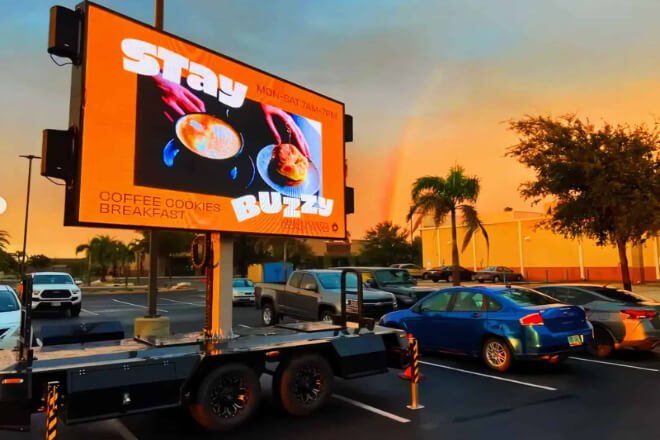
In this era where everyone is vying for attention, the biggest challenge for brands is often not “not advertising,” but “advertising going unseen.”
The advantage of Afficheurs LED lies precisely in their ability to make brands stand out from the sea of information.
First, high-luminosité dynamic content naturally attracts more attention. Compared to static posters, videos, animations, and dynamic effects are more likely to make passersby stop for a few seconds.
After all, when an entire row of advertisements is static, that “moving screen” always grabs attention first.
Often, people are just passing by, but a single interesting image makes them take a second look.
Secondly, LED displays are typically located in high-traffic areas such as commercial districts, pedestrian streets, centres commerciaux, or transportation hubs. Thousands of people pass by daily, providing continuous brand exposure.
It’s like a newly opened milk tea shop; you might not have tried it yet, but because you see its advertisement every day on your commute, you gradually remember the name.
Furthermore, frequent exposure increases brand visibility and familiarity. There’s an interesting phenomenon in marketing:
You might have no impression of a brand the first time you see it, but by the fifth time, you start to recognize it, and by the tenth time, you might even have the feeling, “This brand seems quite famous.”
In addition, dynamic visuals enhance memorability. For example, car advertisements showing vehicles traversing mountains and seas.
Or restaurant advertisements showing close-ups of freshly made food, are more memorable than simply displaying a logo.
After all, people might forget an advertising slogan, but it’s hard to forget that “delicious-looking” pizza on a screen when passing by late at night.
In short, LED displays are like a brand’s “city center stage”: not only do they get more people to see you, but they also make them remember you after seeing you.
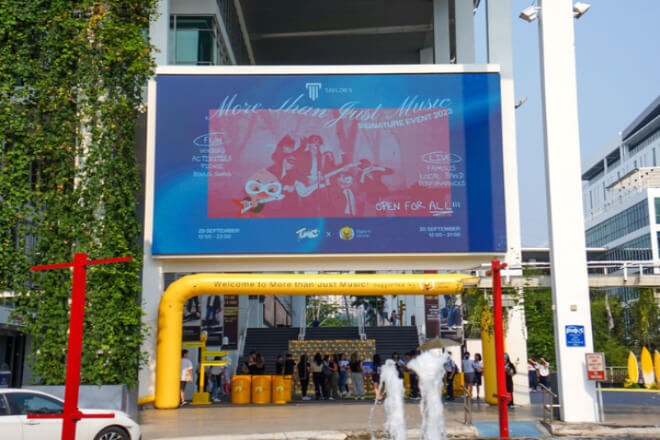
If traditional billboards are like a printed magazine, then LED displays are more like a constantly updated social media account—content can be changed, and creative ideas can be added at any time, offering unparalleled flexibility.
D'abord, Afficheurs LED support rich content formats such as videos and animations. Compared to static images, dynamic visuals are more likely to attract attention.
For example, in a beverage advertisement, instead of displaying a product photo, showing ice cubes colliding and bubbles bubbling directly on the screen is much more captivating for passersby.
Second, it supports remote updates and real-time deployment. Brands don’t need to assign personnel to change advertising materials.
They can update advertising content in multiple cities simultaneously through backend operations.
New product launch in the morning, ads online in the afternoon; promoting a new product today, switching to holiday promotions tomorrow—efficiency is greatly improved.
Furthermore, LED displays make advertising more flexible. Different content can be played at different times:
Promoting coffee during rush hour, showcasing restaurant discounts during lunchtime, and switching to entertainment or shopping ads in the evening.
The same screen can continuously adjust its “chat content” according to the scenario.
More importantly, it can quickly respond to marketing trends. When trending events, festivals, or online topics emerge, brands can quickly launch relevant creative content.
The moment a trend begins to gain traction, ads may already be appearing on large street screens, truly “racing against the tide.”
Simply put, the biggest advantage of LED displays is that advertising is no longer a static poster, but a digital window that thinks, updates, and follows trending topics.
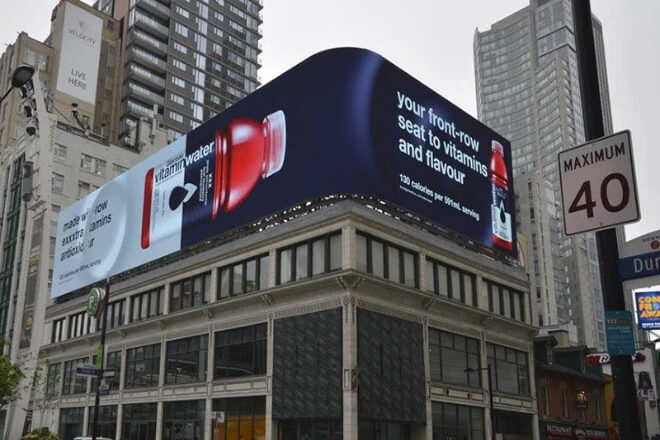
In high-traffic areas such as shopping malls, pedestrian streets, and transportation hubs, Afficheurs LED are no longer just “screens for playing ads,” but rather “magnets” that attract traffic.
Their value lies not only in displaying content but also in converting passersby’s attention into brand engagement opportunities.
First, LED displays can attract consumers to stop and watch. Compared to static posters, dynamic videos, creative animations, and immersive visual effects are more likely to make people stop and look.
For example, if a naked-eye 3D effect suddenly appears on a centre commercial screen, with a “giant whale” leaping out of the screen.
Many passersby’s first reaction is often to take out their phones to take pictures, rather than continuing on their way.
Second, it can increase opportunities for brands to connect with users. When consumers stop to look, brands gain valuable communication time.
Even just a few seconds can make a user remember a brand, a product, or even a promotion.
Simultaneously, LED displays can enhance the influence of offline scenarios. A well-designed large screen often becomes the visual focal point of a shopping district.
Many people may be there to shop, but they might casually take a photo because of a creative LED screen, resulting in increased attention for the entire commercial space.
More importantly, it can drive integrated online and offline marketing.
Brands can use the screen to display QR codes, interactive activities, or social media hashtags, guiding viewers to scan the code to participate, receive coupons, or share content.
A passerby who was initially just “glancing” might become an online fan.
Simply put, LED displays are like “traffic hunters” in the offline world: first attracting people, then turning attention into interaction, converting offline foot traffic into online traffic.
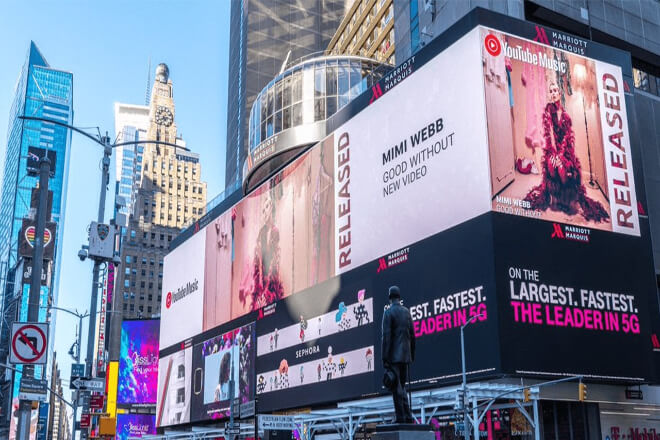
Today’s advertising is no longer just about brands “speaking,” but about encouraging users to actively participate and share.
The growing popularity of LED displays stems from their ability to transform “viewing” into “interaction,” creating greater communicative value.
Firstly, Afficheurs LED can integrate with social media. Brands can showcase campaign topics, interactive challenges, or QR codes on large screens, guiding viewers to participate in online activities.
For example, seeing an interesting and creative large screen will prompt many to take photos and share them on social media, extending the brand’s reach from offline to online.
Secondly, it supports creative visuals and immersive experiences. Naked-eye 3D, dynamic animation, and interactive art content can make ordinary advertisements more appealing.
Compared to traditional advertisements that are easily forgotten, people are more willing to record visual experiences that are “unexpected” or “unexpectedly fun.”
Simultaneously, LED displays can increase user engagement. When viewers are not only passive observers but also actively participate through QR code scanning, on-site activities, or social media, the distance between brands and users is further shortened.
After all, people tend to remember content they have engaged with, not just what they have seen.
Most importantly, it enhances a brand’s topicality and communicative power. A creatively designed LED screen often becomes a topic of discussion among netizens.
Some take photos and share them, some forward and comment, and some even go to the site specifically to check it out.
For brands, this spontaneous dissemination is often more valuable than simply increasing the number of times an advertisement is played.
Simply put, the charm of LED displays lies in the fact that they not only allow users to see the brand but also encourage users to participate in and share the brand.
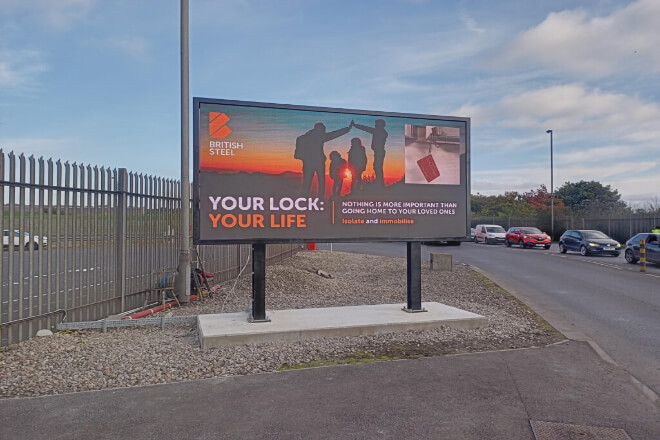
For brands and advertising operators, good advertising equipment must not only be effective but also “withstand long-term use.”
A key reason why LED displays are being adopted by more and more companies is their high long-term investment value.
First, a single Affichage LED can serve multiple marketing campaigns.
Today it can promote a new product, tomorrow it can advertise a holiday event, and next month it can be used for brand image display; all content can be quickly updated through the backend.
Compared to traditional advertising materials that are produced once and fixed for a long time, the use of LED screens is obviously more flexible.
Second, it can reduce the replacement costs of traditional advertising. In the past, each change of advertisement required redesign, printing, and installation, while LED displays only required updating the digital content.
This advantage is particularly pronounced for brands that frequently conduct promotional campaigns or quarterly marketing campaigns.
Simultaneously, LED displays improve the utilization rate of advertising resources. A single screen can not only rotate multiple advertisements but also switch between different promotional themes according to different time periods.
For example, brand advertisements can be displayed during the day, and event information can be played at night.
Ensuring the advertising space remains highly efficient, rather than simply displaying a single image.
More importantly, it helps brands achieve a higher return on investment (ROI). A screen can be used long-term, repeatedly operated, and continuously generate exposure and interaction opportunities.
As usage time increases, the cost per campaign decreases, while the communication value accumulates continuously.
Simply put, LED displays are like an “all-rounder” in brand marketing: one-time investment, multiple uses; content is constantly updated, continuously releasing value.


 English
  Español
  简体中文
简体中文  Français
  日本語
日本語  한국어
한국어  العربية