

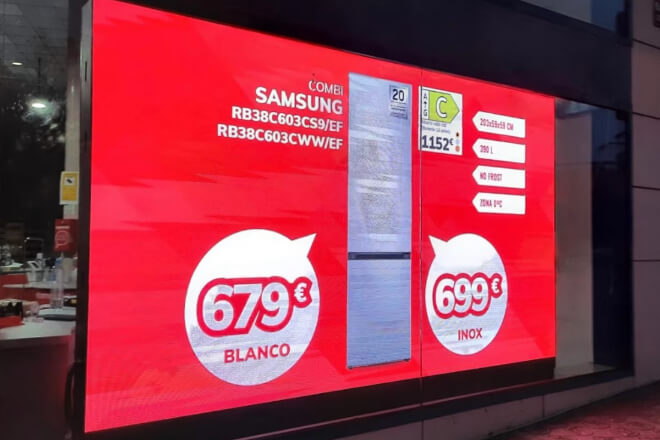
In bustling streets or shopping districts overflowing with information, getting your advertisement seen isn’t as simple as just putting up a poster—it will either be ignored or “drowned out” by countless other displays.
In this situation, Afficheurs LED act like “dancing sprites,” instantly attracting the attention of passersby.
Dynamic visuals are more likely to grab attention than static advertisements: moving text, flashing colors, and scrolling promotional information all act as a “pause” for passersby.
Even if only for a second, creating a stronger presence than the surrounding static environment.
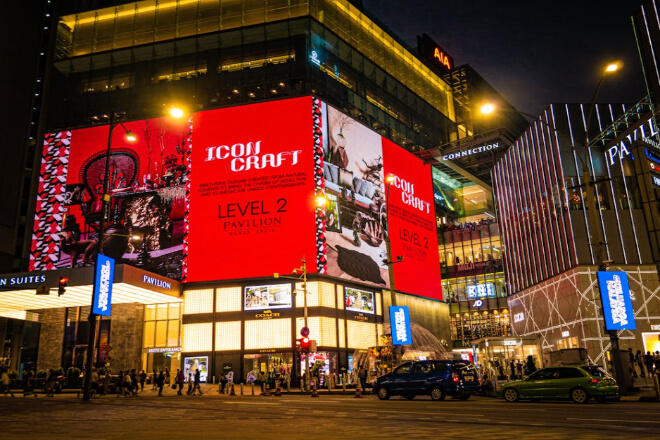
This effect is amplified in densely populated areas. For example, in centre commercial main passages, store entrances.
Or street corners, LED screens act like “performers” in a crowd, naturally becoming visual focal points.
Passersby unconsciously glance at them, linger for a couple of seconds, and silently memorize the promotional information—the advertisement quietly fulfills its mission.
To give a more relatable example: two coffee shops are next to each other. One has a static sign.
While the other has an LED screen outside constantly playing animations introducing new products and offering coupons.
Most passersby will definitely be drawn to the “moving” one first, and many will even be guided into the shop by the flashing images on the screen.
Even more interestingly, in public spaces or squares, a large LED screen acts like a “focal magnet,” causing people to unconsciously look up and stop in their tracks.
The advertisement transforms from “presence” into “unavoidable.”
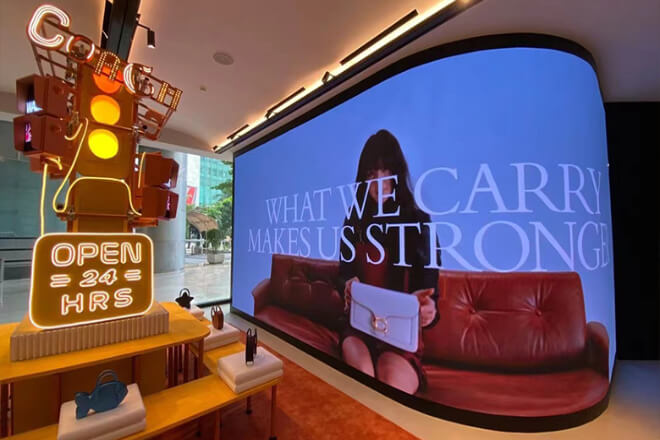
If traditional advertising is “stuck there waiting to be seen,” then Afficheurs LED are more like “actively greeting”—with a touch of performativeness.
Its biggest advantage is that it can move, perform, and tell a story. With videos, animations, and multimedia content, products are no longer “static displays” but are “open for business on the spot.”
For example, a beverage isn’t just a photo; showing ice cubes falling, bubbles rising, and liquid flowing makes it instantly appealing.
This method of expression is more intuitive. Many product selling points, which might take several seconds to explain in words, are understood in a second with dynamic visuals.
For example, the “absorption effect” of skincare products or the “operating process” of electronic products can be demonstrated, making it clearer than a manual.
Even more interestingly, LED screens “create their own memory points.” The moving images, changing colors, and switching content are like gentle taps in the brain—even just passing by leaves an impression.
A very real scenario: in a centre commercial, a row of static posters is usually glanced over, but a nearby LED screen playing a short, rhythmic.
And dynamic video easily attracts attention for a couple of more seconds. Those “two seconds” are what make the advertisement successful.
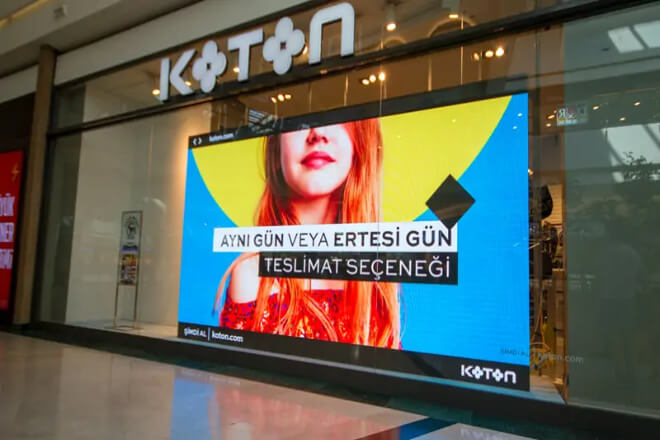
If traditional advertising is like a “one-time print, finalized design,” then Afficheurs LED are more like a “director who can rewrite the script at any time.”
Today it’s promoting new products, tomorrow it’s switching to promotions, and the day after it’s changing event previews—everything can be flexibly adjusted.
The biggest advantage is its speed of updates. Content can be replaced at any time, without reproducing materials or making on-site changes.
Updates are completed with just a few clicks. For brands that frequently run events, this is like having an “advertising space that’s always available.”
Even more interesting is its ability to “speak according to the time of day.” Concise information is suitable for morning commuters.
Product displays can be strengthened when there are more shoppers in the afternoon.
And promotional and atmosphere-building content is emphasized in the evening—the same screen says different things at different times.
For example, a store might play a brand image video during the day, automatically switch to “after getting off work discounts” in the evening, and then change to “last 2 hours discount reminder” at night.
Passersby see different content each time, but it always perfectly matches their current mood.
This flexibility is crucial for promotions and events. For example, if an event is added temporarily or discount information is adjusted.
The LED screen can respond immediately, rather than waiting until the next day to update, avoiding missing the best opportunity.
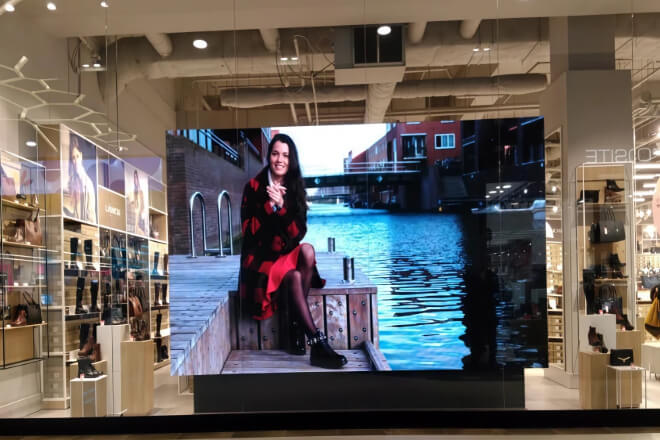
If brand exposure is about “making people remember you,” then LED displays are like “a celebrity who can be seen everywhere.”
Whether in store windows, outdoor advertising in shopping districts, or at event venues.
It can continuously appear in the user’s field of vision, allowing the brand to frequently “make its presence felt.”
This advantage lies in its consistent use across multiple scenarios. Imagine the same visual style playing new product advertisements at the store entrance.
Promotional information on écrans LED extérieurs, and interactive content displayed at events.
Users see a similar visual language in every scenario—the brand image is like a “close friend,” constantly deepening the impression.
A more direct effect is increased brand visibility. Repeated exposure is easier to remember than a single appearance.
Just like hearing a favorite melody while walking; hearing it several times naturally makes it memorable.
LED screens can flexibly play according to time, location, and scenario, allowing the brand to continuously “appear” on screen, enhancing memorability.
Here’s a relatable example: A coffee brand plays a short film about its new product at the mall entrance.
Displays promotional activities on outdoor LED screens, and plays interactive segments on LED screens at the event venue at night.
Customers encounter the same brand information at different times and in different scenarios—the next time they see the coffee shop’s sign, they’ll naturally remember it.
Imagine an LED display not only as a “moving billboard,” but also as a “super assistant” for digital marketing.
It can link with online activities and membership systems, smoothly guiding offline attention to online participation.
The most intuitive way is through interactive guidance. QR codes, interactive games, or voting activities are displayed on the screen.
Passersby can simply scan the code with their phones to directly participate in activities, receive discounts, or become members.
Advertising transforms from “one-way playback” to “instant interaction,” forging a closer connection between the brand and users.
More importantly, it also provides data feedback. Every scan and every interaction is recorded, providing insights for future content optimization.
You can identify which creative ideas are most engaging and which videos linger the longest, allowing you to continuously adjust your playback strategy and refine your advertising effectiveness.
For a relatable example: in a centre commercial or event, an LED screen displays new product promotions while encouraging customers to scan a QR code for a chance to win a prize.
Attracted by the dynamic visuals, customers scan the code, completing an interactive experience that combines online and offline engagement.
The interconnectedness of LED screens and systems elevates marketing from a “single display” to a “full-link closed loop,” not only increasing exposure but also directly driving conversions.


 English
  Español
  简体中文
简体中文  Français
  日本語
日本語  한국어
한국어  العربية