

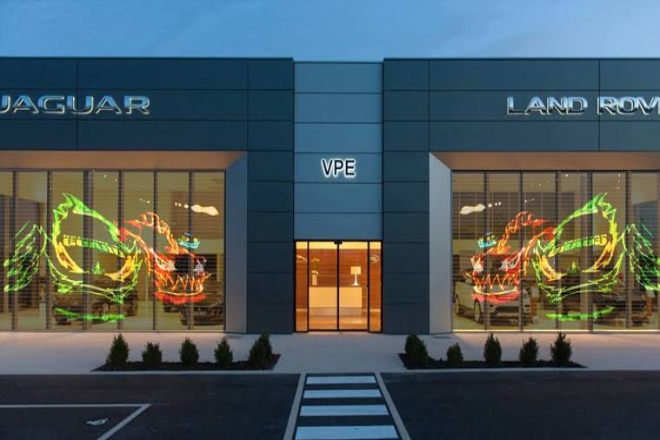
The entrance is one of the most desirable locations for LED displays in a car showroom.
Customers form their first impression of the brand even before entering the showroom. An attractive entrance design will encourage customers to come in and explore.
Installing a grand écran LED near the entrance can play new car promotional videos, brand image videos, model highlights, and information on limited-time events.
Dynamic visuals can bring life to the otherwise static entrance and help the brand establish visual identity within its surroundings.
For example, when a new car is launched, the screen can display images of the vehicle driving on city roads or mountain highways.
Generating interest in the vehicle’s design and usage scenarios before customers even see the actual car on display.
However, a larger entrance screen isn’t always better. If the screen occupies too much space or the content is too complex.
It may negatively impact the overall entrance design and even make it difficult for customers to quickly identify the store’s signage.
Therefore, the entrance layout of an LED display screen in a car showroom should focus on three factors:
Which direction customers approach the showroom from, whether the screen is clearly visible, and whether the image aligns with the brand image.
For street-facing stores, factors such as glass reflection, daylight, and road viewing angle also need to be considered.
If customers primarily pass by vehicles, the image should be simple and eye-catching; if customers walk towards the showroom, brand stories and model information can be appropriately added.
The entrance screen’s task is not to present all the selling points at once, but to pique customers’ interest in entering the showroom.
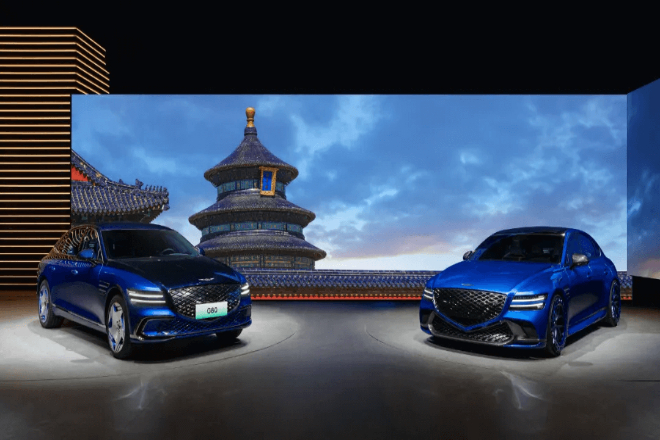
If the entrance is responsible for attracting customers, then the new car display area is where the Écran d'affichage LED effectively showcases the product’s value.
Cars themselves possess strong visual appeal, so screen design shouldn’t merely aim to be eye-catching; it should complement the vehicle.
Appropriate background imagery can highlight the car’s lines, colors, and design style, making it easier for customers to understand the model’s positioning.
For example, sports cars can be paired with images of racetracks, mountain roads, or city nightscapes;
New energy vehicles can showcase charging, intelligent driving, and daily travel scenarios; luxury models can employ a simpler visual design to emphasize quality and brand image.
Regarding installation location, screens can be placed on the wall behind the display vehicle, at a visual focal point on the side of the display area, or integrated into the overall booth structure.
However, businesses need to avoid a common problem: an overly eye-catching screen that distracts customers from the actual vehicle.
If the background displays high-frequency flashing animations, complex color changes, or large amounts of text, customers’ attention may constantly switch between the screen and the vehicle.
Therefore, the content of the display area should revolve around the vehicle, rather than competing for attention with it.
Furthermore, the distance between the screen and the display vehicle must be considered, as well as the customer’s primary viewing angle and the possibility of moving or repositioning the vehicle.
For stores that frequently adjust their display layout, the installation plan should retain a degree of flexibility.
Businesses can also tailor content playback plans to different car models, ensuring the screen corresponds to the displayed vehicle.
For example, when the display area changes to a new car model, the background content is updated synchronously to avoid inconsistencies between the displayed model and the actual vehicles on site.
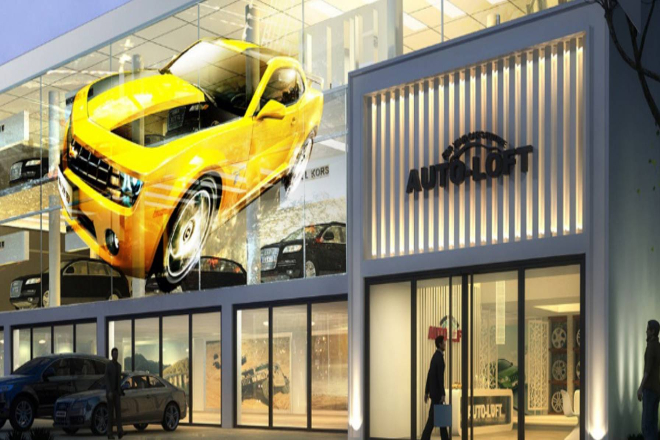
The glass windows and street-facing facades of car showrooms are crucial display areas for attracting potential customers.
This is especially true for stores located on commercial streets, main roads, or near shopping malls, where many people may simply be passing by without intending to enter.
In these cases, LED displays can help create a visually appealing focal point.
If the screen is installed inside the window, it can display images of new cars, brand activities.
And model introductions, allowing passersby to quickly understand what the store is promoting without entering the showroom.
For showrooms that wish to retain the transparency of the glass, transparent LED displays can be considered.
They can display digital content while maintaining a degree of light transmission, allowing the screen image to complement the vehicle display behind the glass.
Cependant, écrans LED transparents are not suitable for all window displays. The actual display effect will be affected by ambient light, background scenery, viewing distance, and product structure.
If the shop window is mainly used for close-up display of vehicle details, a regular LED display or traditional display method may be more suitable.
For street-facing facades, businesses also need to consider sunlight exposure, viewing direction, surrounding building obstructions, and local advertising regulations.
If the screen is installed too high or mainly faces a less frequented area, it may not achieve its intended effect.
In terms of content, street-facing screens should prioritize highlighting the brand logo, the main vehicle model, and key selling points.
Passersby typically don’t have much time to read lengthy text, so concise visual information is often more effective.
Car dealerships can also regularly update content based on new car launches, holidays, and promotional activities to keep the shop window fresh, rather than playing the same promotional video for an extended period.
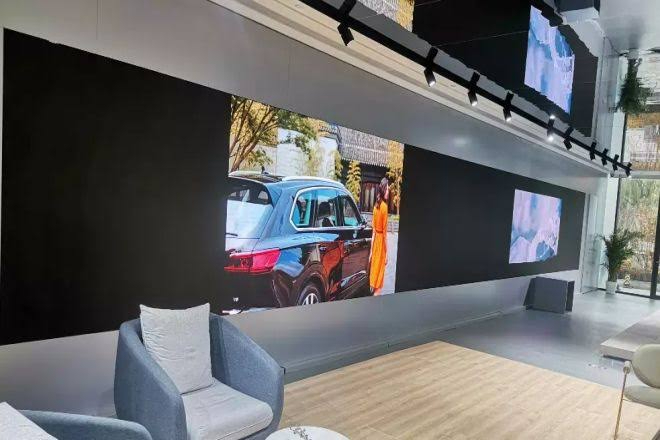
Car showroom Afficheurs LED don’t necessarily have to be installed in the most prominent position.
Some screens, while not immediately attracting all customers, can play a practical role in car purchase consultations and after-sales service.
The customer rest area is a worthwhile installation location to consider.
Customers often spend some time waiting for sales consultants, completing paperwork, or receiving after-sales service.
During this time, screens can display information on new car models, maintenance tips, brand events, membership benefits, and after-sales service procedures, allowing customers to learn more while they wait.
Unlike the entrance or showroom area, the rest area is better suited to clear, slow-paced content, avoiding the need for constantly displaying intense, dynamic visuals.
The consultation area can display vehicle configurations, features, brand services, and related information according to business needs.
However, if the screen is primarily used for communication between sales consultants and customers, clarity for close-up viewing and ease of operation should be prioritized.
When planning these areas, businesses should pay attention to the distance between the screen and the seating, the installation height, and the viewing angle.
The screen should not emit excessive glare directly at customers, nor should it interfere with normal conversation.
Furthermore, content management is equally important. If the rest area screens continuously display advertisements irrelevant to customer needs, customers are likely to quickly lose interest.
A better approach is to arrange content according to the area’s function, ensuring that information truly serves the car buying and after-sales experience.
For car dealerships, while these locations may not be the most prominent, they offer the opportunity to enhance the service experience and ensure brand messaging is effectively communicated during customer stays.
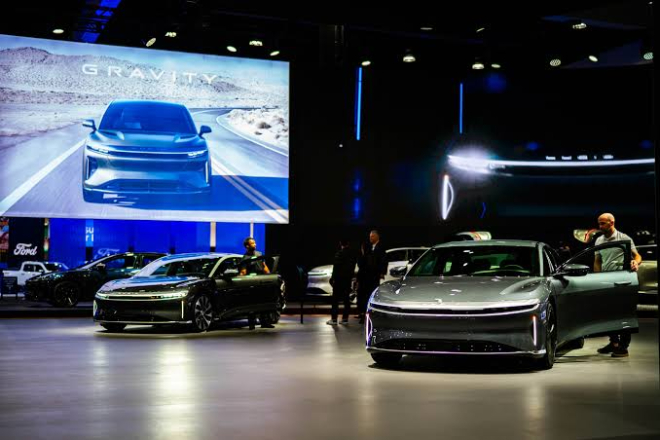
Afficheurs LED can be installed at entrances, behind display vehicles, in shop windows, and in rest areas, but businesses don’t necessarily need to install them in every location.
The key is finding the combination that best aligns with the store’s objectives.
First, analyze customer flow.
Where do customers typically enter the showroom? Which car do they see first upon entering? Where is the sales consultation area?
Do after-sales customers pass through a separate reception area? These questions help businesses identify key visual points and determine which locations are most worthwhile to invest in.
Second, assess distance de visualisation and ambient lighting.
For close-up displays of vehicle details, focus on pixel pitch and image sharpness; for attracting customer traffic from a distance, prioritize screen size, brightness.
And information readability. Screens near glass also need to be evaluated for glare and the impact of natural light.
Third, define the purpose of each screen.
Entrance screens attract attention, display vehicle backdrops highlight the vehicles, window screens draw passersby, and rest area screens convey service information.
Different screens should have different content strategies, rather than looping the same video across all devices.
Fourth, plan ahead for installation and maintenance.
Businesses need to confirm wall structure, power supply, signal lines, heat dissipation, and maintenance space.
Large screens or specially designed screens require professional structural assessments and construction planning.
Finally, assess long-term operating costs.
In addition to procurement and installation costs, content production, daily maintenance, energy consumption, and equipment upgrades should be considered.
For dealerships with multiple stores, unified content management can be further considered to improve the efficiency of new car launches and marketing campaign updates.
If the budget is limited, prioritize key locations such as entrances or main display areas, and then gradually expand based on actual performance.
The best installation solution for LED displays in a car showroom is not the one with the most screens, but the one where each screen plays a clear role in the customer’s journey.


 English
 Español
 简体中文
 Français
 日本語
 한국어
 العربية