

Can Afficheurs LED really be made “whatever you want”?
Curved, cylindrical, wave-like, and even special sizes—customized LED displays offer more possibilities for any space.
But shape is just the beginning. When it comes to actual implementation, size, distance de visualisation, cost, installation, and maintenance are all crucial.
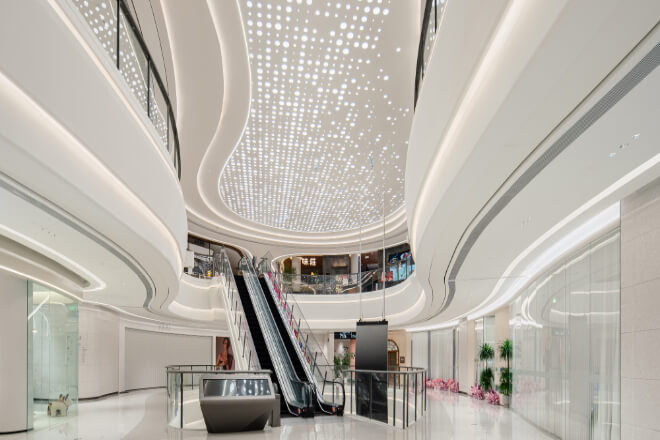
The first step in choosing an LED display screen isn’t actually looking at the specifications, but rather considering where it will be installed.
Centres commerciaux, hôtels, exposition halls, and clubs each have their own unique characteristics, and the screen can’t be forced into them.
First, consider the installation location. For relatively flat walls, a standard flat LED display screen will suffice;
However, for curved walls, cylindrical structures, or wave-like structures, consider curved, flexible.
Or irregularly shaped LED displays, allowing the screen to follow the space rather than “clashing” with the building.
Special locations such as ceilings and corners can also be customized according to the site dimensions.
Secondly, consider whether it matches the interior design style. High-end hotels prioritize sophistication; installing a bulky, obtrusive screen would be somewhat incongruous, like “wearing a suit with slippers.”
However, in esports clubs, circular, curved, or even irregularly shaped LED displays are more effective at creating a sense of technology and immersion.
For example, a 10㎡ LED display can be boldly used to create a visual focal point in a shopping mall atrium;
In a hotel lobby, it’s better suited to blending into the wall; and in a club stage, it can be shaped into an arc or a unique form to match the stage’s contours.
Therefore, there is no truly “one-size-fits-all” LED display. Consider the space first, then determine the form;
Let the screen integrate into the architecture, and the effect will naturally emerge.
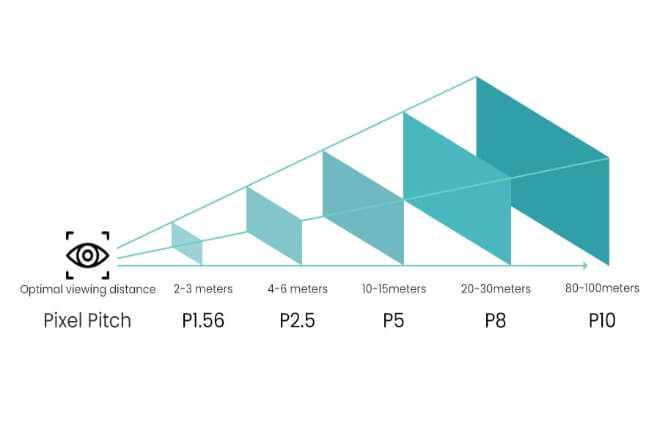
Another easily overlooked issue when choosing an LED display is: how far should the audience be?
After all, viewing from 1 meter away and viewing from 10 meters away are completely different experiences.
For close-up viewing scenarios like stores and showrooms, pixel pitch is crucial.
If the distance is too close and the pas de pixel is too large, text may appear blurry, and product details may be compromised.
Especially for small text such as menus, prices, and product parameters, clarity cannot be compromised by simply “good enough.”
In conference spaces or large exposition areas, where viewing distances increase, there’s no need to blindly pursue ultra-small pixel pitch.
At this point, the focus should be on the overall brightness, color, and depth of the image, ensuring that people at a distance can see clearly at a glance, rather than spending the entire budget on “smaller pixels.”
Of course, the content being displayed is also crucial. If the screen primarily displays text, data, and product information, prioritize image sharpness;
If it mainly plays promotional videos, event videos, and dynamic visuals, then focus more on overall visual performance.
Ultimately, a higher résolution isn’t always better for LED displays; it’s about aligning with the audience’s viewing position.
Appropriate distance, suitable specifications, a comfortable viewing experience, and a well-funded budget.
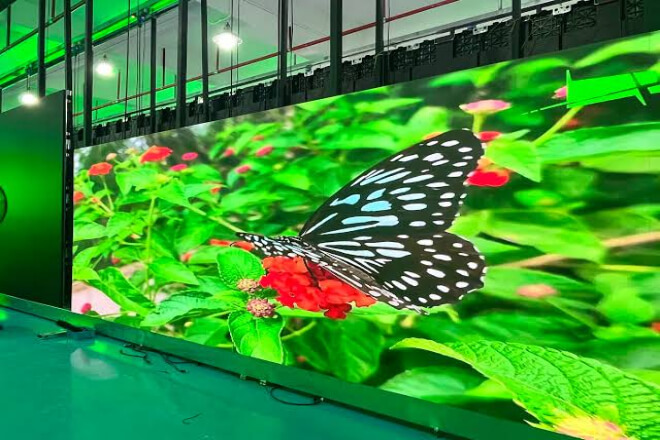
What’s the biggest fear in custom Afficheurs LED? Seeing someone else’s cool design and wanting one too.
But the more complex the design, the more complex the structure, installation, and maintenance often become, naturally impacting the budget.
In fact, customization doesn’t necessarily have to be “oddly shaped.” For brand spaces aiming to emphasize brand identity, designs with curves or rings are more recognizable.
For commercial complexes primarily used for advertising, events, and information display, a large screen with engaging content is often more practical than a complex design.
It’s also important to note that the cost of an LED display project isn’t just the screen itself.
The screen body, steel structure, installation, control system, and even ongoing maintenance must all be factored in.
Otherwise, the initial price might seem attractive, only to discover halfway through the project, “Where did this extra expense come from?”
For example, a brand showroom might only need a curved background screen.
If a complex, irregularly shaped structure is used in pursuit of “uniqueness,” the visual effect might only slightly improve, but the structural and installation costs could skyrocket.
Therefore, truly smart customization isn’t about “making it as complex as possible,” but about finding the perfect balance—looking distinctive, reliable in use, and within budget limits.
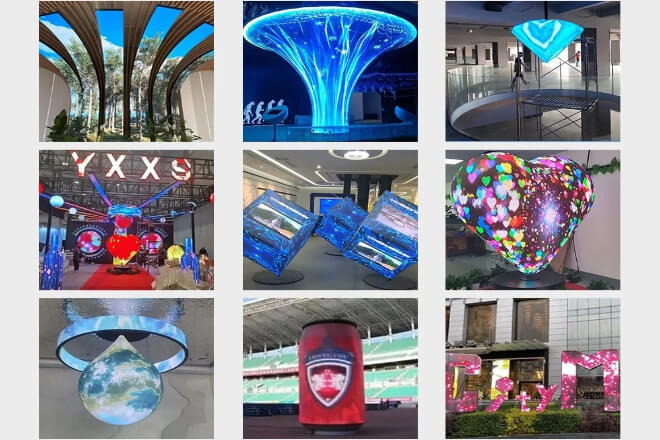
LED displays can be made in cylindrical, curved, suspended, and even all sorts of imaginative shapes, but while designers provide the imagination, engineers ensure their stability.
First, the building’s load-bearing capacity must be considered.
The weight of the screen, how the steel structure will be secured, and whether the installation location can withstand the load all need to be confirmed beforehand.
Especially for cylindrical, suspended, and large irregularly shaped screens, it’s not enough to simply ask, “Does this look good?”
One must also ask, “Is this installation safe?” Outdoors, things become even more complex. Wind, rain, and temperature changes all pose challenges to the screen.
Especially for large LED displays, a gust of wind isn’t just a matter of “romantic swaying,” but a test of the structure.
Therefore, waterproofing, dustproofing, wind resistance, and overall stability must all be planned in advance.
En outre, source de courant and heat dissipation shouldn’t be left unresolved after the screen is installed.
The power routing, cable placement, and heat dissipation methods should all be planned during the design phase.
Otherwise, discovering after installation that there’s nowhere for the wiring or for heat dissipation will lead to a major headache from rework.
Therefore, while creative designs are welcome for uniquely shaped LED displays, safety cannot be a matter of luck.
The design should elicit “wow” reactions, while the structure should provide reassurance.
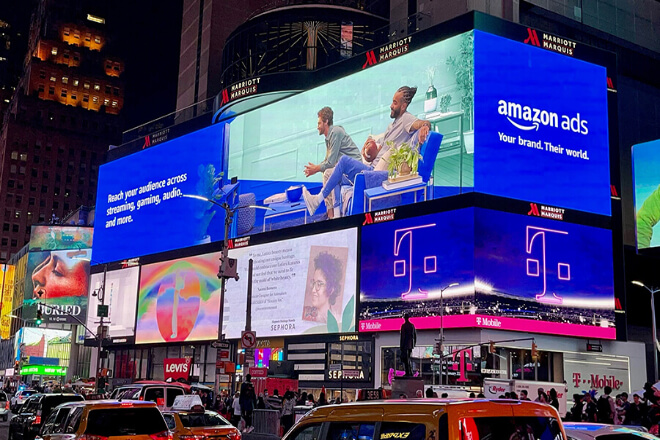
The installation, lighting up, and photoshoot of the LED display don’t end the story. What truly troubles operators is often, “What if it breaks down later?”
Therefore, before customization, the content playback and control methods must be carefully planned.
Commercial advertisements may change materials frequently, exhibitions require theme-based screen switching, and on-site content may need to be modified temporarily.
Determining in advance whether local control or remote CMS management will be used avoids the need for a personal trip every time content is changed.
Maintenance space is also crucial. The more unique the customized screen’s shape, the less the maintenance access should be designed as an “extreme challenge.”
Front or rear maintenance, module disassembly methods, and the placement of power supplies and control equipment should all be planned in advance.
Otherwise, if the screen malfunctions, maintenance personnel might spend half a day figuring out, “Where do I even get in?”
Furthermore, long-term operation must be considered. Modules LED, alimentations, control systems, and other components all have lifespans.
Preparing commonly used spare parts in advance and confirming repair and replacement methods are crucial to avoid situations where “the screen wants to continue operating, but the parts are unavailable.”
Therefore, the true value of a customized LED display screen lies not only in its initial stunning appearance but also in its continued usability years later.
Installation is just the beginning; longevity is the ultimate answer.


 English
  Español
  简体中文
简体中文  Français
  日本語
日本語  한국어
한국어  العربية