
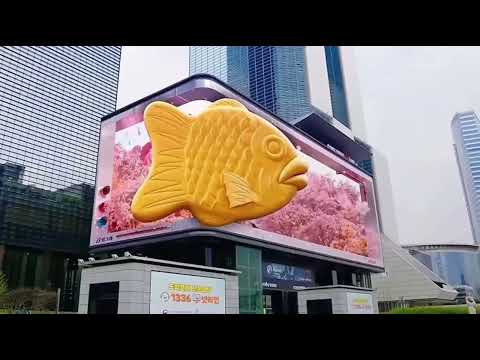
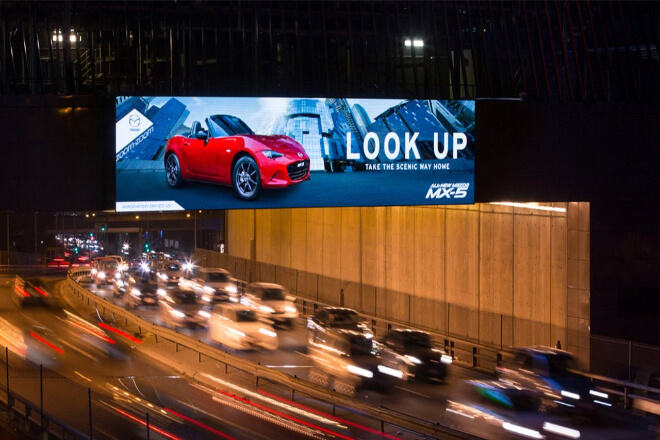
The most direct value of LED displays is making brands easier to see.
In increasingly information-dense urban environments, grabbing the viewer’s first glance is often more important than what is said.
Compared to traditional static advertising, large LED screens, with their larger size, higher luminosité, and dynamic visuals.
More easily create visual focal points in complex environments. Even a brief pause by passersby easily draws their attention.
Especially in high-traffic areas like prime commercial districts, shopping streets, and subway entrances.
LED displays act like a constantly online “brand spokesperson,” receiving continuous exposure to large crowds every day.
They are seen during morning rush hour and evening rush hour, attracting commuters during the day and becoming the most conspicuous presence in the neighborhood at night.
Brands don’t need to actively chase after people; they naturally appear in people’s lives.
For a very real scenario: You pass by the same centre commercial every day. The first day, you just think, “There’s a really bright screen here.”
After a few days, you start to remember the brand name that appears repeatedly on it.
After a while, this brand might even become one of your first impressions of the area.
This continuous, high-frequency exposure doesn’t just increase the number of times you’re “seen,” but more importantly, it builds awareness.
Often, consumers don’t make a purchase immediately because of a single advertisement, but rather through repeated exposure, gradually developing familiarity and trust.
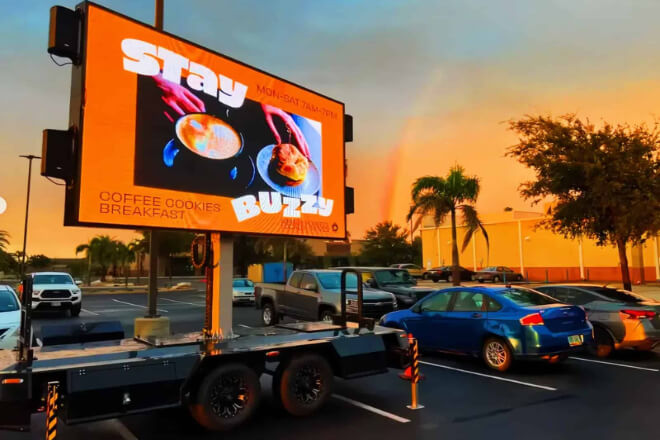
Another important value of LED displays is that they not only make brands visible, but also allow brands to “express themselves better.”
Compared to traditional static advertising, dynamic content is like upgrading from “photo mode” to “short video mode,” and the appeal is naturally on a completely different level.
Videos, animations, and rhythmic visuals are more likely to grab people’s attention than a fixed poster.
Especially in shopping districts, stores, or public spaces, people’s dwell time is often very short. If the visuals can’t attract attention within seconds, the advertisement is easily ignored.
LED displays, through dynamic switching, visual rhythm, and color changes, make viewers more likely to subconsciously take a second look.
Often, the advertising effect lies in these extra “two seconds.”
More importantly, dynamic content is better suited for showcasing products and brand stories.
For example, a new product launch can use video to fully present usage scenarios, functional highlights.
And brand atmosphere, rather than relying solely on a single image to “guess what it’s trying to say.”
Brands are no longer just telling you “I’m good,” but directly presenting the experience to you.
For a very real example: a static poster for a coffee brand might only show a cup of coffee.
An LED screen, however, can play complete footage of latte art, rising steam, and customers entering the store.
Even accompanied by rhythmic animation, creating an urge to “go in and smell the aroma” even through the screen.
This stronger visual impact also makes it easier to create memorable impressions.
Viewers may not remember the text content, but they often remember a memorable visual, a familiar animation rhythm, or even a certain consistent brand visual style.
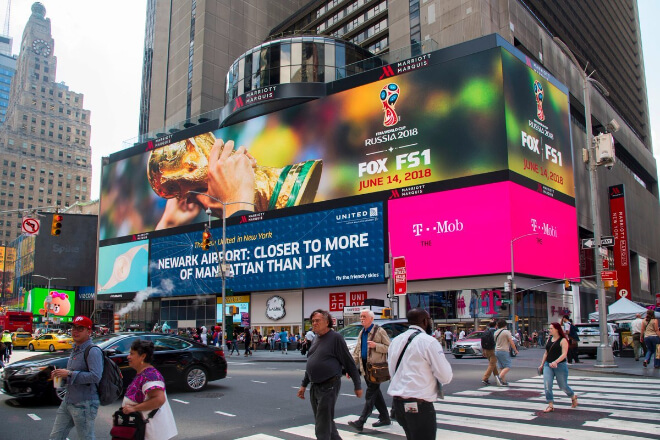
The smartest thing about LED displays isn’t their luminosité, but their ability to “tailor their message to the audience.”
The same screen can convey completely different messages depending on its location and time, freeing advertising from indiscriminately greeting everyone.
Different locations inherently attract different audiences. Shopping districts are filled with shoppers relaxing, airports are frequented by business travelers and high-spending individuals.
Subway stations are for commuters rushing to work, and gyms are for dedicated fitness enthusiasts.
If LED displays can adjust their content based on these scenarios, they act like skilled conversationalists, knowing exactly what to say to whom.
For example, a large screen near an office building might advertise “comfortable shoes for commuting.”
While a screen near a gym would immediately convey “Don’t let your gear hold you back on leg workout days.” The location changes the tone.
Time of day is also crucial. During morning commutes, coffee, breakfast, and productivity tools are most likely to attract attention; lunchtime is ideal for restaurants and centre commercial promotions.
In the evening, late-night snacks, entertainment, and promotional activities become even more attractive.
The same screen, seemingly focused on its job during the day, suddenly transforms into a vibrant atmosphere at night.
The biggest advantage of this approach is that advertisements no longer need to “repeat the same line all day.”
It adjusts its content based on changes in pedestrian traffic and lifestyle, making users feel, “This ad seems to understand me.”
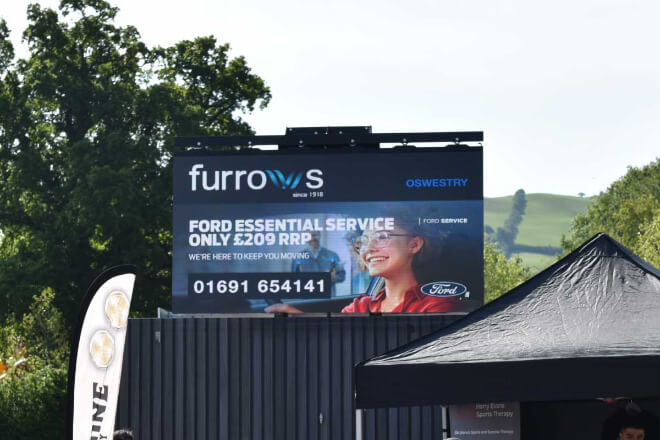
The truly sophisticated use of LED displays goes beyond simply getting people to “glance,” it makes them want to “get closer.”
When the screen is integrated with events, QR codes, and social media sharing, it transcends being just a tool for displaying advertisements; it becomes more like a proactive “live atmosphere generator.”
Previously, advertising was mostly a one-way output: the brand spoke, and the user passed by.
Now, LED displays can transform viewers from “observers” into “participants” through QR code participation, interactive prize draws, on-site voting, and social media sharing.
Advertisements are no longer just background elements; they become easily accessible entry points.
Here’s a realistic scenario: You’re walking through a centre commercial atrium, and a large screen is displaying event information with a prompt to “Scan the QR code to participate in a lucky draw.”
Initially, you might just glance at it, but because “it won’t hurt to scan,” you end up taking out your phone.
The next step might be to claim a coupon, follow the brand’s account, or even casually post it on social media. The brand’s mission is thus quietly accomplished.
Even more interesting is that interaction itself naturally extends user dwell time.
People might only see an ad for three seconds and leave, but if they can participate, their dwell time could turn into three minutes.
For brands, this extra time is often more valuable than simple exposure. After all, “looking a few more seconds” and “actually clicking to take a look” are completely different levels.
Add to that the dissemination nature of social media, and much interactive content is inherently easy to share.
Check-in devices, real-time comments, fun polls, and even a large screen that’s “great for photos” can all encourage users to actively help the brand spread the word.
The advertising shifts from “I show it to you” to “You’re willing to help me share it.”
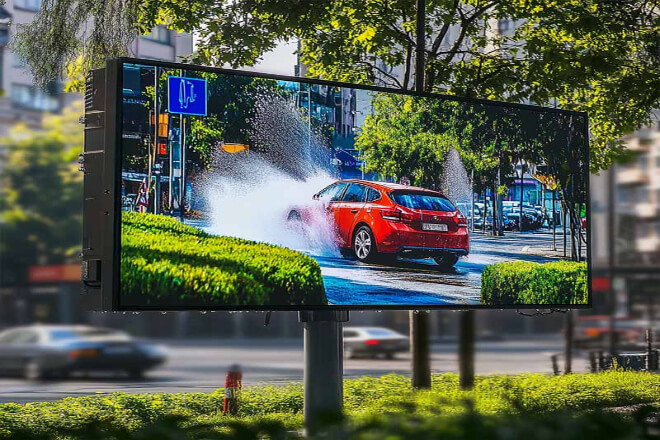
The most powerful aspect of LED displays isn’t just “what you see today,” but “what you still remember long afterward.”
Truly valuable advertising isn’t a fleeting spectacle, but a daily, gradually familiar presence.
Through continuous operation, the content on LED displays can be constantly updated and optimized.
Today it’s a new product launch, tomorrow a holiday event, and the day after a brand story short film.
Unlike traditional posters that are “sticky forever,” it’s more like a brand employee diligently working every day, consistently and steadily maintaining its presence.
For a real-world example: a coffee brand advertises on a large screen in a shopping district for an extended period.
Initially, you just think, “There’s a pretty bright screen here”; after a while, you start to remember the brand name.
Later, you might even subconsciously think of it when a friend mentions coffee. The ad doesn’t pressure you to order, but it has quietly taken up residence in your mind.
The greatest value of this long-term exposure is the continuous reinforcement of brand memory.
Consumers often don’t buy immediately after a single ad, but rather develop a sense of familiarity through repeated exposure.
People naturally tend to trust familiar things more easily—which is why some brands, even without daily discounts, always seem “reliable.”
Furthermore, continuous operation allows content to evolve with the times. Holidays maintain a festive atmosphere, promotional periods highlight key offers.
And regular periods maintain the brand’s tone. The screen never “goes off work,” so the brand remains online.


 English
  Español
  简体中文
简体中文  Français
  日本語
日本語  한국어
한국어  العربية