

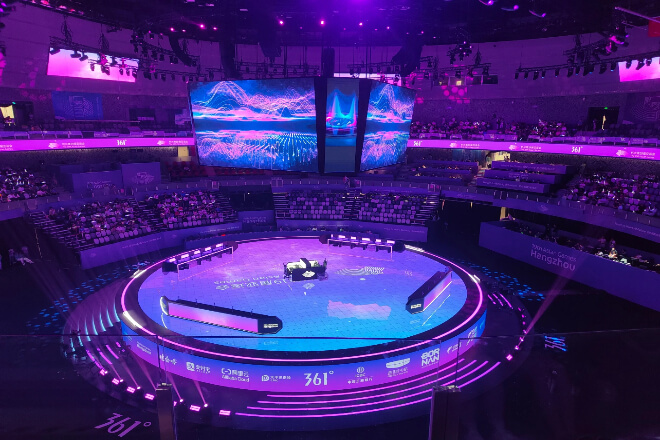
In esports events, a player’s entrance is often the first “emotional climax,” and the addition of LED floor display transforms this moment from an ordinary walk into an “opening show.”
First, the dynamic visuals on the ground can change in sync with the player’s entrance.
As the player walks from backstage to the stage, the floor tiles beneath their feet will display real-time team-specific animations, energy flows, or map texture changes.
Making every step feel like stepping into a “game world,” not just a regular organiser.
Second, it can create a stage effect where “your feet glow.” This visual feedback is incredibly direct—the light follows the person wherever they go, even creating path extensions or particle diffusion effects.
Audiences are easily drawn to this feeling of “interaction between people and the stage.”
Simultaneously, this design significantly enhances the sense of ceremony during openings and transitions.
Not only during player entrances, but also during pauses, match starts, and inter-match transitions, the ground visuals can be restarted, making the entire stage feel like a game interface constantly “loading new stages.”
Even more interestingly, this effect makes the players themselves become part of the stage as “visual triggers.”
They don’t just walk onto the stage; they gradually “activate” the entire scene, and the audience naturally focuses their attention on them.
Simply put, the change brought about by LED floor screens is that entrances are no longer just about walking onto the stage, but about “starting an opening animation.”
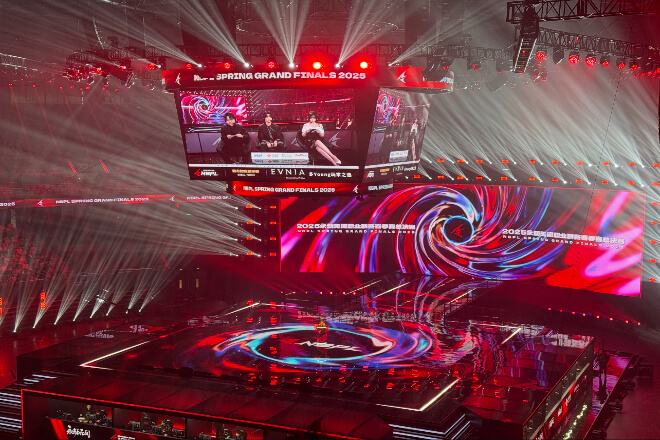
In esports stage design, the addition of Écrans de sol LED completely changes the concept of “stage”—it’s no longer just a performance area, but more like a space re-rendered by the game world.
First, the interaction between the ground and the large screen can form a complete, unified visual experience.
When the main screen displays the sky, buildings, or tactical interface, the floor tile screen can simultaneously present terrain, paths, or energy diffusion effects.
Once the visual elements are connected vertically, the entire stage is no longer a “layered screen,” but a single, continuous spatial image.
Secondly, it can recreate game maps and themed scenes. For example, in FPS competitions, key areas of the tactical map can be “projected” onto the ground.
In MOBA competitions, visual symbols for rivers, jungle areas, or energy nodes can be displayed.
Viewers don’t see an abstract stage, but rather a familiar game world “brought to life.”
Simultaneously, this design significantly enhances the sense of spatial immersion and engagement.
Viewers are not just looking at the screen from the front, but are surrounded by images above, below, left, right, and even at their feet.
Visual boundaries are constantly compressed, naturally locking attention to the center of the stage.
Even more interestingly, this space creates the illusion that “the stage is running a game.”
Players move on it, and the ground visuals change accordingly, as if they are truly controlling a loading battlefield environment.
In short, the core function of the LED floor screen is to transform the stage from a “display space” into an “enterable game battlefield.”
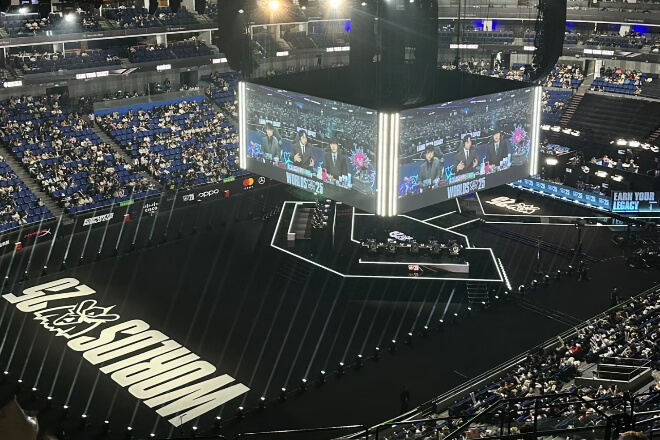
When LED floor screens are integrated into the event information system, the battle situation is no longer just “displayed on the screen,” but directly “laid out in the organiser space and seen.”
First, the ground can dynamically display scores and changes in pace. For example, after each round won, the energy bar on the floor tile screen will tilt and extend to one side.
Or use color diffusion to represent the accumulation of advantages, allowing the audience not only to “see the score change,” but also to “feel the situation moving.”
Second, battle data and visual effects can be presented synchronously.
When an economic advantage expands, a winning streak occurs, or key equipment is acquired, the ground can simultaneously trigger particle diffusion, ripple impact.
Or area highlighting, transforming abstract data into visualized “energy feedback,” making the information more intuitive.
At the same time, this design significantly enhances the visual impact of crucial moments.
For example, in match point or endgame duels, a sudden contraction of the ground’s light effects, rapid color changes.
And accelerated pace flashing will instantly make the entire audience realize “this is the decisive moment,” directly raising their emotions.
Even more interestingly, this method of information expression allows the audience to almost “feel the data” rather than “read the data.”
Which side is stronger, whether the tide has turned, and whether the match has reached its climax can all be intuitively judged through changes in the ground.
Simply put, LED floor screens transform the presentation of the battle situation from simply watching numerical changes to “being on the scene of the change.”
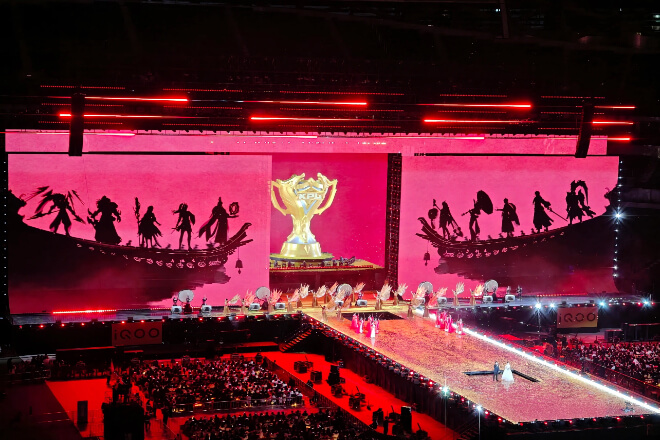
In esports events, the audience experience is not just about “watching the game,” but about “feeling the game along with it.”
The value of Écrans de sol LED lies in their ability to extend this feeling from the screen to the entire ground space.
First, the floor tile screens can trigger special effects changes in sync with the pace of the game. When the game enters a stable phase, the ground visuals may maintain a calm, tactical style;
Once the pace accelerates, the visuals gradually increase in dynamism, such as accelerated light flow and energy diffusion, allowing the audience to visually perceive “an impending battle.”
Second, key kills can trigger instant visual feedback. For example, when an ACE, headshot kill, or a reversal in a clutch situation occurs, a shockwave, shattering and spreading, or team logos flash instantly appear on the ground.
This “instant response” creates a strong sense of participation for the audience, as if the entire stage is “applauding this play.”
Simultaneously, this design significantly enhances the emotional resonance of the audience. When the screen, lights, and floor respond to the rhythm of the game simultaneously, the audience’s emotions are no longer scattered.
Instead, they are unified and driven—holding their breath together in tension, cheering together in moments of elation, creating a strong collective atmosphere.
Even more interestingly, this interaction isn’t about the audience “operating” the stage, but rather the stage “responding to the game.”
Although the audience doesn’t directly participate in the game, through visual feedback, they feel as if they are in the energy field of the match.
Simply put, the change brought about by LED floor screens is: transforming the audience from “spectators” into “people surrounded by the emotions of the game.”
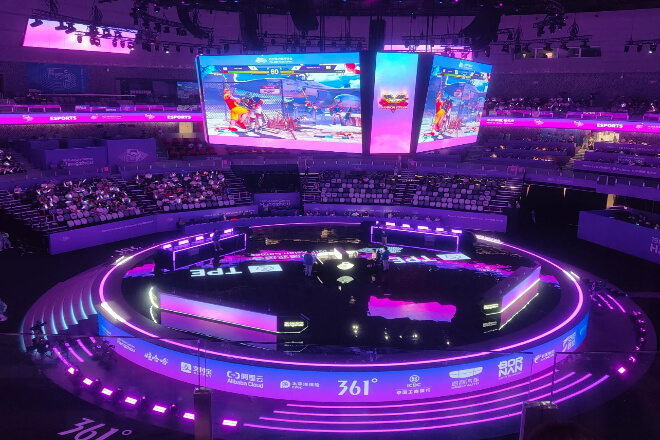
In international events of the Mid-Season Invitational level, stage visuals are not just about being “good-looking,” but about achieving an effect—the audience immediately recognizes: this is MSI.
Firstly, the Écrans de sol LED et organiser lighting will “speak the same visual language.”
For example, the floor represents the flow of energy, the background screen represents the team battles, and the lighting represents the emotional fluctuations.
The three elements collaborate within a unified “visual sound system,” transforming the stage from a cohesive assembly into a complete, “living space.”
Secondly, it enhances the recognizability of the event’s theme. For example, MSI’s common concepts like “global competition,” “energy core,” and “regional clashes” can be visually visualized through the LED floor display:
When a player enters, it’s as if they’re stepping onto an “energy map”; as the match begins, the light patterns on the ground seem to ignite and spread outwards—viewers can grasp the theme without even reading the text.
Simultaneously, it makes the broadcast footage more valuable. When the camera zooms in on a player’s movement.
The ground isn’t empty but dynamically flowing, a visually perfect element for creating short video highlights: even a one-second edit looks like a blockbuster trailer.
More interestingly, many international viewers remember MSI not necessarily for a specific match, but for the feeling that “the stage floor was constantly glowing, flowing, and breathing.”
In short, the role of LED floor display here is not just about building a stage, but about creating a “visual fingerprint” for the event.


 English
  Español
  简体中文
简体中文  Français
  日本語
日本語  한국어
한국어  العربية