

When purchasing an Affichage LED, the quote provided by a supplier often represents only a portion of the total cost.
Once the screen is acquired, there are still expenses for transportation, installation, commissioning, and even long-term maintenance.
If you only account for the price of the display screen itself during the initial planning phase, the project budget is likely to spiral upward. So, how should the actual procurement cost of an LED display project really be calculated?

Suppose a company plans to purchase an Affichage LED with an area of 50 square meters.
If the supplier quotes 5,000 yuan per square meter, the preliminary equipment budget would be 250,000 yuan.
The calculation seems simple enough, but does this 250,000 yuan truly represent the total expenditure for the project?
Not necessarily.
An LED display project typically involves multiple stages.
Beyond the screen itself, costs may include control systems, video processors, power distribution equipment, steel structural frameworks, transportation, installation, and commissioning.
Some projects may also require additional work, such as reinforcing walls, upgrading electrical infrastructure, or modifying the on-site environment.
Furthermore, the scope of quotes can vary between suppliers. Some quotes may cover only the display modules and cabinets, while others might include certain control equipment and installation services.
If you compare only the final figures, you might end up with a scenario where a seemingly low-priced option actually leads to a series of additional, unforeseen costs.
Therefore, when calculating the procurement cost of an LED display, it is essential to clarify a key concept:
The “actual procurement cost” encompasses the total investment required from the initial equipment purchase through to final project delivery—it is not merely the unit price of the screen.

The display screen itself usually constitutes the largest share of the project budget and serves as the starting point for cost accounting.
The most basic calculation method is:
Equipment cost = Display area × Unit price per square meter
For example, if a project requires the installation of an LED display measuring 10 meters wide by 5 meters high.
The actual display area is 50 square meters. If the equipment is quoted at 5,000 yuan per square meter, then:
50 square meters × 5,000 yuan = 250,000 yuan.
However, this is merely a preliminary estimate. There are many other factors that influence the actual price of LED display equipment.
Pixel pitch directly affects image detail and fineness; it also determines the number of LED beads required per unit area, which in turn influences production costs.
Generally, a smaller pixel pitch results in higher product costs. Therefore, businesses should select the appropriate specifications based on the intended viewing distance, rather than simply pursuing the smallest possible pixel pitch.
2). Screen type and usage environment
Indoor, outdoor, transparent, et écrans LED flexibles differ in terms of structural design, materials, and protection requirements—factors that naturally lead to price variations.
3). Core components
Elements such as LED beads, driver solutions, source de courant units, cabinet materials, and thermal management designs all impact both the product’s price and its operational performance.
Consequently, when calculating the cost of LED display equipment, one should not merely look at the total area and unit price;
Rather, the specific product specifications, hardware configurations, and the exact scope of the quotation must also be itemized.
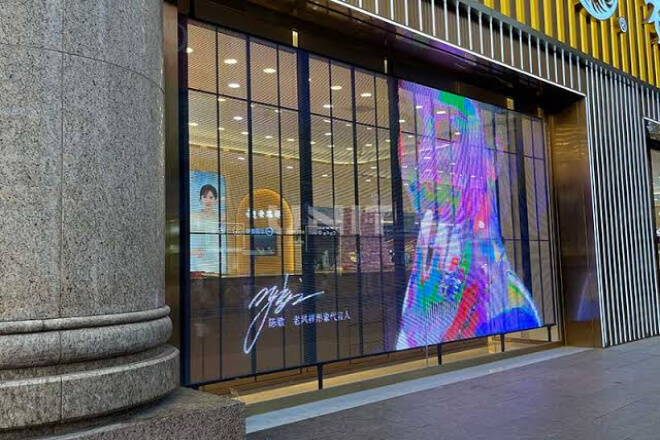
If the LED display is the “star” of the project, then the supporting systems and installation process are the “behind-the-scenes team” that ensures everything functions correctly.
Failing to account for these costs in advance is a common cause of budget overruns.
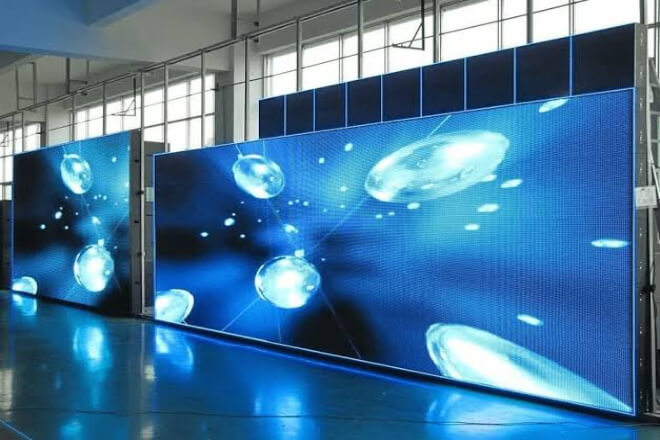
An LED display project does not conclude simply upon installation. Once in operation, the equipment requires electricity, ongoing maintenance, and technical support.
If a business considers only the procurement and installation costs while overlooking long-term operational expenses, it becomes difficult to accurately assess whether the investment is truly cost-effective.
First, consider electricity costs.
The power consumption of an LED display is influenced by factors such as screen size, luminosité, displayed content, operating hours, and product design.
When calculating actual costs, use the equipment’s *average* power consumption rather than its *maximum* power rating to estimate daily usage.
The basic calculation formula is:
Electricity consumption = Average power (kW) × Daily operating hours × Number of operating days
For example, if a display has an average power consumption of 5 kW, operates for 10 hours a day, and runs for 300 days a year, the annual electricity consumption would be approximately 15,000 kWh.
Multiplying this by the local electricity rate yields an estimate for the annual electricity cost.
Next, consider maintenance costs.
Businesses must account for expenses related to spare parts, repairs, labor, and routine inspections.
Long-term expenditures can vary based on the specific maintenance requirements and the ease of repair for different products.
Finally, consider warranty and technical support. Before making a purchase, clarify the warranty period, the scope of service, response protocols.
And whether costs for labor, transportation, and spare parts are billed separately.
It is worth noting that a lower initial equipment price does not necessarily guarantee lower long-term ownership costs.
For commercial projects requiring long-term operation, factors such as stability, energy consumption, and maintenance efficiency should also be considered in the procurement decision-making process.
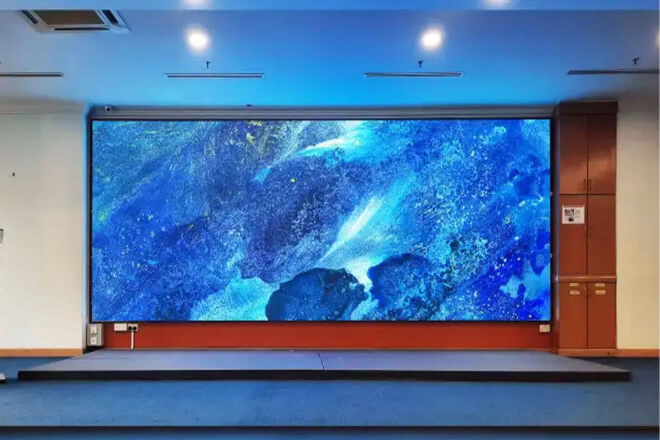
Once the various expenses are identified, they can be categorized to create a consolidated cost schedule.
This facilitates internal approval processes and makes it easier to compare quotations from different suppliers.


 English
 Español
 简体中文
 Français
 日本語
 한국어
 العربية