

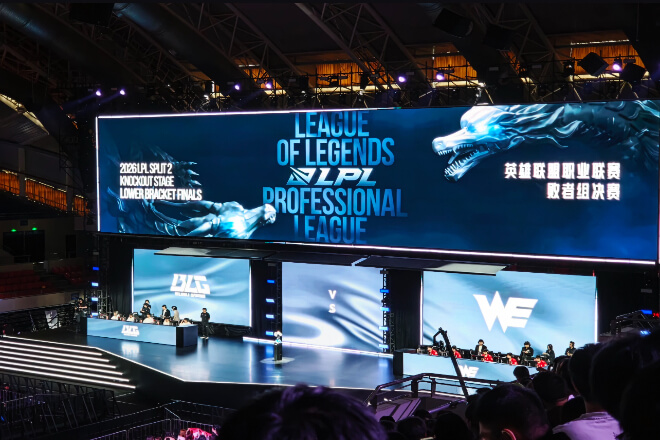
For scenarios like command centers, monitoring centers, and dispatch halls, the most important indicator for Afficheurs LED is often not “how dazzling,” but “how stable.”
After all, if the screen suddenly goes black at a critical moment, even the best image quality is meaningless.
First, high-quality LED chips and driver ICs are used to ensure long-term stable operation.
The core of LED display effect comes from the LED chips and driver ICs, which directly affect luminosité consistency, color performance, and lifespan.
High-quality hardware can effectively reduce problems such as dead pixels, bright and dark lines, and color deviation, ensuring long-term stable image output.
For example, in a 24/7 monitoring center, large screens continuously display massive amounts of data and monitoring footage daily.
High-quality components can significantly reduce performance degradation caused by long-term operation.
Secondly, they support continuous operation for extended periods, meeting the needs of critical scenarios. Many command centers require year-round operation, with screens frequently in continuous use.
Highly stable LED systems can withstand prolonged high-load operation, avoiding failures due to overheating or hardware aging.
Simply put: ordinary screens prioritize “display capability”; professional command center screens prioritize “always online.”
Simultaneously, this reduces failure rates and maintenance costs, improving overall operational efficiency.
Stable equipment means fewer repairs and shorter downtime, allowing maintenance personnel to focus more on operational support rather than frequently dealing with equipment issues.
To put it more interestingly, the command center’s large screen is like the goalkeeper on a football team. Its presence may be low-key most of the time, but it absolutely cannot fail in critical moments.
Finally, from a long-term operational perspective, while highly stable hardware requires a higher initial investment.
It significantly reduces subsequent maintenance and replacement costs, achieving a higher overall value for money.
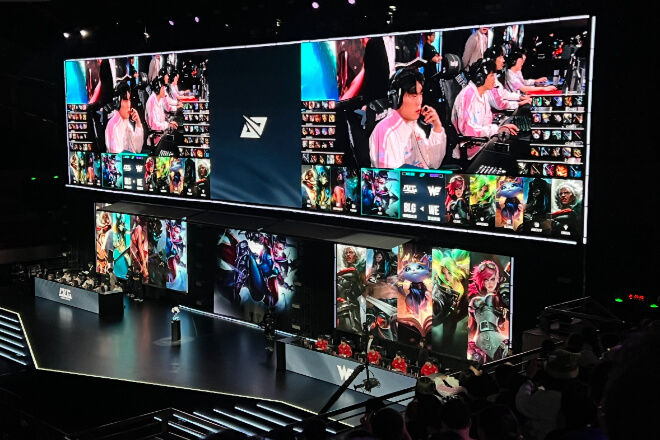
For LED displays that require long-term operation, the “hidden killer” affecting stability is often not the content, but temperature.
Insufficient heat dissipation keeps the equipment at high temperatures for extended periods, affecting display quality, potentially shortening its lifespan, and increasing the risk of failure.
First, optimize the cabinet structure and cooling design to improve overall heat dissipation efficiency. Professional LED display systems optimize cabinet layout, airflow design, and air circulation to ensure rapid heat dissipation.
A well-designed cooling structure not only reduces internal equipment temperature but also maintains a more balanced operating state for each module.
For example, in large command centers, large screens often need to operate 24/7. If heat cannot be dissipated from the cabinet in time, localized temperature increases can easily affect equipment stability.
Second, prevent overheating during prolonged operation to ensure stable display quality. Excessive temperature can lead to luminosité degradation, color deviation, and even component performance degradation.
Combining active and passive cooling allows the display to maintain stable output even under high load.
Simply put: The fact that equipment can operate continuously does not mean it is suitable for continuous high-temperature operation.
A good heat dissipation system is essentially a “temperature management system” that ensures long-term stable operation of the LED screen.
This extends the screen’s lifespan and reduces long-term operating costs.
The more stable the temperature control, the slower the aging of core components such as LED chips, alimentations, and driver ICs.
This not only helps reduce the failure rate but also extends the overall system’s lifespan.
To put it simply, LED screens are somewhat like athletes. They can handle long hours of high-intensity work without problems, but if they’re constantly in a “feverish” state.
Their performance and lifespan will be affected. The heat dissipation system acts as their “fitness coach” and “cooling supply station.”
Finally, for monitoring centers, command centers, and data centers operating 24/7, efficient heat dissipation is not only a guarantee of performance but also a crucial component of system reliability.
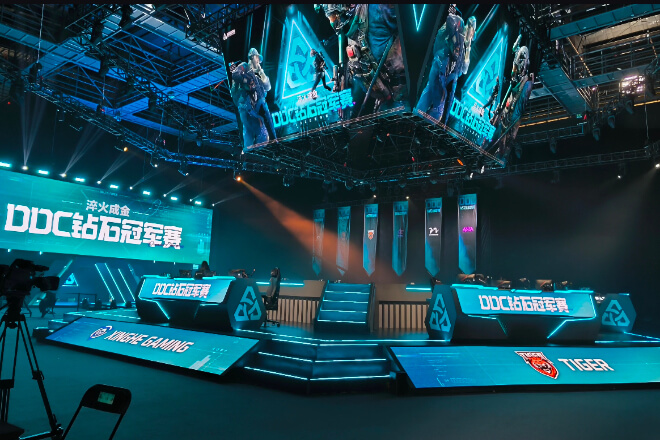
For large Affichage LED systems, relying on manual power on/off, brightness adjustments, and troubleshooting every day is not only cumbersome but also prone to various “minor accidents.”
The role of an intelligent control system is to transform the LED screen from a “device that needs care” into a “device that can manage itself.”
Firstly, automated operation is achieved through timed power on/off and luminosité adjustment.
The system can be pre-programmed with operating schedules, automatically powering on and off, switching content, and intelligently adjusting brightness based on ambient light.
For example, during the day when sunlight is strong, the screen automatically increases brightness; at night when the environment is dark, the screen automatically decreases brightness.
No need for dedicated staff to monitor the screens; the system manages everything perfectly on its own.
Secondly, it monitors operational status in real time, proactively identifying potential problems.
The intelligent control platform continuously monitors temperature, source de courant, signal transmission, and equipment status. Once an anomaly is detected, it issues an immediate warning.
Simply put: previously, you only found out when the screen broke down; now, the system alerts you to a potential problem before it even “gets sick.”
Simultaneously, it improves operational efficiency and reduces manual maintenance workload.
Administrators can remotely view equipment status, adjust parameters, and publish content via a computer or a backend platform.
Even managing dozens or hundreds of screens eliminates the need for on-site operation.
To put it more interestingly: managing LED screens used to be like caring for a constantly monitored “child”; now it’s more like having a 24/7 online, never-missing “intelligent butler.”
It starts and finishes, gets off work on time; it automatically adjusts its brightness when it’s too high and reports any abnormalities; it’s even more punctual than many people.
Finally, through intelligent management, it not only improves operational stability but also reduces human error, making the entire display system more efficient and reliable.
The ideal situation for an Écran d'affichage LED is, of course, never experiencing a failure.
However, in actual operation, what’s more important is often not “whether a problem will occur,” but whether it can be quickly restored when a problem does occur.
Therefore, a comprehensive maintenance and backup mechanism is like preparing an “emergency plan” for the LED display screen system.
First, adopting a modular design facilitates rapid replacement of faulty components.
Modern LED displays typically use a modular structure design. When a module malfunctions, there’s no need to disassemble the entire screen; simply replacing the corresponding module restores normal display.
For example, if a display area malfunctions, maintenance personnel can quickly replace the module, like replacing building blocks, without having the entire screen “stop working and waiting for repairs.”
Second, equipping it with a backup power supply and backup signal system enhances operational reliability.
In critical scenarios, in addition to the main system, backup power supplies and backup signal links are typically configured. When the main system malfunctions, the backup system can quickly take over, ensuring an uninterrupted display.
Simply put: just like an airplane has a backup engine, LED display systems also need their own “backup plan.”
This also reduces the impact of sudden failures on operations, ensuring the continuity of critical business.
Pour sporting events, command centers, large-scale events, or commercial operations, even a few minutes of screen blackout can have a significant impact.
A robust backup mechanism can minimize fault recovery time and avoid disrupting normal operations.
To put it more interestingly, an excellent LED display maintenance team is somewhat like a racetrack’s maintenance team.
The problem is barely apparent when personnel are already on-site; the module is just alarming when spare parts are ready; the system is already back to normal before the audience even notices the anomaly.
Finally, through modular maintenance, the combination of backup power supplies and backup signal systems, LED displays can possess stronger fault tolerance and emergency response capabilities.
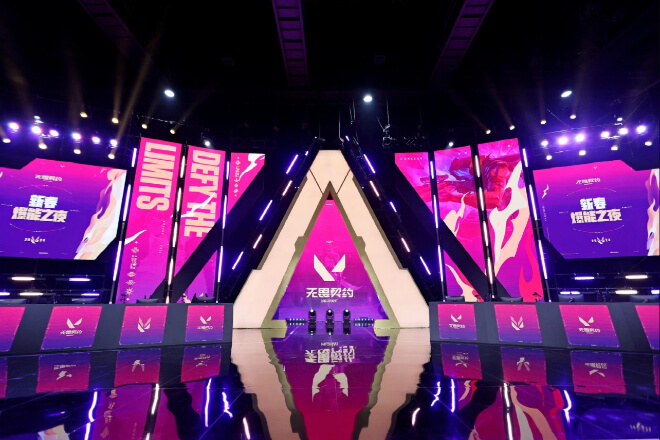
For long-term operating Affichage LED systems, “always on” does not equate to “always efficient.”
A truly mature operational approach involves displaying different content on screens at different times, consuming varying amounts of energy to achieve refined management.
First, intelligent switching between competitions, live streams, and events allows for automatic matching based on the scenario. The system can switch content between different operational states based on preset rules or real-time scheduling:
During competitions: Main screen + data + replay information
During live streams: Multi-camera shots + real-time subtitles
During events: Promotional content + interactive information
In short: It’s not about “live streaming the same content all the time,” but rather “doing different things in different scenarios.”
Second, reduced luminosité and energy consumption during off-peak hours achieve energy-efficient operation.
When there are fewer viewers or during off-peak hours at night, the system automatically reduces brightness and minimizes high-load operation, thereby reducing overall energy consumption.
Achieving a more economical operating mode without affecting basic display quality.
For example: During peak daytime traffic, the screen operates at full brightness; during low-traffic periods at night, it automatically enters energy-saving mode, with softer brightness and reduced power consumption.
Simultaneously, balancing operational efficiency and operating costs allows the equipment to “work smarter.”
By combining content scheduling and energy management, LED systems can ensure visual quality while avoiding unnecessary energy waste. In the long run, this not only reduces operating costs but also extends equipment lifespan.
To put it more interestingly: Previously, LED screens were like “lights always on at maximum power.”
Now they’re more like “intelligent devices that automatically adjust their status based on the time,” outputting full power when needed and quietly conserving energy when quiet.


 English
  Español
  简体中文
简体中文  Français
  日本語
日本語  한국어
한국어  العربية