
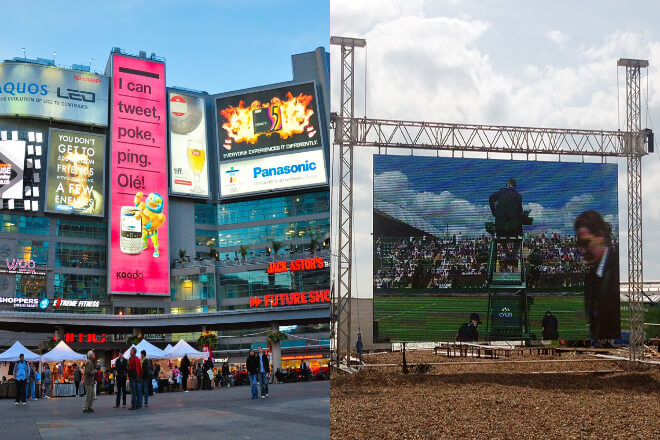
In daily life and work, you may often see various types of pantallas LED: the dazzling large screens in Centros comerciales, the cool background screens on concert etapas, and even the high-definition data screens in conference centers.
But have you ever wondered if these screens are actually different? Why do some screens need to be permanently installed, while others can be moved around as needed? What are the differences between fixed LED displays and Alquiler de pantallas LED?
This article will help you understand the differences between these two types of LED displays in terms of application scenarios, structural design, performance, maintenance methods, and cost logic, so you can easily understand how to choose the right one.
The biggest difference between fixed LED displays and rental LED displays lies in their usage methods and scenarios.
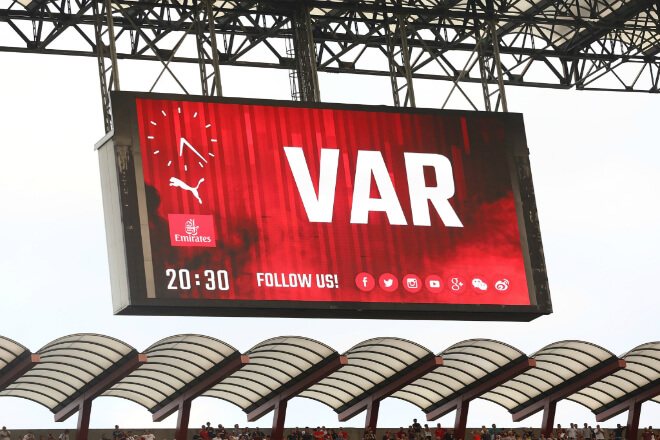
Fixed LED displays are generally installed in commercial complexes, conference centers, estadios, or command centers, and are basically not moved after installation.
Their characteristics are long-term use and stable reliability. For example, advertising screens in Centros comerciales and scoreboards in stadiums are installed and used continuously without frequent relocation, so they require high durability and stability.
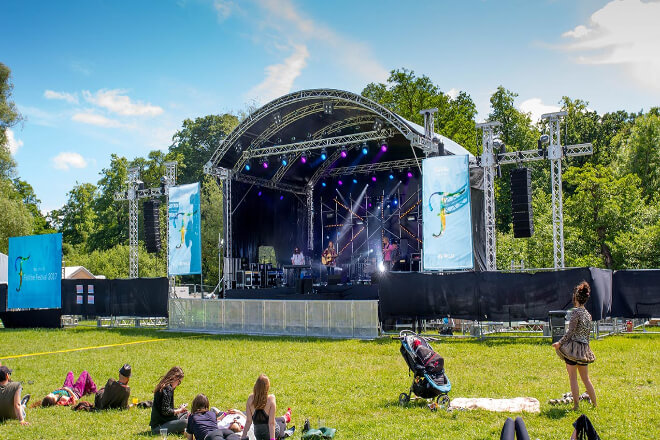
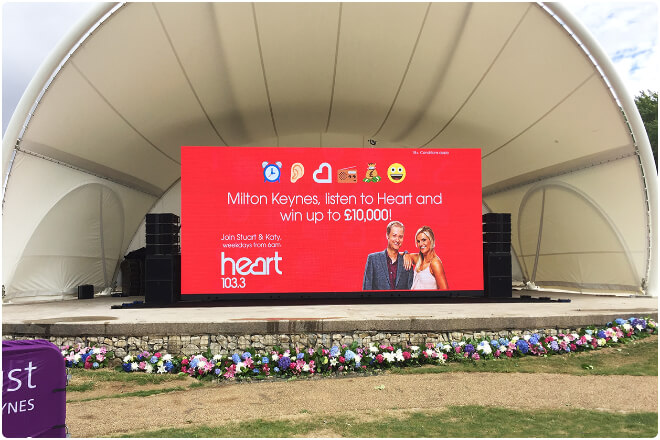
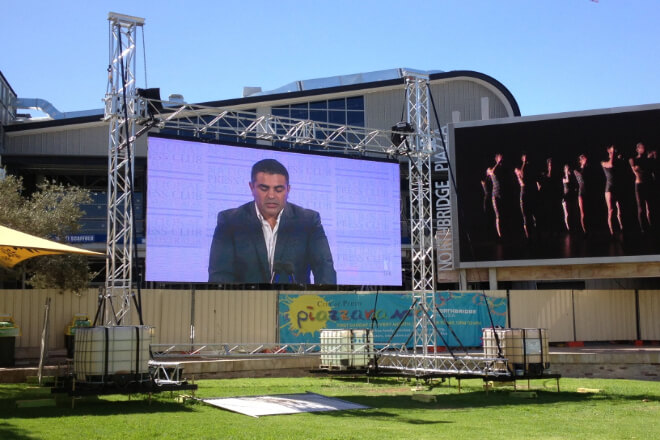
Alquiler de pantallas LED, on the other hand, are used more in concerts, exhibiciones, press conferences, or temporary events, with short usage times and requiring frequent transportation and installation.
Their advantages are lightness, flexibility, and easy assembly. They can quickly set up escenario backgrounds or exhibition display screens, and can be disassembled and taken away after the event, making them very suitable for temporary scenarios.
Simply put, fixed LED displays are “installed and used continuously,” emphasizing stability and durability.
Rental LED displays are “used as needed,” emphasizing flexibility and convenience. Understanding this difference makes it easier to make a decision based on your needs.
Fixed LED displays and rental LED displays have significant differences in structural design.
And installation methods, which directly affect the user experience, construction difficulty, and cost.
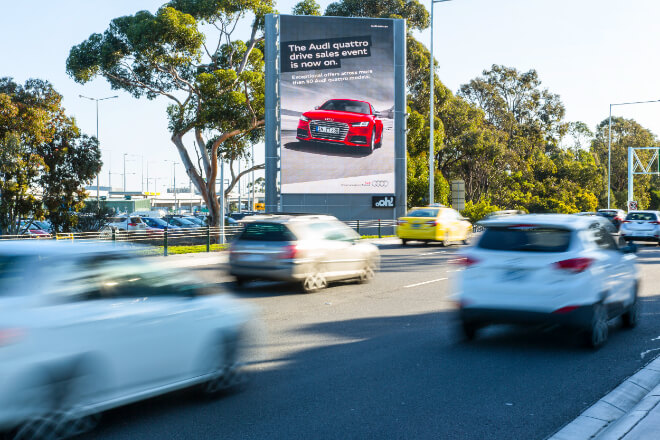
Fixed LED displays focus more on stability and customization. They usually require steel structure support or are directly installed on the wall. Once installed, they are basically not moved again.
This design ensures the safety and stability of the screen during long-term operation, making it very suitable for long-term use scenarios such as shopping malls, conference centers, and stadiums.
However, precisely because it prioritizes stability, its installation process is usually more complex, requiring a professional construction team, and the installation time is relatively longer.
In contrast, rental LED displays are entirely geared towards quick assembly and disassembly.
To accommodate short-term events such as concerts, exhibitions, and product launches, their cabinet design is lighter, uses modular splicing.
And employs a quick-lock structure, allowing several people to complete the installation and removal of a large screen in a very short time.
This design not only improves installation efficiency but also significantly reduces labor costs, while facilitating frequent transportation and multi-event use.
Simply put: fixed LED screens “prioritize stability,” designed for long-term use after installation; rental LED screens “prioritize speed,” requiring frequent disassembly and transportation.
When choosing a screen, in addition to considering the display effect, you should also consider your usage scenario and ease of installation.
Fixed LED displays and rental LED displays also differ in their performance focus, which is closely related to their usage scenarios.
Fixed LED displays primarily pursue long-term stable operation and image consistency.
Because they usually need to operate continuously for extended periods in places such as Centros comerciales, conference centers, or stadiums, the screen’s stability and display accuracy are very important.
When viewers or users watch for extended periods, the image must remain uniform, the colors must be accurate, and there should be no flickering or inconsistent brightness to ensure a good visual experience.
Rental LED displays, on the other hand, emphasize high frecuencias de actualización y escenario shooting effects.
In concerts, exhibiciones, and other events, the screen must not only provide clear images for the live audience but also consider the effect when filmed by television or cameras.
Therefore, a high refresh rate is necessary to reduce flickering and motion blur.
At the same time, rental screens require frequent disassembly and transportation, so structural reliability and durability are also crucial.
Even after multiple transports and repeated use, they must maintain stable display performance.
In addition, the two types of screens differ in their emphasis on brightness and protection levels.
Fixed LED displays usually pursue balanced brightness and all-weather protection (dustproof, moisture-proof) to ensure long-term stable operation.
While rental LED displays focus more on adjustable brightness and impact and vibration resistance to adapt to stage lighting changes and frequent handling.
In general, fixed LED screens prioritize “stability and precision,” while rental LED screens prioritize “speed, brightness, and durability.”
Understanding this allows you to choose the right screen based on your event type and scenario.
Fixed and rental LED displays also have significant differences in maintenance methods and service life, which directly affect the daily user experience and overall investment costs.
Maintenance of fixed LED displays is usually relatively easy, but the maintenance method should be considered in advance.
It can be either front maintenance or rear maintenance: front maintenance is performed from the front of the screen, suitable for places with limited installation space.
Rear maintenance is performed from the back, more suitable for large, fixed-installation venues.
Because fixed screens are mainly for long-term use, once installed, the frequency of daily maintenance is low.
But each maintenance needs to ensure the long-term stable operation of the screen, so quality and reliability are very important.
Rental LED displays present more maintenance challenges. Because they require frequent transportation, disassembly, and reuse.
The easily damaged components of the screen (such as modules, driver boards, power interfaces, etc.) must be easy to replace.
High-intensity use means high maintenance frequency, and operators need to quickly check and replace problematic components to ensure that the screen can be used smoothly for each event.
From a cost perspective, maintenance costs have a significant impact on the overall investment.
Fixed LED screens have a relatively high initial investment, but less maintenance in the later stages, making the overall cost more controllable over the long term.
Rental LED screens may have a lower initial investment, but frequent transportation, disassembly.
And maintenance will increase labor and maintenance costs, requiring a balance between usage frequency and event type.
In general, fixed screens are suitable for “long-term worry-free use after installation,” while rental screens are suitable for “flexible response and multi-event use.”
Understanding this can help buyers more reasonably plan their budget and maintenance plan.
Fixed and rental LED displays also have significant differences in cost and investment logic, which directly affects purchasing decisions.
The characteristic of fixed LED displays is that the initial investment is high, but the long-term usage cost can be spread out.
The one-time investment may be more expensive than rental screens, but because the screen is used in a fixed location for a long time, the annual usage cost is actually very low, making it suitable as an “asset-type investment.”
After purchasing, you can use it for many years; it’s stable and reliable, and the long-term maintenance costs are relatively manageable.
Rental LED displays, on the other hand, emphasize flexible retrieval and frequent use. Although the initial investment for each rental or purchase is not low, it is suitable for multiple events and high turnover needs.
The value of a leased screen lies in its turnover rate and frequency of use: if you need to participate in many temporary events every year, a leased screen can be moved as needed, avoiding long-term capital tie-up and storage costs.
It’s important to note that “cheap price” doesn’t equal “more cost-effective.”
For example, a cheap leased screen, if used frequently, may accumulate higher transportation and maintenance costs than a fixed screen.
While a more expensive fixed screen, if used for a long time, may be more cost-effective overall.
The key to choosing the right screen is to consider your usage cycle, scenario needs, and budget, not just the single purchase price.
In short, fixed screens are suitable for long-term investment, with a higher initial investment but lower long-term costs.
Leased screens are suitable for short-term events, multiple uses, and flexible allocation of funds.
Understanding this logic will lead to more rational purchasing decisions and prevent spending money without actually saving on costs.

When choosing LED displays, many buyers easily fall into some traps. If you don’t pay attention, you may spend money but not get the product that truly suits your needs.
Misconception 1: Using leased products for long-term fixed installation.
Some people think that leased screens are “cheap and flexible,” so they directly use them for long-term fixed installation.
In fact, this is very risky: leased screens are designed for frequent transportation and short-term use.
Long-term fixed installation may lead to accelerated structural wear and tear, reduced lifespan, and even increased maintenance costs.
Misconception 2: Ignoring the hidden costs brought about by usage frequency and scenario changes.
When choosing a screen, you shouldn’t only consider the initial investment, but also the long-term costs such as transportation, installation and dismantling, maintenance, and power consumption.
In scenarios with high usage frequency, choosing an unsuitable screen may result in higher hidden costs than seemingly cheaper products.
Misconception 3: Only looking at resolución and price, ignoring structure and service capabilities.
Many people only focus on the pixel density and price of the screen, but ignore the cabinet structure, splicing accuracy, protection level, and after-sales service capabilities.
These factors directly affect the user experience and subsequent maintenance. Ignoring them may lead to problems such as screen flickering, color differences, or maintenance difficulties.
Misconception 4: The impact of supplier selection on later operations.
The stability, repair response speed, and parts supply of LED displays are all closely related to the supplier.
Choosing an unreliable supplier may result in long repair cycles, high costs, and even affect the effectiveness of events and operations.
 English
  Español
  简体中文
简体中文  Français
  日本語
日本語  한국어
한국어  العربية