

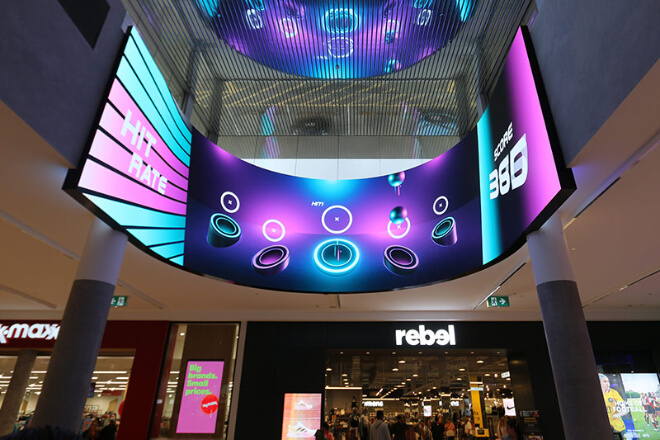
On a street, if ten stores look almost identical, customers often just “randomly walk into one.” In this case, the role of pantallas LED is very direct: to make your store the first to be seen.
First, there’s the difference brought by dynamic images. Most stores still rely on static posters and light boxes, while an LED screen, once animated, stands out prominently among a row of “static images.”
Even a simple image change or slight animation will subconsciously draw attention.
Second, there’s the advantage of attention among similar stores. For example, in a row of convenience stores or pharmacies, if only one has a dynamic screen, it easily becomes the “visual focus.”
Customers may not immediately enter the store, but they’re likely to remember the one that “looks different” first.
Another key is creating an effect that’s “different from a distance.” LED screens typically have higher brillo and clearer images, making them recognizable from a distance.
Compared to ordinary signs, it’s more like a “moving sign,” attracting attention from afar.
To give a more intuitive analogy: in a row of similar stores, an LED display is like a “moving window.”
While others display photos, it’s a short video, naturally more likely to be clicked on at a glance.
Simply put, the difference it brings isn’t complex design, but three points: dynamism, highlights, and distinctiveness from a distance.
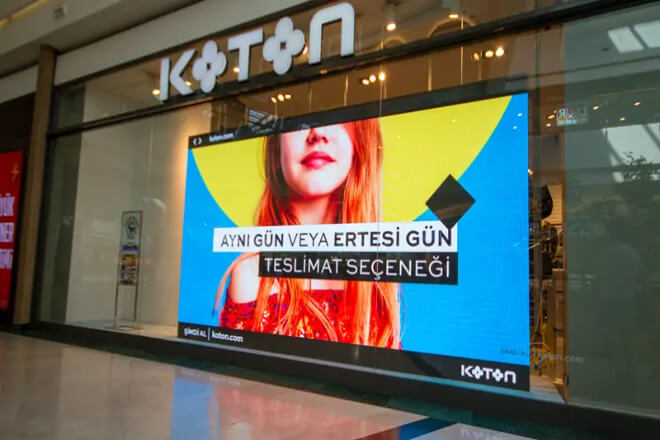
Many stores’ problem isn’t a lack of content, but rather that their content all looks similar.
The advantage of LED displays is that they allow brands to move from “everyone saying the same thing” to “speaking in their own way.”
Firstly, replacing single displays with videos and dynamic content. Static posters often only convey one point, while LED screens can use short videos, animations, and continuous visuals to tell a complete message.
For example, when selling products, some displays showcase prices, while others showcase usage scenarios or anecdotes—the difference in visual experience is striking.
Secondly, flexible updates are crucial to avoid becoming monotonous. If content remains unchanged, even the best visuals will fade into the background.
Therefore, the key to LED screens isn’t just their ability to display content, but their capacity for frequent changes.
Even small adjustments, such as changing the theme, rhythm, or a single line of text, can make a store feel “alive.”
Another key aspect is strengthening brand personality and expression. Some brands lean towards professionalism, using concise information and clear visuals.
Others appeal to a younger demographic, utilizing more dynamic effects and rhythmic content.
An LED screen is like a “tool of expression”—the focus isn’t on what’s displayed, but on how it’s displayed in a way that reflects your brand.
To illustrate more directly: two screens can feel like a manual being read, while another can feel like a story being told. Viewers are naturally more likely to remember the latter.
In short, avoiding homogenization hinges on three points: more engaging content, more frequent updates.
And a more personalized expression, making people immediately feel—”This place is a little different.”
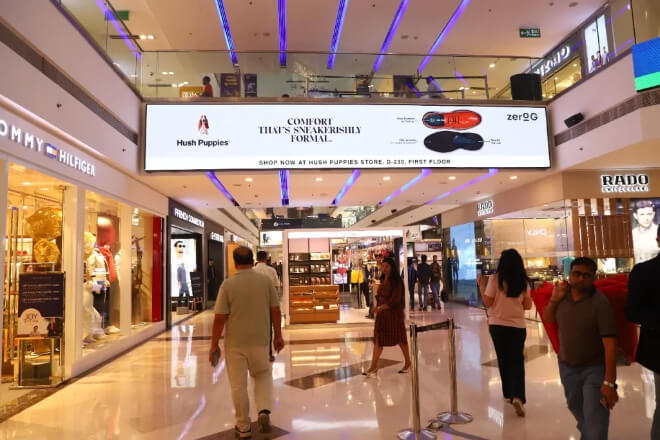
Many promotional campaigns don’t suffer from insufficient incentives; rather, they all look similar. This is where the value of pantallas LED lies: making the same campaign feel different.
First, they strengthen the campaign’s memorability through visual effects. For example, simply displaying “discount for purchases over a certain amount” is easily overlooked.
However, using dynamic visuals, rhythmic changes, or even simple animations makes it much easier for people to remember “this store is having a promotion.”
Sometimes, viewers don’t remember the specific discount, but rather the “active and engaging store.”
Second, they create a differentiated presentation in promotions. While others might use posters, you can use screens for slideshows, scene displays.
Or even demonstrations of product usage. The information itself may be the same, but different presentations create a clear distinction.
Another key aspect is increasing campaign appeal and engagement. LED screens can incorporate interactive prompts.
Such as QR code participation or limited-time offer reminders, encouraging customers to take action instead of just glancing at the screen.
Once there’s participation, the memory is deeper, rather than being forgotten immediately.
Finally, they make the campaign easier to remember. Dynamic visuals, continuous content, and rhythmic variations create a lasting impression in the customer’s mind.
Rather than fragmented information. Even a brief pause makes it easier to leave a lasting impression.
To illustrate, consider two events: some resemble a simple notice, while others feel like a short advertisement. The latter is naturally more memorable.
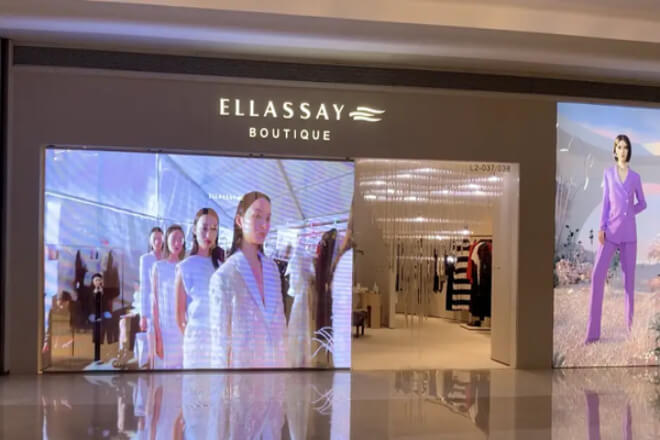
Many stores have a misconception: that a single attractive event establishes differentiation.
However, the reality is that customers see it and leave; what truly matters is the consistent, recurring feeling. This is where LED displays excel.
First, they continuously update content to maintain freshness. LED screens aren’t designed for “one-time use”; their content can be constantly adjusted.
Today it’s a promotion, tomorrow it could be new products, and a few days later it could be a holiday theme. Even small changes create the feeling that the store is always “moving,” not static.
Second, they consistently deliver a unified visual language. The key here isn’t always new tricks, but rather “stylish variation.”
For example, consistent color schemes, visual rhythms, and content structures allow customers to gradually develop a sense of recognition after seeing them multiple times.
They’ll know which brand it is without even seeing the name. This consistency is more important than a single stunning appearance.
Another key aspect is making differentiation a “daily presence.” When LED screens continuously function in stores, they no longer provide a one-off highlight but a stable visual experience.
Customers are exposed to the brand’s message every time they pass by, and this repetition deepens their impression.
Finally, it fosters stable brand memory. Short-term events lead to “remembering once,” while continuous content leads to “gradual familiarity.”
When customers see similar styles and expressions repeatedly, it’s easier to build trust and recognition.
To illustrate more intuitively: some stores are like “occasionally bright,” while others are like “always present.” LED displays are better suited for the latter.
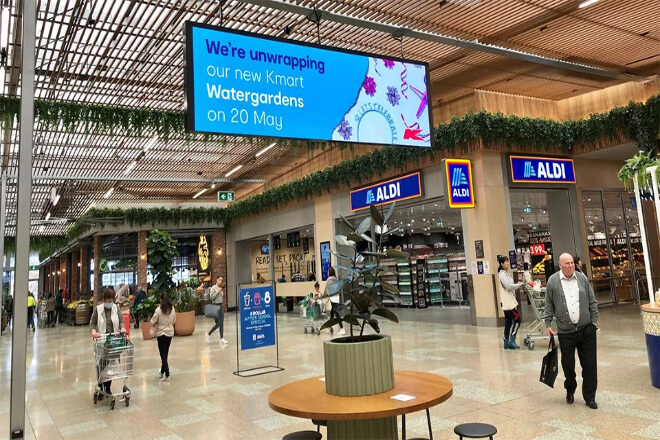
The worst situation for brands is: you recognize the brand in one place, but become unsure in another.
The value of LED displays lies in “connecting” different touchpoints, ensuring the brand always feels like a single person.
First, there’s the consistent visual presentation across multiple scenarios, including stores, events, and exhibiciones.
Whether in daily in-store displays or at offline events and exhibitions, LED screens can use the same visual logic.
For example, similar visual styles, content structures, and rhythmic delivery.
This creates a sense of familiarity for users in different settings, rather than feeling like they’re seeing a completely new brand each time.
Second, there’s consistency between online and offline content. For instance, the content displayed on in-store LED screens can maintain the same theme or visual style as social media and online advertisements.
When users see it online and then offline, they experience a sense of “matching,” and this consistency significantly strengthens memory.
Another key aspect is reinforcing brand recognition. Repeatedly seeing similar visual styles, such as consistent color schemes, dynamic methods.
Or content rhythms, gradually creates a conditioned reflex—seeing this style of expression immediately evokes the brand.
The high-frequency exposure of LED screens acts as a constant reminder.
Finally, it allows users to quickly recognize the brand in different scenarios. Whether in street-side stores, shopping mall atriums.
Or event venues, as long as the presentation is consistent, users don’t need to rethink their understanding to recognize the brand directly.
To put it more intuitively, good brand expression is like a person you can recognize at a glance, no matter the occasion or what they wear.
LED displays help brands establish this “stable brand recognition.”


 English
  Español
  简体中文
简体中文  Français
  日本語
日本語  한국어
한국어  العربية