

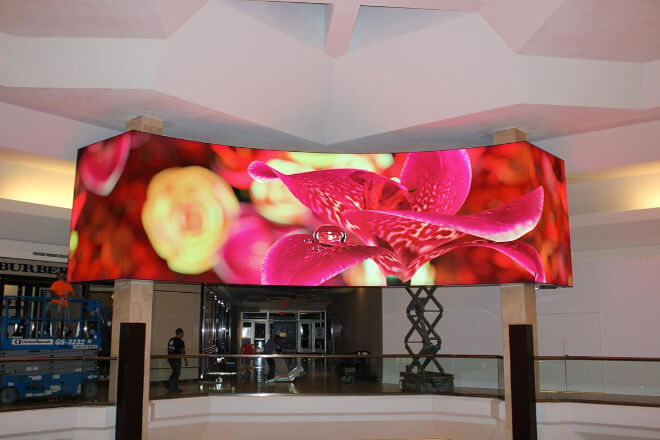
An LED display screen is like a marathon runner; it not only needs a good start but, more importantly, the ability to maintain it until the finish line.
After all, in many scenarios, the screen is lit continuously for hours, or even a whole day; a malfunction would be embarrassing.
First, check if it can support continuous operation for extended periods. Top-tier LED screens, even with “marathon” operation, will not dim, flicker, or develop dead pixels over time, maintaining a clear and stable image.
Next, observe whether problems such as black screens, flickering, or partial blackouts occur.
Small problems may initially be well-hidden, but after several hours of continuous playback, they emerge like mischievous sprites, causing disruption.
For example, during a large event, a sudden blackout can instantly damage the atmosphere and brand image.
Finally, long-term stability is crucial. After multiple power cycles and extended playback, does the screen brightness and color remain uniform.
And does the image maintain sharpness? This is like testing endurance; it’s not just about speed, but also stability.
Simply put, this standard asks: Is your LED screen a sprinter or a marathon runner? A screen that operates stably, continuously, and reliably is a truly worthwhile investment.
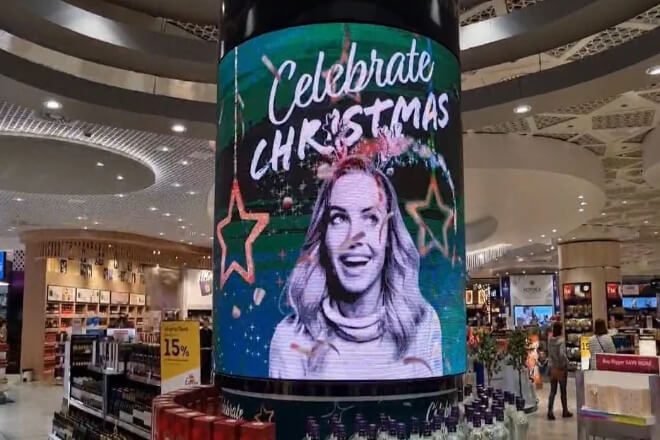
Imagine an LED display screen as an “adventurer”—its ability lies in its ability to perform flawlessly in both comfortable air-conditioned rooms and harsh outdoor environments.
First, consider its ability to seamlessly switch between indoor and outdoor environments. Indoor environments are stable, so screens perform well,
But outdoor environments are constantly changing: scorching sun, rain, and sandstorms can easily cause them to malfunction.
Then there’s the challenge of temperature and humidity. The sweltering heat of summer, the freezing cold of winter.
Or the high humidity of poolside or beach locations can all cause ordinary screens to fail.
A resilient LED screen, on the other hand, is like an “endurance champion,” consistently maintaining uniform brightness and stable color.
Furthermore, consider its ability to withstand environmental interference.
Some screens squint in strong light or fog up in humidity, instantly diminishing the user experience.
Excellent screens, however, are like “professional players,” consistently outputting images regardless of environmental changes, unaffected by external interference.
例如,一个 室内LED屏 在一个 购物中心 can easily handle daily playback, but the same model, placed on an outdoor soccer field.
Can still clearly display the score and advertisements under the blazing sun—a capability that earns it the “Best Performance of the Match” award.
In short, this standard asks: Is your LED screen a “delicate flower in a greenhouse” or a “hardcore performer that withstands all kinds of weather”?
Only screens that can remain stable in all environments are truly worth investing in.
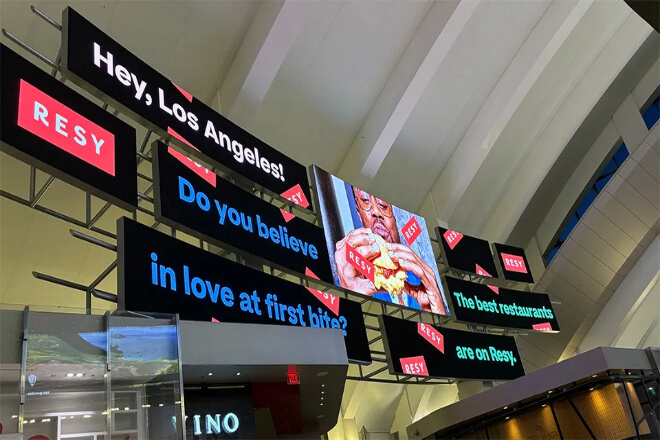
The quality of an LED display screen isn’t just about whether it “lights up,” but also how easily it “can be repaired after it breaks down.”
After all, time is money when equipment malfunctions, and the longer it’s delayed, the more it affects usability.
First, consider whether it uses a modular design. Simply put, it’s like disassembling the screen into individual “building blocks.”
If one part malfunctions, only the corresponding module needs to be replaced, instead of disassembling the entire screen. This makes repairs as quick and easy as “replacing a puzzle piece.”
Second, consider the efficiency of troubleshooting. Some screens require extensive troubleshooting or even shutdown for repairs when they malfunction.
While a good system can quickly pinpoint the problem, even “fixing only what’s broken,” minimizing the impact.
Here’s a practical scenario: a small section of a large screen in a 购物中心 suddenly goes dark.
If it’s a modular design, staff can quickly replace the corresponding module, and the problem might be solved before the audience even notices.
However, if maintenance is complex, the entire screen might need to be shut down, resulting in an awkward situation for everyone.
Finally, there’s the daily maintenance cost. This includes the convenience and cost-effectiveness of cleaning, testing, and parts replacement.
If each maintenance is time-consuming, labor-intensive, and costly, the long-term burden will be significant.
Simply put, this standard assesses whether the screen is a “headache-inducing problem” or an “easy-to-resolve issue.”
LED displays that are easy to maintain, respond quickly, and have controllable costs are truly the “worry-free” choice for long-term use.
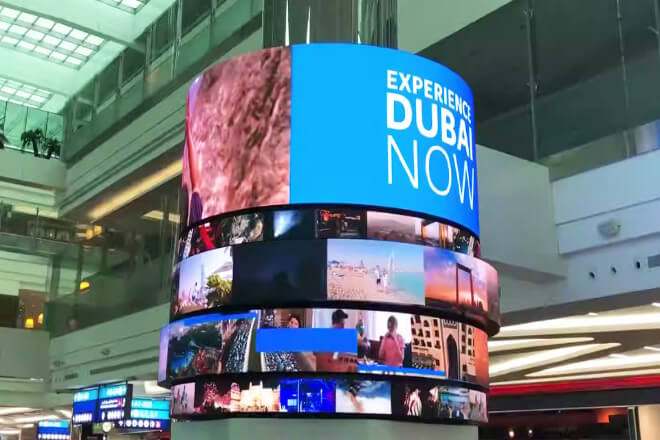
When an LED显示屏 is first installed, it usually looks great—bright, clear, and with vibrant colors.
But what truly differentiates them is whether they can maintain this state after a period of use.
First, check if the brightness noticeably decreases. Some screens initially shine brightly, but after prolonged use, they become like “running out of battery.”
Dimming overall and even exhibiting uneven 亮度 in certain areas, resulting in a noticeable difference in visual quality.
Secondly, color stability is crucial. Excellent LED screens maintain color uniformity even after long-term use, avoiding color casts, graying, or uneven warm/cool tones.
Screens with mediocre performance tend to become “color-blocked” over time, significantly degrading the viewing experience.
Furthermore, the consistency of the overall viewing experience is important. Whether the image remains clear and uniform after long-term use.
And whether issues like uneven brightness, color differences, or eye strain appear, directly impacts the viewer’s experience.
Especially in commercial displays or sporting events, inconsistent visuals appear unprofessional.
For example, two screens may look similar upon initial installation, but after six months, one may still maintain uniform brightness and stable color, remaining “on point.”
The other may have dimmed and developed color casts, appearing filtered from a distance—the difference is immediately apparent.
In short, this standard assesses whether a screen “starts impressively but then becomes mediocre,” or “remains consistently online.”
A screen that maintains consistent display over a long period is truly a good screen that can withstand the test of time.
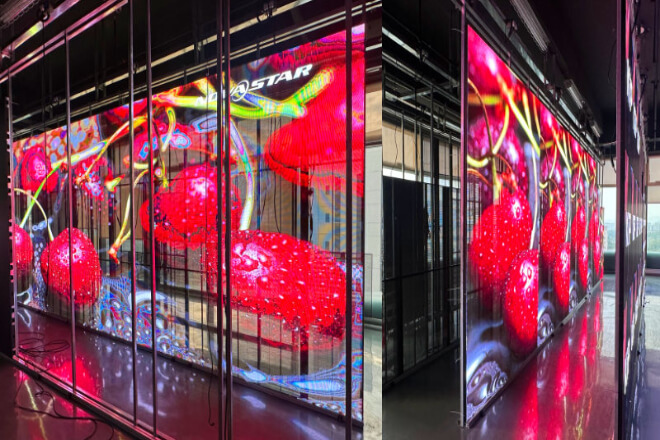
一个 LED显示屏 not only needs to be “bright,” but it also needs to be able to “manage itself,” especially in long-term operation.
The backend system and content management capabilities directly determine whether it can be a reliable partner.
First, consider the stability and reliability of the control system. A good screen’s control system is like an experienced driver.
No matter how long the playback lasts or how much content is switched, it can maintain stable control without suddenly “stalling out” or experiencing lag.
Second, consider the ease of content updates. Can operators easily upload new advertisements, adjust the playback order, and switch event information?
If each update requires a lot of effort, the screen becomes a “stubborn device with a high degree of operational difficulty,” resulting in low efficiency.
A system that supports remote or batch updates is like a screen equipped with intelligent navigation, making operation easy and effortless.
Finally, consider long-term operational support. Can the screen adapt to high-frequency daily use, regular content updates, and even seasonal event adjustments?
If so, it can truly become a core tool for venue or commercial operations, rather than a “decoration” that lights up only occasionally.
For a vivid example, in 体育馆 或者 购物广场, LED screens need to display match information, rotating advertisements, and interactive activities daily.
If the control system is stable and easy to update, the operations team can easily handle busy schedules, and the screen acts like a “well-behaved assistant,” supporting long-term operation.
Conversely, if the system is cumbersome or unstable, even the most beautiful screen will cause headaches.
Simply put, this standard is about whether your LED screen is a “short-term shining vase” or a “long-term reliable operational assistant.”
Only screens that support stable control and flexible management can truly safeguard long-term operation.


 English
  Español
  简体中文
简体中文  Français
  日本語
日本語  한국어
한국어  العربية