
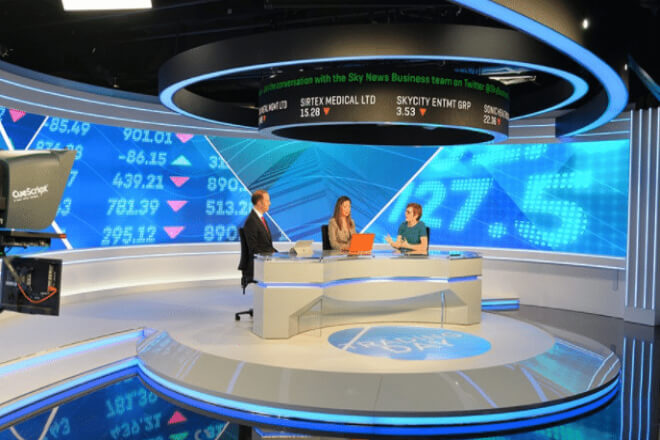
If you’ve ever watched a TV program behind the scenes, you might have noticed an interesting phenomenon:
The scenes on camera change faster and faster, but stage crews no longer need to frequently move various backdrops.
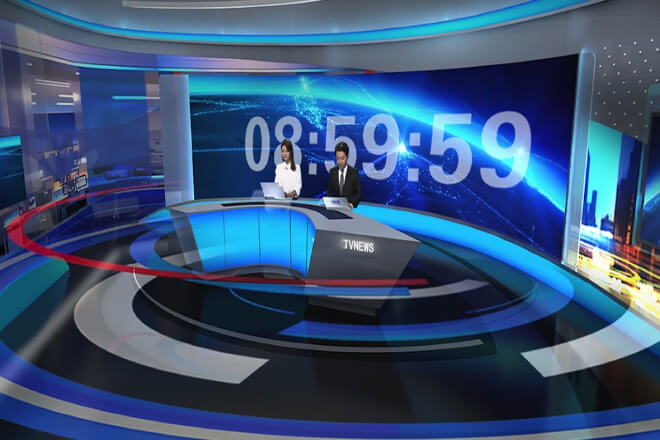
The reason is simple—more and more studios are replacing some traditional sets with LED显示屏.
In the past, changing a program’s theme often meant rebuilding the backdrop, adjusting props, and even requiring days of preparation.
Now, simply changing one set of visuals can quickly “change the look” of the same stage.
For example, news programs can use simple and professional digital backgrounds, entertainment programs can switch to cool dynamic visuals.
And interview programs can create different visual effects based on guests and the theme.
An LED screen is like a “magic wall” that can change at any time.
Besides flexibly switching scenes, LED displays enrich the visual effects of programs.
Dynamic images, high-definition picture quality, and creative design help programs create stronger visual memorability, allowing viewers to not only hear the content but also feel the atmosphere of the event.
More importantly, in the long run, LED displays can reduce the time and cost pressure of frequently setting up physical sets.
This flexibility is crucial for studios that need to constantly produce new programs and themes.
After all, television programs strive for continuous innovation, and the 阶段 cannot remain static.
LED displays are giving studios more possibilities—today it’s a news scene, tomorrow it can be a futuristic technology space.
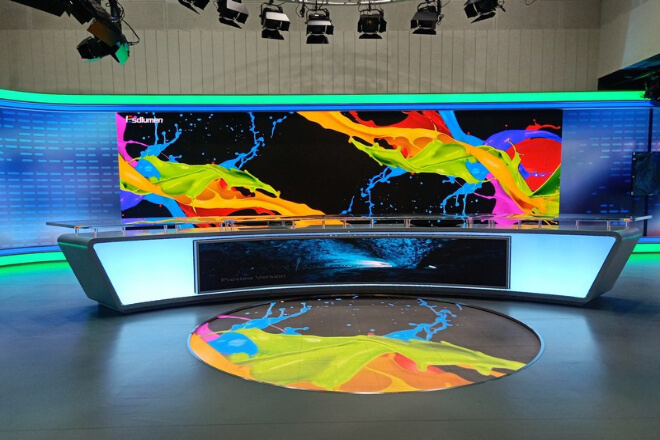
In the studio, LED displays not only face the live audience but also the most “discerning” audience—the cameras.
Sometimes, a screen that looks beautiful to the naked eye may reveal some minor problems when magnified by a high-definition lens.
Such as insufficient image detail, moiré patterns, or even affecting the live broadcast.
Therefore, when choosing an LED backdrop for a broadcast studio, one cannot only consider “how impressive it will be on camera,” but also “how it will look on camera.”
First, the appropriate 像素间距 needs to be selected based on the camera distance. If the anchor is close to the screen, or the program frequently uses close-up shots.
A small-pitch LED can present a more detailed image, making the background more realistic and natural;
Large broadcast studios, on the other hand, need to choose the appropriate specifications based on the 阶段 size and the shooting range.
Simultaneously, image quality is also crucial. Whether it’s a live news broadcast, an interview program, or a large-scale variety show.
The LED screen needs to maintain stable color, clarity, and smooth images to avoid flickering or unnatural effects on camera.
For example, in news programs, the background behind the anchor needs to remain stable for extended periods;
In variety shows, the stage may change visual themes every few minutes. If the LED display is not stable, it can easily affect the quality of the program.
Furthermore, moiré patterns are another issue that broadcast studios need to avoid in advance.
Professional LED display solutions use pixel design, refresh rate optimization, and on-site adjustments to ensure the screen maintains a clean image even under camera conditions.
After all, the LED显示屏 in a broadcast studio are not only “performing live,” but also being scrutinized by a global audience on camera.
Choosing the right solution ensures better visual effects for every live broadcast and recording.
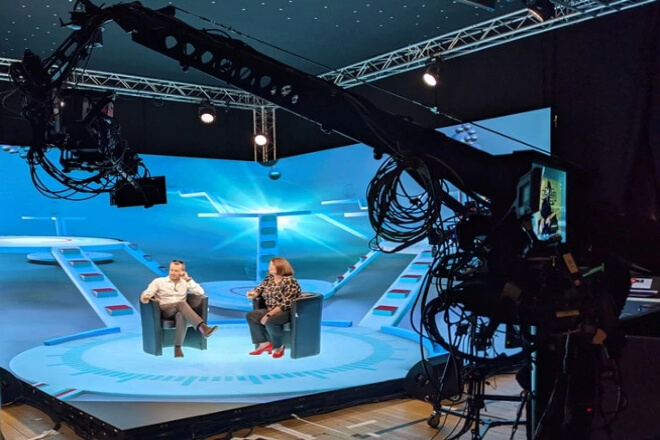
While television programs may appear to be simply recorded on a stage, the “阶段 requirements” behind different programs are actually quite different.
News requires a stable and professional approach, variety shows need to create surprises, and live broadcasts require rapid interaction.
所以, LED显示屏 cannot be a “one-size-fits-all” solution.
In a news studio, the LED display acts more like a digital information backdrop. It needs to present clear and concise images.
Such as news charts, data content, and city backgrounds, conveying professionalism and reliability to the audience.
At the same time, stable display quality is also crucial, as a live broadcast may last for hours, and the backdrop cannot afford to “fail” at critical moments.
For variety shows, the LED screen acts more like the “atmosphere maker” on stage. As the program segments change, the backdrop also needs to switch quickly.
Cool animations, themed scenes, and stage effects can all be achieved through LED displays, transforming the same stage into a futuristic space one moment and a dreamlike scene the next.
Live streaming needs are even more flexible. Whether it’s e-commerce live streaming, interview live streaming, or interactive programs.
LED screens can display real-time data, brand content, and interactive information, helping to build a stronger connection between hosts and viewers.
For example, news programs might need a stable and professional backdrop; variety shows need a visually dynamic stage; and live streaming studios need a digital tool that can quickly respond to changes in content.
After all, different programs have their own “personality,” and LED display solutions need to find the most suitable way to express it.
Choosing the right application scenario ensures that the screen truly becomes part of the program’s effect, not just a background.
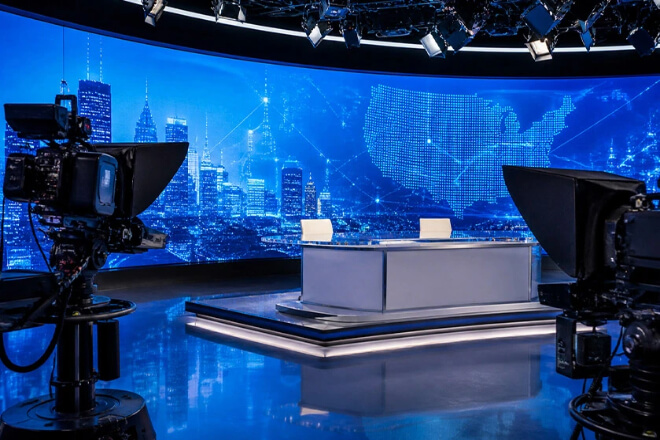
In ordinary scenarios, slight changes in the LED display image might go unnoticed.
But in a studio, the situation is completely different—cameras act like magnifying glasses, recording even the smallest problems.
Therefore, when choosing an LED display for a studio, it’s not just about how impressive it is on-site, but also how stable it is on camera.
First, a high refresh rate is a “safety guarantee” for live broadcasts and recordings. An insufficient screen refresh rate might not be noticeable to the naked eye.
But after being filmed by a camera, it can cause flickering, horizontal lines, and other problems, affecting the final broadcast effect.
Second, high grayscale performance determines the detail in the image. Especially in galas, interviews, or programs with dim ambient lighting.
LED screens need to present more shades in dark areas to make the background look more natural, rather than becoming a “black wall.”
Color consistency is equally important. Imagine a variety show changing 阶段 themes; if the left screen is dark blue while the right is purplish, the live effect will be greatly diminished.
Therefore, stable color performance is a crucial factor in ensuring the quality of the program.
Furthermore, studios typically need to operate for extended periods, especially for live programs, where there’s no “retake” opportunity.
Stable display performance, reliable heat dissipation design, and a mature system solution can reduce the risk of unexpected events during the program.
After all, LED显示屏 in a studio are more than just background actors; they’re like a constantly active behind-the-scenes worker.
They don’t need applause, but they must maintain peak performance with every camera cut.
For TV studios, LED显示屏 aren’t one-off “set-up and done” equipment; they’re long-term partners involved in daily program recordings.
When choosing a solution, it’s not enough to just focus on the initial impact; you also need to consider ease of use over the next few years.
First, the screen structure needs to be planned according to the program’s requirements.
News programs may prioritize stable information display, variety shows require more flexible 阶段 transitions, and live broadcasts may need more interactive content.
Therefore, screen size, installation method, and display effect all need to be designed in advance based on the actual usage scenario.
Second, ease of equipment maintenance is also crucial. Studios typically require high-frequency use; if repairs are difficult later on.
It will not only affect program scheduling but may also increase operational pressure. A structural design that facilitates maintenance makes daily management easier.
At the same time, system stability and after-sales support are also factors that cannot be ignored. Especially for live broadcasts, there’s no opportunity to “pause and reshoot.”
A reliable LED solution can reduce the risk of unexpected malfunctions, making program production more worry-free.
For example, a television station might record different types of programs every day: news broadcasts in the morning, interviews in the afternoon, and variety shows in the evening.
If the LED system can quickly adapt to different needs and maintain stable operation, it can truly realize its long-term value.
After all, a good LED display solution not only makes the studio look more upscale, but more importantly, it helps make program production more efficient and operations more stable.
Choosing a suitable screen is actually laying the groundwork for more exciting programs in the future.


 English
  Español
  简体中文
简体中文  Français
  日本語
日本語  한국어
한국어  العربية