
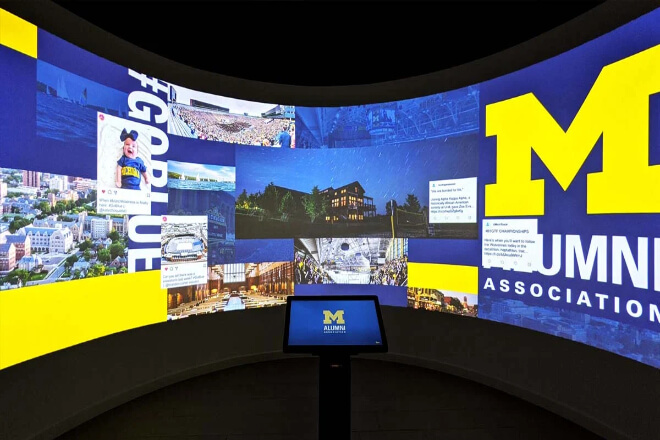
Today’s consumers are increasingly distracted. Entering an experience centre, they might be drawn to their phones one moment and then look at other exhibits the next.
Previously, static display boards or simple product displays could attract attention, but now visitors easily skim through them.
Many experience centres invest heavily in decoration and setup, only to find that visitors spend little time there, and few truly remember the brand information.
At the same time, consumers have higher expectations for how brand stories and product information are presented.
Consumers want vivid, engaging, and intuitive displays, not just a bunch of text or monotonous demonstrations.
How to present brand concepts and product advantages in an interactive, immersive, or creative way has become a pressing issue for experience centres.
For decision-makers, the most important question is: how can the experience centre be more than just a “pretty space,” but one that truly delivers marketing value and brand communication power?
How can it capture consumers’ attention within a few minutes, leave a lasting impression, and even encourage them to share it spontaneously?
If these things cannot be achieved, even the most beautiful experience centre is just a “decoration.”
In short, experience centres need to find more creative display methods that allow every visitor to participate, remember the brand, and even help spread the word—this is where the true value lies.
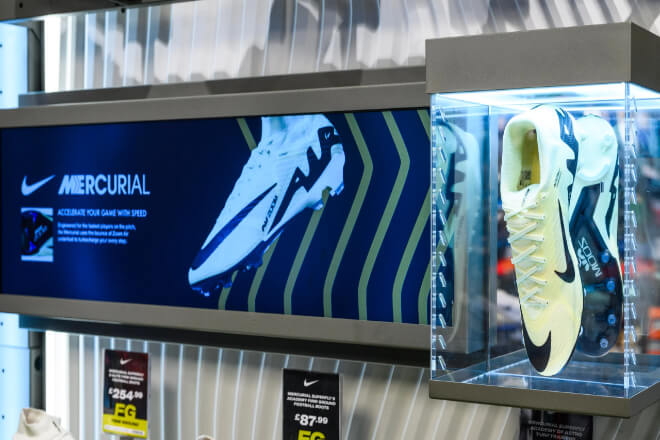
For brand experience centres, display equipment is not only a tool for presenting products but also a crucial medium for attracting visitors and conveying brand value.
First, visual impact is paramount. A well-designed screen or projection with vivid images can grab a visitor’s attention immediately.
For example, when customers enter a technology brand experience centre and are drawn in by the vibrant animations and product demonstrations on a large LED screen, they are often more likely to stop and learn more.
Secondly, interactivity is key to enhancing the visitor experience and brand recall. Compared to one-way displays, interactive equipment allows visitors to participate, enhancing engagement through touch controls, AR experiences, or gamification.
In some automotive brand experience centres, visitors can simulate driving or customise seat colours via screens; this hands-on experience makes the brand impression more profound.
Flexibility is also a crucial factor for experience centres. Display content needs to be adjusted according to event themes, holidays, or new product launches.
Flexible equipment prevents the displays from becoming rigid, enabling rapid responses to marketing strategies and real-time interaction with visitors.
For example, clothing brands can update styling recommendations on LED screens seasonally, keeping each visit fresh.
Finally, stability and durability are paramount. Experience centre display equipment is typically used frequently.
If the equipment is easily damaged or frequently malfunctions, it not only increases maintenance costs but also negatively impacts the visitor experience and even the brand image.
Therefore, whether it’s LED screens, projectors, or touchscreen devices, they all need to ensure stable operation over extended periods to support long-term brand display needs.
1) Brand Story Area
In the story area of a brand experience centre, LED displays can be used to tell the brand’s history, philosophy, and development process.
An immersive large screen can not only display exciting, dynamic images but also incorporate sound, animation, and other elements, naturally drawing visitors to stop and learn about the story behind the brand.
For example, a technology brand experience centre uses LED screens to showcase its founding history and product evolution, allowing visitors to experience the brand’s innovative spirit and cultural connotations through visual impact.
2) Product Experience Area
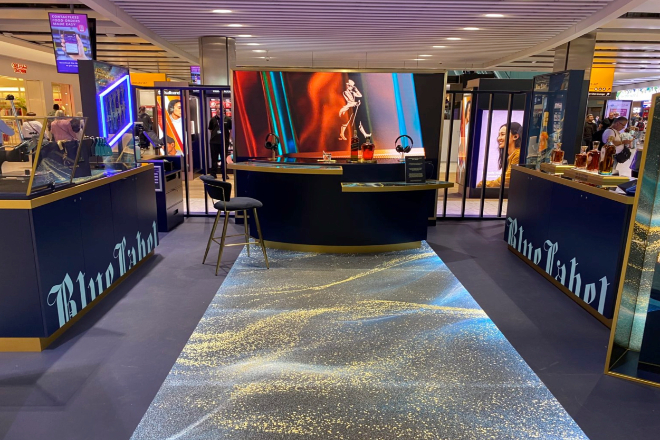
The product experience area is the core area for showcasing product functions and features.
LED screens can present high-definition dynamic content, combined with touch, AR, or interactive experiences, allowing visitors to intuitively understand the product’s advantages.
For example, in a home appliance brand experience centre, customers can see animated demonstrations of the product’s internal workings on a large screen, combined with interactive touch operations.
The effect is more intuitive and leaves a deeper impression than simply viewing physical objects or posters.
3) Event and Launch Area
In new product launch or event areas, LED displays can amplify the on-site effect and enhance visual impact.
Whether it’s a new product launch, a live demonstration, or a live broadcast, large screens ensure all visitors can clearly see key content, enhancing the sense of presence and participation.
For example, when a clothing brand launched its new season collection, LED screens simultaneously played footage of models walking the runway and close-ups.
Allowing viewers in every corner to enjoy a high-quality viewing experience while enhancing the event’s professionalism and appeal.
4) Social Sharing Areas
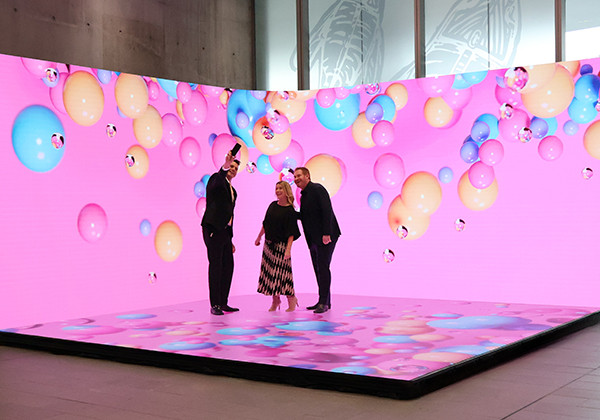
Modern experience centres increasingly emphasise social media engagement, and LED screens play a crucial role in check-in and photo-sharing areas.
Through creative visual effects, dynamic backgrounds, or interactive games, visitors are more willing to take photos, record videos, and share them on social media platforms.
This not only increases the enjoyment of the visit but also brings natural exposure and word-of-mouth marketing to the brand.
For example, some beverage brands have set up LED screen backdrops in their experience centres, incorporating fun animations to encourage customers to take photos and check in.
These photos then spread on platforms like WeChat Moments and Douyin, significantly increasing the brand’s social media presence.
1) Matching Screen Size to Visitor Flow
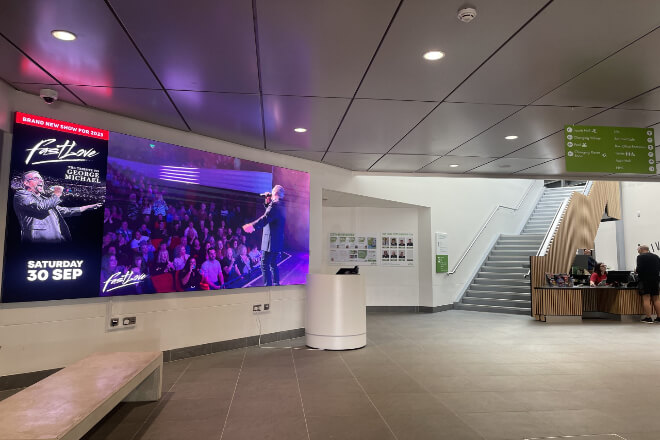
When selecting an LED display, the screen size must match the visitor flow and spatial layout.
A screen that is too small may be difficult to see from a distance; a screen that is too large may take up too much space, making the visitor experience feel cramped.
For example, the large screen at the entrance of the experience centre needs to be visible to customers as soon as they enter.
While the interactive screens in the display area can be appropriately smaller, allowing customers to operate and experience them up close.
2) Installation Environment and Luminosité Conception
The brightness, contrast, and display effect of the screen should be designed according to the installation environment.
Well-lit indoor venues may require high-brightness screens to ensure clear visibility, while dimly lit areas can use screens with slightly lower brightness to avoid glare.
The spatial layout also affects the screen’s installation location. For example, curved walls, corners, or elevated platforms require specially customised mounting brackets and screen sizes to achieve the best visual effect.
3) Content Management System and Ease of Operation
Content updates and management of LED displays are crucial. If the operation is complex or the updates are inconvenient, the screen will quickly lose its appeal.
Choosing a simple-to-use content management system that supports remote management allows for quick switching of displayed content.
Adjustment of playback order, and even scheduled updates based on events or holidays, keeping the display always fresh.
4) Supplier Delivery, Installation, and After-Sales Service Capabilities
Purchasing LED screens is more than just buying equipment; the supplier’s delivery capabilities, installation experience, and after-sales service are also crucial.
An experienced supplier can ensure the screen is installed on time, debugged to its optimal performance, and provide timely maintenance and technical support during use.
Good after-sales service not only guarantees stable equipment operation but also reduces later operational risks, making the experience centre operation more worry-free.
 English
  Español
  简体中文
简体中文  Français
  日本語
日本語  한국어
한국어  العربية