
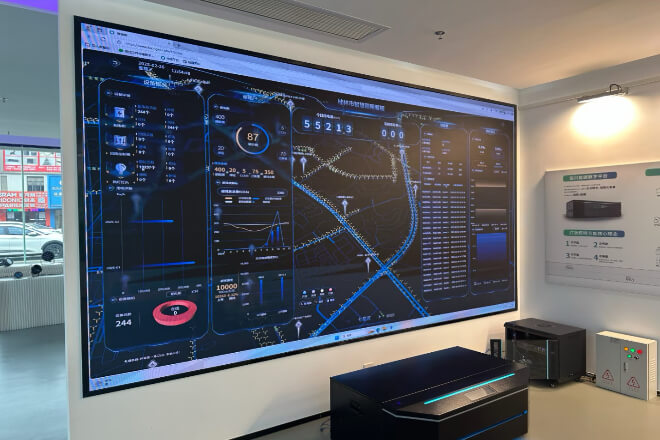
1) High Luminosité and High Résolution
In the monitoring room of a data center, maintenance personnel need to view server temperatures, network traffic, and security alarms in real time.
High-brightness, high-resolution LED displays can clearly present these complex charts and indicators, allowing you to capture key information at a glance, even from a distance.
For example, when a server triggers an overheating alarm, the bright red alert on the screen can immediately attract the attention of staff, preventing potential escalation of the fault.
2) Large Screens and Multi-Screen Splicing
Data centers typically need to monitor data from multiple systems simultaneously.
Through large screens or multi-screen splicing, managers can simultaneously view server status, energy usage, network traffic, and security monitoring feeds on a single wall.
Imagine the entire monitoring room functions as a command center, where the operations team can simultaneously track data flows from different areas.
Upon detecting anomalies, they can quickly locate the problem and arrange for handling, without having to switch between multiple windows, significantly improving efficiency.
3) Real-time Display and Multi-Source Information Integration
LED displays can also integrate data from different devices and systems and update it in real time.
For example, in large data centers, when network traffic suddenly surges, the LED screen will simultaneously display affected servers, related network nodesnd security alarm information.
Decision-makers can immediately take measures to allocate resources or block abnormal traffic.
This real-time integration not only improves response speed but also allows data centers to maintain stable operation under high-pressure environments.
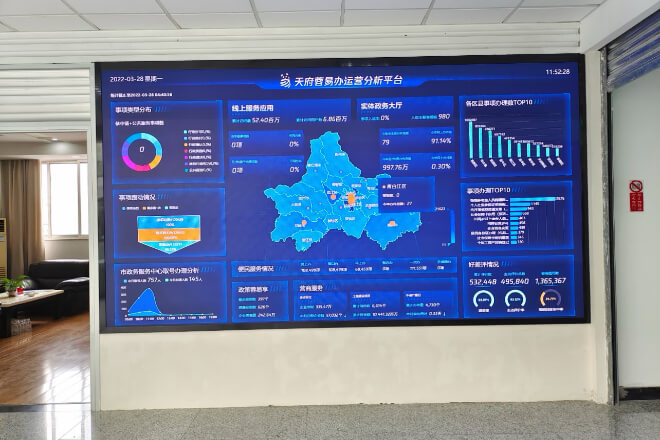
1) Real-time Monitoring and Data Visualization
LED displays can centrally display key information such as network traffic, server status, and energy consumption data, presenting it intuitively through dynamic and visual charts.
For example, when a server malfunctions, a red alert or a dynamic chart on the screen immediately alerts maintenance personnel, helping the team quickly identify the problem and prevent it from escalating.
Real-time data visualization makes complex information clear and readable, supporting rapid response and precise operation.
2) Multi-system integration
Modern data centers involve multiple systems, including security monitoring, environmental monitoring, and alarm systems.
LED displays can unify data from these different sources onto a single interface, supporting simultaneous presentation of multi-screen, multi-source, and multi-format content.
For example, a single video wall can simultaneously display server operating status, data center temperature and humidity.
And network traffic trends, helping the team comprehensively understand the overall operation of the data center.
3) Improved team collaboration and decision-making efficiency
Through LED screens, maintenance personnel can identify and collaboratively handle problems more quickly.
While senior management can monitor operational status in real time, enabling more informed strategic decisions.
Imagine the entire monitoring room as a command center, with team members discussing around a large screen, information synchronized and transparent, making the decision-making process more efficient and scientific.
4) Flexible Layout and Expansion
LED displays can be flexibly installed according to the actual layout of the data center, supporting irregular shapes or multi-module splicing to meet the monitoring needs of large or special computer rooms.
Whether it’s a long, narrow computer room wall, a curved corridor, or multi-room monitoring, customized screen layouts can achieve global visualization, facilitating data center expansion and upgrades.
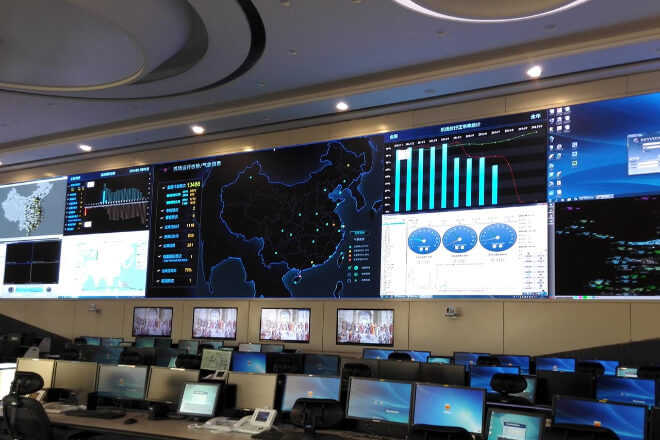
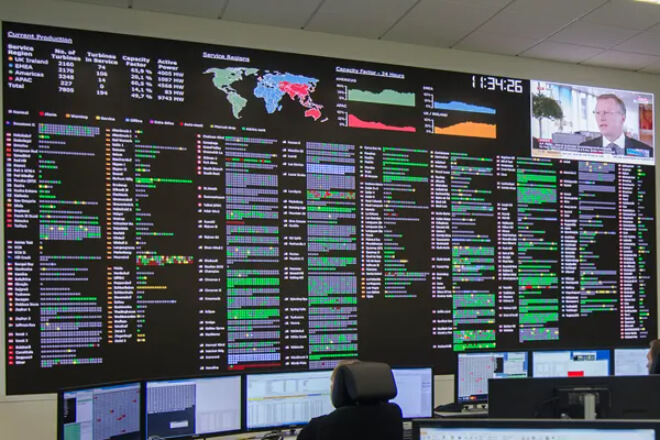
1) Silicon Valley Data Center, USA
In a large cloud computing data center in Silicon Valley, USA, multiple high-resolution LED screens were installed on the walls of the monitoring room to display server status, network traffic, energy consumption data, and security alarms in real time.
Through large-screen splicing technology, the operations and maintenance team can simultaneously view the operation of multiple systems, forming a “global overview” and avoiding information omissions caused by frequent window switching.
After using LED screens, the operational efficiency of the data center has significantly improved.
For example, when a server malfunctions, the screen immediately highlights the alarm information and simultaneously displays relevant system data, allowing operations and maintenance personnel to locate the problem and take action within seconds.
According to statistics, the center’s anomaly response time has been reduced by approximately 30% compared to before, and overall operational efficiency and decision-making speed have significantly improved.
 English
  Español
  简体中文
简体中文  Français
  日本語
日本語  한국어
한국어  العربية