
Introduction
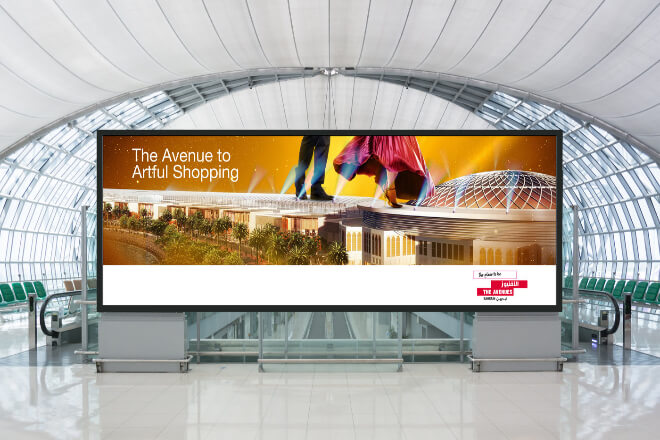
Walk into any modern aéroport, and you’ll almost certainly notice the presence of Afficheurs LED.
From flight information and boarding reminders to wayfinding signs and commercial content, they are distributed throughout the airport, silently supporting the operation of the entire space.
While they may seem like just “screens,” in such a high-flown and complex environment, they are more like a silent but highly efficient information system.
Table des matières
Reason 1: LED displays meet the high-frequency information dissemination needs of airports.
In a place like an aéroport where “information is constantly changing,” the role of screens is far more than just display; they are more like an 24/7 online “information hub.”
Flight delays, gate changes, and departure time adjustments are updated very frequently. If these are not delivered in a timely manner, passengers will easily be confused.
LED displays can perfectly handle this high-frequency change.
Flight information can be updated in real time, whether it’s a normal status or a temporary adjustment, and can be presented immediately, so passengers don’t need to repeatedly check or ask around.
Even more interestingly, simultaneous display in multiple areas makes the information more “unified.”
Whether in the check-in area, waiting area, or boarding gate, passengers see the same updated information, avoiding discrepancies between different sources.
This approach not only improves the efficiency of information access for passengers but also reduces the cost of manual communication.
Staff don’t need to repeatedly answer the same questions, and passengers can more easily manage their travel progress.
Simply put, LED displays act as the “information brain” of the airport, organizing and synchronizing frequently changing content to reduce uncertainty and increase clarity throughout the travel process.
Reason 2: LED displays support wayfinding systems in complex spaces.
Airports are like “enlarged cities,” with numerous functional areas and complex layouts, including check-in, security, boarding gates.
And baggage claim. It’s easy to get lost. In this situation, LED displays act as a constantly online “digital guide.”
By deploying screens in different areas, targeted information can be provided: where to check in, where the security checkpoint is.
How to get to the boarding gate, guiding passengers step by step in the right direction.
Compared to traditional static signage, dynamic information is more flexible and easier to adjust to the situation on-site.
More interestingly, this guidance doesn’t just “tell you where to go,” it subtly optimizes passenger flow.
With clear information distribution, travelers can make decisions faster, reducing time spent checking or observing, thus improving overall flow efficiency.
When fewer people get lost and shorter dwell times, the space naturally flows more smoothly. For travelers, this means less anxiety and more ease; for airports, it means a more efficient operational rhythm.
Simply put, LED displays make complex spaces “easier to understand,” and make the entire travel process less circuitous and more certain.
Reason 3: LED Displays Meet the Large Space Display Needs of Airports
One of the biggest characteristics of airports is that they are “very large, crowded, and far apart.”
If information can only be seen clearly at close range, its actual value is greatly reduced. The advantages of LED displays are amplified in this scenario.
First is long-distance visibility. Whether in a spacious waiting hall or a long corridor, LED screens ensure that information remains clearly visible from a distance, allowing passengers to quickly access key information without having to get close.
Simultaneously, the viewing effect is relatively stable from multiple angles.
Passengers in different directions and positions can see a relatively consistent image from their respective perspectives, without being unable to see clearly or completely due to angle issues.
Furthermore, in the often bright lighting environment of airports (especially in large daylight-exposed areas).
The advantages of LED displays in luminosité and contrast ensure that the content is not obscured by ambient light, and the information remains clearly readable.
In short, in such a large space, LED displays act as an “amplified and stable information outlet.”
Reliably transmitting key information regardless of distance, angle, or light intensity, meeting the needs of airport operations around the clock.
Reason 4: LED Displays Carry Airport Commercial and Brand Value
Airports are not only travel spaces but also commercial scenarios with inherent foot traffic.
The high-frequency flow of passengers every day constitutes a stable and high-quality audience, and LED displays perfectly transform this traffic advantage into brand exposure opportunities.
In high-traffic areas such as departure halls, security checkpoints, and main passageways, large-screen content is easily and repeatedly seen.
For brands, this “natural exposure” is often more valuable than a single touchpoint—even just a few seconds can leave an impression.
More interestingly, the effect is even more pronounced when advertising content is integrated with passenger flow.
For example, playing brand content in waiting areas and displaying concise and impactful information in passageways ensures the content appears in a “just-to-be-seen” location, rather than passively waiting for attention.
From the airport’s perspective, this is not just an information display, but an extension of commercial value.
LED displays transform “passing traffic” into “usable resources,” providing more possibilities for advertising and brand collaborations, and further enhancing overall business revenue.
Simply put, it transforms the airport from a “place of passage” into a space where brand outreach and communication occur continuously.
Reason 5: LED Displays Improve Airport Operational Efficiency and Overall Image
In a place like an airport where “every second is changing,” if information is even slightly delayed, the scene can become chaotic.
Here, LED displays are more than just “displaying information”; they function as a constantly online “visual hub.”
Through integration with flight systems, check-in systems, and back-end management systems, the content on the screens can be updated in real time.
Gate changes, time adjustments, and temporary notices are all synchronized to all areas immediately—no need for back-and-forth confirmations or layer-by-layer relaying; the information automatically “runs” to where it should appear.
Simultaneously, unified multi-screen management makes the entire space feel more like a rhythmic whole.
One-click back-end scheduling allows for rapid synchronization or partitioned adjustments of content in different areas, eliminating the fragmented nature of separate displays.
For management, this reduces repetitive operations; for passengers, it provides greater clarity and certainty.
Even more interestingly, this seamless information experience is directly perceived by passengers.
When you find yourself in an airport where you can understand information at a glance without needing to ask for directions, you’re subtly enhancing the airport’s image.
From a visual perspective, the technological feel brought by large LED screens also continuously reinforces the airport’s modern and international image.
Dynamic visuals, clear information, and a unified visual expression make the space feel like a highly efficient system, rather than just a “crowded place.”
Simply put, LED displays both enhance operational efficiency “behind the scenes” and elevate the image “on the scene”—helping airports run more smoothly and making them look smarter.
6. Conclusion
The reason airports are deploying LED displays on a large scale isn’t simply because they “look more modern,”
But because they play an irreplaceable role in information delivery, spatial guidance, and operational management.
When the flow of people, information, and space intertwine, these screens do more than just display content; they maintain an orderly operational rhythm.
From another perspective, they are no longer just equipment, but an integral part of the airport’s normal operation.
Finally, for more information about LED displays, veuillez nous contacter.
 English
  Español
  简体中文
简体中文  Français
  日本語
日本語  한국어
한국어  العربية