
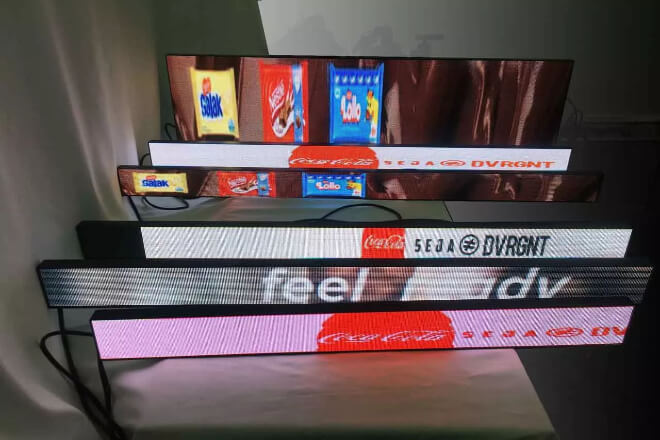
LED shelf displays are typically installed in product display areas or along the edges of shelves, precisely where customers’ eyes are most likely to linger.
Compared to traditional static price tags or posters, they deliver information more naturally through dynamic visuals.
For example, in supermarkets or retail stores, screens can loop product selling points, usage instructions, promotional information, and even simple, scenario-based short videos.
When customers are selecting items, their peripheral vision is easily drawn to the dynamic content, causing them to linger for a few more seconds, take a closer look, and learn more.
To illustrate, consider two rows of similar products. If one row displays static labels, while the other displays “before and after comparison.”
Or “limited-time offer,” the latter is more likely to attract attention and influence customer choices.
This “product-centric” display method ensures information is delivered closest to the purchase decision.
Simply put, a shelf LED display acts like a “smart guide” next to the product, adding a crucial element to boost attention and conversion rates.
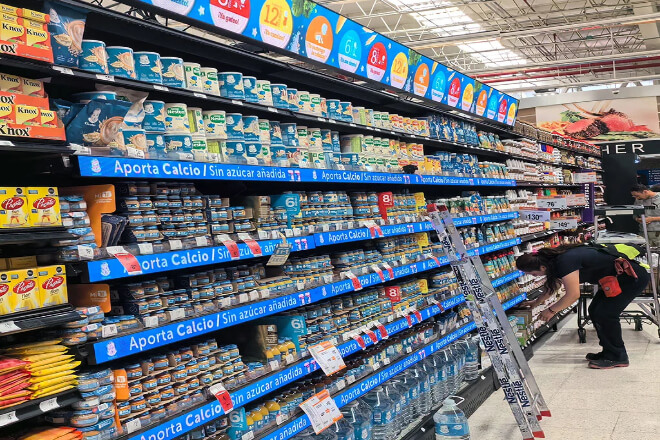
In the retail environment, product information often changes with market dynamics, such as new product launches, price adjustments, or shifts in promotional strategies.
The advantage of shelf LED displays lies in their ability to update content instantly, keeping information up-to-date.
For example, a limited-time discount launched this morning doesn’t require a temporary poster change.
A simple backend operation allows the shelf screens to simultaneously display the latest prices and offers, providing customers with the most accurate information at a glance.
Once the promotion ends, the display can seamlessly switch back to the regular display.
The entire process is remarkably smooth. For example, for the same product, in addition to price, its core selling points, usage methods, or simple scenario demonstrations can be displayed in rotation.
Compared to simple text descriptions, this dynamic presentation makes it easier for customers to quickly understand “what makes the product so good.”
Simply put, shelf LED displays prevent information from being “stuck on the shelf,” but rather allow for flexible adjustments based on time, activities, and strategies.
This ensures that products are always communicated to customers in the most up-to-date and clear way, while also reducing the cost of repeated manual explanations.
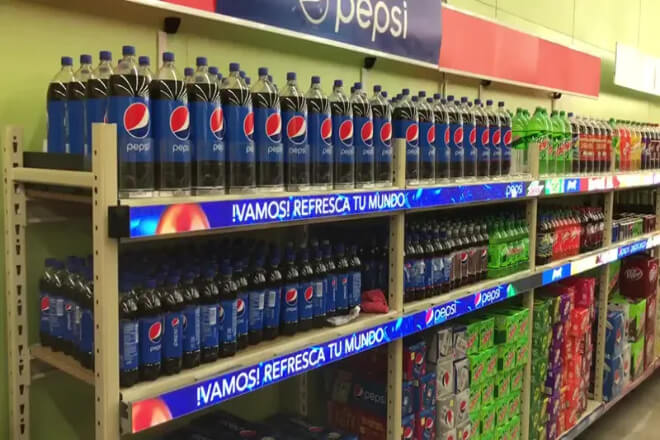
Shelf LED displays are not just tools for displaying information; they are more like “always-on sales assistants,” helping you capture customers’ attention at crucial moments and drive purchasing decisions.
For example, for a specific single item or product combination, the screen can loop recommended content, clearly presenting discounts, bundled deals.
Or usage scenarios, allowing customers to understand at a glance that “buying it is more cost-effective.”
During limited-time promotions or events, LED screens can also enhance the sense of urgency.
And atmosphere through dynamic effects, creating a “buy now or miss out” mentality and increasing the probability of impromptu purchases.
Furthermore, the dynamic displays on the screens are more likely to capture customers’ attention than traditional static labels or posters.
As customers browse the shelves, the rotating content on the screens can guide their attention to specific products.
Even encouraging them to try new products or follow promotional offers, thereby improving overall conversion rates.
Simply put, shelf LED displays not only make products more eye-catching but also continuously remind and guide customers during the shopping process.
Like a “silent salesperson,” it is both vivid and flexible, helping brands improve promotional efficiency and sales in a short time.
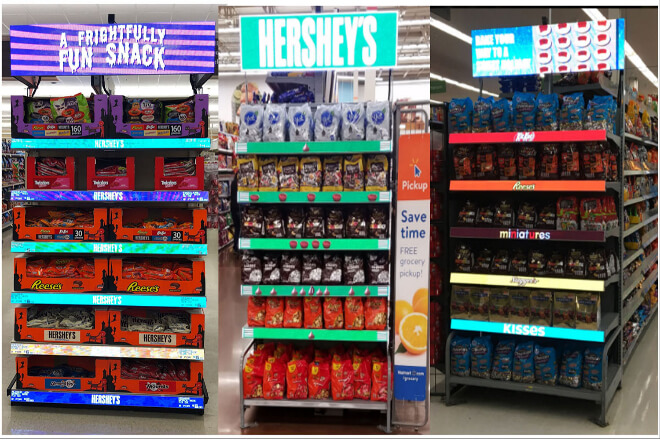
The charm of shelf LED displays lies in their ability to display not only text descriptions but also images, videos, animations.
And other forms of content, making product displays less monotonous and directly attracting customers’ attention.
It’s like a salesperson “always ready to put on a show,” always finding different ways to make customers stop and browse.
For example, on the same shelf, new product introductions or limited-time promotions can be displayed in the morning, while switching to practical tips or usage scenarios at noon.
In the evening, the screens can display styling suggestions or promotional reviews, ensuring the content remains synchronized with the time and customer needs.
Even with different promotional strategies throughout the day, updates can be made immediately without replacing traditional labels or posters, offering both efficiency and flexibility.
Furthermore, the screens can be flexibly configured with content based on products or areas.
Popular items can have their selling points highlighted individually, while combination sets can have styling suggestions displayed in a loop.
This way, each shelf becomes like its own “performance,” constantly capturing customer attention.
Simply put, shelf LED displays not only present information in a rich and varied way but also add “spice” to the shopping experience.
Making every customer browsing interesting and engaging, while significantly improving display effectiveness and purchase conversion rates.
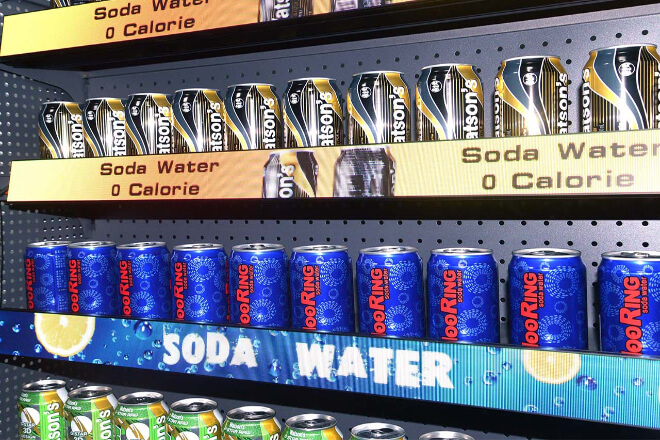
Shelf LED displays not only attract customers at the front end but also act as a silent “digital assistant” in the back end, helping stores streamline operational processes.
Through remote unified management, stores can centrally control the content updates of multiple shelf screens from the back end.
For example, new product launches, price adjustments, or promotional campaigns can all be synchronized across all screens with a single operation, eliminating the need for staff to replace paper labels one by one, saving time and effort.
To illustrate with a practical scenario: for a store with a wide variety of products, traditional methods might require repeatedly printing, cutting, and replacing labels.
Now, with LED screens, content switching can be completed with just a few clicks, reducing repetitive manual operations and lowering the probability of errors.
Furthermore, this digital management approach makes overall store operations clearer and more controllable.
Which screens are functioning normally, which content is playing, and whether updates are needed are all readily apparent in the system.
Simply put, shelf LED displays not only make front-end displays more engaging but also simplify back-end management.
Acting like an “automatically updating information assistant” for the store, subtly improving operational efficiency.
 English
  Español
  简体中文
简体中文  Français
  日本語
日本語  한국어
한국어  العربية