
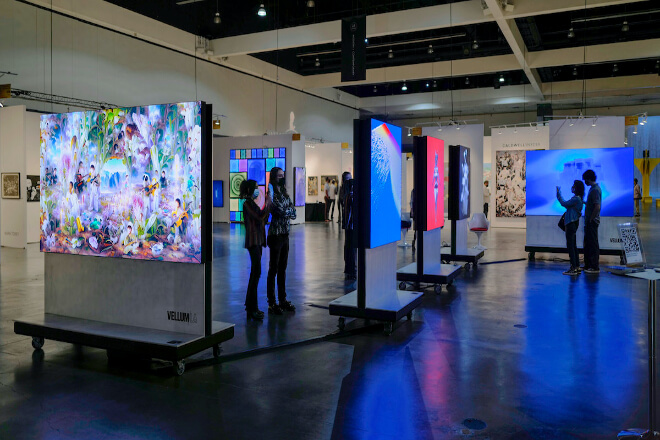
In traditional art galleries, display methods are usually quite fixed—paintings on the walls, sculptures on display stands.
While classic, the format is somewhat monotonous, and space is always a limitation: wall space is limited, so the number of works that can be displayed is naturally limited.
This is where Afficheurs LED open a new window for galleries. Through digital displays, galleries can play a vast amount of artwork.
Such as digital paintings, motion art, video art, or even looping displays of different artists’ works.
In other words, a single screen can “hold” a small art gallery, allowing viewers to see more creations in one space.
Furthermore, LED screens can showcase art forms that are difficult to present using traditional methods, such as dynamic visual art, light and shadow creations, or immersive video works.
The images can move, change, and even change with music or rhythm, making the art experience more vivid.
Additionally, from a practical operational perspective, LED screens reduce the hassle of frequently changing artworks.
Traditional des expositions require transportation, installation, and maintenance when changing artworks, while digital works only require updating the content, saving both time and costs.
Simply put, LED displays free galleries from the limitations of walls and space, giving them a freer and more flexible way of displaying art.
Artists can explore more creative expressions, and audiences can see more diverse forms of work, making the entire gallery experience richer and more engaging.
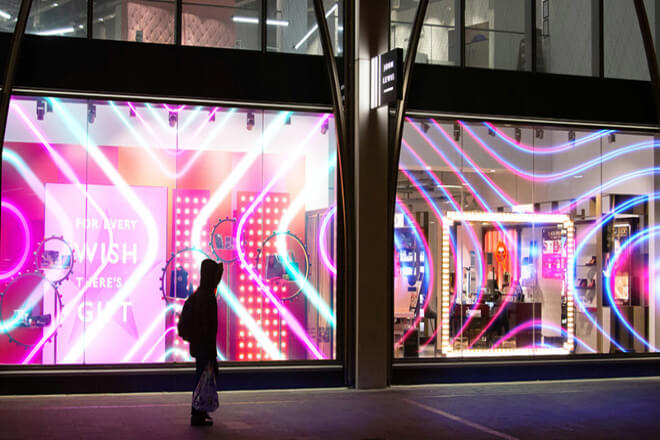
Art often relies heavily on detail and color, and LED displays excel in these areas.
Haut résolution et haut luminosité can clearly display details in the image, such as brushstrokes, color gradations, and even subtle changes in light and shadow in paintings.
When viewers get closer, they often discover small details that are easily overlooked, a fascinating experience akin to rediscovering the “little secrets” within the artwork.
LED screens also boast strong color reproduction, displaying vibrant yet accurate colors that realistically represent the artist’s work.
For richly colored pieces, such as digital art, photography, or abstract art, the screens deliver impactful color gradations, making the images appear more vivid.
Furthermore, large-scale LED screens can create an immersive visual space.
When an entire wall becomes a display of art, viewers are no longer simply viewing a painting from a distance, but rather feel as if they have “stepped” into the artwork.
Many digital art des expositions utilize this approach, immersing viewers in the visual experience from the moment they enter the exhibition hall, resulting in a powerful visual experience.
Even more interestingly, LED screens can incorporate dynamic lighting effects. The artwork can gradually change, flow.
And even synchronize with musical rhythms to create different visual effects.
In this way, art is no longer just a painting hanging quietly on the wall, but a more vibrant visual experience, making it easier for viewers to linger and appreciate it.
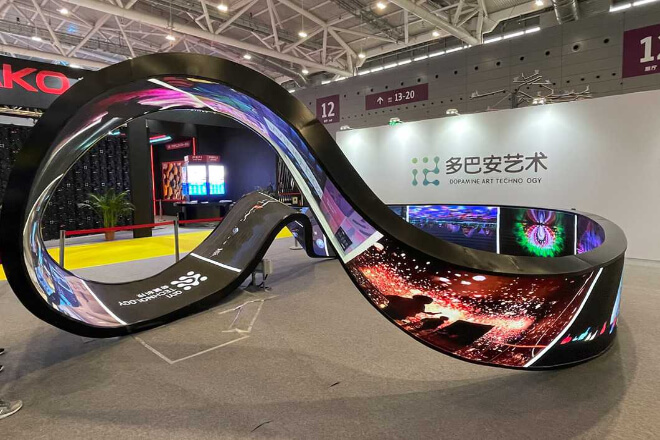
In traditional galleries, most works are displayed statically, such as paintings, photographs, or sculptures.
While these art forms are inherently captivating, their display methods are often rather fixed. The advent of LED displays has opened up many new possibilities for art presentation.
Firstly, Écrans LED can easily display video art and dynamic visual works. The images are no longer simply hanging on the wall.
They can slowly change, loop, or even unfold segment by segment like a story. Viewers often linger, wanting to see what happens next.
Secondly, some cutting-edge art forms, such as 3D visual art, generative art, and AI art, are particularly well-suited for display on LED screens.
Many of these works are generated by programs or algorithms, resulting in constantly changing images with new details appearing every second, making the art seem “alive.”
LED screens can also be used to display NFT art and digital collectibles. As digital art becomes increasingly popular.
Many galleries are bringing their online works to physical spaces, presenting them on high-definition screens so that viewers can appreciate these digital creations up close.
In short, LED displays are like providing artists with an extra “glowing canvas.”
They can not only paint, but also bring their works to life, change them, and even combine technology to create entirely new art forms.
For viewers, this display method is also more novel; visiting an exhibition is like opening a constantly evolving art world.
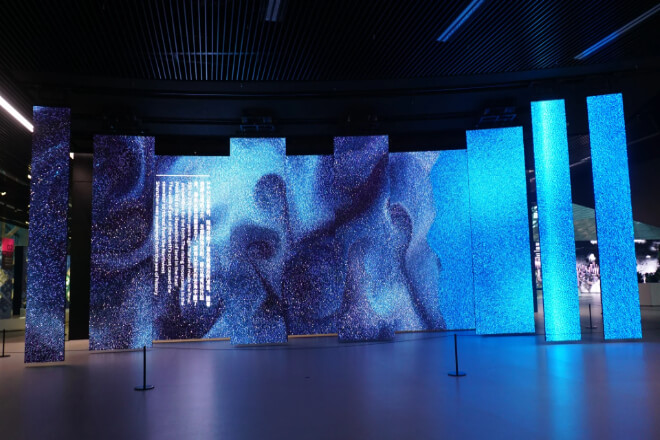
For many galleries, holding exhibitions is not just an art issue, but also involves high operating costs.
Traditional des expositions often require the transportation, installation, and protection of physical artworks, a complex and expensive process.
Using LED displays to showcase digital art can significantly reduce these costs.
Many works can be easily presented on the screen simply by file transfer, eliminating the need for frequent transportation and installation.
This also reduces the risk of damage to artworks during transportation or exhibition.
After all, some artworks are inherently valuable, and accidental damage could result in substantial losses.
Displaying digital works on LED screens is not only safer but also gives galleries greater flexibility in curating.
Furthermore, LED displays typically have a long lifespan and are relatively easy to maintain. With proper use and regular checks, a screen can often operate stably for a long time.
Compared to repeatedly replacing display panels and setting up installations, this is more worry-free in the long run.
An even more practical point is that an LED screen can be reused for different exhibitions. Today it might display digital art, tomorrow a photography exhibition.
And then a video art exhibition. The content can be changed at any time without requiring major space alterations.
For galleries, this is like having a “constantly updated exhibition wall,” offering both flexibility and cost savings.
 English
  Español
  简体中文
简体中文  Français
  日本語
日本語  한국어
한국어  العربية