
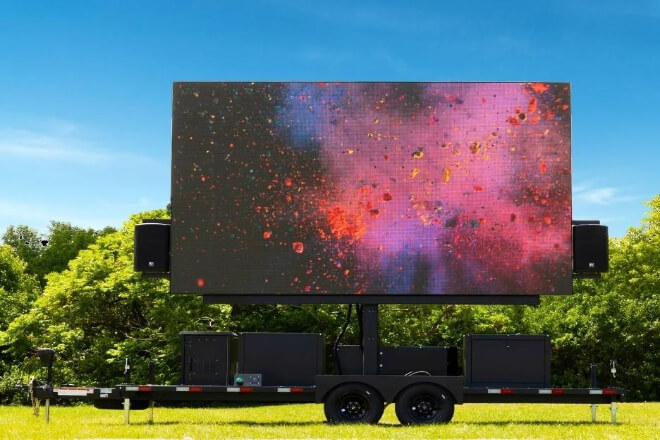
When advertising outdoors, there’s a very real problem: can people actually see you?
If the screen appears grayish or heavily reflective under strong light, even the most exquisite image will be difficult to notice, rendering the effort futile.
One of the biggest advantages of LED displays is their high luminosité, ensuring clarity and visibility even in various complex lighting conditions.
For a very intuitive example, at midday when the sun is strongest, many ordinary billboards on a commercial street appear somewhat “whitened” or blurry.
Cependant, Écrans LED maintain high contrast, resulting in clear, vibrant images that easily catch the eye.
For example, on the street, where vehicles pass quickly, drivers may only see the advertisement for a few seconds.
In this situation, screen brightness is crucial—a brighter screen conveys information more directly and is easier to remember.
At night, LED screens offer a different perspective. They aren’t “drowned out” by surrounding lights.
Instead, they maintain their presence amidst neon lights, ensuring the advertisement stands out.
You’ll find that some large screens even become the “visual center” of a neighborhood at night, visible from afar.
Many LED screens now also support automatic brightness adjustment, bright enough during the day and appropriately reduced at night for a more comfortable viewing experience without glare.
High brightness acts like a built-in “spotlight effect” for the advertisement.
Whether in strong sunlight or complex city lighting, it steadily presents the image, preventing the content from being overwhelmed by the environment.
This is why LED displays have become almost standard equipment in large-scale outdoor advertising campaigns—because they are not only visible, but always clearly and steadily visible.
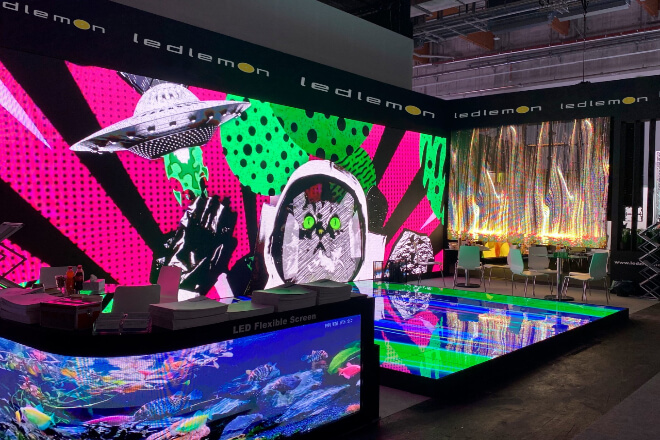
In outdoor advertising, sometimes it really comes down to one thing—bigger is better.
Another significant advantage of Afficheurs LED is their ability to achieve extremely large sizes, ranging from several meters to tens of meters, even covering an entire building facade.
This “mass advantage” directly translates to a powerful visual impact.
Imagine walking down a commercial street or in a plaza and looking up to see a massive screen playing dynamic content—the feeling is completely different from seeing a small billboard.
The larger the image, the clearer the details, and the stronger the immersive experience, easily drawing people to stop and watch for a few more seconds.
Combined with dynamic content, it’s even easier to attract attention and become the “focal point” of the event.
This advantage of large size is even more pronounced at large events or brand launches.
For example, outside city landmarks or large venues, a super-large LED screen can be seen simultaneously by people at a distance.
Whether they are at the other end of a plaza or driving by, ensuring they immediately see the image.
Compared to smaller advertisements, it has a wider coverage and greater impact.
In short, a large size isn’t just about “looking bigger”; more importantly, it creates an overwhelming visual presence, making the advertisement stand out from the crowd.
It’s precisely because of this strong impact that LED displays often become the main focus in large-scale outdoor advertising campaigns.
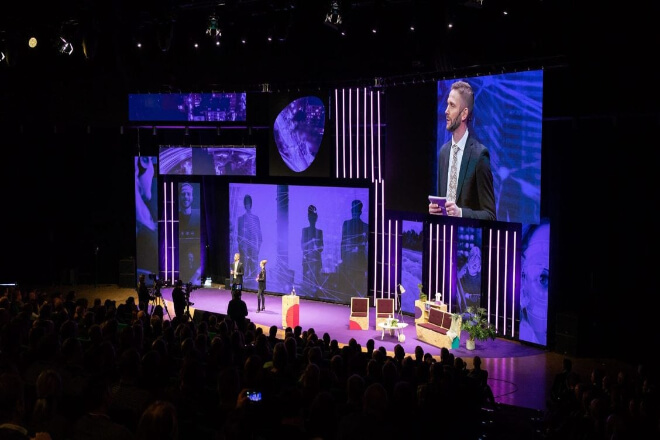
Compared to traditional static advertisements, one of the biggest advantages of LED displays is their ability to play dynamic content.
Simply put, it’s an upgrade from “static images” to “images that tell a story,” naturally making them more appealing.
Imagine walking down the street; a static poster might only be glanced at, but if there’s an LED screen nearby playing animations, videos.
Or rhythmically changing visuals, most people will unconsciously look for a few more seconds.
These few seconds are crucial, because whether an advertisement is remembered often depends on this brief period of attention.
The advantage of dynamic content is that it can convey more information.
For example, a product can not only showcase its appearance but also demonstrate usage scenarios, functional features.
And even create creative effects through animation, making it easier for people to understand and generate interest.
Some brand advertisements use storytelling videos or rhythmic visuals to subtly draw viewers in.
For example, at large events, screen content can change with the rhythm, moving in sync with music or the atmosphere, continuously engaging the audience’s attention.
This experience goes beyond simply “watching an advertisement”; it’s more like watching a performance or visual show.
In short, dynamic content gives advertisements “life.” It not only attracts attention more easily but also makes people linger longer and remember the message, greatly enhancing the advertising’s effectiveness.
This is one of the key reasons why LED displays are becoming increasingly popular in outdoor advertising.
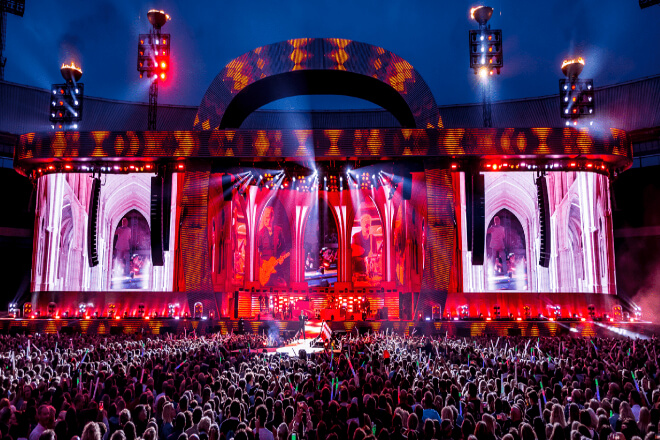
Another practical but often underestimated advantage of LED displays is their exceptionally flexible content updates.
Unlike traditional advertising, where a printed image is essentially fixed, and changes require re-production and reinstallation.
A time-consuming and costly process—LED screens are different. They’re more like a “large-screen media player that can change content at any time.”
For example, the same screen can display commuter-related ads in the morning, switch to restaurant or promotional information at noon.
And then change to entertainment or event content in the evening—multiple changes can be made within a single day.
Moreover, these updates can be largely operated remotely, eliminating the need for on-site adjustments and making them highly efficient.
This flexibility is especially useful for large-scale outdoor advertising campaigns. For instance, a brand can continuously adjust the content according to different stages of an event.
During the pre-event period, attention-grabbing visuals can be displayed; on the day of the event, on-site information can be switched.
And later, the content can be used for recaps or extended promotions. The entire process is seamless, rather than using a single poster throughout.
Another simple example is that if a holiday, weather change, or trending event occurs, the content can be quickly adjusted to make the advertisement more relevant to the current situation.
For example, promoting takeout on a rainy day or promoting warm clothing when it gets colder—this kind of “just right” content is more likely to resonate with the audience.
In short, flexible content updates are like adding “responsiveness” to advertising. It’s no longer fixed but can change with time, context, and even the target audience.
Keeping the advertisement fresh and relevant, and making it easier for viewers to notice and remember.
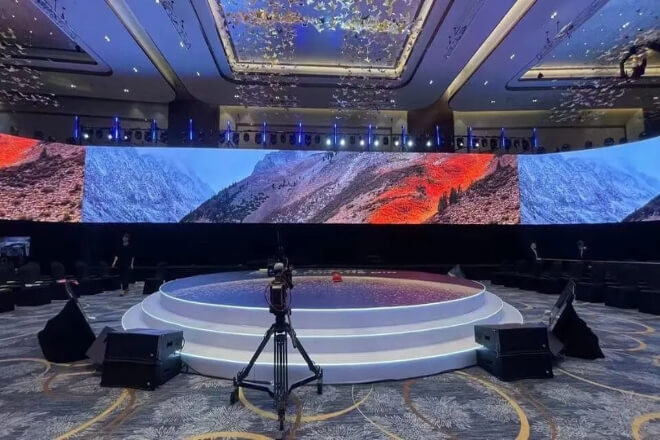
Outdoor environments are far from “friendly”—scorching sun during the day, cooling temperatures at night, rain, wind, and dust accumulation make it a year-round “test.”
Therefore, the long-term stable operation of an advertising screen is crucial. The reason LED displays can “stand firm” outdoors is largely because they are designed to be very durable.
Modern écrans LED extérieurs generally come with built-in “protective features,” such as waterproof and dustproof structures, capable of withstanding rain and dust.
They can also withstand high and low temperatures, and won’t easily malfunction due to weather changes.
Simply put, it’s like a seasoned outdoor worker, accustomed to various environments.
For a very intuitive example, in the middle of a hot summer day, your phone might get hot or even become unreadable after a short time in the sun, but an LED screen will still be lit stably, with the image remaining clear.
Another example is several days of continuous rain; some devices might be “out of commission,” but the LED screen can still operate normally, displaying advertisements as usual.
The benefits of this durability are also very practical—it’s less prone to malfunctions, requires less maintenance, and ensures consistent and stable advertising display without failing at crucial moments.
This is especially important for large-scale outdoor advertising campaigns, as nobody wants their screen to suddenly go black during peak times.
Simply put, LED displays are like a “very resilient performer,” unaffected by complex environments and capable of consistently performing stably.
This reliable and hassle-free characteristic is one of the reasons for its increasing popularity in outdoor advertising.
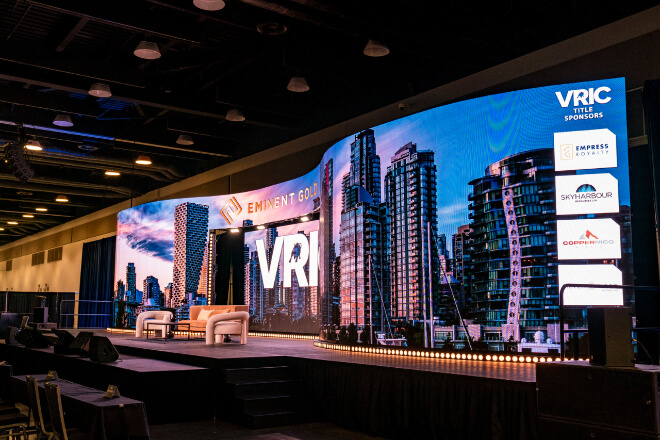
Another particularly “practical” advantage of LED displays is their ability to play multiple advertisements simultaneously, commonly known as a rotation mode.
Compared to traditional billboards that can only display one piece of content, LED screens are more like a “large screen with a schedule,” allowing different advertisers to allocate their time.
For example, a single screen can rotate several advertisements within a minute, each playing for a few seconds, creating a smooth and natural viewing experience.
For passersby, this means a constant flow of new content, preventing boredom; for advertisers, it’s equivalent to sharing a single prime location, offering greater cost flexibility.
For a simple example, in a high-traffic commercial area, if only one advertisement occupies a space for an extended period, the resource utilization rate is actually not high.
However, through a rotating display, different brands can be displayed in the same prime location, not only improving exposure efficiency but also maximizing the commercial value of the screen itself.
Furthermore, this rotating display can be adjusted according to the time of day. For example, it can play advertisements for catering and retail during the day and switch to entertainment.
Or event promotions at night, making the content more aligned with the needs of the target audience.
In this way, it’s not just about “showing more ads,” but about making smarter use of every second.
It can be said that multi-advertisement rotation is like turning a single screen into a “collection of multiple advertising slots,” enriching the content and significantly increasing revenue potential.
This flexible and efficient approach is one of the reasons why LED displays are so popular in large-scale outdoor advertising campaigns.
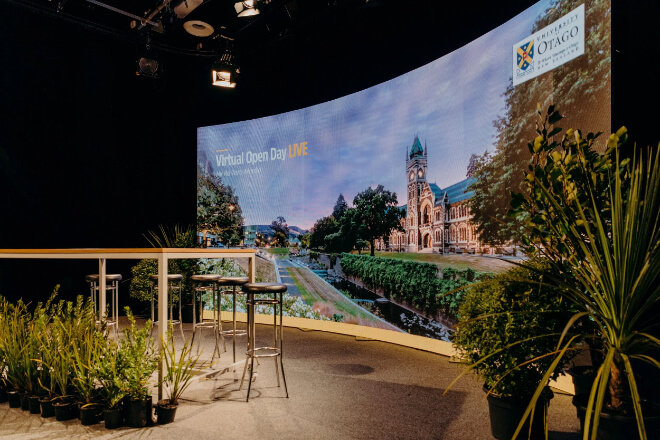
LED displays are somewhat like “all-rounders” in the advertising world, basically unrestricted by location.
You can see them in bustling commercial streets, at subway entrances, in stadiums, at concert venues, and even along highways.
In other words, it can be used almost anywhere there’s foot traffic and attention.
Interestingly, the same screen can “change its personality” in different locations.
In a commercial street, it’s an “atmosphere maker” that attracts passersby to stop and look; in a subway station, it’s more like an efficient information transmitter.
At a performance or event, it transforms into part of the organiser, specifically responsible for creating the atmosphere. The scene changes, the approach changes, but the effect remains consistent.
Moreover, it’s not only suitable for long-term deployments but also for temporary events. For example, for a brand pop-up event or a large-scale launch.
LED screens can be quickly set up and put into use immediately, and can be flexibly adjusted after the event without too many limitations.
This “on-demand, adaptable” characteristic makes it very convenient to use.
Simply put, LED displays are the kind that “go wherever they’re needed,” finding their place no matter how the environment changes.
This flexible and versatile nature makes it particularly effective in various outdoor advertising scenarios.
 English
  Español
  简体中文
简体中文  Français
  日本語
日本語  한국어
한국어  العربية