

Have you ever been drawn to a large screen in a centre commercial and found yourself stopping to look? Want your Affichage LED to have that same “magic”?
Interactive functions are key—touchscreens, QR code scanning, gesture controls, and even AR experiences can encourage customers to actively participate, rather than just glance at it.
Today, let’s talk about the interactive possibilities LED displays can offer, making your brand more engaging and memorable.

When considering placing an LED display in a centre commercial, showroom, or outdoors, you might first focus on the screen’s brightness, size, or resolution, but these parameters are just the basics.
What truly creates commercial value for you is whether the display has interactive functions.
Interactive LED displays not only display content but also generate tangible results for your brand, sales, and data operations.
First, interactive functions can enhance your brand image. Ordinary LED displays can only display information in one direction; users passively watch, easily forgetting your brand.
However, interactive LED displays allow users to touch the screen, participate in games, or scan QR codes, encouraging them to actively engage with the content.
This sense of engagement not only makes your brand more memorable for users but also increases the likelihood of social sharing, while making your brand appear more technologically advanced and innovative.
You’re no longer just displaying a lit screen; you’re creating a lasting brand experience for users.
Secondly, interactive features directly benefit your sales and operations. Interactive content on LED displays can keep users engaged for longer.
If you combine interaction with promotions, offers, or events, users may scan codes to receive discounts, participate in prize draws, or even make direct purchases.
For shopping malls or stores, this means your LED display is not just a display tool but also a conversion portal, helping you drive traffic, increase dwell time.
And boost sales opportunities. Interaction transforms the screen from a “backdrop” into a “sales booster.”
Thirdly, interactive LED displays also provide valuable data. By analysing user interactions on the screen, you can collect data such as dwell time, clicked content, engagement frequency, and user preferences.
This data can tell you which types of content are most engaging and which activities are most effective, providing a scientific basis for your subsequent content design and marketing decisions.
Without interaction, your LED display screen is merely a static display; with interaction, it becomes a digital asset that continuously generates value, providing quantifiable returns.
Finally, you must understand that as a decision-maker, you shouldn’t only focus on brightness and size.
The hardware parameters of an LED display screen only allow users to “see clearly,” but interactive features determine whether users are willing to stay, participate, and take action.
An LED display screen without interaction will quickly lose its investment value; while an interactive LED display screen can continuously enhance brand influence, promote sales conversion.
And generate analyzable data, truly making your investment generate long-term value.
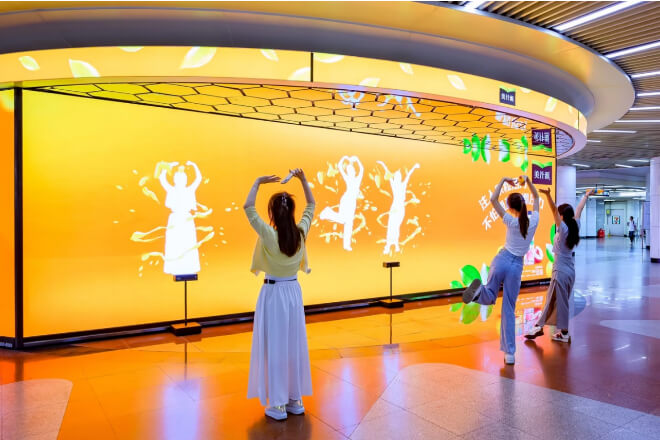
When considering purchasing an interactive LED display, it’s not just about what the screen can do, but also about its ability to stably and sustainably deliver these interactive effects.
Many so-called “interactive functions,” without mature technological support, are merely gimmicks.
They might attract attention in the short term, but are prone to problems like lag, malfunctions, or high maintenance costs.
First, there’s the hardware foundation. A truly stable interactive LED display relies on a control system, sensors, and a touch module.
The control system is like the screen’s brain, responsible for receiving user operations and sensor signals, and then displaying the content correctly.
Sensors can detect your movements, gestures, or proximity, allowing the screen to react accordingly.
The touch module ensures that the system responds quickly and accurately when you touch the screen.
Only with stable hardware can the interaction be smooth and natural, without delays or misoperations.
Second, there’s software and platform support. Interactive LED displays require more than just hardware; they also need a content management system (CMS) and a data analysis backend for support.
CMS allows you to easily manage screen content, update and adjust it at any time, and even achieve multi-screen interaction.
Data collection and analysis functions let you know how many people are participating in the interaction and which content is more popular, thus helping you optimise the effectiveness of your events.
Without the support of this software and these platforms, even the most dazzling interactive screens will be difficult to operate sustainably, with content updates becoming cumbersome and data becoming unreliable.
In summary, if your interactive LED display only relies on “fancy effects” to attract attention, without reliable hardware and mature software support, it will quickly become unstable or fail to realise its true commercial value.
When purchasing, you must pay attention to these technical safeguards to ensure that the screen’s interactive functions truly bring you brand enhancement, user engagement, and data value, rather than just being a decoration.
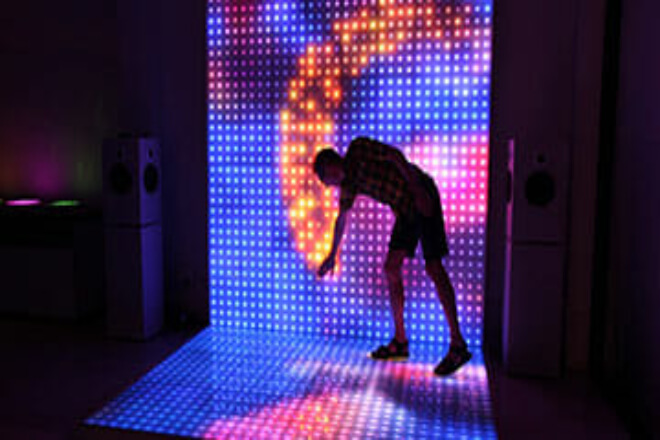
When considering investing in an interactive LED display for your venue or brand, there are several questions you must answer first.
Otherwise, you may buy a screen only to find that the functions are unnecessary or difficult to maintain.
First, you need to ask yourself: Which interactive functions truly align with my business goals? More functions are not necessarily better. If you simply want to attract people to stay, then motion sensing or touch interaction is sufficient.
If you want to collect user data, mobile QR code scanning or cloud-based interaction might be more suitable.
You need to clearly define your goals before choosing corresponding functions; otherwise, you might buy a screen where most of its functions are unused, wasting money.
Secondly, you need to consider the balance between cost and benefit. Each additional interactive function increases costs, not only the purchase price but also installation and setup costs.
If more functions mean higher costs, but low usage frequency or insignificant results, your return on investment will decrease.
Therefore, you need to carefully weigh whether the functions truly bring value to your brand, activities, or sales, and not just be “cool.”
Finally, you must focus on post-purchase maintenance and upgrade capabilities.
No matter how good the interactive functions are, if post-purchase maintenance is complex, prone to malfunctions, or upgrades are difficult, it will be a hassle for you.
You need to understand the manufacturer’s technical support capabilities, the ease of use of the content update platform, and whether the screen can flexibly adjust its functions as business changes.
Only in this way can your investment generate long-term value, rather than sitting idle for a few years.
In short, as a decision-maker, you need to be clear about: whether the chosen interactive functions truly serve your business goals, whether the return on investment is reasonable, and whether the functions are stable and sustainable.
Once you understand these points, your LED display screen won’t just be a decorative piece, but a tool that truly creates value for you.
 English
  Español
  简体中文
简体中文  Français
  日本語
日本語  한국어
한국어  العربية