
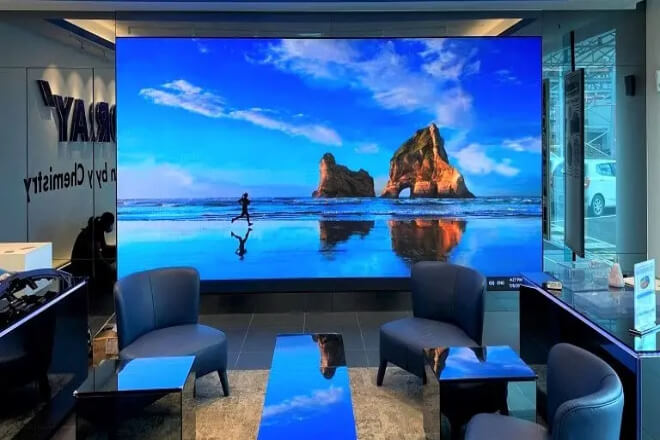
Afficheurs LED are no longer simply “screens”; they have a subtle relationship with the space they occupy.
Different spaces will give the same screen completely different values: lighting environment, distance de visualisation, functional requirements, and content presentation—each factor changes its role.
Therefore, understanding spatial differences is more important than simply pursuing technical parameters before installation and operation.
Today, we’ll discuss how to maximise the value of LED displays from the perspective of spatial differences.
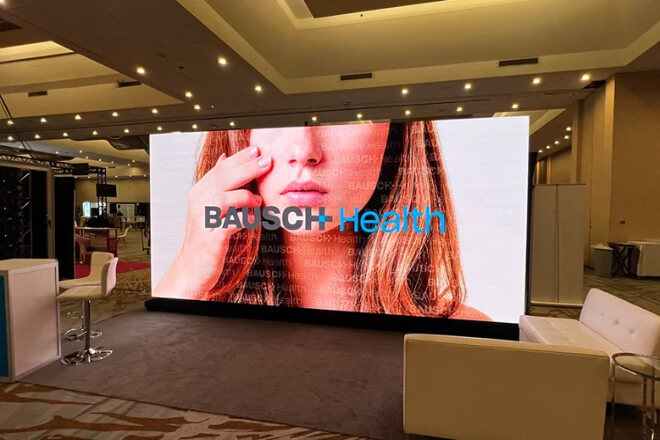
Many people think that LED displays simply need to “light up,” but the reality is far more complex.
In fact, spatial conditions directly affect the selection, installation, and operation strategies of the display and determine its maximum value.
Different viewing distances and lighting environments in different spaces directly affect image clarity, luminosité, and overall viewing experience.
For example, in the spacious atrium of a centre commercial, to attract passersby’s attention, the screen needs higher brightness, a larger size, and a wider viewing angle.
However, in small showrooms or brand experience stores, excessive brightness may be glaring; detail and colour reproduction are the core requirements.
Beyond physical conditions, the intended use of an LED display also varies depending on the space. Is it for advertising, brand display, information guidance, or interactive experiences?
Different goals will determine the focus of the LED display’s functions, such as taux de rafraîchissement, grayscale levels, brightness adjustment, and content update frequency.
Ignoring these spatial factors can lead to subpar results, even with the most advanced screen.
Design and operational strategies must also be matched to the space.
Properly assessing spatial conditions can avoid rework and over-investment, ensuring the display meets both visual requirements and commercial value.
In other words, LED displays are not a panacea; their “expressiveness” stems from understanding and appropriately utilising the space.
In summary: understand the space first, then select and use the LED display to truly make it a powerful tool for enhancing experience and commercial value.
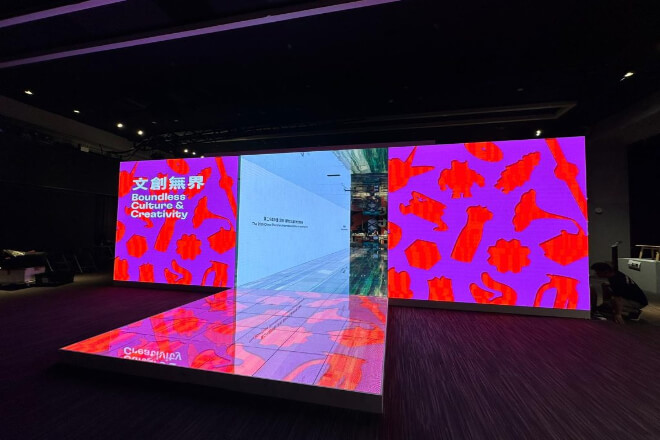
The display effect requirements of different spaces for LED displays are actually much more complex than many people realize.
Basic indicators such as clarity, luminosité, et angle de vue are not “one screen for all scenarios,” but rather need to be tailored to the specific space.
For example, in a spacious, brightly lit centre commercial atrium, you might need a large, high-brightness screen to attract the attention of passersby from a distance.
However, in a small showroom or shop window, excessively bright screens not only waste electricity but may also diminish the product’s detail and colour presentation.
Furthermore, the way content is presented needs to be adjusted according to the space. In a large space like an atrium, advertising screens can boldly play dynamic videos and creative animations to attract the attention of passersby.
In brand stores or experience zones, screens are more like companions in the space, used to enhance the atmosphere, showcase product details, and encourage customers to stop and take a closer look.
Even the same screen can present drastically different effects under different lighting conditions, background environments, and viewing angles.
This tells us an important lesson: LED displays are not a magic bullet that automatically produces outstanding results.
Their performance depends entirely on spatial understanding, content design, and matching viewing habits.
To make a screen truly a highlight of a space, you must first consider its location and then decide how it should “perform” to maximise its value in a way that is both aesthetically pleasing and efficient.
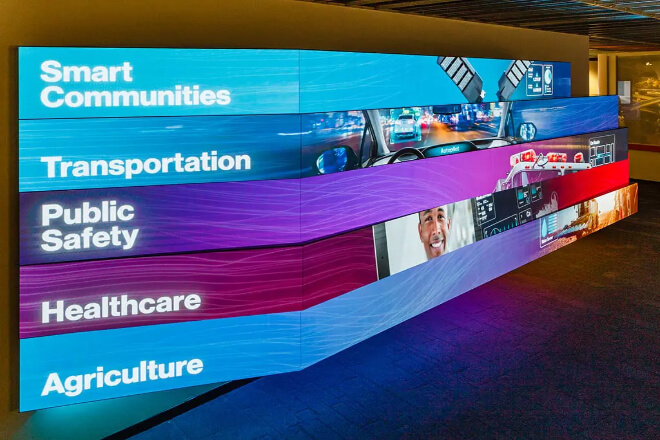
LED displays are not merely devices that “simply light up.” Their true value lies in how content is presented, which often varies depending on the space.
Different spaces have drastically different requirements for content type and update frequency:
In open spaces like centre commercial atriums, content needs to be dynamic, eye-catching, and updated frequently to make passersby stop and look.
In brand stores or showrooms, however, content focuses more on detail and storytelling, allowing for a slower, more refined approach, giving customers time to appreciate the content.
Information density and visual focus also vary by space. Spacious spaces can accommodate larger, richer images.
While smaller experience zones are better suited for highlighting key information, avoiding information overload, and ensuring viewers can grasp the core content at a glance.
More importantly, content must match the space’s function and the target audience. Advertising, brand promotion, wayfinding information, or interactive experiences—different objectives dictate the presentation style.
Only by integrating content design with the spatial environment, intended use, and audience behaviour can a display screen truly fulfil its purpose, rather than becoming a “shining decoration.”
In other words, the value of an LED display screen lies not only in its hardware, but more importantly in how you make the content “speak to the space.”
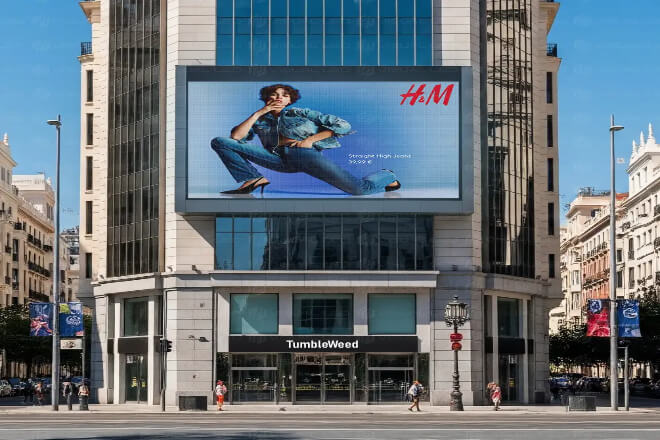
The functional and technical requirements of LED displays are not a matter of “one screen for all scenarios.” They vary significantly depending on the environment and purpose.
In large shopping mall atriums or urban facades, high brightness, high refresh rates, and remote centralized management are often essential functions—in other words, “bright from afar, stable, and easy to manage.”
In brand stores, shop windows, or showrooms, the screen is more like a “partner in the space”—lightweight, flexible, and with exquisite visuals.
The focus is on “integrating into the environment and attracting attention,” rather than stealing the spotlight from the entire space.
System integration requirements are equally diverse. Complex multi-screen interactions and linked displays require seamless cooperation between the screen and the backend system, ensuring synchronised visuals and smooth operation.
Single-screen or partial displays, on the other hand, can be easily handled, with low maintenance costs and simpler operation.
Functional requirements and technical configurations not only determine the screen’s performance but also directly impact cost and subsequent maintenance.
Therefore, LED displays are not “the more expensive, the better,” but rather “the more suitable, the more valuable.”
The smart approach is to first understand the space and clarify the objectives, then choose the appropriate functions and technical configurations.
This not only maximises the screen’s value but also ensures that the investment truly translates into long-term returns, rather than just being a “pretty decoration.”
 English
  Español
  简体中文
简体中文  Français
  日本語
日本語  한국어
한국어  العربية