
Introduction
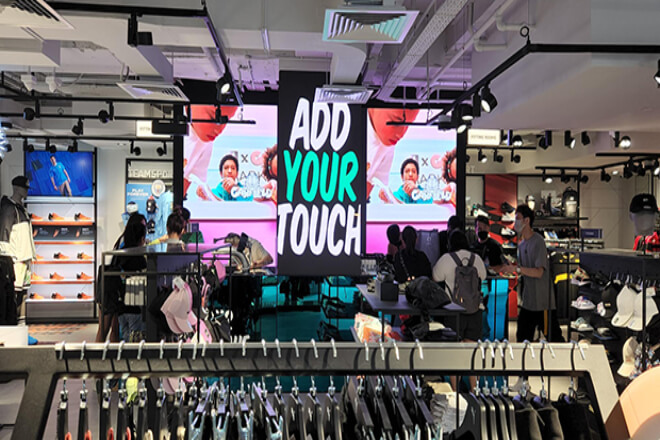
In the design of brand flagship stores, Afficheurs LED are no longer simply “lighting tools.”
They can be the first eye-catching element of the storefront, a dynamic story in the window display, or even a core element of the store’s atmosphere.
However, many brands use LED displays only as “screens,” neglecting the immersive experiences, interactive engagement, and brand value enhancement they can create.
This article will start with the flagship store scenario and outline ten application methods of LED displays to help you truly utilise the screen, making it not only “bright” but also “brand-oriented.”
Table des matières
Method 1: Attracting Initial Attention Through Storefront Facade Displays
The greatest magic of LED displays on storefronts or building facades is their ability to instantly grab the attention of passersby—like a brand’s “super eye-catching light.”
Dynamic images, vibrant colours, and high luminosité are far more vivid than traditional static signs, ensuring customers notice your store at a glance and instantly conveying your brand’s tone.
This visual impact not only makes your brand memorable but also subtly increases the desire to enter the store.
In the fast-paced city, passersby hurry by every day. A bright LED screen is like a beacon, saying, “Hey, come in and take a look!” Daily exposure reinforces brand image, helping customers remember your name and style.
Even better, storefront screens not only display products and promotional information, but also tell brand stories, play short videos.
Or provide interactive content, making the brand like a “living” street celebrity, attracting attention anytime, anywhere.
For flagship stores, chain stores, or pop-up events, LED screens become a “secret weapon” for traffic and conversion.
Simply put, an LED storefront screen is more than just a screen; it’s the brand’s first line of defence, making every passerby a potential customer.
Method 2: Window Displays Highlight Product Appeal
LED window screens transform shop windows from static display spaces into storytelling “mini étapes.”
Products can not only be displayed but also dynamically showcase usage scenarios, functional highlights.
And even tell brand stories, allowing customers to experience the product’s charm as they pass by.
This interactive display is more eye-catching than traditional posters or static window displays.
Passing customers may be drawn in by dynamic visuals, stopping to observe how to use and style products, or even amused by humorous elements in short videos or animations.
Such pauses not only increase product visibility but also improve conversion rates—significantly increasing the likelihood of turning a casual passerby into a potential customer.
Even more interestingly, LED window displays offer flexible content updates, showcasing new products, promotions.
Or holiday themes at any time, giving the window a fresh look every day and providing customers with something new to look forward to each time they pass.
For flagship stores, experience stores, or pop-up shops, this flexible and dynamic window display makes the brand image more vivid.
Allowing the products to “speak for themselves” and adding more creativity and fun to marketing.
Simply put, LED windows not only display products but also silently attract customers, turning every passerby into an effective touchpoint with the brand and its products.
Method 3: Creating an Immersive Experience with the In-Store Main Visual Screen
Inside the store, the LED main visual screen acts like a “spotlight” for the brand. As soon as it’s turned on, customers’ attention is automatically drawn to the core area.
The screen can play brand stories, showcase brand concepts, highlight product features, and even combine animations and short videos to directly convey the brand’s tone to customers.
Instantly filling the entire space with an immersive experience—like adding a “magic filter” to the store.
This design not only enhances the spatial hierarchy but also creates a genuine sense of participation for customers while browsing.
For example, when the screen displays new product usage scenarios or creative lifestyle demonstrations.
Customers feel like they’ve entered the brand’s microcosm, seeing not just products but a complete brand story and experience.
Dynamic visual focal points make people want to look for a few more seconds, increasing dwell time and making it easier to stimulate purchase interest and interactive behaviour.
Interestingly, the content updates on the LED main screen are incredibly flexible. Holiday themes, limited-time events, and new product launches can be quickly switched.
Adjusting the spatial atmosphere at any time, making the store feel like it has a different “face” every day.
It’s not just an information display tool; it’s more like a “brand director” within the store, guiding customers’ attention, controlling the pace, and reinforcing brand memory, making every in-store experience vivid and memorable.
In short, the main visual LED screen in the store transforms it from a place to sell products into an immersive stage that tells stories, interacts, and “performs.”
Customers aren’t just looking at products; they’re experiencing the brand. This experiential aspect directly enhances brand influence and customer favorability—turning every store visit into a “brand adventure.”
Method 4: Product Display Screens Enhance Information Delivery
In the store, LED product display screens act like the brand’s “personal guides,” showcasing not only the product’s appearance but also dynamically presenting details and functional highlights.
Compared to traditional text and image descriptions or static posters, screens can use videos, animations.
Or interactive content to allow customers to easily understand product features and usage methods, making information delivery vivid and intuitive.
The benefits of this approach are obvious: customers don’t need to painstakingly flip through manuals or rely on sales staff for explanations; they can quickly understand product advantages and usage scenarios.
For new product promotions or products with complex functions, LED display screens are particularly effective—they allow customers to quickly upgrade their understanding and improve the efficiency of their purchasing decisions.
Even more interestingly, the screen content can be updated or switched at any time to tell different product stories:
New product demonstrations in the morning, customer testimonial videos at noon, and promotional information or bundled recommendations in the evening.
This dynamic and flexible display makes every customer feel like watching a “mini brand show,” simultaneously improving information delivery efficiency and visual experience.
Simply put, LED product display screens are not just display tools, but also “intelligent interpreters” for the brand, conveying product advantages to customers in the most intuitive and attractive way, making every visit more valuable.
5. Conclusion
In flagship stores, LED displays are not just tools for information display, but also media for brand expression.
Choosing the right content, placing it in the right location, and combining it with interactive and spatial design can transform an ordinary store into one that is memorable and attractive.
Conversely, if it is merely treated as a “bright screen,” even the most high-end equipment can become an “overpriced decoration.”
In the era of digital stores, the true value of screens lies in the integration of visuals, content, and space—enhancing brand image through technology, rather than simply existing as a tool.
Finally, for more information about LED displays, veuillez nous contacter.
 English
  Español
  简体中文
简体中文  Français
  日本語
日本語  한국어
한국어  العربية