
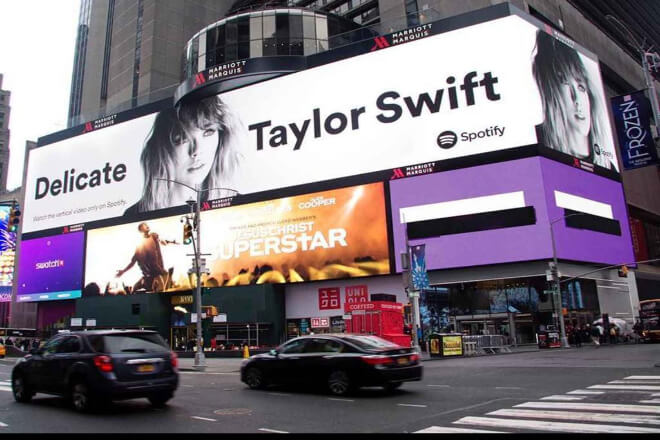
Are ultra-high-definition Écrans LED really necessary? Have you ever been drawn to a dazzling giant screen in a centre commercial, or felt your heart race at a concert or stadium with its breathtaking visuals?
Or perhaps, in an aéroport or subway station, the first thing you see is an information screen, instantly guiding you to your destination.
These scenarios inevitably make you wonder: Do we really need such large screens? What is their true value?
Today, let’s talk about the charm and advantages of ultra-high-definition LED screens, as well as some of the less obvious challenges they present.
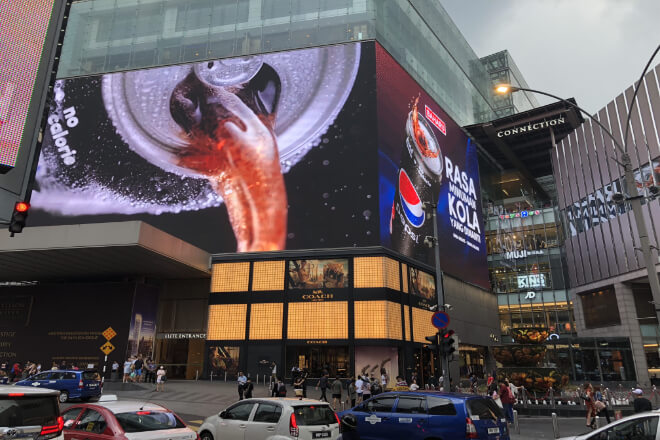
With the development of display technology, ultra-high-definition LED display screens have become core display equipment in large venues, exhibitions, outdoor advertising, and even business conferences.
So, what exactly is an ultra-high-definition LED display screen?
Simply put, an ultra-high-definition LED screen is a giant screen that emits its own light. Each pixel is a tiny “light-emitting guardian” composed of red, green, and blue LED beads.
These beads independently control luminosité and color, ensuring the screen presents the clearest and most vibrant image, day or night. “Ultra-high definition” means extremely high resolution, from 4K to 8K or even higher.
Whether you stand 1 meter in front of the screen or 50 meters away, you can see every detail clearly: text is crisp and sharp, the image is rich in detail, and the colors are as vibrant as the real world.
Seamless splicing, ultra-high résolution, vivid colors… LED screens are like a giant canvas that can “come alive.”
Whether it’s an exposition, un sporting event, or a commercial advertisement, it can directly convey information, images, and even emotions to the audience.
Standing in front of such a screen, the audience doesn’t just see the image, but enters into it. Text is more impactful, videos are more immersive, and the atmosphere of the entire space is instantly ignited.
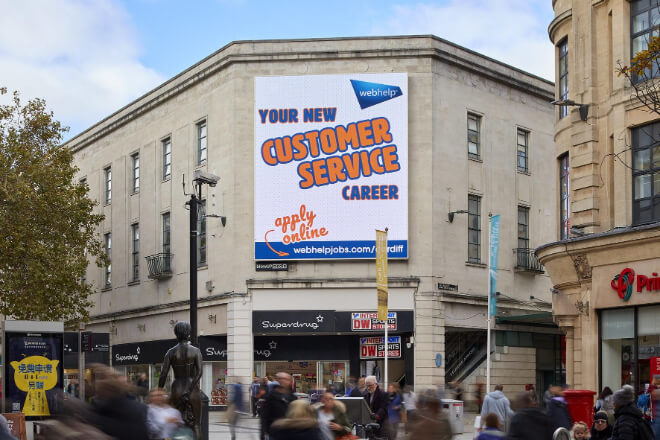
As the demands for visual effects in information dissemination increase, ultra-high definition LED display screens are becoming an indispensable “visual weapon” in various modern scenarios.
1) Commercial Advertising and Digital Signage
Grand centres commerciaux, business districts, and billboards are the forefront of brand display.
Ultra-high-definition LED screens, with their high luminosité and high contrast, ensure advertisements are clearly visible even under direct sunlight, attracting customer attention.
Each frame displays vibrant colors and rich detail, bringing products and promotional information to life and generating stronger customer interest and memorability.
Furthermore, LED screens offer flexible content updates, allowing for rapid switching of advertising or promotional materials, providing endless possibilities for brand marketing.
Compared to traditional LCD or inkjet advertising, LED screens make brand communication more vivid and impactful.
2). Des sports Venues and Concerts
At stadiums or concerts, every audience member wants to see every detail of the event or scène.
The ultra-high-definition LED screen’s large size and seamless splicing ensure clear images for every audience member; the high refresh rate guarantees smooth, lag-free motion or stage visuals.
The realistic colors and rich detail make every movement of the athletes and every beam of stage light clearly visible.
LED screens allow audiences to experience the game or performance as if they were there, pushing the atmosphere to a climax.
3). Aéroports, train stations, and other public places
In public places such as airports, train stations, and subway stations, information must be clear, eye-catching, and easy to read.
Ultra-high-definition LED screens, with their superior luminosité et angles de vision, ensure that flight and train schedules, weather information, or announcements are clearly visible even in bright environments.
At the same time, city promotional videos or directional information displayed on large screens can enhance the modernity and technological feel of the space.
More importantly, the content can be flexibly adjusted, and emergency notices or commercial information can be released instantly, greatly improving management efficiency and user experience.
LED screens make public places not only efficient and practical but also more visually appealing.
Many people’s first reaction to the price of ultra-high-definition LED screens might be: “Wow, that’s too expensive!”
Actually, it’s like buying a high-end sports car—it looks expensive, but the performance and experience are completely different.
The value of LED screens lies not only in their dazzling images but also in their long-term stability and the returns they bring. Let’s discuss this in three parts.
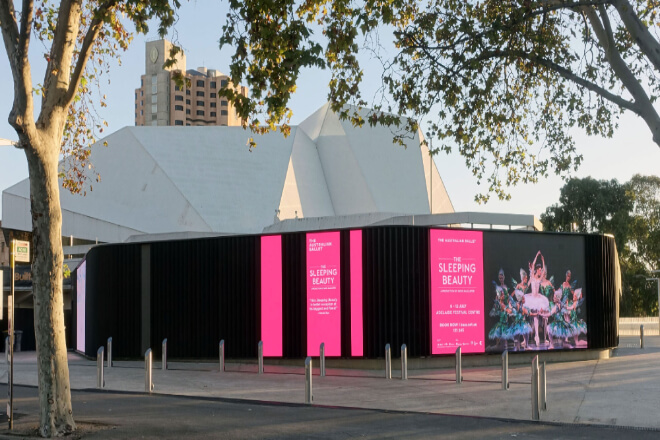
Ultra-high-definition LED screens look glamorous, but there are some technical challenges behind the scenes.
Just like a sports car, while impressive, it requires some driving skill to drive. Let’s look at the challenges these large screens may encounter in real-world use.
1) Challenges in Content Production and Transmission
Imagine you have an 8K ultra-high-definition LED screen, but you only have standard-definition video. Can the image still be considered “stunning”? The answer is clearly no.
Ultra-high-definition LED screens have extremely high requirements for content quality: 4K, 8K, or even higher résolution videos, animations, and advertising materials are needed to fully utilize the screen’s capabilities.
However, the production, storage, and transmission of high-resolution content remain a challenge: large files, slow transmission, and complex processing.
It’s like having a supercar but only being able to drive it on muddy roads, unable to fully utilize its performance.
2) Energy Consumption
Ultra-high-definition LED screens have high luminosité and dense pixel density, naturally consuming more electricity.
Compared to ordinary LCD displays, power consumption is indeed higher, especially for outdoor screens operating continuously for extended periods.
However, modern LED screens increasingly emphasize energy-saving designs, employing technologies such as intelligent dimming and local brightness control to reduce energy consumption while maintaining display quality.
In general, the high power consumption of LED screens is a fact, but it is being gradually optimized.
3) Technological Maturity
Ordinary LED screens have been on the market for over a decade, with very mature technology, few problems, and easy maintenance.
However, ultra-high-definition LED screens, due to their higher resolution and denser pixels, require more stringent requirements in production processes, splicing accuracy, and color calibration.
Therefore, compared to traditional LED screens, technological challenges still exist, especially the seamless splicing of large-sized screens.
And long-term color stability, which still require experience and professional debugging.
In other words, the technology is mature, but it demands a higher level of expertise from both suppliers and users.
 English
  Español
  简体中文
简体中文  Français
  日本語
日本語  한국어
한국어  العربية