
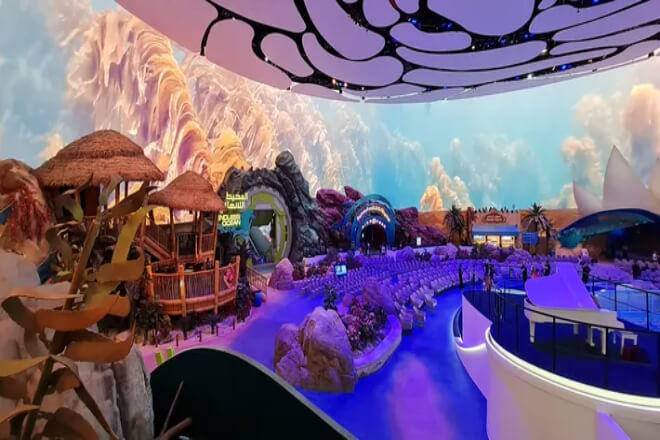
In theme parks, LED displays have long been more than just information display tools.
They are an important component in creating atmosphere and enhancing the experience. From the moment visitors enter the park, the displays begin to play a role.
In the entrance area, LED displays are often used to showcase thematic visuals, welcome messages, and event announcements, allowing visitors to quickly immerse themselves in the story’s atmosphere.
Around various amusement rides, screens can display background animations, plot introductions, or queue information, making the waiting process less monotonous.
In virtual reality interactive areas or immersive experience zones, the role of LED displays is even more prominent.
Through large-area, high-résolution image displays, combined with sound effects, lighting, and scene design, visitors feel as if they are in another world.
The images are no longer just something to “look at,” but are integrated with the surrounding landscape, becoming part of the experience.
By combining LED displays with the theme story, park landscape, and interactive content, an immersive environment can be effectively created.
Dynamic images change with the scene, keeping visitors engaged and entertained throughout their journey.
This visual continuity and sense of immersion not only enhances the visitor’s sense of involvement but also makes the theme park more attractive and memorable overall.
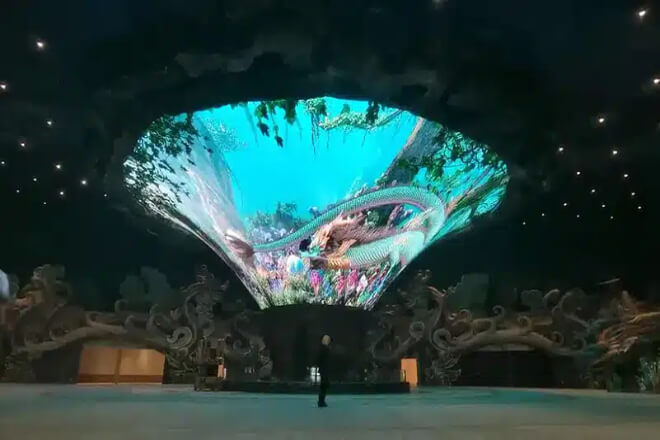
A large part of the charm of a theme park comes from the story itself, and LED screens are an important tool for telling that story effectively.
Through continuous dynamic visuals, the screens can gradually unfold the theme park’s worldview, characters, and plot, allowing visitors to unconsciously enter the story.
For example, projecting or displaying images onto walls, corridors, or building facades creates a virtual environment, allowing visitors to feel as if they are immersed in the scene where the story unfolds, rather than simply “watching a screen.”
In practical applications, LED screens can continuously change the images as visitors move through the space, from scene setting and plot development to the climax, creating a complete narrative experience.
This approach makes the story not just a one-time display but something that runs throughout the entire visit, enhancing continuity and immersion.
At the same time, combining LED screens with sound and lighting effects can further amplify the story’s impact.
Image changes combined with background music, environmental sound effects, and changes in lighting will make it easier for visitors to become immersed in the plot and experience emotional resonance.
When visual, auditory, and environmental effects work together, visitors are not just spectators, but a part of the story, which is the most appealing aspect of immersive experiences.
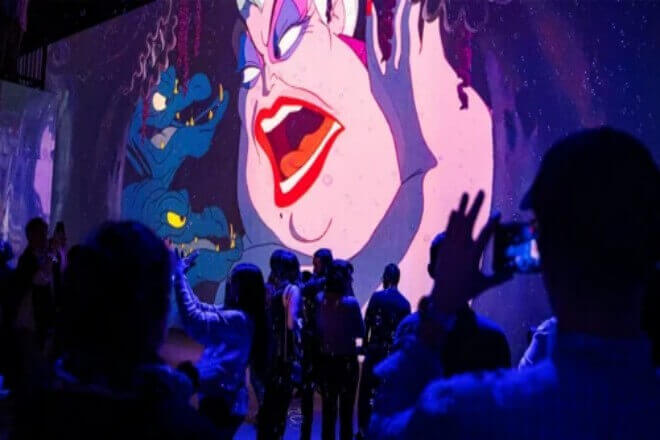
In theme parks, what truly makes a visitor remember an experience is often not just the visuals, but “what I participated in.”
By incorporating interactive technologies such as touch screens and motion sensing into LED screens, visitors can transform from spectators into participants, greatly enhancing immersion and fun.
Touch screen interaction is a relatively common and easy-to-use form.
For example, in a themed scene, visitors can choose different routes or tasks by touching the LED screen; different choices will trigger different images and plot developments.
Some projects even allow visitors to click on props on the screen to change the weather, lighting.
Or environmental elements in the scene, making the entire experience more “participatory” rather than a fixed, unchanging viewing experience.
Motion-sensing interaction makes the experience even more natural and fun. By sensing the visitor’s body movements, the virtual characters or scenes on the LED screen will react in real time.
For example, when a visitor waves, the character on the screen will wave back; when a visitor runs or jumps, the scene on the screen will change accordingly.
In some interactive areas, visitors can even “control” virtual characters to complete tasks, enhancing immersion and interactive fun.
Through these interactive projects, LED screens are no longer just displaying the story background but have become an important part of driving the experience forward.
Every choice and action of the visitor influences the visuals and the story’s progression, making the experience more vivid and memorable, and making the theme park as a whole more attractive.
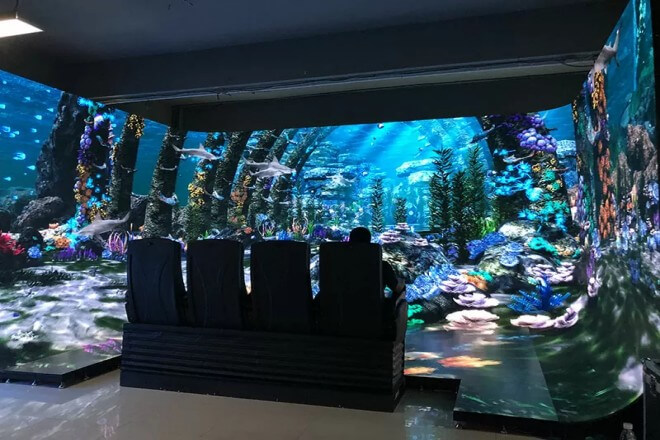
In theme parks or large commercial spaces, a single screen is sometimes insufficient to meet the demand for visual impact.
In this case, by splicing multiple LED displays together, a super-large visual scene can be created, allowing visitors to be “surrounded” by the image as soon as they approach.
Through reasonable layout design, multiple LED screens can be seamlessly spliced into a single giant image, even covering walls, facades, or corner spaces, forming a continuous visual space.
The image is no longer limited to a single plane, but can extend in different directions, making visitors feel as if they are immersed in the image.
For example, in large-scale themed scenes, the screens can simultaneously display the sky, buildings, and environmental changes.
As the story progresses, the images in the entire space change synchronously, creating a strong sense of immersion.
This stunning effect, brought about by multi-screen splicing, is often more visually impactful.
The super-large screen, combined with high luminosité and high-definition display, leaves a deep impression on visitors, whether it’s dynamic scenes, special effects, or the climax of the story.
Compared to a single screen, large-scale splicing makes it easier to create a grand scene atmosphere and is more likely to attract visitors to stop, watch, and take photos to share.
Through the application of large-scale LED screen splicing, the attractiveness and visual layering of the attraction itself will be significantly improved.
The image and space are integrated, allowing visitors to not only watch a display, but to “walk into” a scene, which is the most compelling aspect of an immersive experience.
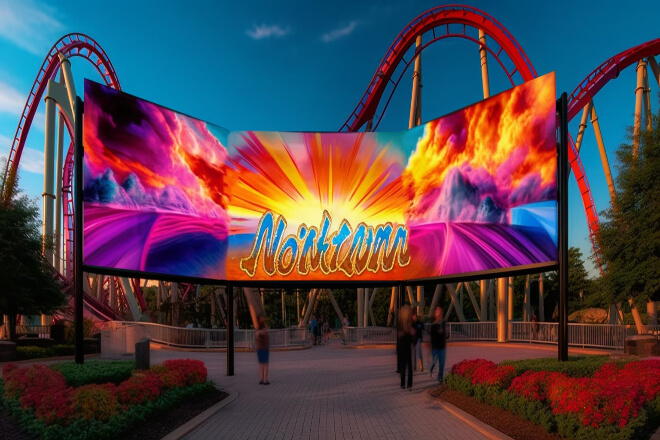
In addition to visuals and interactive forms, LED displays play a very important role in theme parks: transforming “real-time changing information” into part of the experience.
By connecting to the back-end system, the screens can display visitor behavior, environmental changes, or activity progress in real time, making the entire park appear more flexible and vibrant.
For example, LED displays can show real-time visitor interaction feedback or voting results.
In some interactive areas, visitors make choices through their mobile phones or on-site devices, and the voting results are immediately displayed on the large screen, directly affecting the subsequent plot or game content.
This “instant decision, instant change” experience gives visitors a greater sense of participation and makes them more willing to invest in the experience.
Real-time data can also be used to display information such as weather changes, activity times, or performance progress, but the presentation doesn’t have to be limited to traditional announcements.
Through creative visual design, weather changes can be transformed into changes in scene imagery.
For example, the screen darkens when it rains, and the imagery flows faster when it’s windy, allowing the information to be naturally integrated into the experience.
In games or interactive projects, real-time data also brings more possibilities.
LED displays can dynamically adjust screen content and difficulty based on the number of visitors, interaction frequency, or completion status, making each experience unique.
This flexible and dynamic display method not only enhances the fun of the experience but also makes the theme park as a whole more attractive and engaging.
By combining LED displays with real-time data, theme parks can create a “smarter” interactive environment, transforming the experience from a fixed process into an immersive journey that constantly changes with the visitors and the environment.
 English
  Español
  简体中文
简体中文  Français
  日本語
日本語  한국어
한국어  العربية