
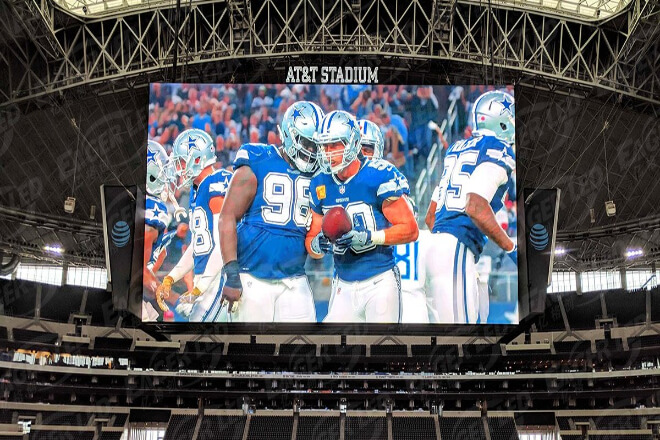
In modern des sports venues, the audience experience is no longer limited to quietly watching the game from the stands.
With technological advancements and the diversification of audience needs, the challenges faced by venues have become more complex.
How to enhance audience engagement and interaction while increasing commercial value has become a core problem that venue managers need to solve.
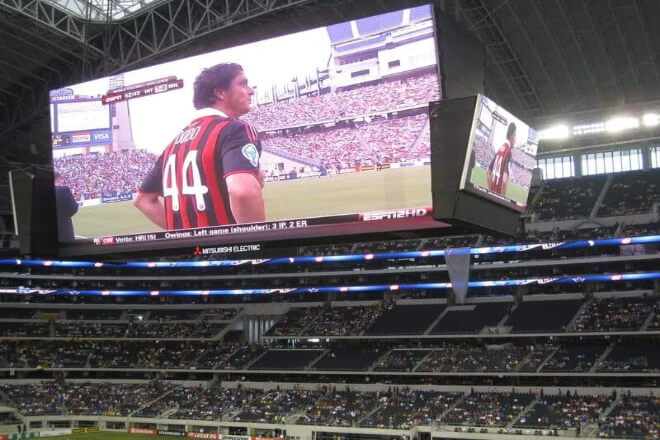
With the continuous development of the sports and entertainment industries, Afficheurs LED have become an indispensable part of modern venues.
It is not just a tool for displaying information, but also an important technological means to enhance the audience experience, strengthen brand influence, and improve venue management efficiency.
From the perspective of operations and audience experience, the core value of LED displays in venues is reflected in several aspects:
Different types of sports venues have varying audience sizes, layouts, and functional requirements, so the selection and layout of LED displays need to be specifically designed.
A reasonable screen configuration can not only enhance the audience experience but also maximize the operational value of the venue. The following are LED display solutions for several typical venue types:
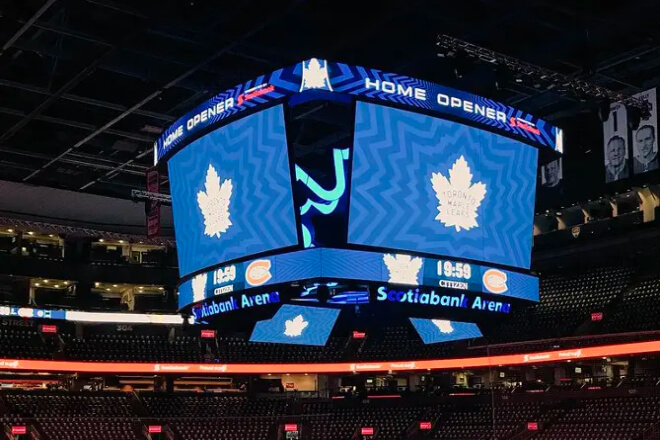
1). Large Stadiums/Multi-purpose Arenas
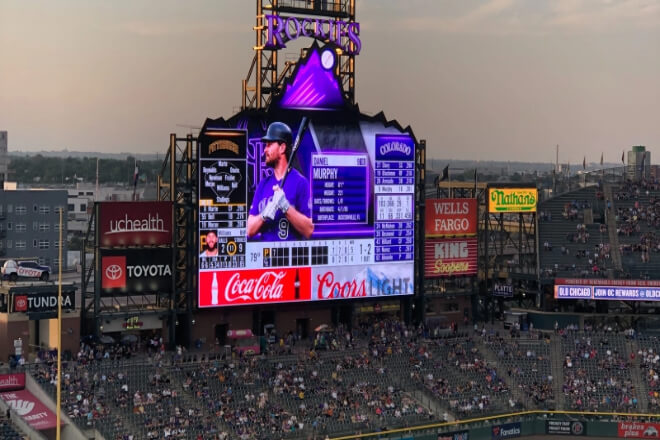
For large stadiums or multi-purpose arenas that can accommodate tens of thousands of people, the audience is widely distributed, and the viewing distance is long.
Traditional single screens cannot meet the visual needs of all spectators. Circular LED screens and the main grandstand large screens are the best choices:
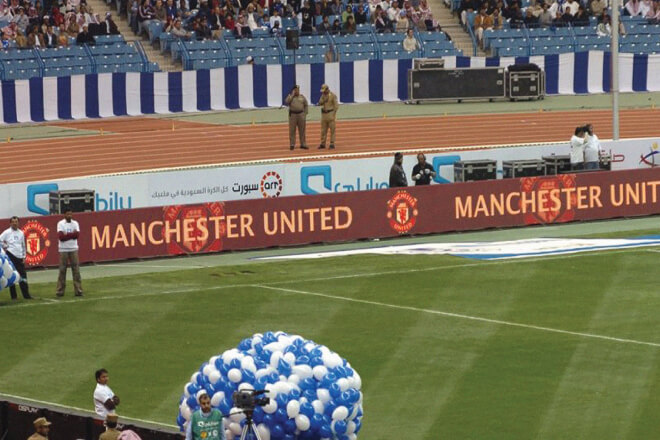
Circular LED screens surround the entire arena, displaying scores, game data, advertising information, and interactive content, allowing spectators far from the field to clearly obtain information.
The main grandstand LED display is used to play highlights, slow-motion shots, and game clips, enhancing visual impact and immersion.
Affichages LED flexibles can be arranged along the edges of the stands or the periphery of the venue to integrate brand promotion with the event atmosphere, while also increasing commercial revenue.
This configuration allows spectators, regardless of their location, to enjoy clear and comprehensive game information and interactive experiences, while also creating more commercial value for the venue.
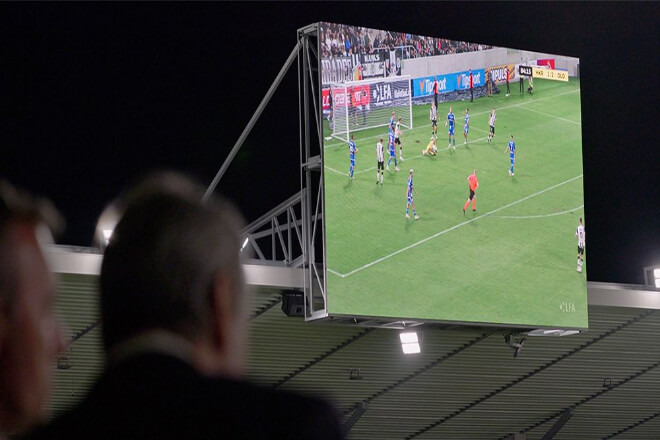
2). Medium and Small-sized Venues
Medium and small-sized venues have relatively compact spaces and concentrated audiences, allowing for more flexible screen layouts:
A central LED large screen is directly suspended in the center of the venue or above the field, ensuring that every spectator can see scores, real-time statistics, and replays.
Multi-screen combinations, by arranging small LED screens in different corners, achieve multi-angle information coverage, catering to the viewing needs of different audiences.
This configuration not only saves costs but can also be flexibly adjusted according to the venue structure and activity type, balancing visual experience and operational efficiency.
3). Indoor Basketball/Volleyball Courts
Indoor basketball and volleyball courts usually have limited space, but high audience density, requiring high screen clarity and real-time performance:
Side LED screens are arranged along both sides of the venue, displaying game data, player statistics, and replays, allowing spectators far from the main screen to clearly watch the game.
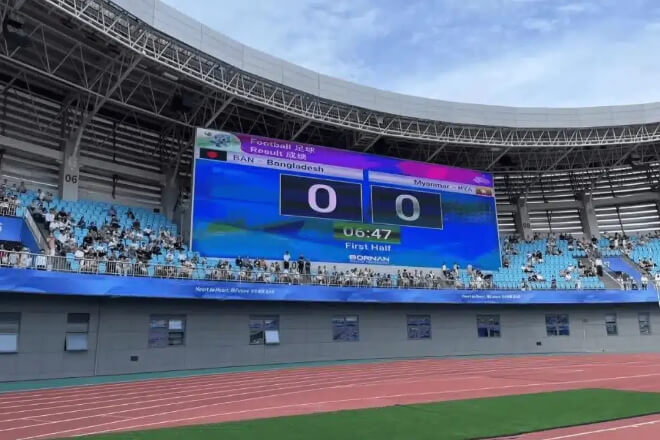
LED scoreboards are integrated to ensure that scores and game time are always visible, while also providing dynamic content and interactive elements to enhance on-site participation.
This combination design balances information display and visual comfort, ensuring that every audience member has a good viewing experience from their seat.
In modern venues, LED displays are no longer just tools for “displaying scores,” but rather a core means of comprehensively enhancing the audience experience.
First, in terms of viewing experience, high-definition large screens and high refresh rates allow audience members in distant seats to clearly see game details, slow-motion replays ensure that no exciting moment is missed.
And real-time statistical data satisfy the audience’s need for an in-depth understanding of the game.
For example, in many modern NBA arenas, the large screens not only display scores and time.
But also simultaneously display real-time data such as player shooting percentage and running distance, allowing the audience to enjoy immersive real-time game information while enjoying the visual experience.
Secondly, in terms of interactive experience, LED displays can enhance audience participation and increase on-site activity.
Voting interactions, prize draws, and real-time social media content displays allow the audience to become part of the game, rather than simply being spectators.
For example, a European football club displays real-time audience voting results and social media fan comments on the stadium’s large screen.
Data shows that these interactive segments can extend the time audiences spend in the venue by 15%-20%, while also increasing spending within the venue.
In terms of atmosphere experience, LED screens, combined with lighting, color, and animation content, can adjust visual effects in real time with the rhythm of the game, strengthening the emotional impact of the match.
Opening shows, halftime performances, goal celebrations, and even advertising displays can be seamlessly integrated with the on-site rhythm through the screens, making the entire venue vibrant.
For example, after a large American baseball stadium introduced dynamic LED lighting and stadium animations, audience satisfaction with the game atmosphere increased by approximately 18%, and the proportion of returning customers also increased significantly.
In addition, LED displays can provide a convenient experience: audiences can access game information, advertising information, seating guidance, catering, and surrounding service information on a single screen.
This “one-screen access” experience eliminates the need for audiences to frequently check their phones or ask staff for information, thus improving the overall viewing convenience.
From industry data, there is a clear correlation between the use of LED displays and audience satisfaction and ticket revenue.
According to research by a North American sports league, venues that introduced high-definition interactive LED displays saw an average increase in audience satisfaction of 15%-20%.
And ticket revenue increased by approximately 8%-12%, particularly noticeable in peak events and VIP ticket sales.
This shows that LED displays not only enhance the audience experience but also directly boost the commercial value of the venue, achieving the dual goals of “experience upgrade – increased business revenue.”
LED displays can indeed upgrade the audience experience and bring more business opportunities.
But before investing, several key points must be considered to avoid spending money without achieving the desired results.
1). Screen Size, Résolution, et Luminosité Must Suit the Venue
Choosing a screen isn’t about bigger or brighter being better; it’s about matching the screen to the actual conditions of the venue.
Large venues may require circular screens or extra-large main screens so that even spectators in distant seats can clearly see the scores and highlights.
Smaller venues may only need a central large screen or several combined screens.
Brightness should also be considered carefully – outdoor venues need to withstand direct sunlight, while indoor venues shouldn’t be dazzling.
If the screen size, resolution, and brightness are unsuitable, the audience won’t be able to see the content clearly, and the experience will be compromised.
2). Installation and Maintenance Must Be Simple and Feasible
LED screens aren’t a one-time purchase; they require installation, debugging, and daily maintenance.
Large screens are particularly complex, involving hoisting, wiring, waterproofing, and dustproofing.
If maintenance is too troublesome, any future malfunctions could affect the game and the audience’s experience.
Choosing modular, easily replaceable screens is much better, making debugging and module replacement convenient and ensuring the screen’s long-term stable operation.
3). Content Updates Must Keep Pace
Even the best screen hardware is useless without good content.
Scores, slow-motion replays, interactive voting, advertisements, animations… this content must be continuously updated and synchronized with the pace of the game and events.
If the content isn’t updated or lacks creativity, the audience will quickly find the screen “boring,” and the interactivity and immersion will decrease.
It’s best to plan the content production team and update process in advance to ensure the screen remains attractive.
4). Return on Investment Must Be Clearly Calculated
LED screen investments are usually substantial, so the return on investment must be carefully considered.
Revenue sources include advertising, sponsorships, ticket value-added services, and merchandise sales.
For example, the circular screen and main screen can display advertisements, and interactive voting or raffle activities can drive on-site consumption.
It’s best to simulate the ROI in advance, considering audience traffic, event type, and sponsor needs, to see how much direct and indirect revenue the screens can generate.

In the investment and operation of LED display screens, many venues easily fall into certain “traps,” resulting in investments that don’t deliver their intended value.
Understanding these common pitfalls and adopting targeted strategies can make the screens a powerful tool for enhancing audience experience and commercial value.
Pitfall 1: Focusing only on hardware, neglecting content and interactive experience
Many venues, when purchasing LED screens, focus entirely on hardware parameters such as size, resolution, and brightness, while neglecting the design of screen content and interactive strategies.
As a result, although the screens are large and dazzling, the audience only sees scores and advertisements, lacking a sense of participation and immersion.
To avoid this problem, venues need to plan their content ecosystem in advance, including real-time scores, slow-motion replays, player data, interactive voting, and social media updates.
At the same time, the screen content should be closely integrated with the event rhythm and on-site activities, allowing the audience to truly participate, rather than simply passively receiving information.
Pitfall 2: Blindly pursuing large screens while ignoring the actual angles de vision of the audience
Some venues, in pursuit of visual impact, purchase oversized screens without considering the actual viewing angles.
And distances of the audience’s seats, resulting in a poor viewing experience for some seats, or even blurry or obstructed views.
To avoid this problem, the screen size and layout should be planned based on the size of the venue, seat distribution, and audience viewing distance.
In large venues, a circular screen, multi-screen combination, or main screen + side screen approach can be used to ensure that every audience member can see clearly, rather than simply pursuing the “shocking effect” of the screen.
Pitfall 3: Treating LED screens as a one-time decoration, rather than a tool for long-term experience enhancement
Some venues only invest in LED screens during opening ceremonies, major events, or peak concert periods, treating them as a “venue highlight” or decoration.
Once the event ends, the screens are left idle, or the content updates lag behind.
This not only wastes investment but also fails to create long-term audience experience value.
The solution is to treat the LED screen as a long-term operational tool, not a one-time decoration.
Venues should plan for continuously updated content and interactive activities to ensure the screen is utilized throughout the year, including during regular matches, training days, performances, or commercial events.
At the same time, the effectiveness of the screen’s use should be regularly evaluated, audience feedback collected, and content and interaction methods continuously optimized to maximize the long-term value of the screen.
 English
  Español
  简体中文
简体中文  Français
  日本語
日本語  한국어
한국어  العربية