
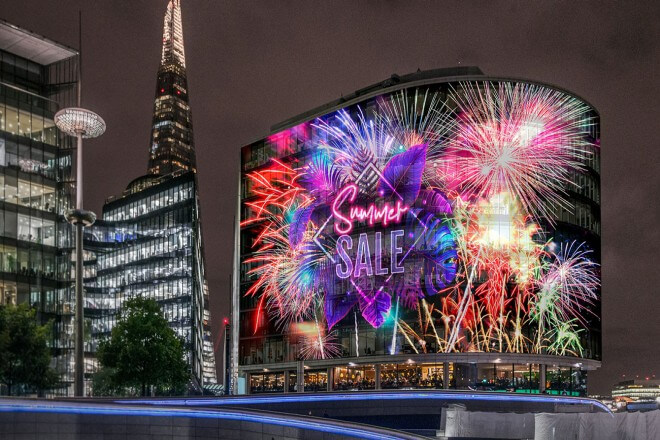
Luminosité and color performance are crucial for an LED display to truly be “seen.”
Especially in outdoor environments, under strong sunlight, ordinary screens are easily “smothered” by the light, appearing grayish or washed out.
High-brightness LED screens, however, remain clearly visible even under midday sunlight.
At night, their high-saturation colors and vivid contrast make the image even more striking, quickly grabbing the attention of passersby.
In practical applications, increasing brightness and optimizing color calibration can make the image more vibrant and impactful.
For example, when playing brand promotional videos or event posters, bright reds, blues, and dynamic images will stand out against a row of ordinary signs.
The strong and clear visual effect naturally makes LED displays the “visual center” of public spaces, attracting people to stop and watch.
From an effectiveness standpoint, the advantages of brightness and color not only enhance screen visibility but also directly strengthen the communication effect.
People are more easily attracted to vivid images, thus increasing dwell time and information retention.
Simply put, only by being clear, bright, and eye-catching can the true value of an LED display screen be realized.
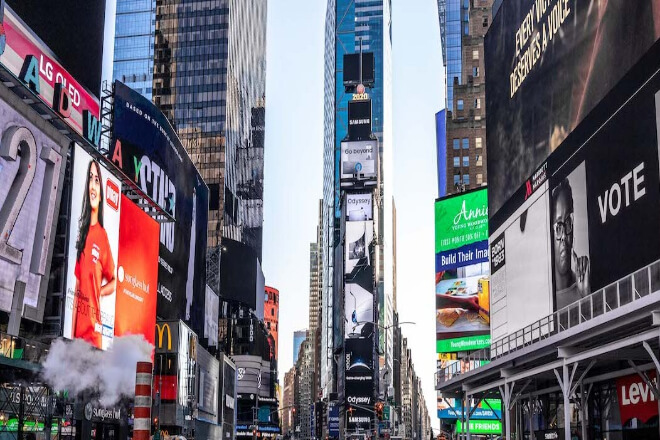
Si luminosité and color are the first step in “attracting attention,” then creative content is the key to making people truly remember a city.
LED displays are not just for playing advertisements; they can also become creative windows in urban spaces.
By showcasing dynamic artworks, city-specific logos, and even combining animation, 3D images, and art videos, the screen itself can become a symbolic visual landmark.
In practice, content design can revolve around urban cultural elements, such as incorporating local history, natural landscapes, or representative architecture into animated creations, producing looping art short films.
Special themed visual content can also be launched during festivals, making the entire screen part of the festive atmosphere.
When the screen is no longer just an “information carrier” but participates in the city’s expression, its presence becomes entirely different.
Such art displays significantly enhance a city’s cultural atmosphere, making public spaces more layered and vibrant.
People are more willing to take photos and share them, and are more likely to form unique impressions of the city.
Over time, these visual symbols become part of the city’s brand, improving its overall image and cultural identity.
In other words, a creative LED screen is not just about lighting up; it’s about telling a story for the city.
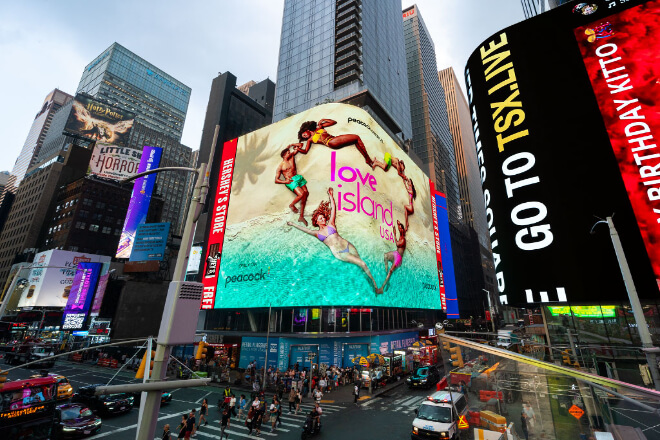
A screen that merely “plays” has limited appeal, but when it can be “interactive,” the atmosphere is completely different.
By setting up audience voting, real-time message boards, social media content displays, and even dynamic interactive advertisements on LED displays, the screen is no longer a one-way communication tool, but a participatory public platform.
The specific implementation is actually not complicated. For example, when holding events in city squares, on-site attendees can scan QR codes to participate in voting, with the real-time results displayed directly on the large screen.
Or a photo wall function can be set up, allowing people to instantly see their photos on the screen.
When promoting brands, interactive mini-games or real-time data feedback can make advertising content more interesting, rather than simply displaying images.
Such interactive design transforms the public from “bystanders” into “participants.” When people see their choices, comments.
Or photos appear on the large screen, their sense of participation and belonging is significantly enhanced.
Urban spaces thus become more vibrant and welcoming, and more likely to foster a lively and active public atmosphere.
The more natural the interaction, the stronger the screen’s presence, and the closer the connection between the city and its people.
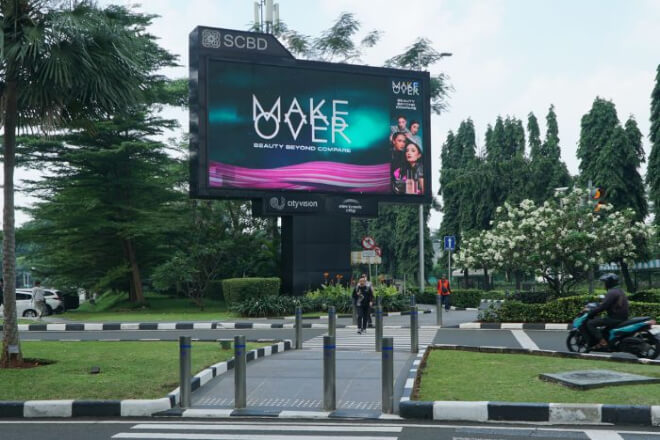
In commercial districts or centres commerciaux, competition is often fierce.
Every shop tries to attract passersby’s attention, and a large, prominently positioned LED display screen can quickly become the visual center of the entire block.
By installing high-quality LED screens in core areas, continuously playing brand advertisements, limited-time promotional information, new product launches.
Or mall navigation content, passersby can receive the most crucial information in a short time.
In practice, locations such as entrances, atriums, or street corners with the highest foot traffic can be chosen, placing the screen within the “must-see” range.
Utilizing large-screen displays, dynamic videos, and rhythmic visual content creates a greater impact than traditional static posters.
For example, launching countdown promotions during holidays, with screens scrolling “Only 3 hours left,” often stimulates immediate consumer action.
Alternatively, creating an atmosphere through brand image videos can generate interest in a brand before customers even enter the mall.
From an effectiveness standpoint, the high luminosité and dynamic display methods of LED displays naturally increase brand exposure and memorability.
People are more easily attracted to moving images and are more willing to stop and look for a few more seconds.
These few seconds are often key to attracting customers into the store. With increased attention, the time people spend in commercial areas increases, leading to more consumption opportunities.
In the long run, LED screens not only serve individual brands but also create a lively, modern, and vibrant atmosphere for the entire commercial area.
When the visual environment is more vivid and the content richer, the overall attractiveness of the business district increases, creating a virtuous cycle that further drives foot traffic and economic activity.
 English
  Español
  简体中文
简体中文  Français
  日本語
日本語  한국어
한국어  العربية