
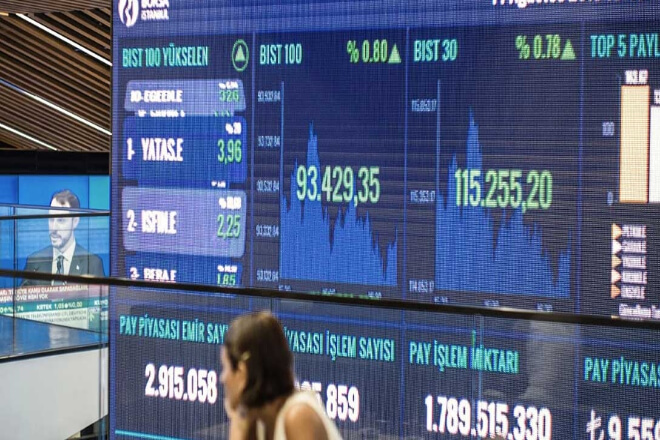
In the fast-paced, high-traffic space of the lobby, LED displays act like “always-online guides.”
Silently and clearly presenting key information such as queue status, number calling, and processing progress to every visitor.
Real-time display of the queue and number calling information makes waiting more “predictable.”
Users no longer need to frequently ask “Am I there yet?” or repeatedly confirm the window location; a glance at the screen is enough to grasp the current progress.
This transparent information transmission subtly reduces anxiety and improves the overall smoothness of the experience.
For on-site staff, LED displays also act as “flow guides.” Tasks that previously required repeated manual explanations.
And guidance can now be completed uniformly through the screen, allowing more focus on key service aspects and making human resources more efficient.
Especially during peak hours, when crowds are concentrated, and the pace is fast, clear and orderly, queuing information is crucial.
LED displays help maintain good order on-site, facilitating smoother flow between different windows and services, reducing the chaos caused by congestion and waiting.
From an overall perspective, it’s not just about “displaying information,” but also about participating in on-site rhythm management.
A single screen connects information, order, and experience, ensuring the hall remains orderly even during high-frequency operations and making the service process easier and more efficient.
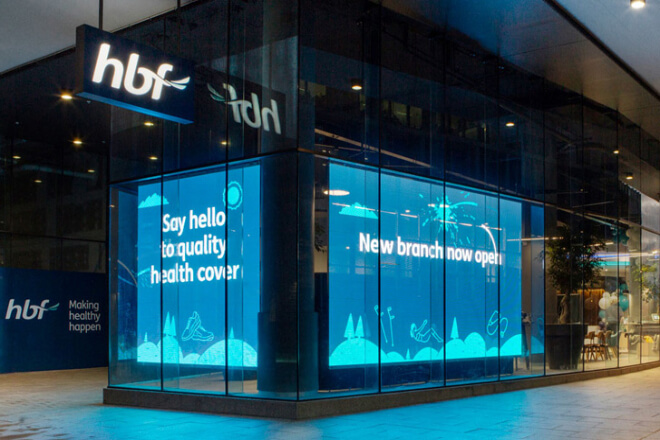
In many service scenarios, waiting is often the most easily overlooked yet most impactful aspect of the overall experience.
The role of Afficheurs LED here is not merely to “fill time,” but to make the waiting process itself more valuable.
While queuing or waiting, the screen can continuously display financial news, service prompts, and other useful information, allowing users to access useful content while waiting.
Compared to simply waiting statically, this method is more like “casually reading something,” subtly alleviating anxiety and making the time feel more relaxed.
Simultaneously, by clearly presenting the processing procedure, required materials, and next steps on the screen, users know exactly what to do next, reducing the need for repeated inquiries or confirmations.
This transparency makes the entire process more predictable and orderly.
From an overall experience perspective, when waiting is no longer a “passive waste of time” but a process involving information acquisition and process guidance, customers’ perception of the service is more positive.
Here, the LED display screen is not only displaying content but also subtly improving the quality of the waiting experience, making the entire service chain smoother and more natural.
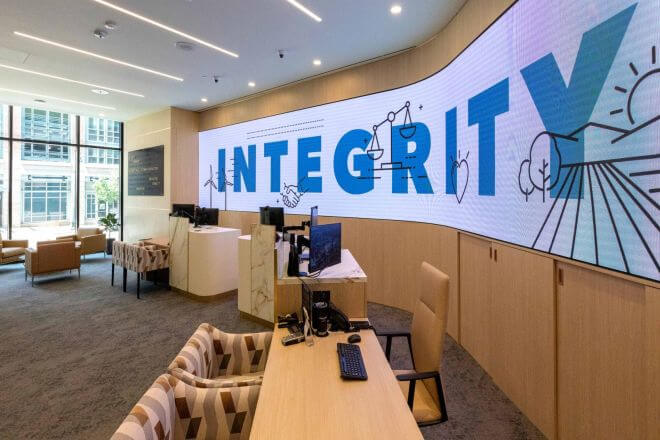
In financial service scenarios, users often face a lot of information, but only the information that is truly “seen and understood” is effective.
Here, the LED display screen acts as a constantly online “information integration window,” centrally presenting scattered business content.
Whether it’s product introductions, service descriptions, or key information, everything can be displayed uniformly on the screen.
Compared to flipping through brochures or switching between multiple documents, this method is more direct and allows users to grasp the key points quickly.
Users only need to pause briefly to get a general understanding of the core information.
In terms of content presentation, key points can be highlighted through visual hierarchy. For example, core selling points, key parameters.
Or important explanations can be emphasized, making the information more immediately grab attention rather than requiring word-by-word reading.
This approach aligns better with users’ fast browsing habits in real-world scenarios.
At the same time, unified information dissemination makes the overall content more standardized.
Information seen in different areas is consistent, avoiding inconsistencies in versions or expression, which enhances professionalism and credibility to some extent.
Simply put, LED displays don’t just replace traditional promotional materials; they transform “scattered information” into a “clear, unified display,” allowing users to understand faster and make informed decisions more easily.
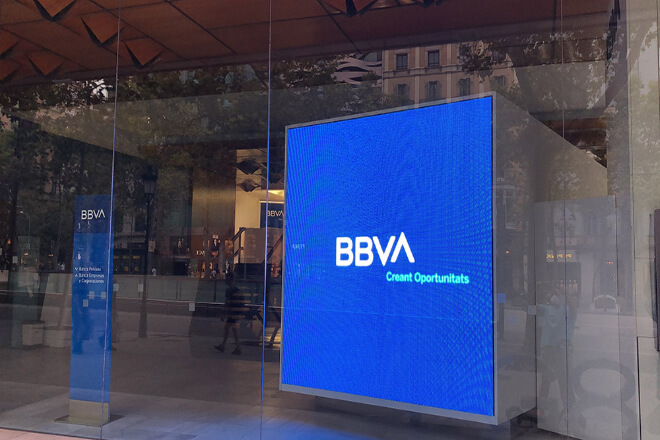
In bank branches, Afficheurs LED are often one of the elements that customers notice “at first glance.”
It not only conveys information but also subtly shapes the overall ambiance of the space.
By displaying brand visuals, core concepts, and service-related content on screens, the expression of a branch transcends mere functionality, becoming more unified and recognizable.
When customers enter the space, they see more than just a place to conduct business; they also intuitively perceive the values and style the brand wants to convey.
Simultaneously, the dynamic visual effects and clear images provided by LED displays subtly enhance the technological feel of the space.
Compared to traditional static posters, this presentation method is more flexible and makes the environment appear more modern and design-oriented.
When different branches maintain a consistent visual style, the customer experience across different locations becomes more coherent.
Over time, this consistency transforms into familiarity and trust—users develop a stable brand perception without much explanation.
Simply put, LED displays are not just about “displaying content” but are continuously involved in brand expression, giving the space a more stylish feel and making the brand easier to remember.
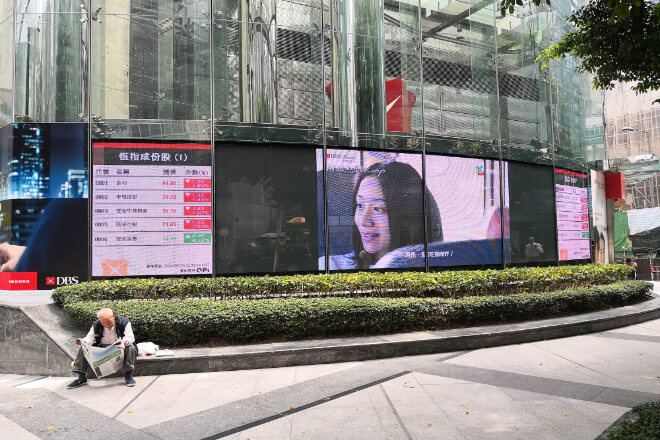
In bank branches, if an LED display only appears in one location, its potential is limited.
When distributed across multiple locations such as the entrance, counter area, and waiting area, it resembles a well-defined information network.
The screen at the entrance serves as the “first impression,” displaying welcome messages, brand content.
Or event promotions, giving customers a clear understanding of the environment upon entering.
Screens in the counter area are more functional, providing service guidance, process explanations, or product information to help customers complete their transactions smoothly.
Screens in the waiting area can display news, reminders, or event information, making the waiting process less monotonous.
Different areas display different content, but maintain a consistent overall style, achieving both division of labor and a sense of unity.
Customers moving between spaces perceive the information as “coherent,” rather than fragmented, thus enhancing the overall experience.
Furthermore, in actual operation, LED displays can quickly switch according to holidays or events, such as holiday themes or phased marketing content.
Allowing the entire branch to present different atmospheres at different times without significantly altering the physical environment.
In short, through multi-point deployment and content collaboration, LED displays upgrade branch networks from “single-screen displays” to “holistic” (holistic linkage).
Improving information efficiency while also making the space more rhythmic and dynamic.
 English
  Español
  简体中文
简体中文  Français
  日本語
日本語  한국어
한국어  العربية