
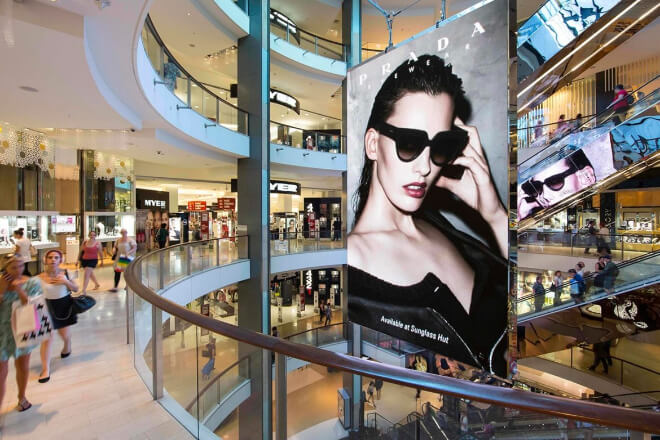
En la era moderna Centros comerciales, a key reason for the popularity of large LED displays is their ability to quickly capture customers’ attention.
Compared to traditional lightbox or spray-painted advertisements, LED screens offer higher brillo, more vibrant colours, and the ability to play dynamic content.
This visual impact makes it difficult to ignore the content on the screen as soon as you enter the mall.
For example, some shopping malls install super-large screens in their atriums, playing holiday-themed animations or new product promotional videos.
Customers see them immediately, are unconsciously drawn to them, and may even stop to take photos or watch for a few seconds. This brief pause can guide them to browse nearby shops.
Furthermore, LED screens displaying dynamic content can extend customers’ dwell time. Static posters might be glanced at quickly, but a constantly changing video or animation will pique customers’ curiosity, compelling them to watch for a few more seconds.
In some shopping malls, the installation of large screens has increased average dwell time in the atrium by 5 to 10 seconds. While this may seem brief, it significantly increases customers’ opportunities to browse surrounding shops and participate in activities.
For example, one shopping mall installed an interactive LED screen at its main entrance, displaying real-time weather information and promotional countdowns.
As a result, customer dwell time in front of the screen nearly doubled, and there was also a noticeable increase in foot traffic to nearby coffee shops and clothing stores.
For mall management, this “attractiveness” translates into a quantifiable return on investment.
By comparing foot traffic statistics and merchant sales data, LED screens not only make the mall look more vibrant but also directly bring considerable increases in foot traffic and merchant revenue.
In this context, the large screen is not merely a decorative display but also acts as a “traffic amplifier,” encouraging customers to linger and browse more, thus bringing tangible value to the overall operation of the mall.
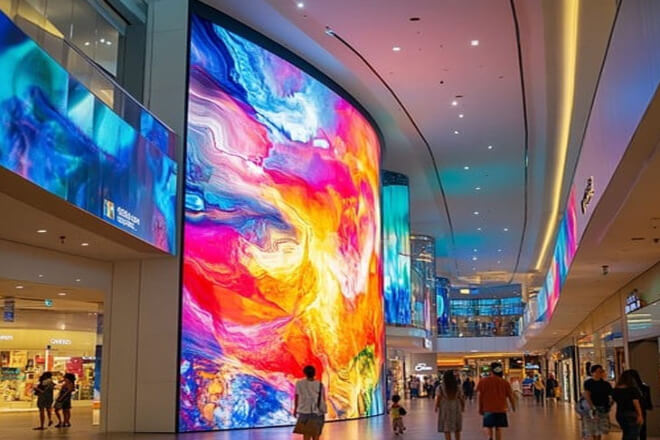
Besides attracting customers, large LED displays have another particularly practical function: generating revenue for shopping malls. They’re not just for aesthetics or creating ambience; the screen itself is a rentable advertising space.
Many shopping malls rent out their screens to brands for advertising or to display limited-time discounts and promotional information during holidays and sales periods.
This provides customers with engaging content while generating additional revenue for the mall.
Compared to traditional light boxes or static advertisements, LED screens offer greater flexibility and high exposure.
They can display advertising content frequently in prime locations, making brand advertising more effective.
More importantly, LED screens can be updated with new content at any time, allowing for flexible adjustments to marketing strategies.
For example, during the Spring Festival, the screens can display red envelope activities or interactive games to attract customers.
At other times, they can showcase new product launches or brand collaborations, ensuring every screen is fully utilised.
Shopping malls can even target different demographics with different advertising content based on time periods and areas.
For example, playing children’s brand promotions in children’s activity areas and fashion brand advertisements during prime evening hours not only improves the targeting of advertising but also makes brands more willing to invest and cooperate.
Furthermore, the value of LED screens extends beyond promoting the mall’s own merchants; they are themselves a monetizable asset.
A single screen can play several rounds of different advertisements daily, accumulating substantial rental income annually while simultaneously enhancing the overall commercial atmosphere and interactive experience.
In other words, LED screens not only make the mall more vibrant but also directly generate economic benefits, ensuring that each playback produces real value.
For managers, this equipment, which serves both their own marketing and generates advertising revenue, is undoubtedly a high-value investment.
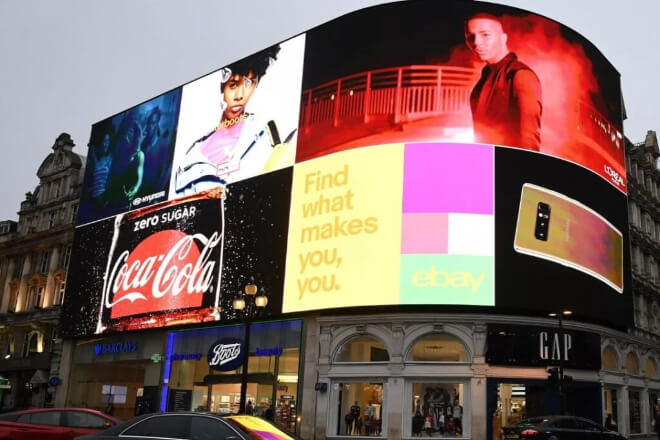
Besides attracting customers and generating advertising revenue, large LED displays have a longer-term value: helping brands build their image and upgrade the shopping experience.
A huge screen itself conveys a sense of modernity and sophistication, creating a visually stunning and anticipated experience for customers upon entering the mall.
Compared to traditional signs or lightbox advertising, LED screens offer higher brightness, more vibrant colours, and dynamic content, creating a more lively spatial atmosphere.
This makes the entire shopping mall appear more modern and dynamic, and leaves a stronger impression.
In actual operation, many successful shopping malls use LED screens as a core visual identity.
For example, some malls have installed large interactive screens in their atriums, playing mall brand promotions or holiday-themed content.
These screens not only become focal points for customers to check in and share on social media, but also enhance the mall’s unified and upscale image.
Such a visual identity not only increases customer awareness of the mall but also subtly increases the overall added value of merchants and brands.
For shopping mall decision-makers, LED screens are not just a short-term marketing tool but also a long-term asset.
They continuously release value as content is updated, and whether used for brand image display, event promotion, or collaborative advertising, they can have a sustained impact over many years of operation.
In other words, a well-designed, well-located large screen is not just decoration and advertising, but a crucial “core asset” for malls to enhance their overall image, strengthen brand memory, and create a modern shopping experience.
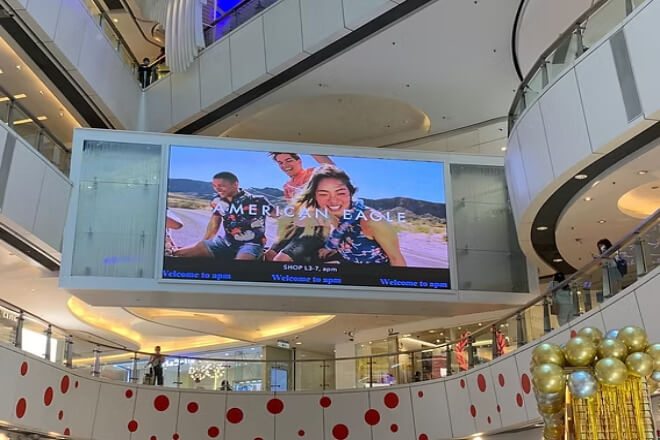
Besides attracting customers, generating revenue, and shaping a brand image, large LED displays offer another significant advantage: enhanced interactivity and customer experience.
Modern LED screens not only play videos or advertisements but also support interactive features like QR code scanning, mini-games, and AR experiences, allowing customers to actively participate rather than passively watch.
For example, some shopping malls design holiday lucky draws on their screens, allowing customers to participate by scanning a QR code or win small gifts through interactive games. This sense of participation is often more memorable than traditional advertising.
This interactivity not only enriches the customer experience but also increases customer loyalty.
People are more willing to revisit places that offer fun and surprises and are more likely to share their experiences on social media.
Many shopping centres have created “check-in hotspots” using LED screens, where customers can take photos or record videos to share on social media platforms like WeChat Moments or short video platforms.
This secondary dissemination expands the mall’s exposure and influence.
In short, the interactive features of large LED screens transform shopping malls from mere shopping venues into spaces that generate experiential and social value.
Through this immersive interaction, the relationship between customers and the mall becomes closer, and merchants can enhance brand recognition through screen activities, thereby achieving multiple enhancements in experience, social value, and commercial value.
When considering installing large LED displays, many mall managers are primarily concerned with cost and return.
Of course, the initial investment in an LED screen is not low, including the screen itself, installation, and supporting hardware.
However, from a long-term perspective, the benefits it brings often far outweigh the costs.
Besides direct advertising revenue, the large screen can also enhance the mall’s brand image, increase customer dwell time and engagement, all of which indirectly boost merchant sales and rental value.
In other words, an LED screen is not just an “advertising tool,” but a long-term asset that can continuously generate economic benefits and brand value.
From an operating cost perspective, modern LED screens typically have a lifespan of over 10 years, and maintenance is relatively simple.
Routine maintenance mainly involves cleaning, software updates, and occasional replacement of individual damaged LEDs, making long-term operating costs quite controllable.
For example, some shopping malls, after installing large atrium screens, recouped their investment in just 2 to 3 years through advertising rentals and holiday interactive events, while the screens continue to generate additional value for the mall.
Compared to a one-time investment, this long-term, stable return is more reassuring.
Assessing the feasibility of investing in LED screens involves more than just looking at the immediate cost; it requires considering multiple aspects of returns.
Metrics such as foot traffic statistics, customer dwell time, and merchant sales data provide a clearer picture of the screen’s actual value.
Large screens attract attention, enhance interaction, improve brand image, and generate advertising revenue—all of which can be quantified as advantages for mall operations.
For decision-makers, analysing these factors comprehensively allows for a clearer assessment of the return on investment cycle, ensuring that each screen becomes a “core asset” capable of long-term effectiveness.
 English
  Español
  简体中文
简体中文  Français
  日本語
日本語  한국어
한국어  العربية