
1) Production Workshops
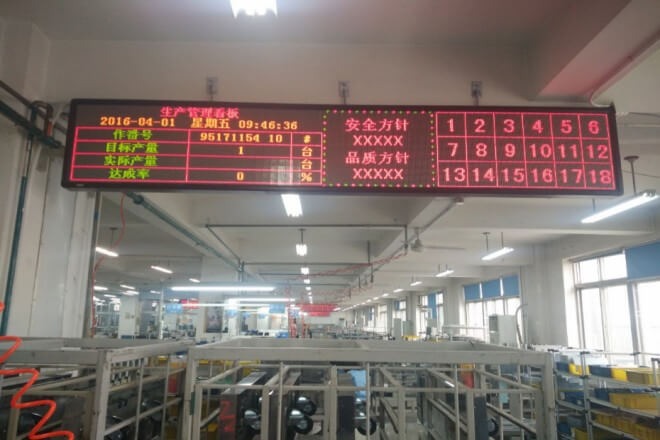
In production workshops, LED displays can show real-time equipment operating status, production progress, and key indicators.
Operators can see which equipment is running, which production line has reached its output target, and where abnormal alarms have occurred with just a glance at the large screen.
This significantly reduces the time spent on manual inspections, allowing managers.
And operators to have a comprehensive view of production at any time, quickly identify and handle problems, and improve production efficiency and safety.
2) Logistics and Warehousing
In warehousing and logistics centers, LED screens can display information such as inventory quantity, inbound and outbound status, and transportation routes.
Staff can intuitively see which goods have been received, which are being shipped out, and the real-time location and route of transport vehicles can also be displayed.
This kind of visual management makes warehouse scheduling more organized, reduces error rates, improves overall operational efficiency, and avoids duplicate handling or omissions.
3) Energy and Power
In the energy or power industry, LED displays can be used for load monitoring, alarm prompts, and large-screen overviews.
The screen can simultaneously display important information such as grid load, power plant operating status, and equipment status.
Once equipment malfunctions or overloads, alarms on the screen will immediately alert staff.
Managers can quickly identify the source of the problem and take timely measures to ensure a safe and stable power supply, reducing the risk of accidents.
4) Control Room/Command Center
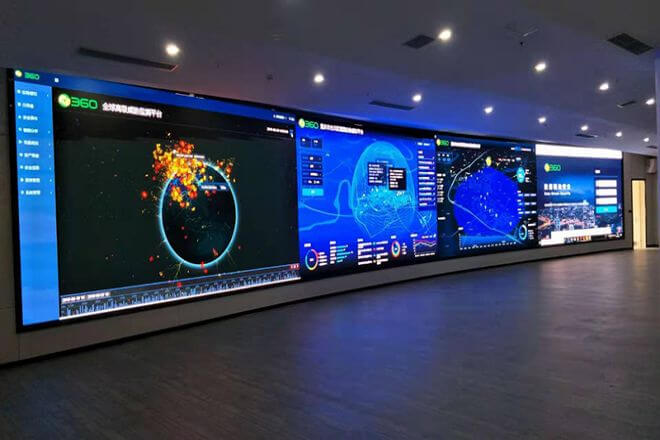
In the control room or command center, LED screens can splice multiple video feeds onto a single large screen, enabling centralized monitoring and unified dispatch.
Data and video feeds from different factories, equipment, or monitoring systems can be displayed simultaneously, allowing managers to have a comprehensive overview at any time.
Whether for production scheduling, emergency command, or safety monitoring, information can be quickly obtained, improving response speed and decision-making efficiency.
1) Improved Production Efficiency
In industrial production, time is efficiency. LED displays can show equipment status and production progress in real time.
If any abnormalities occur, operators can immediately detect and handle them.
This means significantly reduced production downtime, faster problem resolution, a smoother production process, and naturally improved efficiency.
2) Enhanced Safety
Safety management is crucial in factories and industrial sites. LED screens can display alarm information and anomaly alerts in real time, allowing staff to see potential risks immediately and take timely measures.
Whether it’s equipment overload, abnormal temperature, or safety alarms, nothing will be missed, thus reducing the likelihood of accidents and ensuring the safety of personnel and equipment.
3) Optimized Management Decisions
Industrial management requires a large amount of data support, and LED displays can present complex data intuitively in the form of numbers, charts, or videos.
Managers can see key indicators and trends at a glance without having to consult multiple systems or reports.
This not only allows for faster problem detection but also makes scheduling and decision-making more precise, supporting intelligent management and improving the overall operational efficiency of the factory.
4) Scalability and Flexibility
LED display designs typically support splicing and flexible expansion, allowing for adjustments to screen size and layout as needed to adapt to changes in the industrial environment.
This means that when a factory upgrades to a smart factory or increases monitoring requirements.
LED screens can easily adapt without large-scale modifications, ensuring the long-term value of the investment.
1) Screen Brillo, Resolución, and Size
In industrial environments, LED displays must be bright enough to remain clearly visible even under strong factory lighting or direct sunlight.
Resolution and screen size are also crucial—too small or too low-resolution will result in unclear information.
Too large may waste space or increase costs. Before selection, determine the screen size and display resolution based on the actual monitoring scenario to ensure operators can easily see key data.
2) Industrial Durability
Factories and production sites are complex environments with high dust levels, humidity, and even vibration and temperature fluctuations.
When purchasing LED displays, choose products with industrial-grade durability, including dustproof, moisture-proof, and shockproof features.
This ensures stable long-term operation, reduces the likelihood of malfunctions, and minimizes maintenance and replacement frequency.
3) System Compatibility and Data Interface
LED displays typically need to connect to monitoring systems, sensors, or other data sources.
When purchasing, pay attention to system compatibility and whether the data interface is compatible with existing factory equipment to ensure easy integration into the production monitoring system for real-time data display.
Good compatibility and easier deployment, eliminating signal connection or data delay issues.
4) Long-term maintenance and operating costs
Industrial monitoring requires long-term screen operation. When purchasing, don’t just look at the initial price; consider long-term maintenance and operating costs.
High-quality LED screens, while slightly more expensive, offer better stability, lower failure rates, and lower maintenance costs.
Also consider energy consumption, spare parts supply, and after-sales service to ensure long-term stable operation.
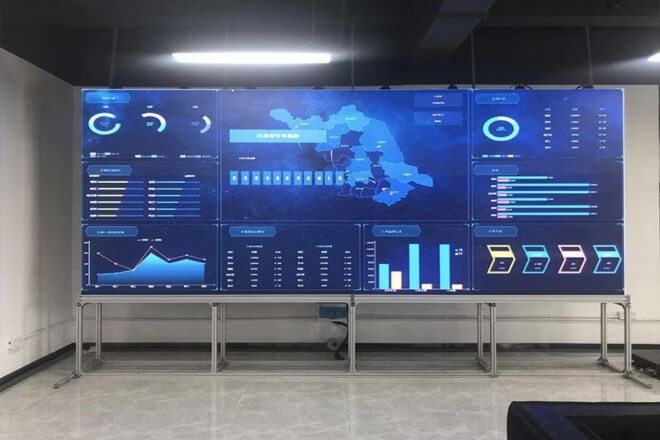
Misconception 1: Focusing only on screen size, ignoring environmental adaptability and viewing angle.
Many people’s first reaction when purchasing LED displays is “the bigger the screen, the better.”
However, size is only one part; environmental adaptability is even more important.
For example, workshop lighting, viewing distance, and viewing angle must all be considered; otherwise, even a large screen may be difficult to see or prone to glare.
- Solución:
Before purchasing, measure the installation location, lighting conditions, and viewing distance on-site to ensure that the screen brightness, angle, and size are suitable for the environment.
Myth 2: Correct Hardware Selection, but Unclear Content and Data Presentation.
Some factories buy high-end LED screens but display the data directly without modification, resulting in operators still not understanding it.
No matter how good the screen is, if the content presentation is unreasonable, it won’t improve efficiency.
- Solución:
Design the data display method before deployment, making key indicators, alarm information, and charts intuitive and easy to read, allowing users to understand important information at a glance.
Myth 3: Ignoring Long-Term Maintenance and Upgrade Needs.
Many companies only consider the initial investment cost, ignoring the need for long-term screen maintenance and upgrades.
LED displays require long-term stable operation. Ignoring maintenance, spare parts, system upgrades, or expansion needs may lead to additional costs or affect performance.
- Solución:
Evaluate the supplier’s after-sales service, spare parts supply, and system expansion capabilities during the purchase process to ensure long-term stable operation and the ability to meet future upgrade needs.
 English
  Español
  简体中文
简体中文  Français
  日本語
日本語  한국어
한국어  العربية