
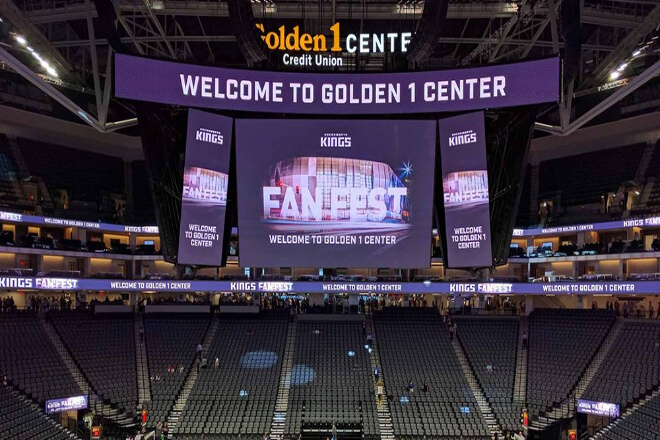
What are the advantages of LED displays in live events?

Introducción

Have you ever noticed that at concerts, exhibiciones, or large-scale events, there’s always a screen that catches your eye?

It instantly grabs attention and conveys rich information, making the entire event more vibrant and atmospheric.

In fact, this is the charm of LED displays. So, what key points should we focus on when choosing and using pantallas LED to truly enhance an event?

Tabla de contenido

1. Core Advantages of LED Displays in Live Events

1) High Brillo and Strong Contrast, Clear Visibility in Any Environment

In live events, the lighting environment often changes and is subject to significant interference, especially at outdoor events, which are affected by direct sunlight.

LED displays have high brightness and strong contrast, ensuring that the image remains clear and visible even in strong light, without becoming faded or distorted.

When used indoors, they can also present a layered image effect, ensuring that the audience can clearly see the screen content from different positions.

2) Flexible Size and Free Splicing, Adaptable to Various Event Venues

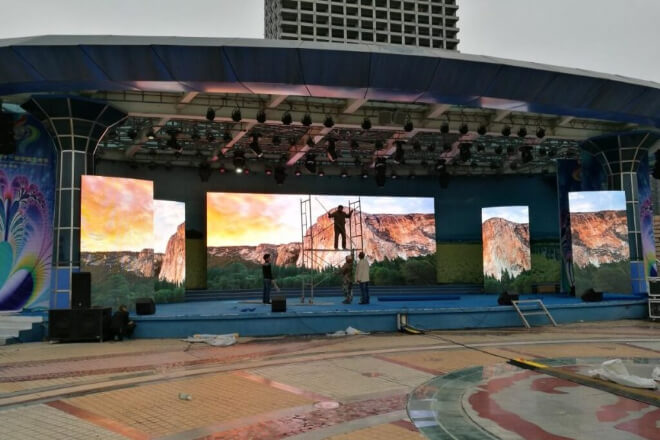
LED displays can be freely spliced according to event needs, whether it’s a large main background screen or auxiliary screens on either side of the escenario, allowing for flexible combinations.

Regardless of the venue size or stage structure, the display screen can quickly adjust its form, even creating curved.

Or irregularly shaped designs, making the image more consistent with the overall stage style and bringing richer visual layers to the event.

3) Clear Image and Vivid Colors, Easier to Attract Audience Attention

With continuous technological advancements, LED displays have made significant progress in clarity and color performance.

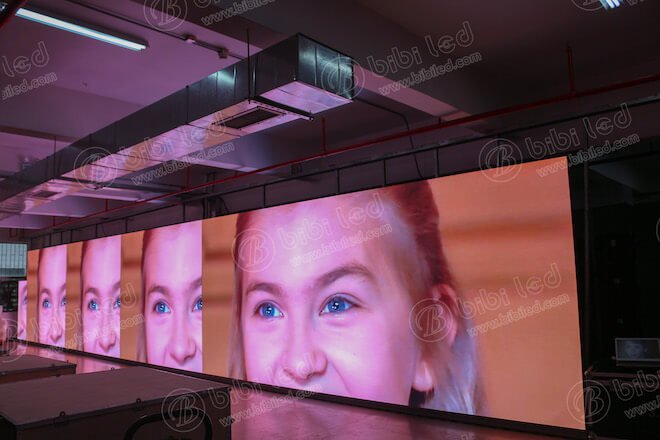
High resolution makes image details more realistic, and people, videos, and animations look more natural.

At the same time, the colors are rich, and the transitions are smooth, making the overall image more impactful and engaging, helping to quickly capture the audience’s attention and enhance the atmosphere and communication effect of the event.
2. Specific Advantages of LED Displays in Live Events

1) Real-time Interaction and Multimedia Integration

LED displays can not only play videos, animations, and live broadcasts, but also support real-time interaction with social media content, greatly enriching the forms of expression for the event.

Through QR code scanning, touch operation, or sensor technology, the audience can directly participate in interactions, achieving instant feedback and content sharing.

This multimedia integration and interactive experience not only enhances the fun of the event but also makes it more lively and attractive.

2) Strong Environmental Adaptability

Whether it’s an indoor escenario or an outdoor plaza, LED display screens can easily handle the job.

Their high-brillo design ensures the screen remains clearly visible even in direct sunlight, and they also feature windproof, rainproof, and dustproof characteristics, making them suitable for various complex environments.

Even in event venues with complex lighting, LED display screens maintain excellent visual effects, ensuring that viewers get a consistent viewing experience from different positions.

3) Easy Management and Content Updates

LED display screens offer very flexible content management. Multiple screens can be updated simultaneously via remote control, reducing on-site operational pressure.

Content can also be quickly switched at the event site, from brand promotion and event information to interactive content, all presented in a timely manner.

This convenient management method not only improves work efficiency but also ensures the diversity and timeliness of event content.

3. Examples of LED Display Screen Application Scenarios

Due to their high brillo, vivid colors, flexible splicing, and strong interactivity, LED display screens have become an indispensable visual core device in various events.

Based on different types of events, their application scenarios can be broadly divided into the following categories:

1) Commercial Exposiciones and Brand Launch Events

In exhibitions, trade fairs, or new product launches, LED display screens can be used to display brand promotional videos, product animations.

Or live demonstrations, allowing audiences to intuitively understand the characteristics of the brand and products at first sight.

Large-sized, high-definition screens not only attract crowds but can also be combined with lighting.

And stage design to enhance the visual impact of the entire exhibition area, making the brand image more modern and technologically advanced.

2) Concerts, Escenario Events, and Celebrations

Concerts, evening parties, celebrations, and other stage events are one of the most common applications of LED display screens.

Large, spliceable screens can display stage background animations, real-time videos, and special effects, closely integrated with stage lighting, stage design, and performances, enhancing the immersive and entertaining experience.

Audiences can not only see the performance details up close but also feel the overall visual impact of the stage.

3) Deportes Events and Large Outdoor Activities

In sports events, marathon races, or various outdoor performances, LED display screens play a dual role of information dissemination and visual focus.

The screens can display real-time scores, live broadcasts of the competition, athlete close-ups, or advertising information, while their high brightness, waterproof.

And windproof design ensures clear visibility even in direct sunlight or adverse weather conditions.

For large-scale events, LED screens allow even distant audiences to catch every exciting moment, enhancing the overall viewing experience.

4) Internal Corporate Meetings and Training Activities

In corporate meetings, training sessions, or internal presentations, LED displays can be used to show PowerPoint presentations, video demonstrations, remote connections, or data visualizations.

The high-definition, clear display makes information more intuitive, allowing the audience to quickly understand complex content.

The flexible screen size also adapts to different meeting room layouts, making meetings or training more efficient and engaging.

4. Key Selection Points for Decision-Makers

When choosing an LED display, the screen size should first be determined based on the type of event, venue size, and audience distance.

El resolución directly affects the detail of the image; high resolution is suitable for close-up viewing and detailed image display.

Brillo relates to visibility under different lighting conditions, especially in outdoor events or strong light environments, where a high-brightness screen ensures clear information transmission.

For live events, the efficiency of screen installation and disassembly directly affects the preparation and dismantling time of the event.

Modular design, lightweight materials, and standardized interfaces can greatly simplify the setup process, reduce labor costs, and reduce transportation and storage difficulties.

Choosing a display screen that is easy to operate and flexible to assemble helps improve overall event execution efficiency.

The value of an LED display lies not only in its hardware but also in its content presentation capabilities.

Decision-makers need to consider whether the screen supports a convenient content management system (CMS) to achieve remote updates, multi-screen unified control, and rapid content switching.

At the same time, if the event requires interactive elements, it should also be considered whether the screen supports touch control, QR code scanning, or sensor interaction functions to make audience participation smoother.

When choosing an LED display, budget is always a factor that cannot be ignored. High-end screens certainly offer outstanding effects.

But whether they match the scale of the event and the target audience’s needs requires careful evaluation.

Decision-makers should consider the frequency of screen use, event type, audience experience.

And brand communication effects to comprehensively judge the return on investment, ensuring the best visual effects and on-site experience within a controllable budget.

5. Conclusión

Whether it’s a concert, exhibition, corporate meeting, or sporting event, LED displays can make the event more vibrant and engaging.

Understanding its advantages, application scenarios, and key selection criteria will ensure optimal visual effects and audience experience for every event.

Next time you attend an event, pay attention to the screens – they might be the unsung heroes creating the atmosphere.

Finally, if you would like to learn more about LED displays, Por favor póngase en contacto con nosotros.

6. Maintenance method

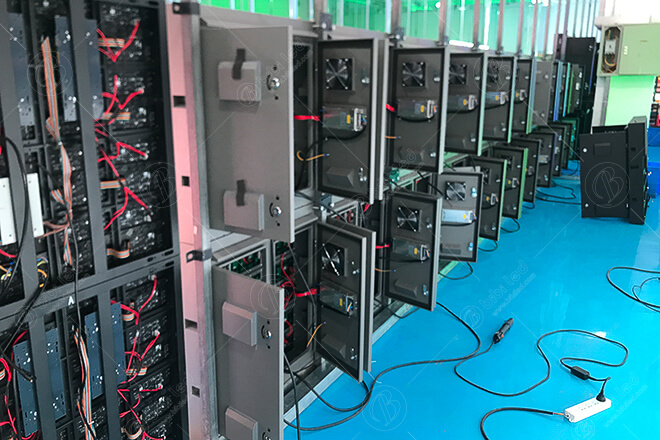
Los métodos de mantenimiento de las pantallas LED para exteriores se dividen en mantenimiento de acceso frontal y mantenimiento trasero, y se utilizan principalmente para la reparación y el mantenimiento posventa de pantallas LED.

En términos generales, el precio de los productos de mantenimiento trasero es relativamente bajo y la eficiencia de la inspección y el mantenimiento es alta. Sin embargo, si el lugar donde instalará es escaso y el terreno es costoso, entonces el mantenimiento del acceso frontal puede ayudarlo a ahorrar espacio y reducir el costo del terreno.

Entonces, ¿cómo juzgar qué método de mantenimiento es adecuado para su pantalla LED?

  • Mantenimiento trasero de mamparas de gran tamaño para edificios exteriores, mamparas instaladas en cubierta, pilares independientes, etc.

  • Mantenimiento de acceso frontal: Se requiere una pantalla de área pequeña y que ahorre espacio.

(Si tu quieres saber La diferencia entre el mantenimiento frontal y el mantenimiento trasero de la pantalla LED en detalle., haga clic en aprendizaje rápido) 

Además de los costos de mantenimiento comunes, si coopera con una empresa confiable que extiende el período de garantía, se pueden reducir los costos de mantenimiento.

7. Canal de compras

¿Es de origen local o importado?

Es obvio; precio: adquisición local > adquisición importada, la adquisición local cuesta más.

Sin embargo, sería mejor si tomara una decisión basada en su situación real, como por ejemplo:

1) Si no le importa el presupuesto y valora más el servicio de ventas local y rápido, puede comprar directamente localmente.

2) Si su presupuesto es limitado o desea ahorrar muchos costos y tener suficiente tiempo, puede importar desde fabricantes de pantallas LED.
8. Factura de electricidad

En cuanto a la factura de la luz, se trata de un coste acumulado a largo plazo. La factura de electricidad se correlaciona en gran medida con el consumo de energía real de la pantalla LED. El bajo consumo de energía significa facturas de electricidad bajas. Por lo tanto, al comprar una pantalla LED, debe preguntar al proveedor sobre el consumo de energía real. 

(Para saber cómo calcular el costo de electricidad de una pantalla LED, puede hacer clic para aprender rápidamente)

¿Cómo reducir el consumo de energía de las pantallas LED para exteriores?

1) Planifica tu tiempo de forma razonable

No es necesario que la pantalla LED se muestre durante 24 horas y la hora se puede configurar a través de la administración de la aplicación.

2) Utilice un sensor de luz

Un alto brillo significa un alto consumo de energía. El uso de sensores de luz no sólo puede garantizar que la imagen no se vea afectada por el entorno, sino también evitar que la pantalla LED esté en un estado de alto consumo de energía durante mucho tiempo.

3) Compre una pantalla LED que ahorre energía

Desde una perspectiva a largo plazo, las pantallas LED que ahorran energía pueden ahorrar en las facturas de electricidad.

9. Gastos de transporte

Costos de transporte Se consideran los costos de importación, los costos de transporte y los impuestos.

Los costos e impuestos de importación deben considerarse de acuerdo con la política de importación y las creencias religiosas de su país, y cada país es diferente.

En cuanto a los costos de transporte, existen dos métodos de transporte: marítimo y aéreo. El método de transporte específico a elegir depende de tus necesidades, por ejemplo:

1) Si tiene muchos productos y tiempo suficiente para importar pantallas LED, entonces el costo del transporte marítimo será menor, que es aproximadamente 5 veces menor que el del transporte aéreo. La fecha de entrega desde Shenzhen a Estados Unidos es de 25 a 30 días hábiles.

2) Si su proyecto es más urgente o hay menos mercancías, considere el transporte aéreo, la fecha de entrega del transporte aéreo es de aproximadamente 3 a 7 días hábiles.

10. FAQs(根据实际情况来,不是所有的内容都需要这个章节)

Lorem ipsum dolor sit amet, consectetur adipiscing elit. Ut elit tellus, luctus nec ullamcorper mattis, pulvinar dapibus leo.

Lorem ipsum dolor sit amet, consectetur adipiscing elit. Ut elit tellus, luctus nec ullamcorper mattis, pulvinar dapibus leo.

11. Conclusión

Spare parts are generally used for daily maintenance and maintenance. Spare parts can be purchased directly from suppliers, including power cords, power supplies, lamp beads, ICs, masks, LED modules, etc. Generally, a professional and reliable LED display screen supplier provides 2% spare parts and 2 years warranty for each order.Spare parts are generally used for daily maintenance and maintenance. 

Generally, a professional and reliable LED display screen supplier provides 2% spare parts and 2 years warranty for each order.Spare parts are generally used for daily maintenance and maintenance. Spare parts can be purchased directly from suppliers, including power cords, power supplies, lamp beads, ICs, masks, LED modules, etc. Generally, a professional and reliable LED display screen supplier provides 2% spare parts and 2 years warranty for each order.

Deja una respuesta

Tu dirección de correo electrónico no será publicada. Los campos obligatorios están marcados con *

¡Comencemos nuestra historia AHORA!

Conseguir Nuevo precio 2025 para pantalla LED AHORA