
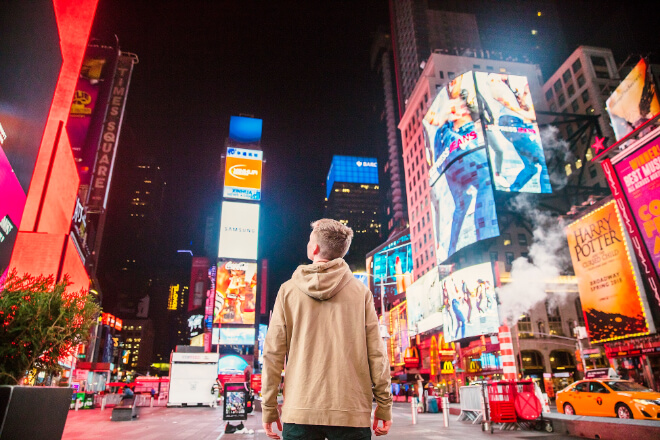
Por qué pantallas LED al aire libre attract our attention on streets and alleys? Why are some advertising screens clearly visible even in bright sunlight, while others appear dim and blurry?
In fact, this all depends on the role of brillo and contrast. Brightness determines whether the screen can be seen, while contrast determines how clear and detailed the image is.
Only by combining these two factors effectively can the screen display vivid and vibrant images in various lighting conditions, allowing information and advertisements to truly attract viewers.
The brightness and contrast of outdoor LED displays are two important factors that determine the quality of the image.
Brillo, simply put, is how “bright” the screen is; it determines whether you can see the content on the screen in sunlight.
In more professional terms, it is the light intensity emitted per square meter of the screen, measured in candelas per square meter (cd/m²), also called “nits” in display technology.
A screen with high brightness can clearly display advertisements or information even in direct sunlight; if the brightness is low, no matter how beautiful the image is, it will easily be “washed out” by the surrounding light.
Generally, pantallas led exterior require a brightness of at least 5000 cd/m² during the day, while at night or in indoor environments, a lower brightness of 300 to 800 cd/m² is sufficient.
Contrast is somewhat like the “depth” of the screen. It reflects the difference between the brightest and darkest parts of the screen.
The darker the darks and the brighter the whites, the more three-dimensional and comfortable the image will appear.
Low contrast makes the image appear grayish, lacking detail, and looking blurry.
Simply put, brightness allows you to see things, and contrast allows you to see them clearly and distinguish different details.
Therefore, to ensure that outdoor LED screens look good both day and night, neither of these two indicators can be ignored.
Brightness ensures that the image is bright enough to be seen, and contrast ensures that the image has depth and clear content.
When both are properly combined, the screen effect will naturally be more outstanding and more attractive.
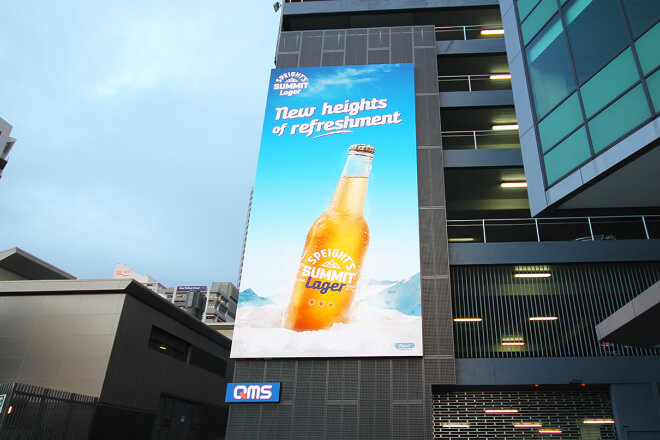
Brightness affects the attractiveness and effectiveness of outdoor advertising like a light in the sunlight, instantly catching the attention of passersby.
High-brightness LED screens make advertising images more vivid and colorful, with clear details and text.
Whether red, blue, or yellow, the colors maintain their original brightness and vibrancy even in sunlight, without being “washed out” by ambient light.
This means that whether it’s a sunny day, a cloudy day, or a brightly lit evening, the information on the screen is clearly displayed, allowing people to understand the advertising content at a glance.
Brightness not only makes the image look good but also directly impacts audience attention.
Pedestrians walking on the street, busy commuters, and even drivers passing by from a distance can be immediately attracted by the high-brightness screen.
The advertisement is like a beam of light, instantly capturing people’s attention, making them pause for a moment to notice and remember.
This visual impact not only enhances the viewer’s experience but also greatly strengthens the advertising effect and memorability.
It can be said that brightness is the “secret weapon” of outdoor advertising, making every message shine brightly in the sunlight, capturing every pair of eyes, and standing out even on the competitive city streets.
High brightness not only guarantees the visibility of the image but also provides solid support for the attractiveness and effectiveness of the advertisement, allowing outdoor advertising to truly fulfill its intended purpose.
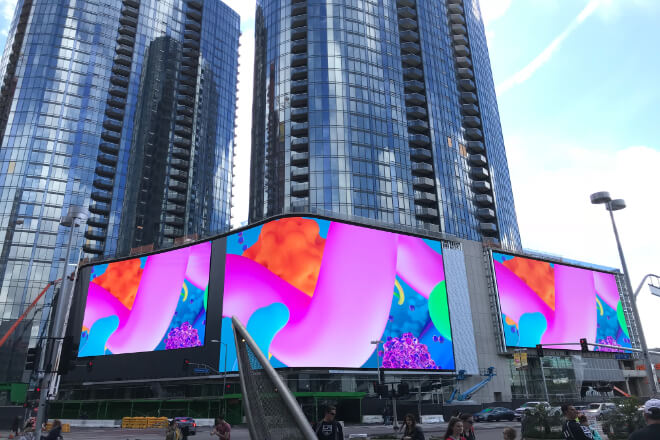
En pantallas LED al aire libre, contrast is like the “soul” of the image, directly determining the depth and color expression of the picture.
Screens with high contrast have deeper blacks and brighter whites, with more distinct color differences, naturally giving the image a sense of depth and impact.
For example, on a commercial street, you might see two red advertisements.
The one on the high-contrast screen will have vibrant and rich red colors, with clear edges for text and patterns, allowing passersby to easily see the content at a glance.
A low-contrast screen, on the other hand, might appear hazy, with blurry text and less vibrant red colors, making it easy to overlook.
High contrast also makes details clearer. For example, when playing movies or animated advertisements outdoors.
People from a distance can still see the outlines and expressions of the characters, and the subtitles will not be swallowed by the background.
It can also adapt to different ambient light conditions: in strong sunlight during the day, the screen can still display vivid colors; in the evening or on cloudy days, the image colors remain natural and not dim.
LED screens in large commercial plazas or transportation hubs rely on high contrast to ensure that advertising content is clearly visible in various lighting conditions.
Thus more easily attracting the attention of pedestrians and drivers and maximizing the visual impact of the advertisements.
It can be said that contrast is like the “paintbrush” of the screen, determining the clarity of image details and the realism of colors.
Making every frame of the outdoor LED display vivid and layered, while also improving the visual impact and communication effect of the advertisement.
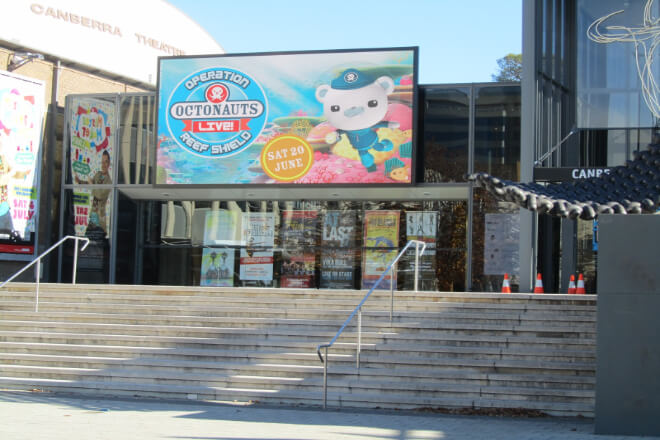
The balance between brightness and contrast is crucial for the visual effect of outdoor LED displays.
If the brightness is too high, the screen is very “eye-catching,” but it can be dazzling and cause eye strain after prolonged viewing.
If the brightness is too low, the image is easily washed out by sunlight, and the text and images are unclear.
The same is true for contrast; too low makes the image appear hazy and lacking detail, while too high can create an overly strong black and white contrast, which can be uncomfortable to look at for extended periods.
Ideally, brillo and contrast work together to make the screen both bright and layered.
In this way, advertisements or information are clearly visible day and night, with rich and natural colors and rich details without being dazzling.
For example, on LED screens in commercial streets or transportation hubs, if the brightness and contrast are properly matched.
Pedestrians and drivers can easily notice the screen content without experiencing eye strain, resulting in a more comfortable viewing experience.
In short, brightness provides visibility, contrast provides clarity, and the balance between the two determines the overall visual effect.
Only by mastering the relationship between these two factors can outdoor LED screens be both eye-catching and comfortable to view and memorable.
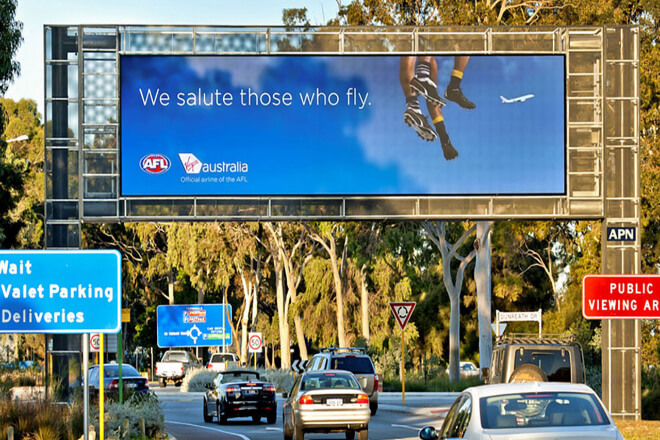
The brightness and contrast of outdoor LED displays are not constant; they need to be flexibly adjusted according to the environment to achieve the best results.
During the day, when the sunlight is strong, the screen needs higher brightness and reasonable contrast so that text, images, and details are clearly visible and not “washed out” by the strong light.
At night or in low light conditions, if the brightness is too high, the screen will be dazzling and uncomfortable to look at.
Therefore, the brightness needs to be appropriately reduced while maintaining the contrast to keep the image clear and soft.
Many outdoor LED screens now feature ambient light sensors that automatically adjust brightness and contrast based on surrounding light conditions.
For example, if the sun is suddenly obscured by clouds, the screen brightness will automatically decrease; as dusk falls, the screen brightness will be appropriately increased, ensuring optimal viewing at all times.
Besides light, geographical location and weather also affect brightness settings: areas with strong sunlight in the south usually require higher brightness during the day.
While cloudy or rainy weather allows for lower brightness while maintaining balanced contrast, ensuring the image remains clear and the colors true.
Through this flexible adjustment, whether it’s the scorching midday sun or the dim streets at night, outdoor LED displays can present vivid and clear images.
Making advertisements or information always easy to see and attract attention, and providing viewers with a more comfortable and natural viewing experience.
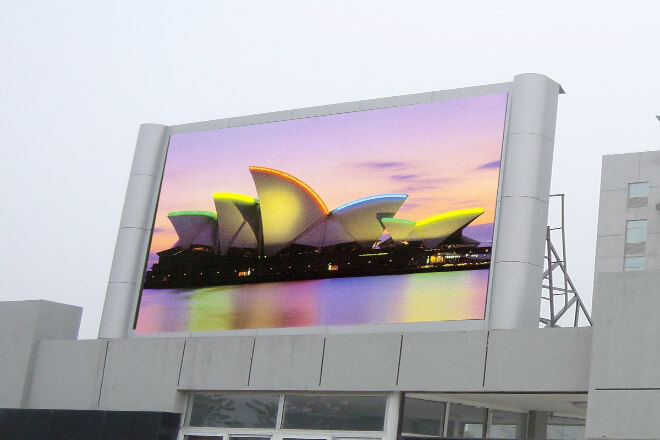
Choosing the appropriate brightness and contrast for an LED display depends on the specific project requirements and usage scenarios.
First, there’s brightness, and different types of screens have vastly different brightness requirements.
For example, advertising screens on commercial streets usually require high brightness to attract the attention of pedestrians and drivers during the day.
Traffic information screens must ensure clear readability under various weather and lighting conditions.
Deportes event screens need to be clearly visible during the day and have vibrant colors under nighttime lighting, allowing viewers to easily distinguish the game footage and scores.
The choice of contrast is equally important, as different scenarios have varying requirements for image layering and detail.
Outdoor billboards usually require high contrast so that pedestrians and drivers from a distance can clearly see the text and images.
Subway station advertising screens, due to relatively stable lighting, only require moderate contrast.
Large screens in sports venues require both high brightness and high contrast to ensure that viewers, whether close up or far away, can clearly see every detail, while the colors remain vibrant and natural.
Simply put, when choosing an LED display, brightness determines whether the image can be seen, and contrast determines how clearly the image can be seen.
By rationally matching these two indicators according to different projects and environments, the screen can achieve the best visual effect, allowing viewers to see clearly and feel comfortable and natural.
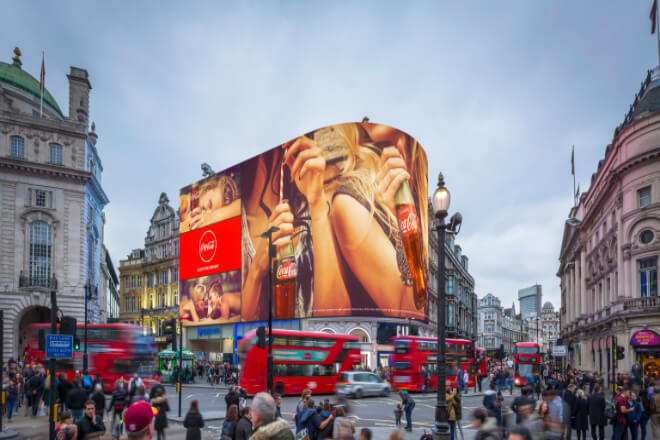
The brightness and contrast of pantallas LED al aire libre not only affect the image quality but also directly relate to electricity costs and energy consumption.
Imagine a scorching hot afternoon, the large advertising screens on the commercial street are at full brightness and vibrant colors to ensure the text and images are clearly visible.
Making the display exceptionally eye-catching, but also consuming a lot of electricity.
At night, if the screen maintains the same brightness and high contrast as during the day, it would not only be dazzling and uncomfortable for passersby, but also waste energy.
Modern LED screens are much smarter. They are equipped with ambient light sensors that can detect changes in surrounding light and automatically adjust brightness and contrast.
When the sun is strong, the screen automatically brightens, keeping the advertisement clear.
When the sky darkens or on rainy days, the screen brightness decreases, still maintaining clear details without being dazzling, and saving a significant amount of electricity.
More advanced screens even utilize regional brightness control and optimized pixel design, adjusting the brightness of different areas according to the image content, making the picture both vivid and energy-efficient.
In this way, whether it’s a dazzling large screen on a sunny street during the day or a screen under dim streetlights at night.
LED displays can maintain vibrant colors and clear details while keeping power consumption within a reasonable range, achieving both excellent visual effects and energy efficiency.
 English
  Español
  简体中文
简体中文  Français
  日本語
日本語  한국어
한국어  العربية