Introducción

Have you ever noticed those eye-catching pantallas led on the street? They always catch people’s attention, sometimes even making them stop to look. Can your store use them to attract customers?
The answer is yes. LED displays are not only eye-catching, but they can also move and update in real time, instantly grabbing passersby’s attention with your promotional information and brand stories.
Today, we’ll discuss why more and more businesses are using LED screens as a secret weapon for brand promotion.
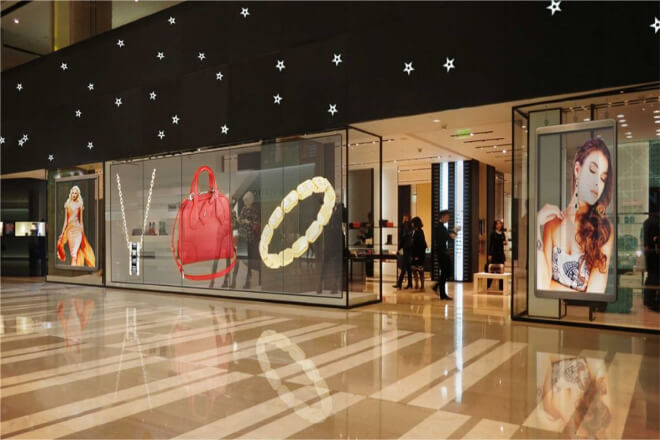
Tabla de contenido
1. Core Advantages of LED Displays in Brand Promotion

LED displays have outstanding brillo and colour, easily capturing the attention of passersby, whether in bright daylight in commercial areas or on busy streets at night.
For example, a coffee shop installing an LED screen outside to display new product recommendations and promotional activities easily attracts passersby to stop and enter the store.
This high exposure allows brand information to be conveyed quickly in a short time, far more effectively than traditional posters.
Compared to static advertisements, LED screens can play videos, animations, or scrolling text, making information more vivid.
For example, in electronics stores, LED screens can display demonstrations of new TV features and limited-time discounts, making it easier for customers to remember product characteristics than simple posters.
Dynamic visuals not only attract attention but also generate consumer interest in brand activities, enhancing brand memorability.
LED display content can be updated at any time, making it ideal for holiday or trending marketing.
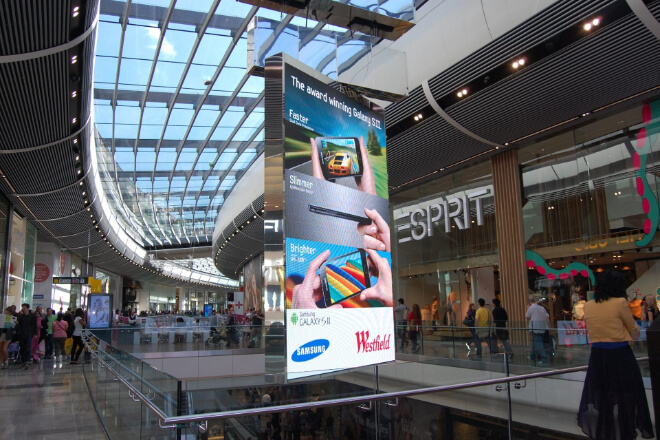
For instance, during the Spring Festival, Centros comerciales can change their screens to a New Year theme to display promotional information; during shopping festivals, they can quickly switch to limited-time discount activities.
Businesses can quickly adjust their advertising strategies without rebuilding billboards, maintaining the freshness of content and interactivity with consumers.
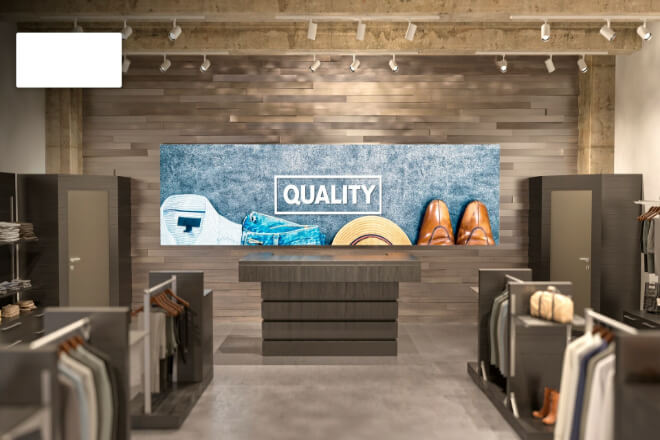
The modern and technological feel of LED screens makes stores appear more professional and stylish.
For example, a fashion clothing store using LED screens to display runway videos and new product styling recommendations makes customers feel that the brand is more tasteful and trustworthy.
This visual experience not only enhances the store’s image but also helps consumers form an impression of the brand as high-end and innovative.
2. Suitable LED Display Solutions for Different Types of Stores
1). Street-side Retail Stores: Small Outdoor Screens or Window Displays
Street-side retail stores typically have limited space but high foot traffic, aiming to quickly attract passersby’s attention. In this case, small outdoor screens or window displays are ideal.
For example, a convenience store installing an LED screen in its window to display daily specials and new product information allows passing customers to notice promotions immediately, increasing the likelihood of an immediate purchase.
Small screens are simple to operate, low-cost, and easy to update content promptly, meeting the demands of a fast-paced retail environment.
2) Department Stores/Speciality Stores: Medium-sized Indoor Screens
Department store/speciality store spaces are relatively spacious, and customers spend more time there, making medium-sized indoor LED screens more suitable.
These screens ensure clear visibility of content without taking up too much storage space.
For example, in a cosmetics speciality store, displaying skincare tutorials, brand stories, and new product showcases on a medium-sized screen not only enriches the customer’s shopping experience but also helps consumers retain a deeper impression of the brand.
Dynamic visuals can attract customers to stop and increase dwell time, thereby improving purchase conversion rates.
3) Large Flagship Stores: Creative Irregularly Shaped Screens or Multi-Screen Interaction
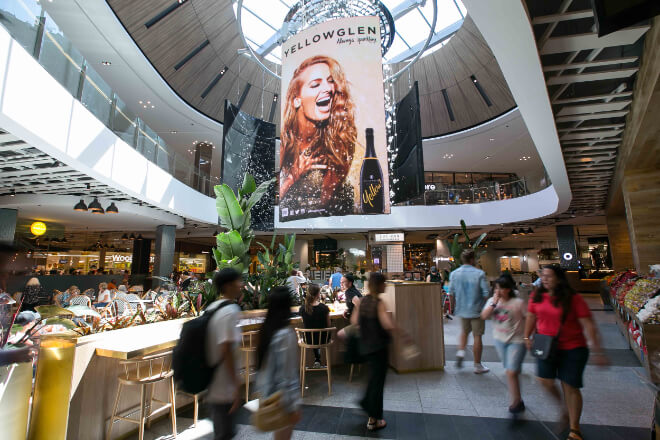
Large flagship stores prioritise visual impact and immersive experiences, making creative irregularly shaped screens or multi-screen interaction solutions most suitable.
For example, a sports brand flagship store uses curved LED screens and multi-screen interaction to display sports scene videos, making customers feel as if they are at the sports event, providing not only visual impact but also enhancing brand interaction.
In this way, flagship stores can convey brand concepts, highlight product features, and improve the overall shopping experience, leaving consumers with a lasting brand impression.
4). Chain Stores: Uniformly Standardised Screens
For chain stores, management efficiency and brand consistency are key. Uniformly standardised LED displays facilitate remote management and synchronised content updates, while ensuring a consistent visual image across all stores.
For example, a chain coffee shop uses LED screens of the same size and layout in all its stores nationwide to display new product information, promotional information.
And brand stories, allowing customers to experience a unified brand style regardless of the store.
This not only enhances brand awareness but also facilitates centralised operations and data analysis at headquarters, improving management efficiency.
3. The Actual Impact of LED Displays on Brand Promotion

1). Attracting New Customers
The most direct effect of LED displays is attracting passersby into stores. A large, bright screen with dynamic images and vibrant colours easily draws people in.
For example, in a Shanghai commercial street, a brand store installed a large LED screen at its entrance to display new products and promotional information.
As a result, nighttime foot traffic increased significantly, and the number of customers entering the store increased by approximately 40%.
Compared to traditional static posters, LED screens are truly more eye-catching.
2) Instant Delivery of Promotional Information
LED screens can be updated with content at any time, allowing promotional information to reach customers faster.
Some restaurant chains use LED screens during peak lunch and dinner hours to push limited-time offers and set meal recommendations.
This not only reminds customers to make purchases but also directly increases order volume.
Compared to reprinting advertisements or posters, LED screens make marketing more flexible and the results more immediate.
3) Enhancing Professionalism and Trustworthiness
High-quality LED displays look very modern and professional, making customers feel that the brand is powerful and trustworthy.
Surveys show that more than two-thirds of consumers believe that LED screen advertising can improve brand image.
This explains why many high-end brands are willing to invest in LED screens in their stores or shopping districts, as it subtly helps cultivate a high-quality, trustworthy image.
4) Easy to Photograph and Share
Creative or interactive LED screens can also become “highlights” for customers to take photos and share.
For example, holiday animations, interactive mini-games, or immersive videos often prompt customers to take photos and post them on social media, naturally spreading brand information.
Surveys show that approximately one-quarter of viewers will actively share the LED content they see with friends, making word-of-mouth marketing of the brand easy and natural.
4. Key Factors Stores Must Consider Before Investing in LED Displays

Before deciding to invest in LED displays, stores need to carefully evaluate several key factors to avoid a “high investment, low return” situation.
1) Location and Ángulo de visión
Even the most high-end LED screen will be ineffective if placed in a location where customers cannot easily see it.
For example, if a street-side store’s screen is only facing a corner or is obstructed by billboards, passersby will not see it at all, making the investment a waste.
Therefore, when choosing a location, consider pedestrian flow and viewing angles to ensure the screen is seen by the most potential customers and truly converts traffic into sales.
2) Screen Size, Brillo, and Environmental Suitability
Different environments require screens of different sizes and brightness. High-brightness screens are needed in bright outdoor environments, while small indoor shops can opt for small to medium-sized screens.
If the screen is too small or lacks sufficient brightness, even the most engaging content will struggle to attract attention; conversely, an overly large screen may waste costs or disrupt the overall shop layout.
Therefore, the size and brightness must match the shop environment to ensure visibility while controlling investment costs.
3) Content Production and Update Capabilities
The LED screen is merely a carrier; the content is the core. If a store lacks a stable capacity for content production and updates, the screen will quickly become a “blank advertising board.”
For example, chain stores need to update daily promotional information, holiday activities, and new product recommendations promptly; otherwise, customers will eventually ignore them.
Therefore, before investing, assess whether the store has a team or outsourced resources to ensure continuous content updates and creative output.

5. Common Misconceptions and Avoidance Strategies

Many stores easily fall into some common misconceptions when investing in and using LED displays.
Understanding these misconceptions and taking corresponding strategies can help avoid wasting costs and fully realise the value of LED screens.
Many stores believe that the larger and brighter the screen, the more effective it is, ignoring the importance of creative content.
In reality, even the largest screen will struggle to attract customers’ attention if it only displays static images or boring text.
The correct approach is to design interesting dynamic content, interactive elements, or short videos that align with brand tone and promotional goals.
For example, a coffee shop displayed the new product preparation process and fun animations on its LED screen, not only attracting customers but also inspiring them to take photos and share them, thus increasing actual conversion rates.
Some stores use different styles of LED screen content in different locations, resulting in a fragmented and inconsistent brand image.
Consumers seeing different styles of information on multiple touchpoints may create a confusing impression of the brand.
The key to avoiding this is establishing unified visual standards, including colours, fonts, and animation styles, to ensure that every screen conveys a consistent brand image.
For example, chain coffee shops unify the content layout and colour scheme of their LED screens across all their stores nationwide, ensuring a consistent brand experience for customers regardless of location.
Some stores treat LED screens as temporary promotional tools, using them only during specific events and leaving them idle afterwards.
In reality, LED screens are long-term assets that can continuously serve brand promotion and interaction.
Long-term strategies include regularly updating content, incorporating holidays and trending events, and building interactive features.
Large flagship stores, for instance, use LED screens year-round to showcase new products, brand stories, and interactive activities, making the screens a crucial tool for continuously enhancing customer experience and brand awareness.
6. Conclusión
Ultimately, LED displays are not just decorations; they are helpful tools for attracting customers and building your brand.
By choosing the right location, size, and content, your screens can not only attract attention but also elevate your store’s image and make your brand more memorable.
Used well, they can be the most eye-catching “billboard” for your store’s brand promotion.
Finally, if you would like to learn more about LED displays, Por favor póngase en contacto con nosotros.