
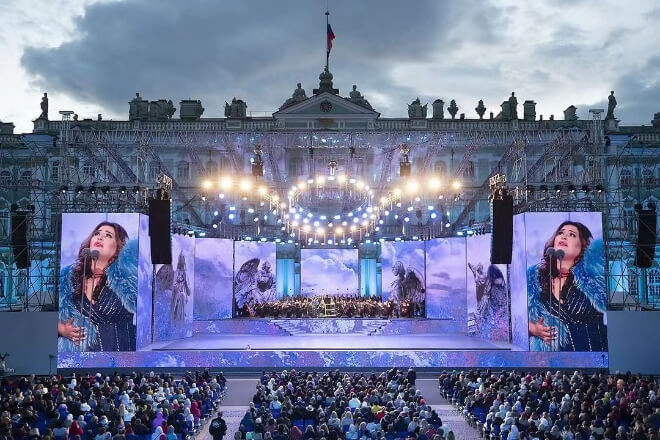
In multi-stage events, how can every audience member experience a truly immersive visual experience?
LED displays are becoming the preferred choice for an increasing number of event planners.
They are not just simple screens, but powerful visual tools that enhance the entire performance experience.
First, the high brillo and clarity of LED displays allow them to maintain excellent performance in various environments.
Whether in a sunlit outdoor performance venue or a brightly lit indoor stage, LED screens deliver bright and detailed images, ensuring that the audience doesn’t miss a single detail.
Even audience members far from the stage can clearly see every dynamic image, something often difficult to achieve with traditional projectors or LCD screens.
Secondly, flexibility and versatility are other major advantages of LED displays.
They can be freely adjusted to meet the design needs of different stages, whether it’s a circular stage, a curved screen, or a creatively shaped screen; LED screens can adapt perfectly.
Event planners can freely switch the size and shape of the screen according to the performance content, making the stage layout more dynamic and adding more creative possibilities to the event.
Seamless splicing capability is also an important feature of LED displays. Multiple modules can be combined to form a super-large screen, presenting a continuous and complete visual effect.
For large concerts or multi-stage exhibitions, the screen can not only display performance content but also simultaneously display text information.
Interactive elements, or advertising content, achieving multi-layered information delivery and providing the audience with a rich experience both visually and informationally.
Furthermore, the ability to display dynamic content further enhances the expressiveness of LED screens.
Various forms of content, such as videos, animations, and subtitles, can be freely switched and combined, making the performance more rhythmic and engaging.
Stage performances rely not only on the actors’ performances but also on the images, special effects, and interactive elements displayed on the screen to make the entire stage more three-dimensional and vivid.
Finally, the advantages of LED displays in terms of energy saving and durability cannot be ignored.
Compared with traditional projectors and LCD screens, LED screens not only have a longer lifespan and can withstand long-term continuous operation, but also significantly reduce energy consumption.
While ensuring high brightness and high-quality display, they save costs for event operators, reduce maintenance burdens, and bring a more stable user experience.
It is precisely because of its multiple advantages, such as high brightness, flexibility, seamless splicing, dynamic performance, energy saving and durability, that LED displays have become the ideal choice for multi-stage events.
It not only enhances the visual impact of performances but also provides audiences with a more immersive and richer experience, bringing a higher level of quality and professionalism to each event.
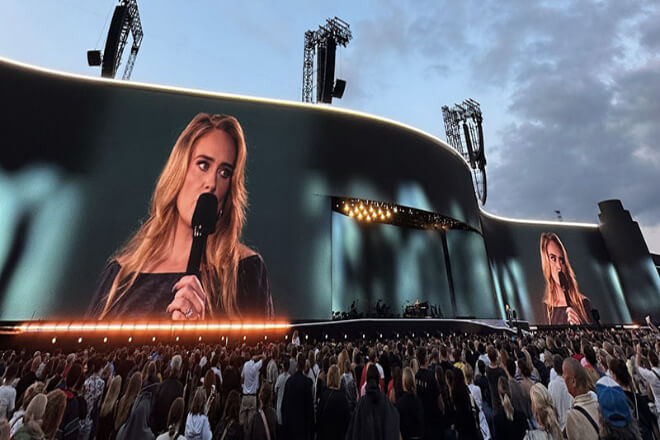
1) Rational planning based on stage size and audience ángulos de visión
In multi-stage events, the size and shape of different stages and the viewing angles of the audience vary.
The size, installation height, and tilt angle of LED displays need to be designed based on audience distance and line of sight to ensure clear visibility from all positions.
For example, audiences further from the stage require larger, brighter screens, while those closer to the stage can fine-tune the angle and position for a more comfortable viewing experience.
2) Design Differences Between Main and Secondary Stage Screens
The main stage typically hosts the core performance of the event, thus requiring larger, higher-resolución LED screens to present details and dynamic images.
Secondary stages can choose appropriate screen types and sizes based on actual needs, such as small to medium-sized screens for displaying performance footage or background decoration.
This differentiated design not only controls costs but also ensures a unified and uncluttered overall visual effect.
3) Functional Needs Planning for Different Areas
LED screens in different areas serve different purposes. On the main escenario, screens are primarily used for displaying performance footage, subtitles, or interactive content.
On side stages or surrounding areas, screens may be used more for presenting performance details, advertising information, or background decoration.
Clearly defining the function of each screen helps audiences obtain complete information from different angles while avoiding repetitive or distracting visuals.
4) Ensuring Full Audience Coverage
To ensure a good viewing experience for every audience member, LED screens need to be scientifically distributed.
Through reasonable splicing and layout, even audience members in the sides, back rows, or in corners of the stage can clearly see the stage content.
Full coverage not only improves audience satisfaction but also avoids blind spots caused by improper screen placement.
5) Integration with Sound and Lighting Systems
LED displays do not exist independently; they need to coordinate with sound and lighting systems.
Pantalla brillo, content switching rhythm, and special effects displays should all be synchronized with lighting and sound effects to ensure a unified and smooth overall stage effect, creating a more immersive and professional visual experience.
In the preparation and execution of multi-stage events, LED displays have become an indispensable tool for organizers.
From planning to implementation, each screen carries the task of conveying event information and optimizing the audience experience.
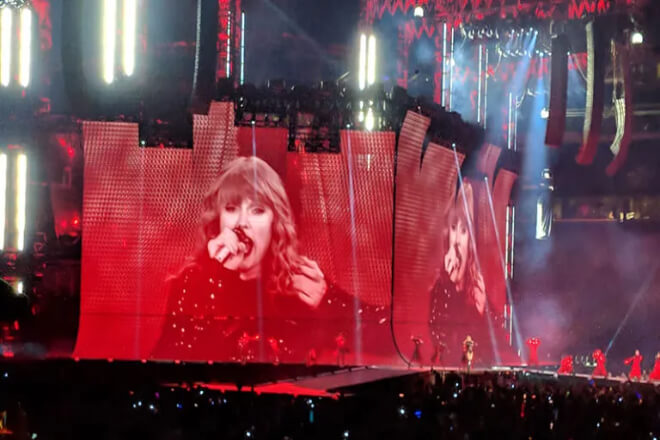
1) Main Stage Background Screen
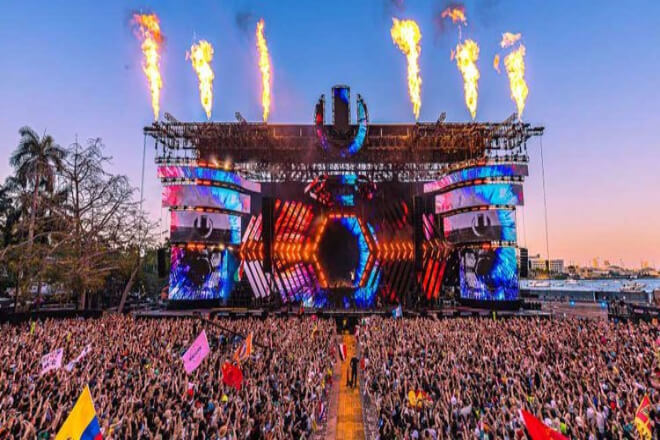
As the core of the event, the main stage LED screen is the aspect we focus on most.
We utilize large, high-resolución screens to display performance content, stage animations, and organizer information, ensuring audiences can see every detail regardless of distance.
During rehearsals, we repeatedly adjust screen brightness and content switching rhythm to perfectly synchronize the visuals with stage lighting and sound effects, creating a stunning visual atmosphere for the performance.
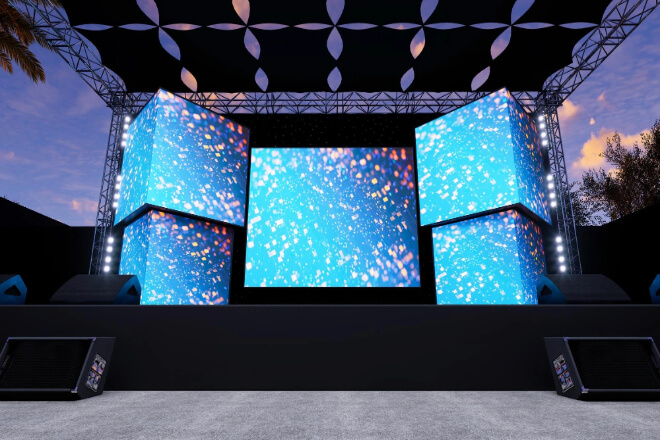
2) Secondary Stage Auxiliary Screens
In multi-stage events, LED screens on secondary stages help solve the problem of audience dispersion.
By simultaneously displaying footage from the main stage or secondary stages, we ensure that audiences in different areas can keep up with the performance.
Organizers can flexibly switch screen content according to the program schedule, ensuring optimal presentation of each stage’s performance while preventing audiences from missing any exciting moments.
3) Audience Area Navigation Screens
To optimize the audience experience, we place LED navigation screens in key locations such as seating areas, dining areas, and restrooms.
The screens clearly indicate various areas, allowing audiences to easily find their seats or service facilities.
This not only reduces on-site chaos but also enhances the overall service and professionalism of the event, allowing every audience member to participate smoothly.
4) Interactive Screens and Social Media Integration
Interactive elements are a major highlight of the event. We use LED screens to display real-time audience social media feedback, voting results, and interactive content, making audience participation immediately visible.
Organizers can use this to adjust the atmosphere, increase engagement, and boost the event’s social media exposure, achieving positive online-offline interaction.
5) Exterior Advertising Screens
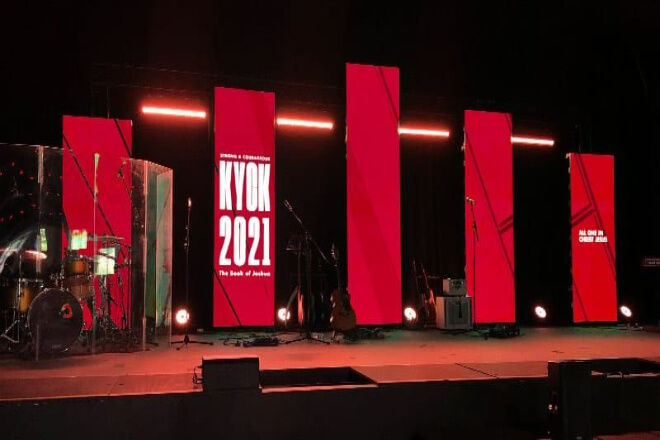
To maximize promotional effectiveness, we also deployed LED advertising screens around the event venue.
These screens display sponsor information, event previews, and directional information, attracting the attention of passersby and increasing brand exposure.
By strategically planning the placement of external LED screens, organizers can build awareness and generate buzz before the event even begins.
From the visual impact of the main stage to the supplementary displays on the secondary stage, from audience guidance to interactive feedback, and external promotion, LED displays allow organizers to have comprehensive control over the event.
It not only enhances the event’s professionalism but also ensures an optimal experience for every audience member, allowing the entire multi-stage event to be presented smoothly, efficiently, and brilliantly.
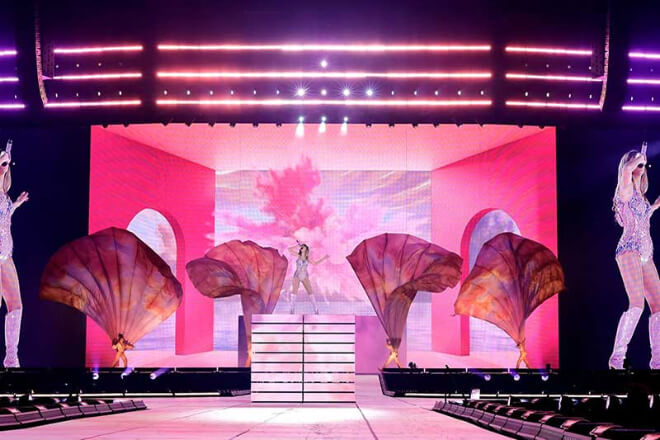
In multi-stage events, LED displays not only bear the core responsibility of visual presentation but also directly impact the smooth running of the event.
A well-designed screen layout requires comprehensive consideration of multiple factors to ensure the best experience for each stage and each audience member.
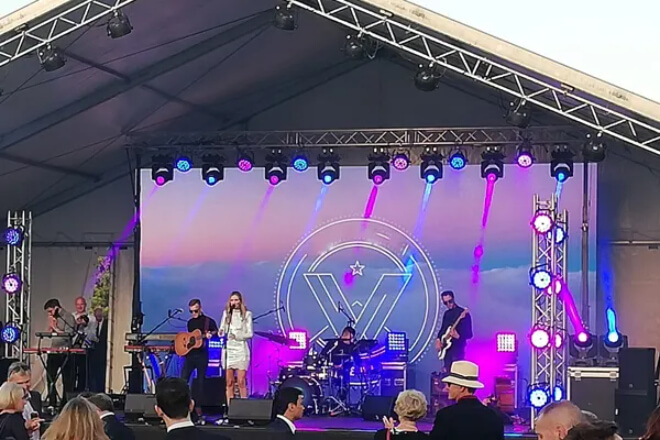
In multi-stage events, the rational layout of LED displays plays a crucial role in the overall effect.
Firstly, it significantly enhances visual impact through a scientific combination of the main stage’s large screen, side screens, and surround screens.
Whether seated at a distance or in a corner, audience members can clearly see the performance details, and the escenario animations and dynamic effects instantly ignite the atmosphere.
Secondly, the layout of LED screens enhances audience engagement. Interactive content, real-time voting results, or social media feedback are displayed simultaneously on the screens.
Making the audience feel noticed and involved, increasing immersion and interactivity, and encouraging them to share their experiences on social media.
Furthermore, a well-placed LED screen improves information delivery efficiency. In multi-stage or large venues, real-time display of event schedules, guest information.
Or directional information ensures that audiences in different areas can quickly access key information and avoid missing important content.
Finally, a high-quality LED screen layout elevates the event’s prestige and brand image.
The modern and professional feel of large screens not only elevates the event’s status but also strengthens brand visual recognition and awareness, fostering greater trust and goodwill towards the organizers and partners.
Overall, LED display layout not only affects visual effects but also directly impacts audience experience, information delivery efficiency, and brand image, making it an indispensable core element in multi-stage events.
 English
  Español
  简体中文
简体中文  Français
  日本語
日本語  한국어
한국어  العربية