
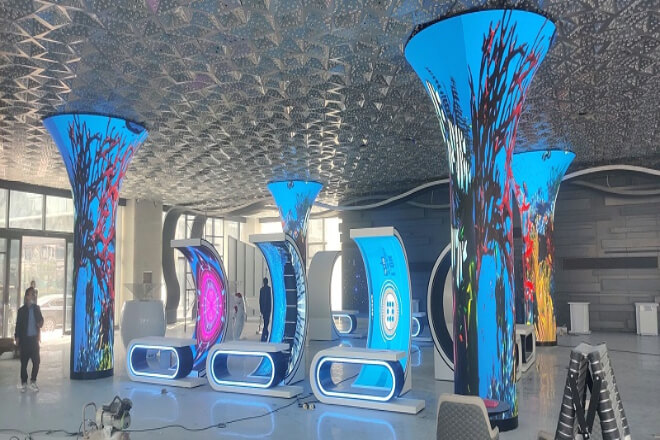
The entrance is like the “face” of a space; its ability to capture attention at first glance determines whether visitors linger.
The role of an LED display here is like a “flashlight + signboard,” not only attracting attention but also subtly telling people “there’s a story here.”
First, place the screen at the entrance or along the main circulation route. Imagine people walking into the space as if walking on a red carpet.
If the screen occupies the visual center, viewers will naturally be drawn to it and won’t miss any information. This not only guides the flow of movement but also subtly strengthens the brand’s presence.
Secondly, leverage dynamic content to enhance appeal. Compared to static images, dynamic videos, animations, or content with changing rhythms are more likely to grab attention in a fleeting moment.
When viewers glance at the entrance, they can be drawn in by the visuals, creating an urge to linger for a few more seconds.
It’s like adding a touch of magic to the space, making people unconsciously stop and observe.
Finally, establish brand impressions from the outset. Entrance screens are not just for displaying products or information; they are the first business card of the brand.
Through color, rhythm, and content style, viewers can perceive the brand’s tone within seconds, transforming a casual passerby into a memorable one.
Simply put, the large screen at the entrance is not just decoration, but a “flashing welcome message” for the space.
Using visual language to grab attention in the first second, allowing viewers to begin a complete experience journey the moment they enter.
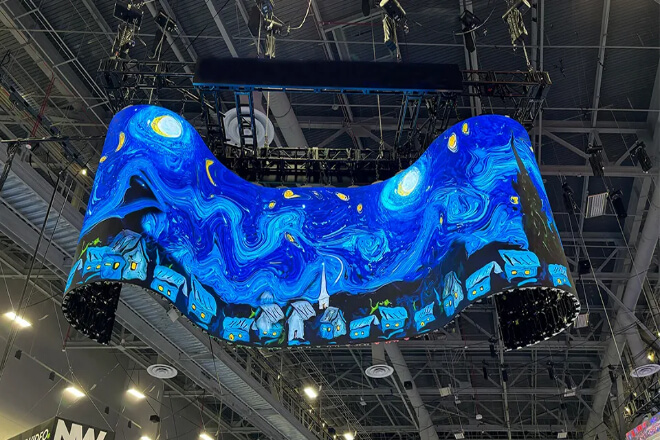
If the entrance is responsible for “attracting attention,” then the display area is more like a place to “clearly explain the content.”
Here, the focus of LED displays is not just on aesthetics, but on conveying information more clearly and in a more layered way.
First, replace traditional static displays with dynamic visuals. Compared to posters or static displays, dynamic content can create greater coherence through rhythmic changes, camera transitions, and visual guidance.
Viewers don’t just glance at it; they are more easily drawn in by the content, thus staying longer.
Secondly, the content tells the brand story and conveys product information. The display area is not just an information output space, but also a space for expressing the brand’s logic.
By using segmented content, brand concepts, product features, and application scenarios can be presented gradually, allowing viewers to build a more complete understanding within a limited time.
Furthermore, enhancing the expressiveness and hierarchy of information delivery is crucial.
Through screen partitioning, highlighting key points, and varying visual rhythm, information can be prioritized rather than simply “piled together.”
This allows viewers to quickly grasp the key points and more easily understand the content structure.
Simply put, the large screen in the display area is not just about “displaying content,” but about “telling the content clearly and smoothly.”
When the content is well-designed, the LED display screen becomes more than just a display tool.
It becomes a visual carrier that “tells a story,” making information easier to see and remember.
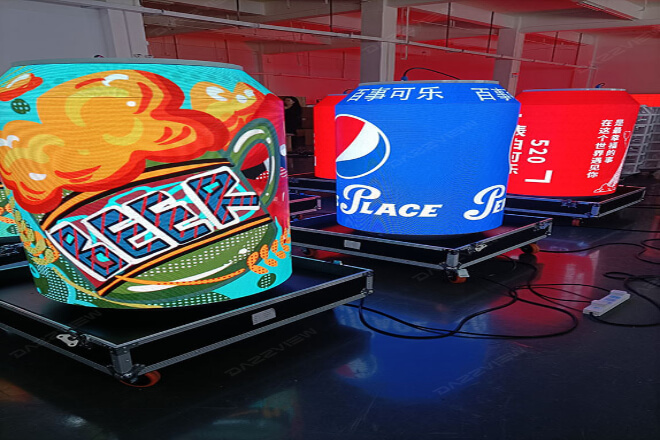
A brand atmosphere isn’t something that can be created with just a few posters; it’s more like a silent “aura” within a space.
LED displays act like an “emotional amplifier,” allowing visitors to immediately sense your brand’s character upon entering.
First, the screen content must seamlessly integrate with the space’s style. Whether the space is technologically advanced or warm and comfortable.
The visual design on the screen should feel “naturally part of the space,” not jarring or like an alien screen suddenly appearing.
Second, reinforce brand identity with color and visuals. Brand colors, logos, and core visual elements can be presented dynamically.
Or interactively, allowing visitors to unconsciously remember the brand’s personality.
Young and vibrant? Use bright, lively colors; high-end and sophisticated? Low-saturation colors and a slow visual pace are perfect.
Furthermore, unify the visual language across different areas. Commercial spaces often have several display areas. If each corner has a different screen style, it’s like a band playing their own tunes.
Maintaining a consistent style, ensuring every corner is “in the same song,” creates a cohesive brand atmosphere.
Finally, enhance the overall spatial quality. The screen not only conveys information but also acts like dancing light and shadow in the space.
Allowing a natural flow of depth and sophistication, making the brand image three-dimensional and warm.
Simply put, LED displays aren’t just “playing ads,” but rather “hosting a party” in the space, allowing every visitor to experience the brand’s unique aura.
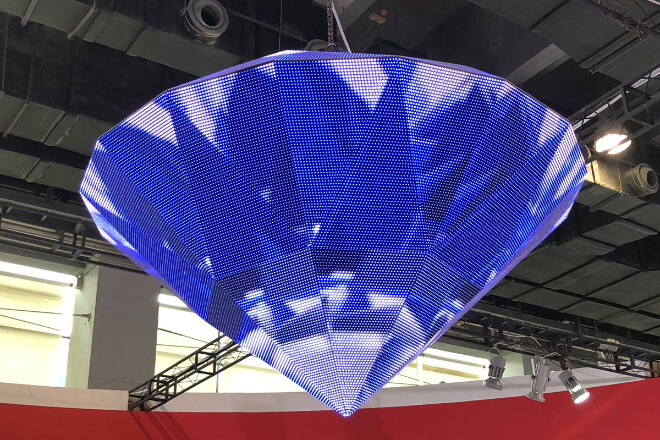
The key to interactive scenarios is not just “making people watch,” but “making people want to move.”
When the screen begins to respond to user behavior, the experience transforms from watching into a small “participation game.”
First, support interactive content or sensing mechanisms. Through touch, gestures, QR codes, or other sensing methods, the screen can respond to user actions.
Simply put, the screen “reacts” when you approach or interact with it; this instant feedback easily sparks interest.
Second, display content based on changes in user behavior. User choices, dwell time, or operation paths can trigger different content presentations.
The screen is no longer a static display but “changes according to the person,” making each interaction a slightly different experience.
Furthermore, increase dwell time and engagement. When users start clicking, swiping, or exploring, they naturally linger in front of the screen for a few more seconds or even longer.
Compared to passive viewing, interactive content makes it easier for people to “stop and see what else they can do.”
Finally, it enhances the overall spatial experience. Interaction transforms the screen from a mere background into a participant in the space.
Viewers don’t just pass by; they engage, making the space more vibrant and memorable.
Simply put, in interactive scenarios, LED displays are not just “playing content,” but a presence that “responds,” making people want to linger, play, and participate.
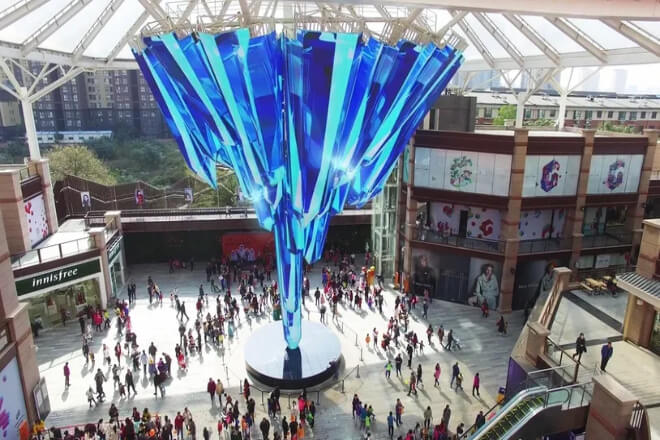
Different spaces are like etapas with different “personalities.” Using the same content for all scenarios often results in an unsuitable effect.
The value of LED displays lies in their ability to be “tailor-made” to the characteristics of a space, ensuring the image, structure, and content are perfectly balanced.
First, it adapts to different scenarios such as retail, showrooms, and brand spaces. Retail spaces are more like a “front desk” that “attracts passersby to stop,” requiring a more impactful approach.
Showrooms, on the other hand, focus on “clearly explaining something,” with a clearer logic.
Brand spaces, on the other hand, act more as “atmosphere providers,” emphasizing long-term visual expression and overall tone. Different goals naturally lead to different approaches.
Secondly, form design should be tailored to the spatial structure. Whether it’s a glass curtain wall, an open space, or an irregularly shaped structure.
Different sizes, splicing methods, or installation schemes can be used to adapt the screen, making it appear as if it’s part of the space, rather than “added later.”
Furthermore, different scenarios require different content strategies. Retail can be faster-paced and more eye-catching.
Showrooms can be layered and progressive; brand spaces lean more towards atmosphere and continuous output.
Once content matches the scenario, the overall experience becomes more natural and easier to accept.
Finally, functionality and visual unity must be achieved. Good customization is not just about “looking right,” but also about “being easy to use.”
It should convey information while seamlessly integrating into the space, making the screen both a tool and part of the experience.
Simply put, customizing LED displays is not just about changing the size, but about “changing the way it speaks” according to different spaces.
Making each scenario more in line with its own rhythm and character.
 English
  Español
  简体中文
简体中文  Français
  日本語
日本語  한국어
한국어  العربية