
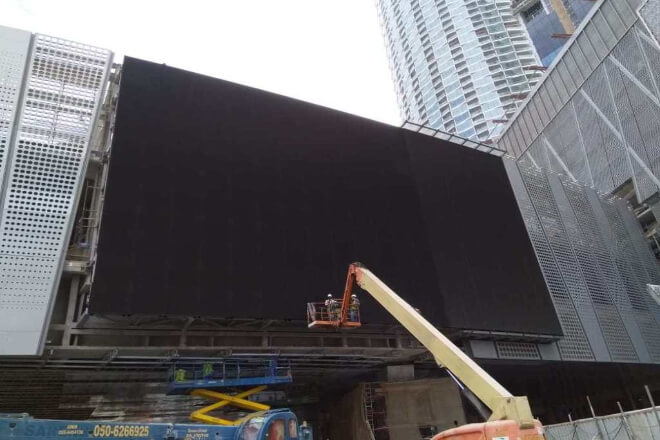
Why are some pantallas LED particularly eye-catching, while others are rarely noticed? Often, it’s not that the screen is bad, but rather that the location was chosen incorrectly.
Different environments, such as Centros comerciales, exhibiciones, plazas, or estadios, have different requirements for screen installation locations.
Taking a look at the surrounding environment before installation and deciding where to place it will often result in significantly different effects.

Before installing an LED display, don’t rush to choose the screen size or style. The first step is to consider the type of environment.
Different environments have completely different requirements for the installation location of the LED screen.
Simply put, you can first divide it into indoor and outdoor environments, and then determine the most suitable location based on the actual purpose.
In indoor venues, such as conference halls, exhibiciones, Centros comerciales, or studios, LED displays are usually placed in the most easily visible location.
For a simple example, in a conference hall, the screen is generally placed behind the stage or podium, so that people in any row can clearly see the content.
In shopping malls, you’ll often see pantallas led installed in atriums, entrances, or near escalators.
These areas have high foot traffic, and customers are easily attracted by dynamic visuals, unconsciously stopping to watch for a few seconds.
Outdoor environments, such as city squares, stadiums, or public transportation hubs, require more careful location selection. Because outdoor spaces are larger, people can see the screen from a distance.
Therefore, LED screens are usually installed in locations with open views, such as the exterior wall of a building in a square or above the stands of a stadium. This way, the content on the screen can be seen from any direction.
Furthermore, you need to clearly define the purpose of the LED screen. If it’s for displaying information.
Such as station timetables or event announcements, it should be installed in a place where people can easily stop and view it.
If it’s for advertising, it’s best to choose a high-traffic area; if it’s for a stage backdrop or interactive experience.
It needs to be well-integrated with the overall venue design, ensuring the screen is eye-catching without interfering with the event.
Simply put, choosing an LED screen location is like choosing a shop location—where people are, where their line of sight is, that’s where the screen should be.
Once you’ve clearly defined the environment and intended use, the subsequent installation and results are essentially halfway to success.
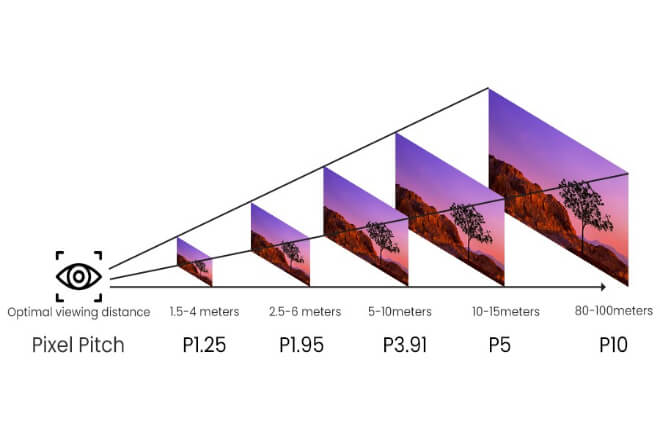
When determining the installation location of an LED display screen, there’s an easily overlooked but crucial factor—how far the audience is from the screen and from what angle they are viewing it.
If these two points aren’t considered properly, even a large screen with a clear image may result in an uncomfortable viewing experience for the audience, or even make it difficult to see the content.
Generally, for scenarios involving long-visión a distancia, such as large advertising screens in city squares, live broadcast screens for sports events.
Or large screens at outdoor events, LED displays are usually installed at a higher position, and the screen size is also larger.
This way, even if the audience is standing far away, they can easily see the content on the screen, and the higher position also avoids obstruction of the view by buildings or crowds.
Many giant advertising screens on city landmarks follow this idea, making them easily visible to people at a distance.
However, the situation is completely different for close-up viewing.
For advertising screens in Centros comerciales, product display screens at exhibitions, or demonstration screens in conference rooms, the audience is usually much closer to the screen.
In this case, the screen is usually installed relatively low, and a small-pitch LED screen is chosen.
This results in a more delicate image, eliminating noticeable pixelation and reducing eye strain even after prolonged viewing.
For example, at technology exhibiciones, LED screens are often positioned within a few meters of the audience, making clarity and viewing comfort particularly important.
Another key point is ángulo de visión. An ideal LED display should be visible to people from all directions, not just those directly facing the screen.
Therefore, during installation, some venues require the screen to be slightly tilted or the angle adjusted according to the spatial structure.
For example, in a shopping mall atrium, if the screen is installed perfectly vertically, only people on the first floor might have a clear view.
However, if it’s tilted slightly downwards, customers on the second and third floors can easily see the content.
Simply put, when installing an LED screen, first imagine the scenario:
Where will the audience stand?
From which direction will they view the screen?
Approximately how far away?
Once these questions are clarified, the screen’s placement will be largely determined.
An LED display installed in this way will provide clear and comfortable viewing, whether viewed up close or from a distance, resulting in a better display effect.
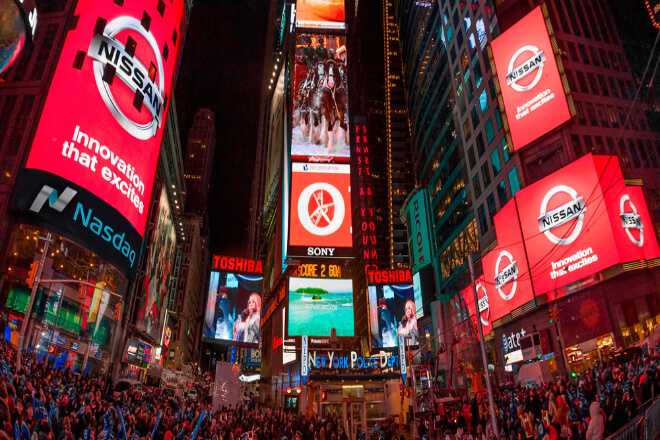
The spatial layout of the venue is crucial when choosing an installation location for an LED display screen.
Simply put, the screen must not only be comfortable to view but also not interfere with the normal use of the venue.
A poorly chosen location may obstruct the view, block passageways, or even compromise safety.
First, consider the installation height. A screen that’s too low will be easily blocked by crowds; one that’s too high may be difficult to see.
Therefore, the position is generally adjusted based on the audience’s eye level, ensuring that most people can easily see the content.
Por ejemplo, en un centro comercial atrium, a large screen is usually installed between the second and third floors.
So that people on the first floor can see it, and customers on higher floors can also see it clearly.
Second, it’s important to avoid obstructing passageways or emergency exits.
While LED displays are eye-catching, installing them in the center of a walkway or near emergency exits can impede pedestrian flow, especially at events or in areas with high foot traffic.
Therefore, many venues install screens on walls, pillars, or above atriums, making them prominent without hindering movement.
Furthermore, the screen size and its proportion to the space must be considered.
Installing a huge screen in a small space can make the room feel visually cramped; conversely, a small screen in a large space can easily be overlooked.
Por ejemplo, en exhibición halls, screen sizes are usually chosen to match the booth size for a more harmonious overall look and to attract more attention.
Simply put, the placement of an LED display screen requires considering not only “whether it can be installed” but also “whether it’s suitable for this location.”
When the installation height, spatial layout, and screen size are properly matched, not only is the viewing experience better, but the entire environment also looks cleaner and more aesthetically pleasing.
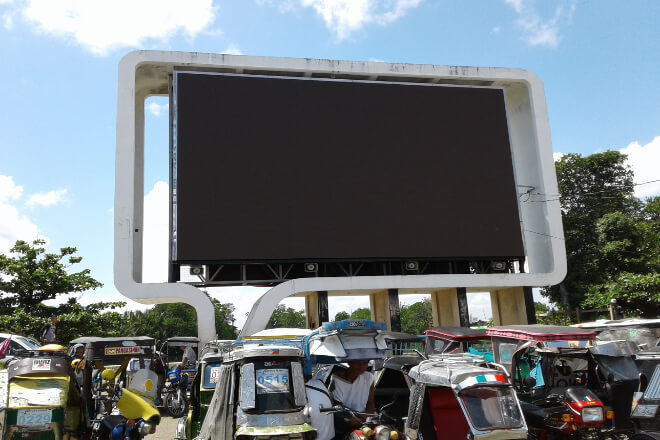
When installing an LED display screen, in addition to considering viewing effects and safety, consider: Does this screen look good in this location?
If the location is well-chosen, the LED screen is not only an information display tool but can also become part of the spatial design.
However, if poorly chosen, it can appear jarring and even detract from the overall aesthetics.
The first thing to note is consistency with the interior decoration or escenario style.
For example, at exhibiciones or brand launches, LED displays are typically integrated into the overall stage design, creating a unified visual effect with lighting, backdrops, and brand colors.
In shopping malls or brand stores, the screen’s placement is often coordinated with the interior design style.
Such as embedding it in a wall or hanging it above an atrium, achieving a striking yet uncluttered look.
Furthermore, locations that easily cause visual interference should be avoided. For instance, placing it near reflective glass, where strong reflections can negatively impact the image quality.
If the screen faces a strong light source or direct sunlight, the content may not be clearly visible.
Therefore, before installation, the lighting conditions of the venue are usually observed to determine the most suitable location and angle.
Simply put, a good LED display location is not just about being “visible,” but also about seamlessly integrating it into the overall environment.
When the screen, space design, and lighting effects are well-matched, not only is the displayed content more attractive, but the overall visual effect of the space is also significantly enhanced.
 English
  Español
  简体中文
简体中文  Français
  日本語
日本語  한국어
한국어  العربية