
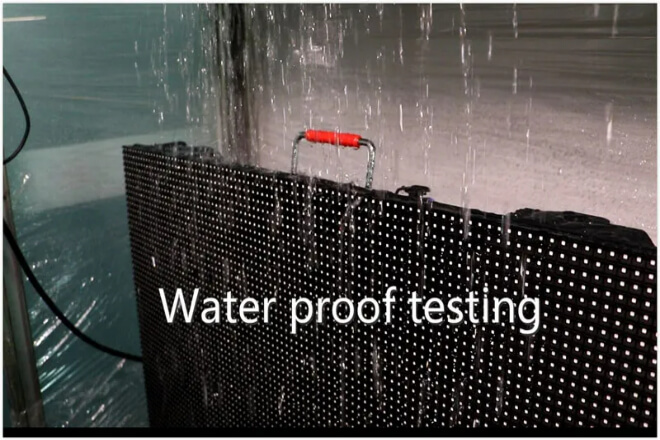
Have you ever noticed that some pantallas led exterior remain clear and bright even in scorching sun or light rain, while others flicker or go blank when it rains? This is largely related to the screen’s waterproof capabilities.
Waterproofing not only affects whether the screen can be used but also directly impacts the audience’s experience and future maintenance costs.
So, how do you understand the waterproof rating of outdoor LED screens? What designs are needed for different scenarios? What should you pay attention to when purchasing? This article will take you through the details.
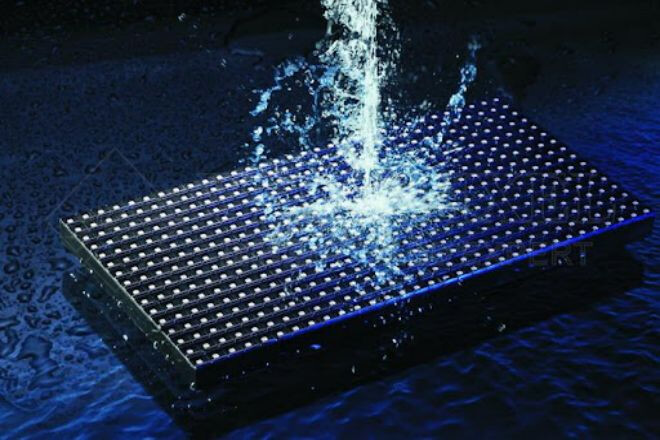
You may have encountered this situation: the LED screen works normally during everyday use, but suddenly malfunctions during a crucial event, leaving everyone stunned.
In fact, this “sudden breakdown” is usually the result of long-term environmental damage accumulating over time.
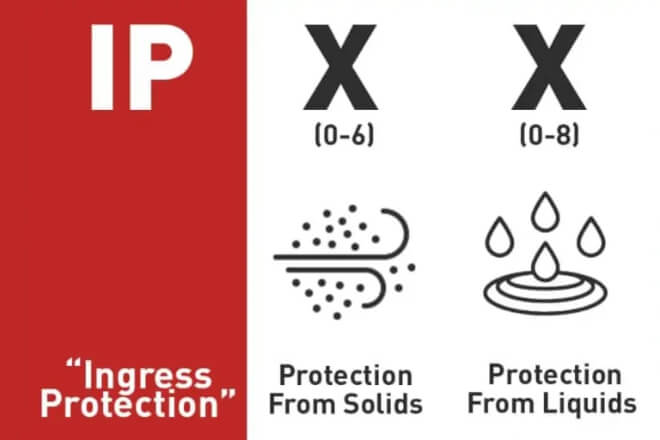
When using LED displays outdoors, waterproofing is a crucial consideration. We usually see the IP rating as an indicator.
It’s quite simple: the first digit represents dust protection, and the second digit represents water protection.
For example, an IP65 screen is completely dustproof and can withstand water jets, while an IP67 screen is even better, being able to withstand short-term immersion in water.
Understanding this number allows you to determine whether the screen is suitable for outdoor use.
Different IP ratings are suitable for different scenarios. For example, for ordinary city stadiums or outdoor basketball courts, IP65 is sufficient, providing protection against dust and rain.
For football fields or track and field stadiums with strong winds and heavy rain, IP66 is a better choice, as it can better withstand strong winds and heavy rain.
For environments like temporary concerts, outdoor etapas, or competitions on ships, IP67 is recommended.
Offering the strongest waterproof and dustproof capabilities, ensuring the screen is less likely to malfunction.
Of course, a higher waterproof rating isn’t always better. Higher ratings mean higher costs, and the screen may be heavier and consume slightly more power.
If the environment isn’t that harsh, blindly pursuing a high rating is a waste of money.
The most important thing is to choose according to the actual conditions of the venue, ensuring the screen is safe and reliable without unnecessary expense. This way, audiences can enjoy a clear and stable viewing experience outdoors.
Different IP ratings are suitable for different scenarios. For example, outdoor advertising screens in cities are constantly exposed to wind, rain, and sunlight.
If the waterproofing is insufficient, the screen may quickly malfunction. IP65 is generally sufficient.
Sports venues or public squares have large crowds and high humidity. Screens need to be protected not only from rain but also from moisture.
While ensuring clear images for viewers watching the game up close. For these locations, IP66 or higher is recommended.
There are also temporary outdoor events or rental screens, where the challenge lies in frequent disassembly and assembly.
Each time the screen is moved and installed, it may be exposed to water or damage, so the waterproof design of these screens needs to be more flexible.
For example, at outdoor concerts or exhibiciones, if the screen’s waterproofing is insufficient.
It may break down in the rain, affecting not only the audience experience but also causing trouble for the operators.
Special environments also need attention. Coastal areas have strong winds and high humidity, cities have high humidity during the rainy season.
And high or low temperatures require specific screen materials. If these factors are not considered, the screen is likely to malfunction prematurely.
However, a higher waterproof rating isn’t always better. Higher ratings mean higher screen costs, potentially increased weight, and slightly higher power consumption.
If the environment isn’t that harsh, blindly pursuing a high rating is a waste of money.
The key is to choose the appropriate rating based on the actual environment and budget, ensuring the screen lasts a long time without unnecessary expense.
This way, whether it’s an advertising screen or a Deportes screen, viewers can see a clear and stable image outdoors, and the operators can have peace of mind.

For LED displays used outdoors for extended periods, waterproof performance directly relates to their lifespan. If the waterproof rating is insufficient, even light rain or humidity can allow moisture to enter the screen, leading to various malfunctions.
The most common problems include module flickering, localized black screens, or even the entire screen failing to display properly.
Sometimes the screen powers on normally, but when encountering high humidity or rainwater intrusion, short circuits or power supply abnormalities occur.
Different parts of the screen have varying degrees of sensitivity to water. The modules are the most directly exposed part.
If the waterproofing is poor, the LED beads and circuits are easily affected by moisture; if the cabinet interfaces are not properly sealed, water can easily seep in.
The power supply and control system are the core of the screen; if water enters, it can cause the entire screen to malfunction.
It can be said that any weak point in waterproofing will affect the stability and lifespan of the entire screen.
Poor waterproof design not only affects lifespan but also increases future maintenance costs.
After water ingress, the screen requires frequent disassembly and repair, or even replacement of modules or power supplies, which often costs more than the purchase price of the screen itself.
Especially for large outdoor screens, the labor and transportation costs for disassembly and repair are considerable, so if the waterproof design is inadequate, the maintenance burden will be very heavy.
In addition, there is a balance between waterproofing and heat dissipation. The better the screen’s sealing, the stronger the waterproofing, but heat dissipation may be worse.
If the screen operates at high brillo for a long time, overheating problems are likely to occur.
A good waterproof design needs to balance sealing and heat dissipation, ensuring that water cannot enter while heat can be effectively dissipated, so that the screen can work stably for a long time.
In summary, the waterproof rating not only determines whether the screen can operate normally in harsh environments but also directly affects its lifespan and operating costs.
Choosing the appropriate waterproof rating and ensuring proper sealing and heat dissipation design are key to guaranteeing the long-term reliable use of LED displays.
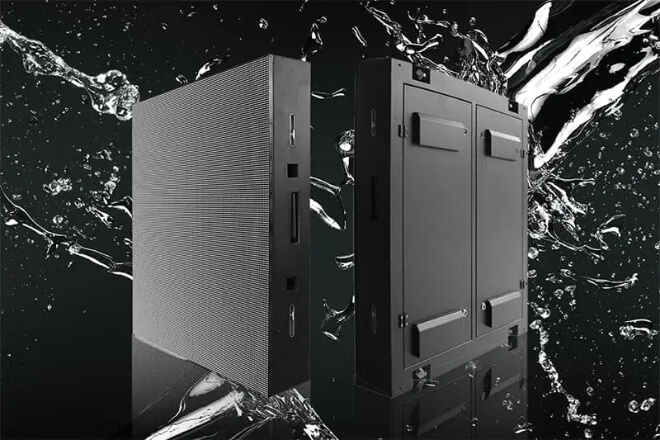
Many people’s first reaction when choosing an outdoor LED display is to look at the IP protection rating.
But in reality, parameters are only a reference; the true waterproof capability depends on the design and manufacturing process.
First, the cabinet structure design is crucial. If the cabinet design is unreasonable, even with a high IP rating, water may still seep in through the seams.
For example, some low-cost screens have loosely assembled cabinets, making them prone to water leakage during heavy rain or strong winds.
Secondly, the sealing glue, sealing rings, and drainage design must be in place. A good LED screen will have sealing materials added to every interface, screw hole, and cabinet edge, and will have reasonably designed drainage holes to guide water away.
Without these designs, even with high specifications, the screen may still suffer water damage in real-world conditions.
In addition, the front and rear protection and potting process of the modules are also crucial. LED beads and circuits require waterproofing.
If the potting is uneven or the protective layer is weak, prolonged exposure to moisture can lead to short circuits or screen failure.
For example, with outdoor advertising screens, if the back of the module is not properly waterproofed, heavy rain during the rainy season may require extensive repairs.
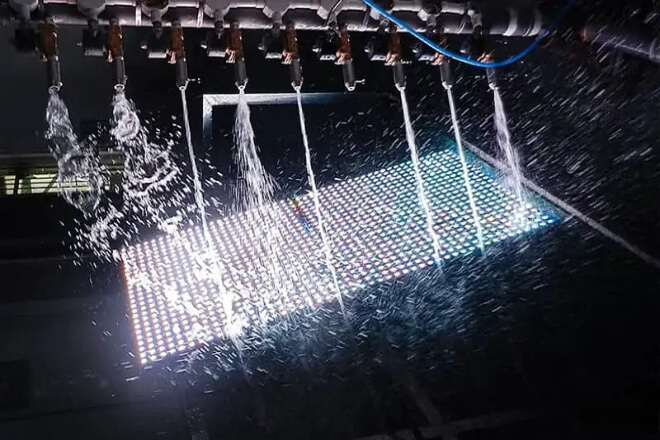
Finally, there is the difference between real-world outdoor testing and laboratory testing. Laboratory tests usually involve ideal conditions, such as static water spraying or short-term immersion.
While outdoor screens have to face wind, rain, dust, temperature differences, and even ultraviolet radiation.
Only screens that have been tested in real outdoor environments can truly guarantee long-term stable operation.
Therefore, when choosing an outdoor LED display, don’t just look at the IP rating; pay more attention to the cabinet design, sealing process.
And module protection to ensure that the screen works reliably in wind and rain, reducing future maintenance problems.
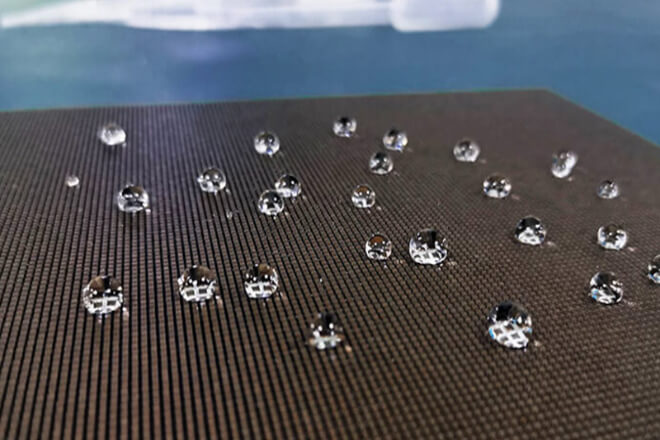
When purchasing an outdoor LED display, waterproofing is a core consideration, but simply looking at the IP rating is not enough; you also need to consider whether the supplier is truly reliable.
First, you can look at the test reports provided by the supplier. Reputable manufacturers will have waterproof.
And dustproof test reports issued by third-party organizations, which are more convincing than simply stating an IP rating.
For example, for IP65, it’s more reassuring if there is experimental data proving stable operation under continuous water spraying and dusty environments.
Secondly, whether the supplier has mature outdoor project cases is also important.
Real-world project experience means they understand the problems that outdoor screens may encounter in environments with wind, rain, and high humidity, and have corresponding solutions.
For example, if a company has undertaken projects for stadiums or outdoor advertising screens in multiple cities, they will certainly have practical experience in cabinet structure, sealing design, and module protection.
In addition, when purchasing, you can pay attention to whether the supplier is willing to explicitly commit to waterproof-related warranty terms.
Some manufacturers clearly specify the responsibilities and repair procedures for waterproof failures in their contracts, which can reduce disputes during later use.
Finally, don’t overlook the after-sales service’s attitude and experience in handling water ingress issues.
Even screens with high waterproof ratings may occasionally experience problems due to extreme weather or installation errors.
If the supplier can respond quickly and provide effective solutions in after-sales service, it indicates that they have a mature system in waterproof design, construction, and maintenance, rather than just writing IP numbers on paper.
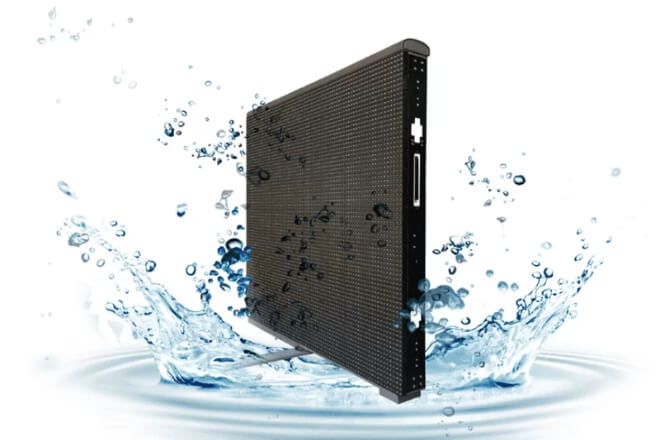
When choosing an outdoor LED screen, waterproof rating and cost always need to be weighed.
The higher the rating, the tighter the cabinet seal and the more complex the module potting process, naturally increasing material and labor costs.
For example, an IP67 screen is significantly more expensive than an IP65 screen, but its waterproof capability is also stronger.
However, there’s no need to blindly pursue a high rating. Over-waterproofing may mean spending a lot of money to cope with extreme situations that the actual environment doesn’t require.
Insufficient waterproofing, on the other hand, carries a high risk, as the screen is prone to water ingress, and the cost of subsequent maintenance and repairs may exceed the money saved.
For example, using IP67 for a regular city basketball court might be a bit wasteful, and installation would be more troublesome; if the rating is too low, constant repairs will be needed during the rainy season.
From the perspective of the entire service life, the most cost-effective approach is to choose a waterproof rating that is sufficient but not excessive.
This ensures that the screen operates stably in windy and rainy weather without driving costs up too much.
The key is to make a rational judgment based on the site environment, actual usage, and long-term maintenance costs, rather than blindly pursuing a high rating.
 English
  Español
  简体中文
简体中文  Français
  日本語
日本語  한국어
한국어  العربية