
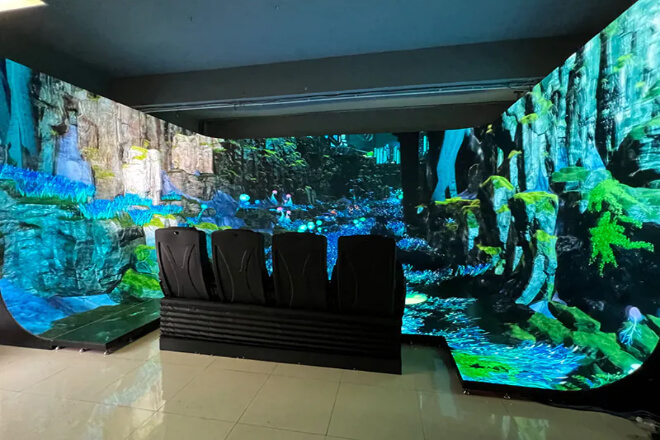
In experience centres, you can use LED displays to create a stunning visual experience that immediately attracts users upon entry.
For example, high-definition resolución and large screen sizes ensure that every image is crystal clear.
Whether showcasing product details, playing brand stories, or demonstrating technological effects, it creates a strong visual impact.
You’ll find that users are not just “looking at the screen,” but truly “experiencing the scene.”
Meanwhile, high brillo and high contrast ensure that the screen remains clearly visible in various lighting conditions.
Even in a sunlit showroom or a dimly lit space, the content you display will remain bright and vibrant, without being diminished by lighting issues.
For experience centres, this means maintaining a consistent visual experience regardless of when visitors arrive.
If you want to cover a larger space, ultra-wide ángulos de visión and large-screen displays are crucial.
You can combine multiple LED screens to form an entire wall, or even arrange them around the space, ensuring users can see the complete picture from any corner.
This approach makes users feel as if they are actually in the scene, enhancing immersion and encouraging exploration and interaction, rather than just passively observing.
Finally, dynamic content and creative displays make experience centres more interesting and engaging.
Through animation, videos, interactive elements, or real-time content changes, you can allow users not only to watch but also to “participate.”
For example, touch interaction, motion sensing, or mobile phone interaction allows users to operate the content themselves and trigger effects, increasing fun and memorability.
This makes the user experience more vivid, and your brand impression more profound.
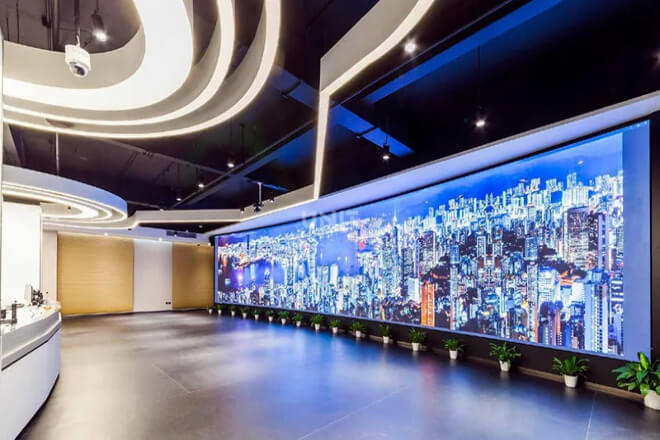
In experience centres, you can make LED displays more than just something to “look at,” but something that truly gets users moving and involved.
You can combine touchscreens and sensor-activated interactive screens with a large LED screen.
This allows users to trigger changes in the screen content through taps, swipes, or actions like walking or waving.
You’ll find that when users actively interact with the screen, their attention is fully engaged, they stay longer, and the entire experience becomes more interesting and interactive, rather than just passive viewing.
To make the experience richer and more layered, consider multi-screen interaction and multi-scene switching.
For example, you can link the large LED screen with surrounding smaller screens, displaying different content on different screens.
Or automatically switching scenes based on the user’s location and actions, making the user feel as if they are in a complete immersive environment.
You’ll find that this not only increases users’ interest in exploration but also naturally keeps them on the go longer.
Enhancing the overall attractiveness and interactivity of the experience centre, encouraging them to take photos and share.
Interactive and intelligent applications can also help you collect data and analyse user behaviour.
You can use touch, QR code, or gesture interactions to understand how long users stay, what types of content are most engaging, and which interaction methods are most popular.
For you, this data is invaluable because you can adjust the screen content based on actual feedback, making the display increasingly precise and engaging.
Simply put, LED displays are not just display tools, but also crucial tools for optimising user experience and marketing strategies.
Furthermore, you can combine LED displays with AR/VR, sound, light, and electricity technologies to create a truly futuristic experience.
Imagine a user approaching the screen, and the virtual effects on it interact with the real environment, or the screen combines with light, shadow, and sound effects to create an immersive escenario-like space.
Such designs not only catch the eye but also leave a lasting impression, making users remember your brand and products and even spontaneously sharing their experiences.
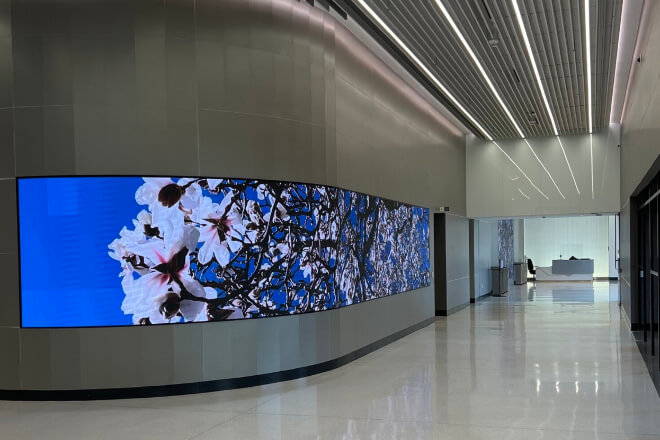
In the experience centre, you can manage the content of multiple LED displays through a central control system.
This means that large screens, small screens, or spliced screens can all display simultaneously, or different content can be played in different zones.
This management method is incredibly convenient. You don’t need to go behind each screen to operate it.
You can update the content of all screens instantly with just one operation on your computer or mobile phone.
With this system, you can update product information, demonstration data, or brand event content in real time.
For example, when a new product is launched, an event theme changes, or data is updated, you can immediately display the latest content on the LED screen, ensuring users always see the most accurate and engaging information.
This not only enhances professionalism but also builds user trust in your brand and products.
Furthermore, the system supports multi-screen partitioning, allowing you to display different information simultaneously on the same screen.
For example, you can play product introductions on the left, video demonstrations in the middle, and scrolling event information or interactive prompts on the right.
This not only makes information delivery more efficient but also allows users to access richer content simultaneously, resulting in a more complete experience.
Most importantly, you can flexibly adjust the content to suit different events or themes, whether it’s a holiday event, a temporary exhibition, or a brand promotion.
You can quickly change the screen content and layout, allowing the LED display to adapt to different scenarios, ensuring users always feel something new and exciting when they visit the experience centre.
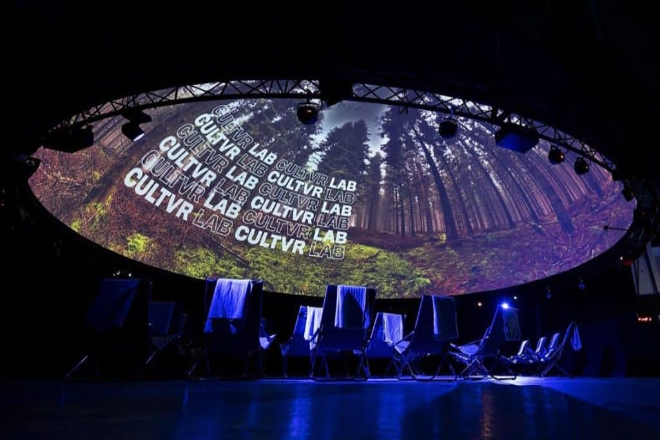
In experience centres or commercial spaces, LED displays are not just aesthetically pleasing tools; they directly contribute to your brand and business value.
First, it can significantly enhance your brand image and technological sophistication.
When users enter a space and see high-definition screens, dynamic interactive displays, or creative content, they will naturally be impressed by your company’s professionalism and innovation.
This visual impact and immersive experience make it easier for people to remember your brand than traditional display methods.
Simultaneously, LED displays can enhance the customer experience and extend user dwell time.
Whether it’s interactive touch, motion sensing, multi-screen linkage, or creative displays, users will actively participate, naturally leading to longer dwell times.
This is crucial for you because the longer users stay, the more fully they are exposed to brand information, increasing the chances of purchase or engagement.
Furthermore, LED displays can serve as a marketing tool, showcasing your product advantages and new technologies.
You can use the screen to display product features, usage scenarios, technical demonstrations, or brand activities, allowing users to understand product highlights at a glance—more intuitive and persuasive than simple text or static displays.
Finally, interactive LED screens can collect user behaviour data, such as dwell time, interaction frequency, or popular content.
This data can help you optimise your display strategies and marketing decisions, making your brand activities more precise and effective.
In other words, your LED display not only makes the space more vibrant and the experience more engaging, but it can also become an important tool for optimising your marketing strategies and events.

First, key selection considerations. You need to pay attention to the screen’s resolución, brillo, y viewing angle.
Higher resolution results in a clearer image and more detailed display; brightness and contrast ensure the screen remains clearly visible under various lighting conditions.
A wide viewing angle allows users to see the entire image regardless of their position. Furthermore, if you want the screen to provide an interactive experience,
You also need to focus on interactive functions such as touch control, sensing, QR code scanning, or multi-screen interaction. These functions can significantly enhance user engagement and the overall experience.
Second, spatial layout and audience flow. You need to plan the installation location and size of the LED screen based on the size of the experience centre, user movement, and viewing angles.
For example, in high-traffic areas, you can enlarge the screen or use multi-screen splicing to allow more users to watch and participate simultaneously.
A well-designed walking path can naturally encourage users to linger in front of the screen, enhancing immersion and interactive experience.
Third, supplier capabilities. Choosing a supplier involves more than just products; service is equally important.
You need to ensure the supplier possesses capabilities in design, construction, content management, and after-sales service.
An excellent supplier can help you plan the space, design interactive content, build the system, and ensure stable screen operation and content updates, allowing your investment to generate long-term value.
Finally, there’s the return on investment (ROI) assessment. Purchasing an LED display screen is not just about hardware investment.
More importantly, it’s about the enhanced display effect and customer experience it brings.
You can evaluate its value from perspectives such as user dwell time, engagement, brand impression, and marketing effectiveness.
Choosing the right resolution, brightness, and interactive features will not only make your experience centre more attractive but also deliver tangible returns for your brand and business goals.
 English
  Español
  简体中文
简体中文  Français
  日本語
日本語  한국어
한국어  العربية