مقدمة

Municipal squares are bustling with people every day, but not everyone stops to look at the notice boards.
This raises an interesting question: what would it be like if the city had its own “spokesperson”? More and more places are answering with شاشات LED.
They can release information instantly and quickly convey notices at crucial moments, making communication between the city and its citizens more direct.
جدول المحتويات
1. How do LED displays publish city announcements and government information?

In urban public spaces, يعرض الصمام are no longer just “cold electronic screens.”
They can become talking “information assistants” in the city, allowing citizens to access the latest information at any time.
First, they can publish policy notices in real time. For example, as holidays approach, an LED screen in a Beijing subway station will instantly scroll through “traffic restriction reminders + traffic information for popular attractions.”
Allowing commuters and tourists to plan their routes in advance and avoid getting stuck in traffic.
Second, LED screens can also display municipal announcements and public service information.
Garbage sorting guidelines, public facility maintenance notices, community activity information, and even weather forecasts can all be presented dynamically.
Imagine an LED screen in a plaza displaying a loop: “The plaza fountain will be under maintenance from 9:00 AM to 11:00 AM today.
Please detour.” This is both practical and avoids the risk of being easily overlooked, like traditional bulletin boards.
Furthermore, LED screens improve the efficiency of public information dissemination. Dynamic scrolling and looping displays are more eye-catching than paper notices and can reach citizens at different times of the day.
For example, during the morning rush hour, traffic information displayed on the screen can accurately reach commuters rushing to catch the subway.
In the evening, community event announcements can attract residents to participate.
More importantly, it enhances the interaction between the government and citizens.
Transparent and timely updates make policies less abstract and easier for citizens to understand and follow.
Simply put, LED displays are like “megaphones and eyes” in the city: not only do they make policies immediately visible, but they also make citizens feel—”Hey, the city is talking to me!”
2. How can LED displays serve festivals and large-scale public events?

At festivals and large public events, LED displays act as “all-purpose assistants,” serving as both a compass and a منصة attraction, making events more organized and engaging.
First, they can display event schedules and on-site guidance. For example, at Spring Festival temple fairs or National Day celebrations, LED screens can scroll through performance schedules, stage locations.
And entry routes, preventing crowds from getting lost and reducing the need for staff to repeatedly explain things.
Imagine visitors looking up and seeing “Lion Dance Performance: 3 PM, Stage A; Light Show: 7 PM, Main Square”—convenient and intuitive.
Second, LED screens can showcase celebrations and cultural activities.
Stage backdrops, interactive videos, rotating photos, and even real-time voting results can make participants feel the energy and excitement of the event.
For example, during the recent European Cup, LED screens simultaneously displayed live track footage and exciting moments, allowing distant viewers to feel the tension and passion of the sprint.
Furthermore, LED screens can improve event organization efficiency. Through pre-set content and dynamic on-site adjustments, staff can quickly publish changes.
Such as temporary adjustments to performance orders or safety notices, ensuring the smooth running of the event.
Finally, it enhances on-site participation. Audiences not only watch performances but also interact through the screen.
Such as voting, sending blessings, taking photos, and sharing them, making the event more fun and memorable.
ببساطة، يعرض الصمام in festivals and events are like a compass + stage + interactive center.
Ensuring both the smooth running of the event and the enthusiastic participation of the audience, instantly igniting the atmosphere.
3. How do LED displays fulfill their function of emergency information dissemination?

In the face of emergencies, information transmission is a lifeline, and LED displays act like “smart loudspeakers” in the city, delivering important information quickly and prominently to everyone.
First, it can issue weather warnings and disaster notices. For example, during a typhoon, an LED screen in a Shanghai square would scroll through messages like “Typhoon Warning: Wind force 8, please avoid going out as much as possible.”
Allowing citizens to bring in laundry and lock windows in advance—a more timely and reliable reminder than those posted on social media.
Second, it can update emergency information in real time. If a temporary line adjustment occurs at a London Underground station.
LED screens can simultaneously display the closed section and the alternative line, preventing passengers from crowding at the exits and avoiding complaints.
Simultaneously, they can guide crowd evacuation and safety. During large festivals or in commercial areas, in case of an emergency.
The screens can display “Please evacuate orderly from the east exit,” accompanied by on-site audio guidance, like an “orderly animated game,” allowing crowds to evacuate in an orderly manner rather than in panic.
More importantly, LED screens enhance public safety. Compared to traditional broadcasts or paper notices, they are more eye-catching, update information faster, and have a wider coverage.
In critical moments, they act as the city’s “eyes and loudspeakers,” ensuring citizens can see, understand, and move safely.
In short, LED displays are not only “notifiers” in emergency information dissemination but also the city’s “safety guardians,” being both practical and intuitive, enabling orderly responses to emergencies.
4. How do LED displays disseminate public service and civic virtue messages?

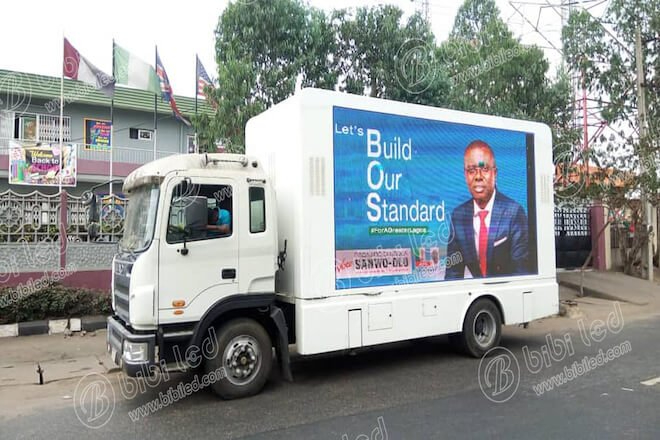
In cities, يعرض الصمام not only play commercial advertisements but also serve as important windows for disseminating public service concepts.
Compared to traditional bulletin boards, LED displays are more eye-catching, flexible, and easier to attract the attention of passersby.
Firstly, LED displays can showcase public service advertisements and civic virtue initiatives. For example, in shopping districts, squares, or subway stations.
Screens can continuously display content such as “civilized dog ownership,” “yielding to pedestrians,” and “garbage sorting.”
Compared to a static poster, dynamic images and short videos are often more likely to catch people’s eyes, and the promotional effect is more direct.
Secondly, they can popularize public knowledge, such as environmental protection and safety.
For example, during the summer heat, they can broadcast heatstroke prevention reminders.
During the rainy season, they can release flood prevention knowledge; and before holidays, they can promote fire safety common sense.
Many people who were originally just passing by are often able to remember a few practical points after seeing concise and vivid animations or case demonstrations.
At the same time, LED displays can also help improve the city’s image of civility.
For example, playing public service short films on large screens in large shopping districts can promote green travel and water conservation.
Giving the city not only a bustling commercial atmosphere but also a warm human touch.
Sometimes, a simple phrase like “Please be a little more patient with those around you today” can bring a smile to the face of a hurried pedestrian.
Furthermore, LED screens offer advantages such as wide coverage and rapid updates. During events like National Energy Conservation Awareness Week and Traffic Safety Awareness Month.
Relevant content can be quickly synchronized across multiple regions, allowing public service information to reach a wider audience and generating greater impact.
Simply put, LED displays act like “public service megaphones” in the city: spreading civilized concepts in ordinary times and popularizing practical knowledge in critical moments.
Subtly making the city more welcoming and making public service announcements easier to see and remember.
5. How do LED displays create information windows for smart cities?

In the construction of المدن الذكية, LED displays are gradually evolving from simple display devices into important windows connecting urban data and citizens’ lives.
They not only “display,” but more importantly, “transmit real-time information.”
أولاً، يعرض الصمام can connect to urban data platforms.
By connecting to systems such as traffic, meteorology, and emergency management, the screen can obtain the latest data in real time and quickly present it to citizens.
In other words, it acts like a “visual translator” of urban data, transforming complex information into content that everyone can understand.
Second, it can display real-time traffic and weather information. For example, during the morning rush hour, large screens in public squares display traffic congestion information on major roads.
Before the end of the workday, the screens warn of heavy rainfall expected within the next two hours, advising citizens to plan their trips in advance.
Many citizens may only glance at the screens, yet this can save them from traffic jams and getting caught in the rain.
Simultaneously, LED displays can provide a wealth of public service content.
Besides traffic and weather information, they can also publish information on public events, convenient service guides, and announcements of cultural exhibitions.
For instance, the large screens in public squares can display weekend music festival schedules.
And information on available parking spaces in nearby parking lots—a single screen providing a variety of useful information.
More importantly, this information-based display method can improve the city’s digital management level.
When urban operational data is aggregated and displayed in real time, government departments can transmit information more efficiently.
And citizens can access services more conveniently, achieving an efficient connection between urban management and public needs.
In short, LED displays are like the “city information window” of a smart city: connecting urban data, serving citizens’ lives, and displaying the city’s operational status, turning invisible data into visible convenience.
For example, if you’re rushing to work and look up to see a message like “Road ahead is congested, detour recommended,” that screen might help you avoid the traffic jam even before your navigation system does.
6. الخاتمة
A municipal square LED display screen may seem like just a small corner of the city.
But from weather warnings to event announcements, from public service announcements to convenient services, it silently delivers important information every day.
In a way, it’s like a “public chat window” for the city, allowing information to reach people, rather than people having to search for information.
Finally, if you would like to learn more about LED displays, الرجاء التواصل معنا.