

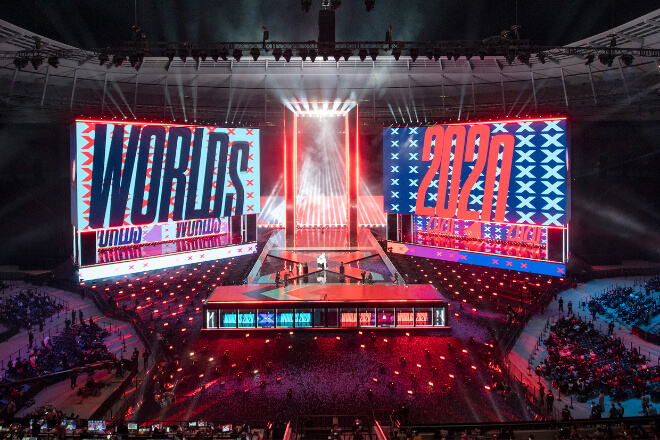
On the international stage of esports tournaments, LED displays are no longer just a “background,” but the “main structure” of the entire visual system.
First, they can create an immersive visual background for the main 阶段.
The massive LED background screen changes in real time according to different stages: during the draft phase, it serves as a tactical and lineup analysis interface.
After the match begins, it switches to a Rift theme or battle energy visuals, making the stage feel like a world constantly “loading new scenes.”
Second, it bears the core function of displaying hero selection and draft phase information.
During the hero selection phase, viewers can not only see hero portraits but also understand the team composition and matchups through dynamic visuals.
For example, features like counter-picking prompts and team composition displays transform the draft phase from mere information into a “visual game of strategy.”
Simultaneously, the LED system enhances the overall visual unity of the match. From player entrance animations to the HUD style during the game.
And even kill notifications and match point effects, all visual elements operate under the same design language, making the entire event feel like a “live-action epic.”
More importantly, this system directly elevates the professional standards of international tournaments.
The visuals are no longer just “playing the game,” but rather a cinematic presentation, allowing global audiences in different language environments to visually understand the game’s rhythm.
Interestingly, many viewers’ first impression of the match isn’t the operational details, but rather, “This stage looks high-end from the start.”
Simply put, the role of LED显示屏 here is to upgrade the match from being “played” to being “designed as a visual work of art.”
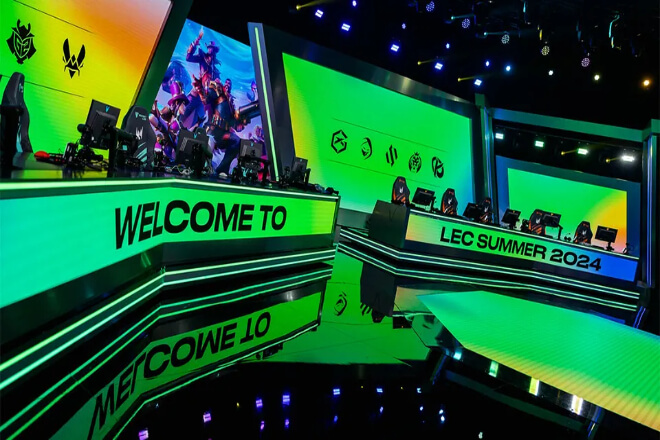
In esports tournaments, what truly gets the crowd going isn’t the calm laning phase, but those decisive moments that decide the outcome of the game.
The role of LED显示屏 is to transform these moments from simply “occurring” to being “remembered.”
First, they amplify the highlights of team fights and kills. When a team fight breaks out, the large screen quickly switches to the core combat scene, using slow motion, close-ups, or enhanced effects to turn an ordinary kill into the focus of everyone’s attention.
Second, they excel at enhancing the atmosphere of comebacks and decisive moments.
For example, when the economically disadvantaged team achieves a crucial team wipe, the large screen often simultaneously amplifies the visual impact:
Increased contrast, enhanced special effects, and prominently displayed score changes amplify the feeling of a “reversal.”
Simultaneously, they can enhance the sense of rhythm by coordinating with camera transitions.
When the director switches from the players’ first-person perspective to the overall team fight and then back to the base push, the large screen’s visuals change in sync.
This “visuals following the rhythm” design gradually builds the audience’s emotions.
Even more interestingly, in these crucial moments, viewers are often not first trying to understand what happened.
But rather being “emotionally driven” by the visual impact. By the time they realize what’s happening, they’re already cheering.
In short, the role of LED displays here is to transform crucial moments from “game milestones” into “emotional climaxes.”
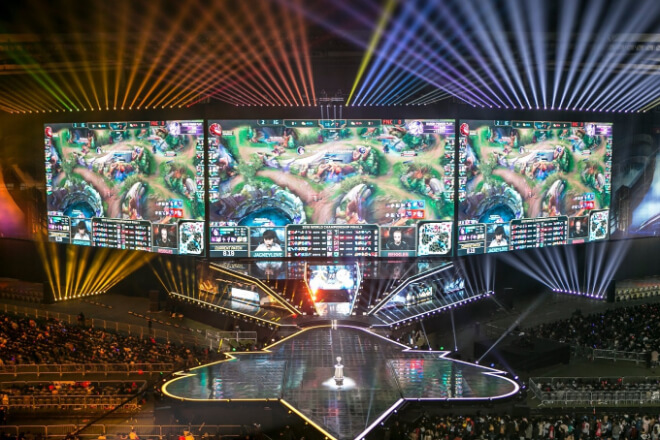
In esports events like esports, the pace is fast, and the information density is high.
Without clear data presentation, viewers can easily find themselves “watching the excitement but not understanding.”
The role of LED显示屏 is to transform complex information into easily understandable “battle language.”
First, it can clearly display real-time economic and kill data. For example, key indicators such as the economic difference between the two sides, kill scores.
And CS differences will be presented through dynamic charts or intuitive comparisons, allowing viewers to quickly determine “who is leading, by how much, and whether the advantage is widening.”
Second, it can also present map resources and strategic information.
Key resources such as dragons, Rift Herald, and vision control will be highlighted or displayed on the screen through countdowns, making it easier for viewers to understand “why the next wave is important.”
Simultaneously, the LED system can also enhance the comparison of team status. For example, if one side is on a winning streak, the screen might display an “upward trend in performance”;
If the other side enters a defensive phase, the screen might use visual de-emphasis or color contrast to reflect the changing pressure, making the trend of the battle more intuitive.
More interestingly, this information doesn’t just “tell you what’s happening,” but helps you “predict what’s coming next.”
Viewers can even sense in advance through the large-screen data whether the next team fight is imminent.
Simply put, the core value of LED data presentation is: transforming the game from “requiring commentary and translation” to “being understandable to the audience themselves.”
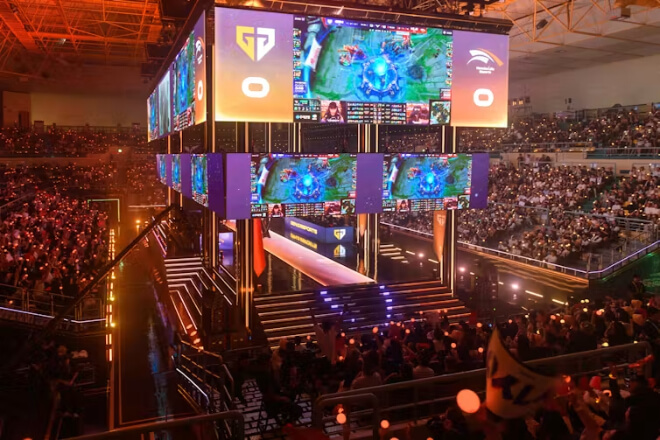
In esports events like League of Legends, the audience experience is no longer just about “watching the game,” but about “entering the game atmosphere.”
The role of LED displays is to extend this atmosphere from the visual to the entire venue space.
First, it works in conjunction with lighting and stage design to make the entire 阶段 a unified “emotional system.”
When the game enters a tense phase, the screen dims, the colors tighten, and the lighting synchronously intensifies the sense of pressure;
When a team fight breaks out or a kill occurs, the visuals are instantly released, directly engaging the audience’s emotions.
Secondly, it enhances the sense of ceremony surrounding a player’s entrance. Players don’t simply walk onto the stage.
They appear accompanied by unique animations, themed effects, and full-screen visual changes, like “bringing hero entrance animations to life.”
This design puts the audience in a state of high anticipation from the very beginning.
Simultaneously, LED displays can enhance on-site interaction and emotional engagement.
For example, full-screen effects during crucial kills, countdown animations for match points, and even visual changes triggered by audience cheers can create a strong sense of “resonance” on-site.
More interestingly, this experience makes it easy for the audience to enter a state of “emotional synchronization.” It’s not just about watching the game; it’s about sharing the tension, cheering, and excitement with the entire venue.
In short, the immersive experience brought by LED displays can be summarized as: making the audience not just watch the game, but “surrounded by the emotions of the game.”
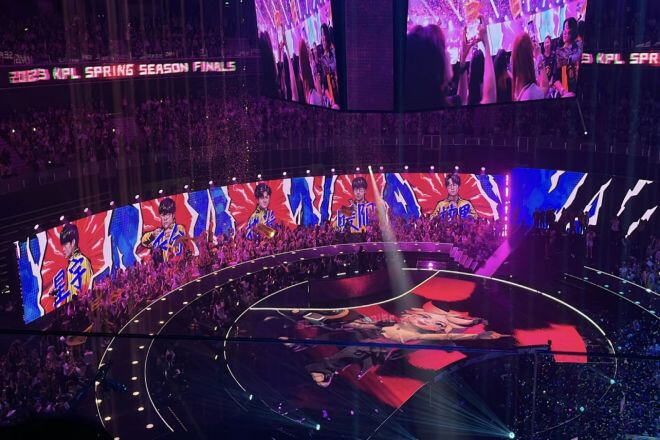
In international esports events like League of Legends, LED displays are no longer just “阶段 equipment,” but a core medium connecting commerce, communication, and the viewing experience.
First, it can significantly increase the exposure of sponsoring brands. Brands are no longer just relegated to corner logos.
They can be integrated into player entrance animations, team battle highlight reels, and even match-cliff moment effects, ensuring they’re seen by the audience at emotional peaks and reinforcing memorability.
Secondly, it supports a multi-screen (interconnected) dissemination system.
The main stage screen handles the visual impact, side screens display data and tactical information, and ground screens enhance the immersive atmosphere.
These multi-dimensional visuals combine to form a unified visual system, ensuring continuous exposure of brand content from different perspectives.
Simultaneously, it’s highly compatible with live streaming and short video dissemination.
Directors can directly utilize LED displays to construct cinematic language, such as full-screen effects for kills and dynamic backgrounds for player close-ups.
These visuals are naturally suited for editing into highly shareable short videos, further amplifying their reach on social media platforms.
More importantly, it expands the global influence of the event. When viewers of different languages can visually understand the rhythm and emotional shifts of the game.
The event itself more easily transcends language barriers, achieving simultaneous global dissemination.
Interestingly, many “out-of-the-box” esports moments are essentially visually packaged with the help of LED screens—transforming a single action into a globally shareable “iconic moment.”
In short, the commercial and communicative value of LED displays can be summarized as: ensuring that events are not only watched, but also disseminated, remembered, and re-consumed.


 English
  Español
  简体中文
简体中文  Français
  日本語
日本語  한국어
한국어  العربية