
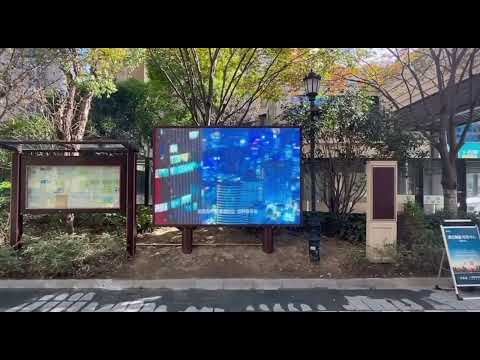
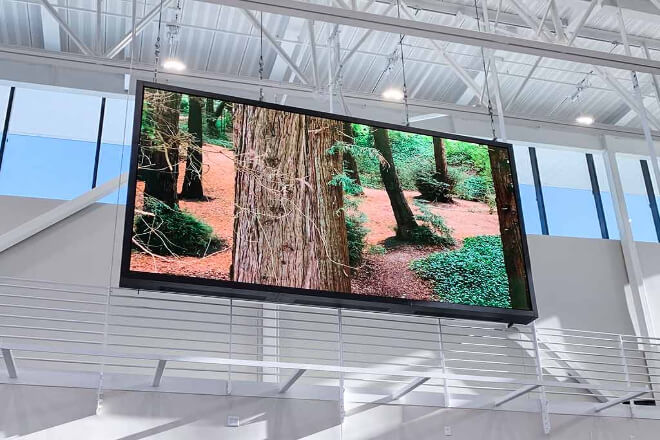
In traditional communities, property management notices often rely on bulletin boards, WeChat groups, or posted paper notices. But these methods all have a problem: information is easily overlooked.
For example, water and power outage notices posted downstairs might not be noticed by residents when they return home;
Messages sent by property management in groups might be overwritten by other chat content.
For large residential communities, how to quickly deliver important information to every resident is a practical problem.
LED显示屏 make community information dissemination more intuitive.
For example, after installing LED information screens at community entrances, building lobbies, or underground parking lots.
Property management can update information such as water and power outage schedules, elevator maintenance notices, visitor reminders, and safety tips in real time.
Residents can see it directly as they pass by, without needing to specifically check their phones.
Besides daily announcements, LED displays can also showcase community activity information, such as children’s activities, holiday celebrations.
And garbage sorting promotions, making community operations more than just issuing “notices,” but enhancing interaction among residents.
Some overseas residential communities also utilize digital displays to disseminate public information.
For example, some apartment communities in the United States display visitor notices, event schedules, and property service information on lobby LED screens.
Allowing residents to be informed of the latest developments as soon as they enter the community.
Compared to traditional announcement methods, the biggest advantage of LED displays is their fast update speed and wide coverage.
An important notice doesn’t need to be reprinted or replaced with paper; simply modifying the content in the backend allows it to be displayed immediately.
For smart communities, LED displays are not just display devices but also information windows connecting property management and residents, making community communication more timely and efficient.
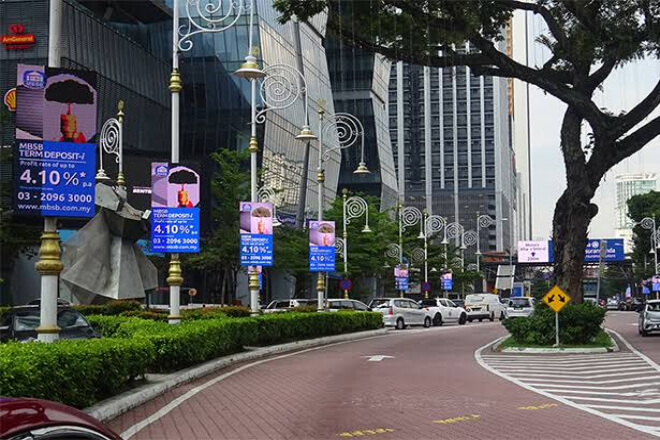
For community residents, what they often need is not complex information, but rather small reminders related to daily life.
Will it rain today? Are there any community activities nearby? Where are the convenient services available on weekends?
These seemingly simple pieces of information, if readily available on the way home, would greatly enhance daily life.
LED displays can serve as “life information windows” within communities. Installed at entrances, lobbies, and elevator areas, they can display real-time weather changes.
Surrounding traffic conditions, and community event schedules, allowing residents to quickly access useful information without repeated searches.
For example, before the morning rush hour, LED screens at community entrances can alert residents to nearby traffic congestion;
During typhoons or heavy rains, they can promptly issue safety warnings; and information about community events.
Such as flea markets, family activities, or health lectures for seniors can be displayed in advance to attract more residents.
Some overseas residential communities also utilize digital displays to enhance the living experience.
For instance, some apartment lobbies in the United States use LED屏幕 to display community announcements, reminders about public facilities.
And information about nearby services, ensuring residents are informed of the latest developments upon entering the building.
Compared to traditional bulletin boards, the biggest advantage of LED displays is their adaptable content.
Today it might display weather alerts, tomorrow it could switch to community events, and during holidays it could play greetings, making information delivery more tailored to residents’ needs.
LED displays in smart communities are not just for announcing notices; they play the role of a “community assistant” in daily life, making it easier and less time-consuming for residents.
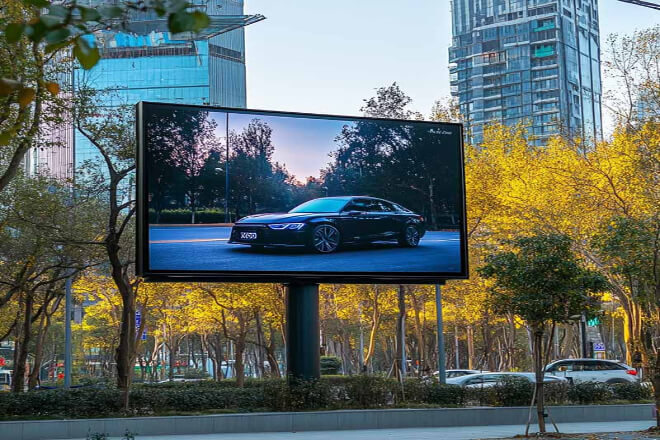
In community management, safety information often needs to be seen “as soon as possible.”
In the past, fire safety reminders and anti-fraud campaigns relied heavily on bulletin boards or paper posters.
However, these methods are slow to update, and residents don’t necessarily stop to check them every day.
For emergencies, the speed of information delivery is particularly important.
LED显示屏 allow safety information to reach residents more directly.
For example, installing LED screens at community entrances, elevator lobbies, and underground parking lots can continuously display fire safety knowledge.
Reminders to prevent objects from being thrown from heights, garbage sorting requirements, and anti-fraud cases.
Compared to a fixed poster, dynamic videos and images are more likely to attract residents’ attention and leave a lasting impression.
The role of LED displays is even more significant in emergencies. For example, in the event of heavy rain, typhoons, or extreme weather, property management can quickly issue reminders;
If there are temporary road closures or equipment maintenance issues within the community, residents can also be notified promptly, reducing information delays.
Some overseas residential communities also utilize digital displays to improve security management.
For example, in some apartment lobbies in the United States, screens remind residents of visitor safety, fire drill schedules, and emergency contact information, integrating security information into daily life.
Of course, community security management cannot solve all problems with just a screen.
But LED displays can serve as an important communication channel between property management and residents, making reminders more timely and information coverage wider.
For smart communities, LED displays are not only display devices but also “quick notification windows” in security management, helping information reach residents faster in critical moments.
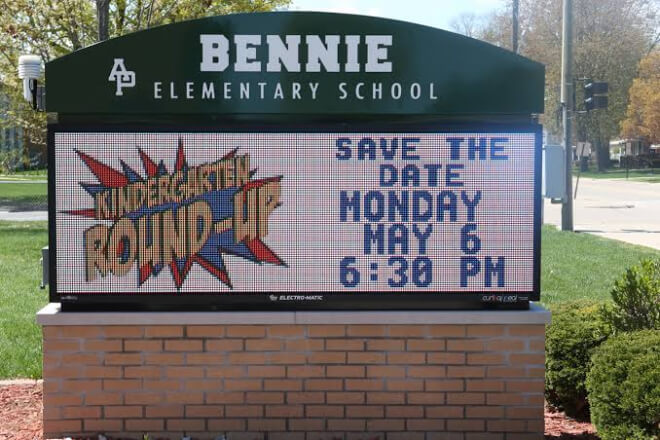
The first impression a community leaves on residents is often not based on the size of the buildings, but rather on the moment they enter the community.
In the past, many community entrances, lobbies, and public areas had relatively simple display methods, perhaps only property bulletin boards, simple signs, or a few promotional posters.
With the development of smart communities, more and more projects are beginning to utilize LED显示屏 to make public spaces warmer and more interactive.
For example, LED screens at community entrances can display welcome messages, holiday greetings, and event announcements;
In lobby areas, they can show community news, property service information, or photos of resident activities, adding a sense of interaction to the daily journey home.
In some high-end residential communities, LED displays are even integrated into the spatial design.
For instance, digital walls in the lobby can change their visual content according to the season, holidays, or community events, giving ordinary public areas a more modern atmosphere.
Beyond enhancing the visual experience, LED displays can also help strengthen connections between residents.
For example, when the community hosts parent-child activities, sports competitions, or charity events.
The screens can be used to announce these events in advance and showcase highlights afterward, making residents feel like they are part of the community.
Some overseas apartment projects also use digital display systems in public areas.
For example, some high-end residential lobbies in the United States use LED screens to display community activities, service information.
And environmental content, making public spaces not just places to “pass through,” but areas where residents want to linger and interact.
LED displays in smart communities not only make the environment look more technological, but more importantly, they make cold public spaces more interactive and create a stronger sense of community.
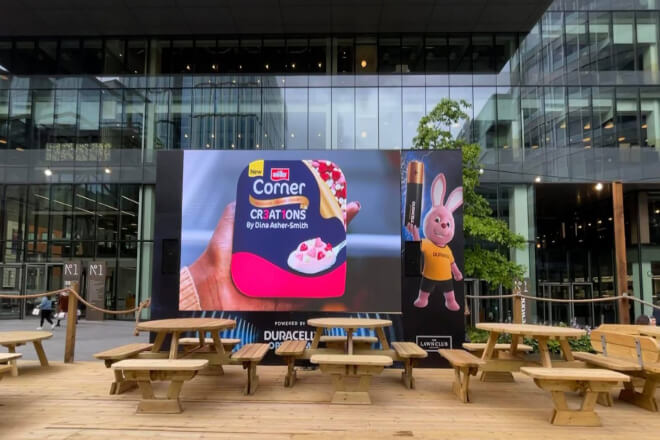
With the development of smart communities, LED displays are no longer just tools for “playing announcements.”
But are becoming digital gateways connecting property management systems, community services, and residents’ lives.
In traditional community management, if there are multiple buildings and public areas, property management needs to update announcements individually, which is inefficient.
However, by connecting LED显示屏 to a smart property management system, managers can centrally manage the display content of different areas from the backend, enabling remote updates.
For example, a large residential community might have LED screens in the entrance lobby, underground parking lot, and elevator lobbies.
Property management can simultaneously publish parking reminders, visitor notices, maintenance schedules, etc.
Through the management platform, eliminating the need for staff to manually update content in each area.
In daily operations, this digital management also reduces a lot of repetitive work. For example, property management can pre-set holiday greetings, community event reminders.
Or automatically adjust the displayed content according to different time periods, making information dissemination more flexible.
Some overseas apartment and commercial residential projects also integrate digital display systems into their property management platforms.
For example, some smart apartments in the United States use lobby displays to simultaneously show community announcements, facility reservation information.
And service reminders, making communication between residents and property management more efficient.
Of course, the value of LED displays goes beyond just “remote control.” More importantly, they transform community management from passive notification to proactive service.
Property management can respond to residents’ needs more quickly and improve overall operational efficiency through data management.
For smart communities, LED displays connect more than just images; they connect the community’s information flow.
They simplify property management and provide residents with a more convenient digital living experience.


 English
  Español
  简体中文
简体中文  Français
  日本語
日本語  한국어
한국어  العربية