

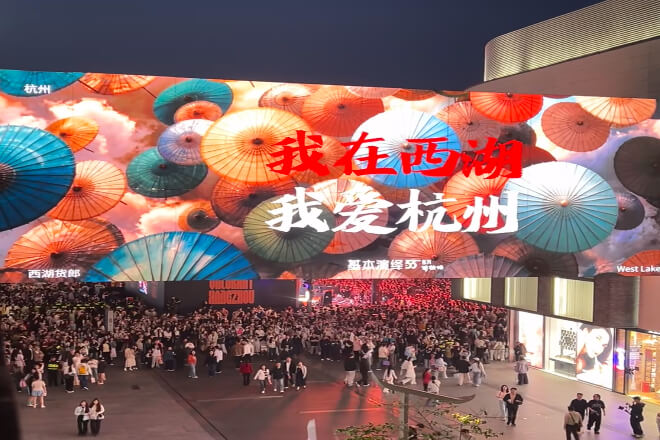
The most practical problem for nighttime scenic spots is simply this: are people willing to stop and take a closer look?
The role of LED screens is to transform “a quick glance and move on” into “stopping for a while before continuing.”
Firstly, it easily becomes the “first focal point” at night. In the darkness, areas with dynamic visuals become particularly noticeable.
For example, at the entrance of a scenic spot: previously, it might have just been a lighted sign and directional sign, which people would simply walk past;
But if a moving LED屏幕 is added, playing festival animations or scenic spot-themed content, many people will subconsciously stop to look, and might even take a picture.
Secondly, the combination of lighting and visuals makes nighttime scenes much more engaging. It’s not just about illumination; with LED screens, the scene becomes dynamic and engaging.
For example, in a water feature plaza: lights reflecting on the water create atmosphere, while LED screens simultaneously displaying images of flowing water, mountains.
Or cityscapes add depth and dimension, making it more than just a bright, uniform expanse.
Thirdly, the appeal of a nighttime scene hinges on having memorable elements. Many nighttime tourist attractions aren’t unattractive, but rather easily forgotten. LED screens help create these memorable points.
For instance, as tourists walk around, while other areas may be decorated with lights, a screen displaying a dynamic story or light show segment is more likely to be remembered and shared.
Finally, its most direct effect is encouraging people to linger. This doesn’t require complex design; as long as the content is changing, people will naturally stop to see what’s next.
For example, during a festival light show, if the visuals suddenly switch to interactive animation or themed content halfway through, many people will stop and wait before moving on.
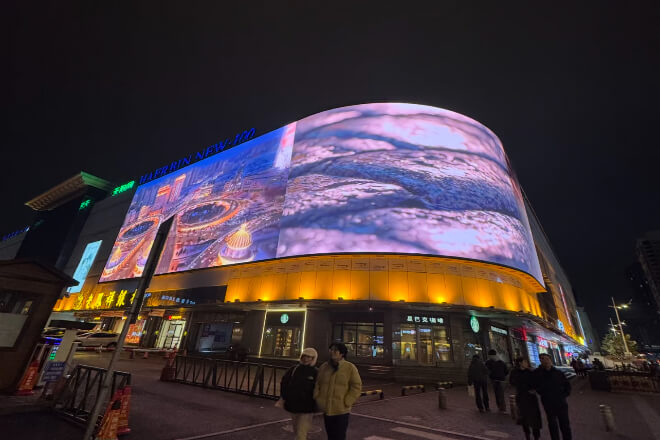
The key to creating an “immersive” experience in nighttime tours isn’t the quantity of lights, but rather making visitors feel like they’re not just “viewing scenery.”
But rather stepping into a scene unfolding before their eyes. The role of LED screens here is to connect scattered lights and performances.
First, when combined with light shows, the visuals become more complete. Simple lights and fountains are primarily “aesthetically pleasing,” but with LED display content, a narrative emerges.
For example, in a river-themed nighttime tour: fountains control the rhythm of the water, lights create the atmosphere.
And LED screens display the changing flow of water from mountains to the city. The overall experience transcends mere performance, becoming a story told.
Second, LED显示屏 can transform a “theme” into an immersive story space. Instead of each point playing independently, the story unfolds continuously around a central theme.
For example, entering a nighttime tour area: the entrance is the “beginning of the story,” the central LED screens narrate history or scene changes.
The plaza culminates in a climax light show, and finally, visitors return to the interactive area for a conclusion.
Visitors are essentially “following a storyline,” rather than simply wandering around.
Then, the sense of immersion comes from the fact that “the route itself is part of the content.” A good night tour isn’t about standing and watching a show; it’s about walking and seeing different visual changes along the way.
For example: it starts with soft lighting and guiding visuals → as you approach, the LED displays begin to tell a story → you enter the core area and enter a large-screen light and shadow show → finally, there are interactive check-in points.
The whole process progresses rhythmically, rather than being pieced together in a fragmented way.
Finally, participation makes the experience more authentic. If you just watch, the immersion is limited, but if you can “participate a little,” the experience is significantly different.
For example, scanning a QR code to trigger light changes, leaving a blessing on the screen, or participating in festival interactive scenes makes it easier for tourists to remember “I participated.”
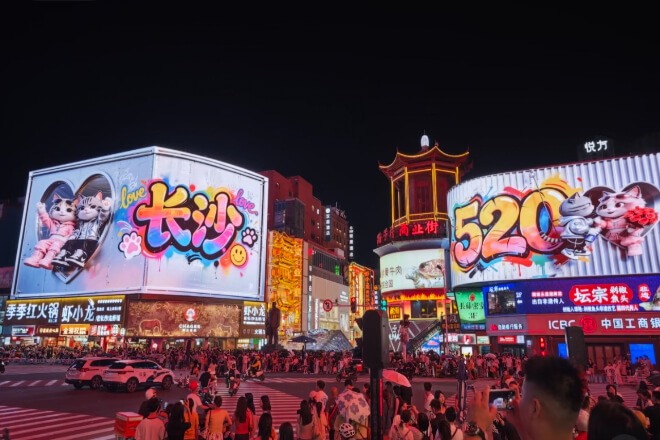
Many scenic spots used to tell their cultural stories through display boards, text descriptions, and sculptures, but now tourists are more easily attracted by content that is “visible and dynamic.”
LED显示屏 make “storytelling” much simpler.
First, history and folk customs can be presented as digital content.
Instead of lengthy text, LED displays directly present stories through dynamic visuals, such as the rise of an ancient town, the origins of festivals, and the local way of life—all readily understandable.
For example, upon reaching the entrance, an LED screen might “play” a scene depicting daily life in the ancient town from dawn till dusk, creating a visual experience even before visitors enter.
Secondly, local cultural IP can be showcased dynamically.
Mythological figures, local legends, and intangible cultural heritage skills can all be transformed into animated visual content, allowing culture to be “seen,” not just “known.”
Furthermore, LED displays offer a stronger expressive power. Many cultural elements, inherently somewhat abstract, become more intuitive and emotionally resonant through light, animation, and rhythmic variations.
For instance, in festival displays, the scene gradually transitions from a quiet village to a bustling lantern festival, evoking a strong emotional response.
Finally, and crucially, LED displays are more memorable.
Compared to reading explanatory text, visitors are more likely to remember a visually engaging, rhythmic, and atmospheric segment, and may even take photos and share them online.
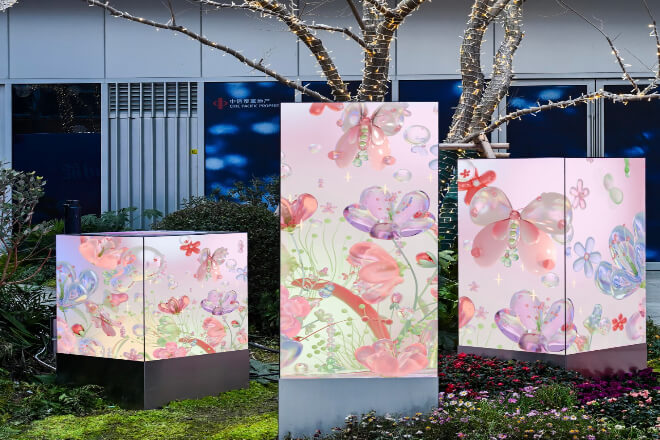
At night, the competition in scenic spots and commercial districts isn’t about how brightly lit they are, but rather whether they can attract people to linger.
LED displays here play a crucial role in “setting the pace.”
First, they naturally draw people in. For example, a dynamic LED屏幕 at an entrance, plaza, or street corner displaying light shows, festival content, or interactive visuals easily makes passersby stop and take a look.
Often, this happens: someone who was just passing by looks up for a couple of minutes and then starts to “go further in and explore.”
Second, they can be integrated with restaurants and commercial areas. For instance, LED screens don’t just display content;
They also recommend nearby restaurants, special offers, and night market information, letting tourists know that “this place isn’t just beautiful; there’s also food and shopping to be had.”
For example, a plaza LED screen displaying night tour routes, along with nearby popular restaurants and night markets, naturally draws people there.
Simultaneously, it improves the conversion rate of nighttime visitors. People who were initially just sightseeing are more likely to become “participants” or “consumers” after seeing activities, performances, and photo spots.
For example, seeing an LED screen displaying “Light Show + Night Market Activities Ahead” will encourage many people to stay and experience the event instead of leaving immediately.
Finally, its impact on the night economy is direct—it transforms “nighttime into more than just sightseeing.”
Creating a complete experience chain with content, activities, and consumption scenarios.
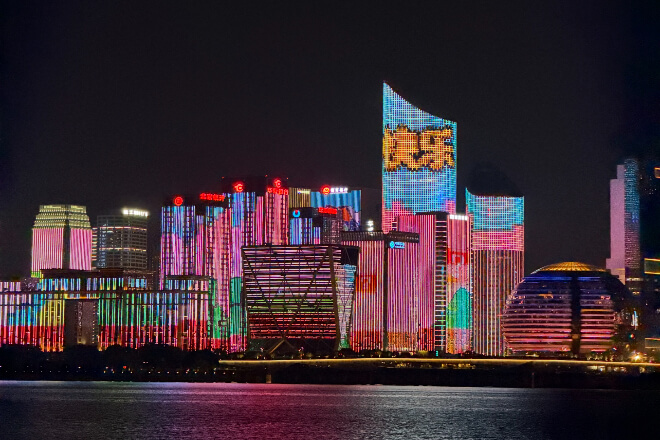
The popularity of many scenic spots nowadays isn’t solely determined by ticket sales, but rather by one key factor: “Is it photogenic here?”
In this regard, LED displays are essentially “traffic engines.”
First, they easily become popular photo spots. Large screens themselves have visual impact; when combined with dynamic content, festival themes, or artistic visuals, tourists are almost guaranteed to stop and take a picture.
例如,一个 LED屏幕 displaying flowing landscapes or starry skies at night, with a line of people taking photos, automatically creates a “photo spot.”
Second, it’s particularly effective for short video sharing.
Many tourists use LED displays as backgrounds when filming videos because dynamic content is inherently more photogenic than static walls, and it’s easier to get views on social media.
A common scenario is this: a friend is filming a short video at a scenic spot, and the background displayed on an LED screen is changing with lighting effects.
The video easily gets likes and shares after being posted.
Simultaneously, it amplifies online exposure. Tourists filming, live-streaming, and sharing their experiences are essentially helping the scenic spot with secondary promotion, and LED screens provide visual material that is even easier to share.
For example, in some popular nighttime scenic spots in cities, a video of a light show on an LED screen might attract many people to “definitely see the same scene.”
Finally, it directly expands the overall influence of the scenic spot. As more and more content spreads on social media platforms.
The scenic spot becomes more than just a physical location; it becomes a “visible visual symbol.”


 English
  Español
  简体中文
简体中文  Français
  日本語
日本語  한국어
한국어  العربية