
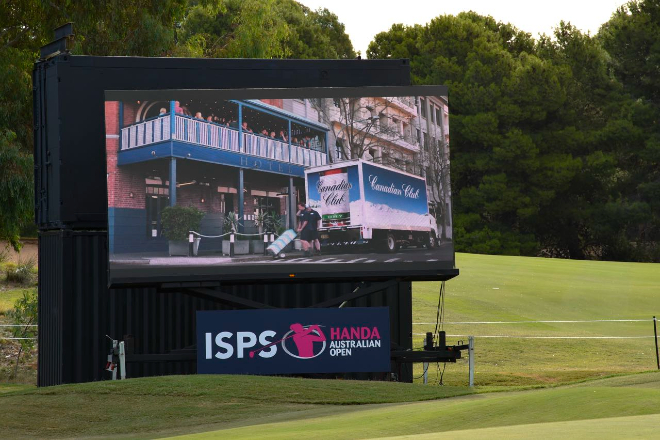
Golf has always been associated with a sense of tranquility and elegance.
But this doesn’t mean golf courses are rejecting technology. In fact, more and more golf courses are installing LED显示屏, making information that previously required guesswork readily available.
From live scores to highlight reels, from event management to brand presentations, LED displays are becoming a new “partner” on the course.
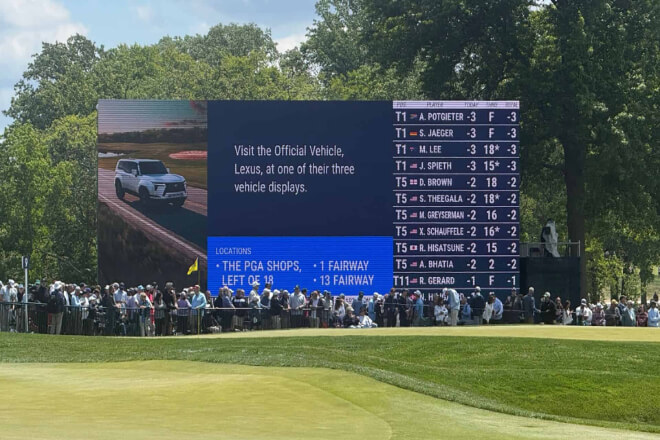
In modern tennis tournaments, the appearance of LED displays in the tee area is not just about “upgrading equipment,” but rather about moving match information from the “broadcast era” to the “visual era.”
First, it can display player information and match schedules. Before the match begins, the screen clearly displays the names of both players, their world rankings, head-to-head records, etc.
For example, in an ATP Tour match, spectators can quickly learn “who’s playing whom today” through a small LED屏幕 near the tee as soon as they sit down, without having to look up information or wait for commentary.
Second, LED displays can provide real-time match data. Key data, including serve speed, aces, double faults, and game score changes, are updated synchronously during service breaks.
This allows even non-professional spectators to more intuitively understand the pace of the match, such as “the serve is noticeably faster this game” or “the number of errors is increasing in this set.”
Simultaneously, it significantly improves the efficiency of information acquisition for spectators.
Traditional tennis match information relies mainly on large screens or commentators, but LED screens in the service area present information “nearby.”
Spectators don’t need to look up to find the main screen; they can quickly grasp key data during breaks, making the viewing experience easier.
More importantly, it enhances the professional image of the event. When data is presented clearly, consistently, and dynamically, the entire event looks more modern, more systematic, and more in line with international professional standards.
In short, the role of LED screens in the service area can be summarized as: making information closer, more up-to-date, and more professional.
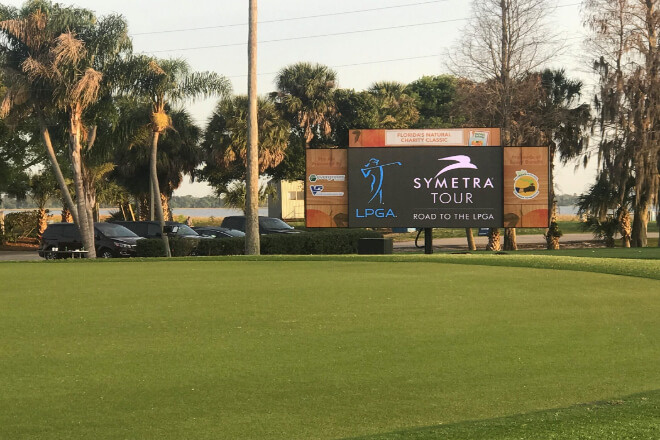
In tennis matches, the “information acquisition experience” varies greatly depending on the seating position.
The LED displays in key spectator areas are designed to reduce this information gap, ensuring every spectator can keep up with the pace of the match.
First, they can display real-time score and ranking changes. In a fierce three-set battle, the score can instantly shift from 40-15 to game point or even break point.
The LED screens update rapidly after each point, eliminating the need for spectators to guess the current situation, such as “This game has entered a crucial phase.”
Second, the LED displays play replays of exciting shots. For example, a close-range ace or a baseline save will be replayed in slow motion, allowing spectators to not only “see the result” but also “understand the process.”
Especially for seats at greater distances, these replays practically fill in blind spots.
Furthermore, they help spectators better grasp the progress of the match. For example, set changes, break points, and consecutive point trends are presented visually.
Allowing spectators to more intuitively understand “who is gaining the upper hand,” rather than just relying on commentary.
Most importantly, it enhances the sense of participation in the live match. When crucial points occur, the screen simultaneously magnifies the data, plays replays.
And even provides sound cues, making it easier for the audience to be emotionally engaged, creating a rhythm of collective breath-holding and cheering.
Simply put, the function of these LED displays is to transform “watching the game” into “being part of the game.”
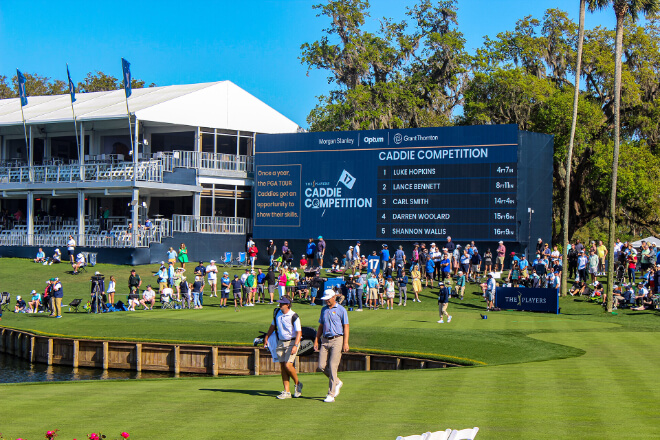
Golf tournaments have a relatively relaxed pace, but their commercial exposure is highly dependent on “location and timing.”
The addition of LED显示屏 allows brands to move beyond static displays and strategically integrate into the overall rhythm of the tournament.
First, LED displays can continuously showcase sponsor brand content. On the tee box, near the green, or in spectator gathering areas, the screens will cycle through brand logos and promotional images.
For example, during the pauses between players’ shots, the display can switch to sponsor visual content, naturally embedding exposure into the rhythm of the game.
Second, it supports dynamic advertising rotation, allowing multiple brands to take turns being displayed at different times.
For example, one group of brands might focus their exposure on the front nine holes, while another group strengthens their presence on the back nine.
This staggered approach ensures every sponsor has a chance to shine, keeping the visuals fresh.
Simultaneously, LED displays significantly increase the commercial value of the event. Compared to traditional hoarding advertising, dynamic screens can display more than just images.
They can also play videos, brand stories, and even event information, upgrading advertising from “passive display” to “content expression,” thus enhancing the overall sponsorship appeal.
More importantly, it expands the brand’s reach. Golf tournaments are often broadcast globally through television, online streaming, and tournament highlights.
Once LED screen content enters the frame, it is continuously displayed alongside the game footage, achieving “dual coverage” for both on-site and online viewers.
Simply put, the role of LED displays in golf tournaments is to upgrade brands from “appearing on the sidelines” to “fully participating.”
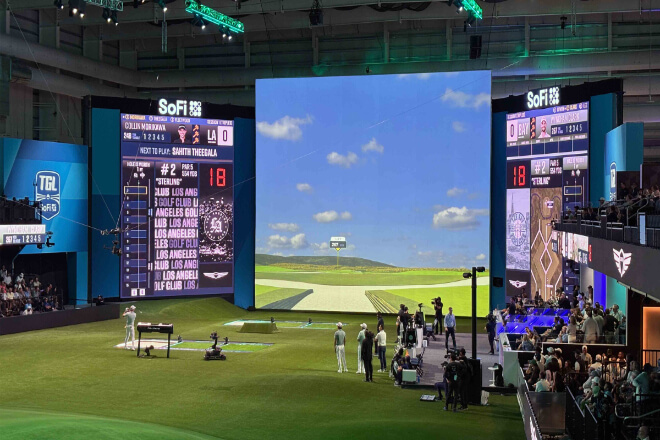
In golf clubs and driving ranges, LED displays are no longer just “information screens,” but rather like a quietly working “smart coach + facility manager.”
First, they can display training data and performance statistics. For example, data such as swing speed, distance, and landing distribution are displayed in real-time on the screen after each practice session.
Practitioners no longer need to repeatedly ask the coach; they can intuitively see “how well this shot went,” making training feedback clearer and more immediate.
Secondly, the LED screen can display member activity information. Whether it’s a weekend member tournament, instructional courses, or club social events, all can be displayed via scrolling text.
For example, “This Saturday afternoon: Short Game Challenge registration opens” is more eye-catching than traditional posters and more easily noticed by passing members.
Simultaneously, it significantly enhances the venue’s technological feel and service experience.
When the screens in the practice range simultaneously display swing data and slow-motion replays, the entire training process becomes more “professional.”
Many members’ first reaction is often, “Is practicing golf this smart now?”
More importantly, it meets the club’s digital operation needs. By integrating the LED screen with system data, the club can more efficiently manage member information.
Activity notifications, and training data, gradually shifting operations from “experience-driven” to “data-driven.”
In short, the role of LED displays here is to upgrade the driving range from a “place to play golf” to a “training space where data is visible.”

In golf courses, LED显示屏 are no longer just “information tools,” but rather an integral part of shaping the overall atmosphere—determining whether the course looks “traditional” or a “modern, smart course.”
First, it significantly enhances the visual quality of the course. Whether at the clubhouse entrance, beside the tee boxes, or in the spectator area, LED screens replace static signage with dynamic visuals, adding depth and dimension to the space.
For example, a large screen at the entrance displays aerial footage of the course in the early morning, with the grass, lake view.
And sunlight interwoven, immediately establishing an impression of a “high-quality course.”
Second, LED displays help create a high-end tournament atmosphere. When hosting professional tournaments or member invitationals.
The screens can display the tournament theme visuals, player information, and real-time scores, instantly transforming the course from a daily practice area into a formal competitive stage.
For example, before the tee-off ceremony, the large screen simultaneously displays the tournament countdown and images of past champions, maximizing the sense of occasion.
Furthermore, it enhances the club’s brand competitiveness. For high-end golf courses, service experience and brand image are equally important.
A course equipped with a smart display system will give members a stronger sense of professionalism and modernity, and will more easily differentiate itself from similar clubs.
More importantly, it aligns with the development trend of smart golf courses. With the widespread adoption of digital management and smart devices.
LED displays can be linked with the course management system to achieve integrated event information dissemination, member services, and data display, making course operations more efficient and transparent.
Simply put, the role of LED displays on golf courses is to upgrade the course from a “naturally beautiful field” to a “modern space that combines technological sophistication and experiential elements.”


 English
  Español
  简体中文
简体中文  Français
  日本語
日本語  한국어
한국어  العربية