
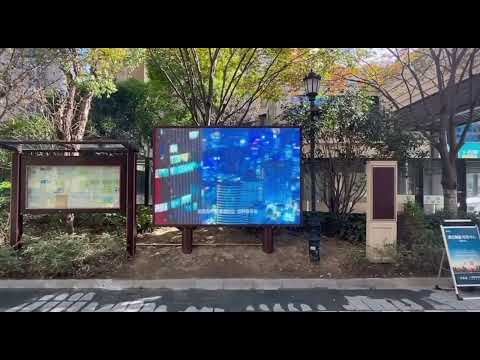
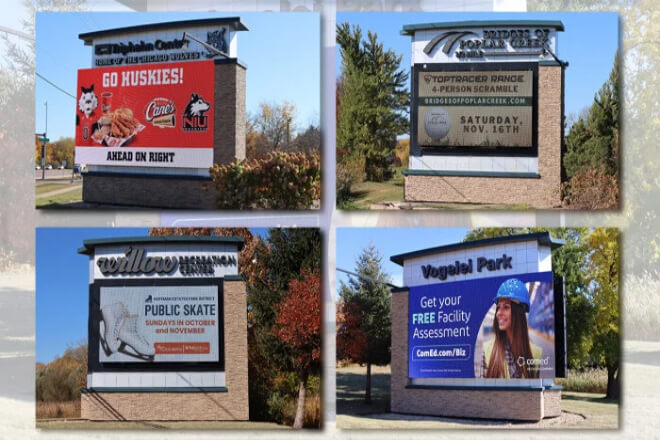
A community LED显示屏 screen may seem like just a screen displaying notices and event information, but it typically needs to operate continuously.
Running it for a few hours each day may not seem like much, but if it runs continuously 365 days a year.
The electricity costs will gradually accumulate, becoming a long-term expense in community operations.
Therefore, energy conservation is not about making the screen “brighter,” but about making the equipment operate more efficiently while maintaining display quality.
For example, during the day when sunlight is strong, the screen can maintain a suitable 亮度 so that residents can clearly see property notices, community events, etc.;
At night, the brightness automatically decreases to reduce power consumption and prevent the screen from disturbing nearby residents.
In addition, energy-saving design can also help reduce equipment heat generation.
If an LED screen experiences excessive heat dissipation during prolonged operation, it will not only increase energy consumption but may also shorten component lifespan.
Choosing a more efficient product solution allows the display screen to operate stably every day, like an “endurance runner,” rather than requiring frequent repairs.
For communities, a good LED display screen needs to not only convey information but also consider long-term operating costs.
After all, every bit of electricity saved on a screen that operates daily will translate into real operational value over several years.
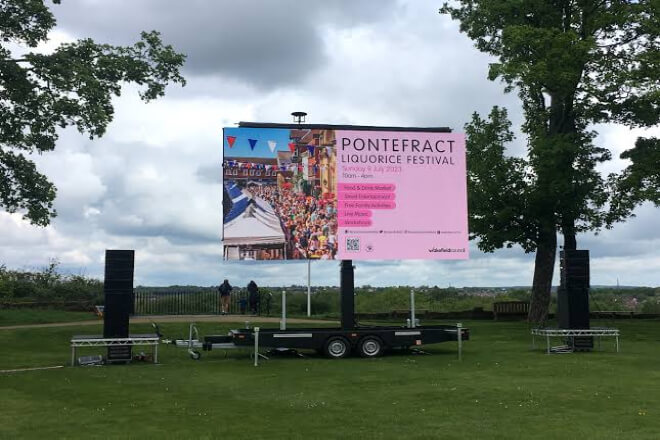
Community LED displays are not like large concert screens that only need to “ignite” the audience for a few hours.
They are more like an “upgraded version of the bulletin board” in the community, operating daily, so energy saving and stability are equally important.
First, low-power LED display chips are an important choice for long-term use.
They can reduce energy consumption while maintaining image clarity, making them particularly suitable for scenarios that require long-term display of announcements and community event information.
For example, an LED display screen at the community entrance displays property notices and parking information daily.
If it operates at high 能量消耗 for a long time, it will become a significant expense over several years.
Second, efficient 电源 design also affects the overall energy-saving effect.
A good power supply reduces waste during power conversion, ensuring more stable screen operation and lowering long-term energy costs.
Additionally, 亮度 selection is crucial. Community displays aren’t necessarily better the brighter they are.
During the day, residents need to be able to clearly see the content, while at night, the brightness can be appropriately reduced to save electricity and avoid disturbing nearby residents.
For a community, choosing the right LED display technology is like choosing a family car—it’s not just about how fast it starts, but also about fuel efficiency and reliability during daily use.
Energy-efficient LED display solutions are essential for the display to truly realize its value in long-term operation.
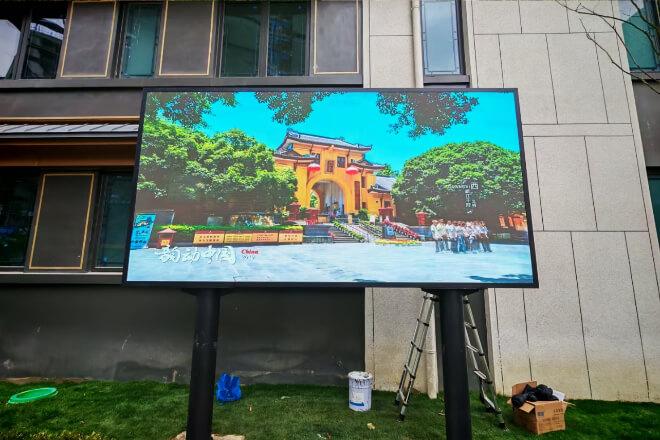
Just like different spaces in a home, there’s no “one-size-fits-all” solution for LED displays in a community.
Entrance gates, property management lobbies, and outdoor areas each serve different purposes, so the selection priorities naturally differ.
Entrance gates are the first impression residents and visitors have of the community, much like a 酒店 lobby; they need to be immediately noticeable.
The displays here prioritize clarity and all-weather visibility, showcasing community notices, visitor information, event announcements, and even holiday greetings, transforming the entrance into more than just a daily gateway.
Property lobbies, on the other hand, focus on practical applications.
Unlike 阶段 that require a strong visual impact, efficient information delivery and low long-term operating costs are paramount.
For example, property management can use LED screens to announce water outages, community event schedules.
And safety reminders, allowing residents to quickly access information without queuing.
Low-energy design also reduces long-term operational pressure.
Outdoor areas face more challenges, such as rain, dust, and extreme temperatures.
Therefore, when using LED screens in parking lots and community squares, waterproofing, dustproofing, and stability are crucial to ensure continued operation despite weather changes.
The key to choosing community LED displays is not “installing the same type everywhere,” but rather assigning each screen a specific role.
The entrance attracts attention, the lobby delivers information, and outdoor screens ensure stable operation—this is how to truly realize the value of the displays.
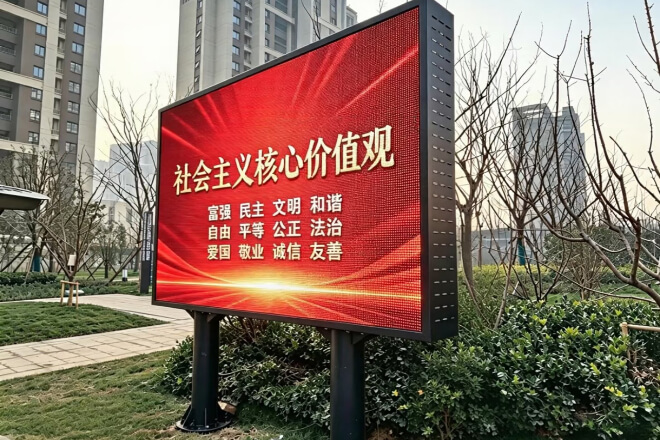
To save energy on community LED displays, it’s not enough to simply “use less electricity”; the screens need to “work smarter.”
Just like a home air conditioner can’t be on full blast all year round, LED screens also need to adjust their settings according to the environment and time of day.
自动的 亮度 adjustment is a simple yet effective method.
During the day, when the sun is strong, the screen automatically increases its brightness, ensuring residents can see property notices and parking information from dozens of meters away.
At night, the screen automatically decreases its brightness, preventing it from becoming a “glowing billboard” in the community and reducing unnecessary power consumption.
The system can also schedule different operating modes based on time of day.
For example, in the morning and evening when residents are frequently in and out, it can display community activities and friendly reminders.
At night when foot traffic decreases, it enters a low-brightness mode, allowing the screen to quietly “standby” instead of constantly operating at full capacity.
Remote management significantly reduces the workload for property management.
Previously, updating a notice might require staff to manually adjust each screen with tools.
Now, operating from the back office, multiple LED屏幕 can be updated simultaneously, essentially giving the entire community an “electronic bulletin board.”
For large communities, this intelligent control is particularly valuable. It not only reduces electricity costs but also lowers the burden of manual maintenance.
Making the LED screen a truly worry-free, cost-effective, and long-term stable information platform.
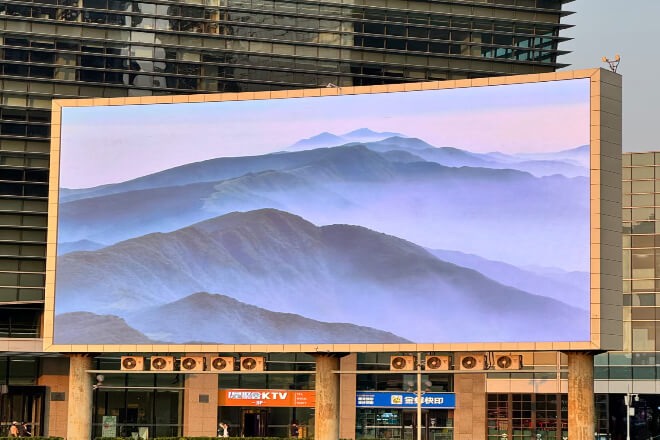
When choosing an energy-efficient LED display, it’s not enough to just look at “how much electricity it saves now”; you also need to consider its reliability over the next few years.
After all, community displays are not disposable items but long-term facilities that operate daily.
First, product lifespan and long-term stability are crucial. While low-power designs can reduce electricity consumption.
Frequent screen malfunctions not only increase repair costs but also affect the dissemination of community information.
For example, if a community needs to display property notices and parking reminders daily.
And the screen frequently malfunctions, the electricity savings might not even cover the repair costs.
Second, the cost of future maintenance and replacement must be considered. High-quality LED显示屏 typically have better heat dissipation, power supply.
And structural designs, reducing wear and tear during long-term operation and lowering the frequency of maintenance.
For large communities, fewer high-altitude repairs mean less time and labor costs.
Furthermore, the supplier’s technical support capabilities are also crucial. The project isn’t finished once the LED screen is installed;
Subsequent system upgrades, troubleshooting, and content management all require professional support.
Therefore, a truly energy-efficient LED solution isn’t just about slowing down electricity meter readings;
It’s about ensuring long-term stable operation. Focusing on “costs over several years” is often more valuable than simply looking at the initial price.


 English
  Español
  简体中文
简体中文  Français
  日本語
日本語  한국어
한국어  العربية