
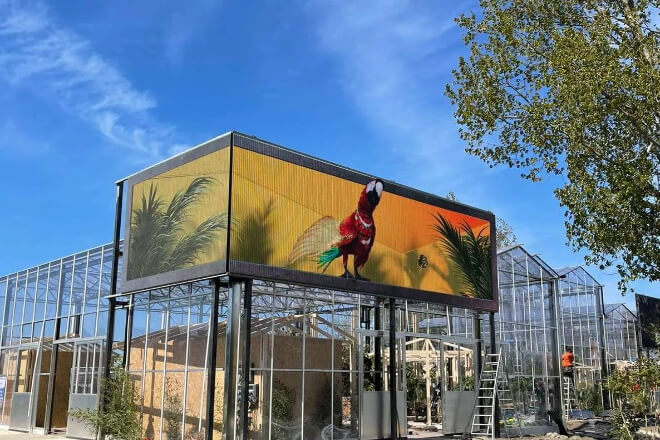
购买时 户外LED显示屏, many businesses face a common question: what brightness level should be chosen?
如果 亮度 is too low, the image may be “washed out” by sunlight during the day; if it is too high, it can lead to increased energy consumption, excessive heat generation, and higher operating costs.
In reality, “brighter” does not always mean “better” for outdoor LED displays. The ideal brightness depends on the installation location, ambient lighting conditions, and specific viewing requirements.

Think of an outdoor LED display as a canvas placed under the sun. If the canvas itself isn’t bright enough, the stronger the sunlight, the duller the image will appear.
Conversely, if the brightness is too high, it may become glaring or uncomfortable for viewers.
This is why 亮度 is a critical factor for outdoor LED displays.
The brightness of an LED display is typically measured in “nits”—a higher value indicates that the screen can emit more intense light.
Compared to indoor displays, outdoor LED screens generally require higher brightness to contend with complex environmental factors, such as direct sunlight, scattered daylight, and light reflected from surrounding buildings.
For instance, an advertising screen installed in an outdoor plaza may be exposed to intense sunlight during the day.
If the screen lacks sufficient brightness, the text, figures, and product details in the advertisement may become indistinct, making it difficult for passersby to see the content clearly.
On the other hand, in a commercial district that is active at night, keeping a screen at maximum brightness could be overly glaring and lead to unnecessary power consumption.
Therefore, brightness affects not only the image’s visibility but also the advertisement’s effectiveness, viewer comfort, and long-term operating costs.
When selecting an 户外LED显示屏, the primary consideration should be the actual environment, rather than simply chasing the highest possible brightness figure.
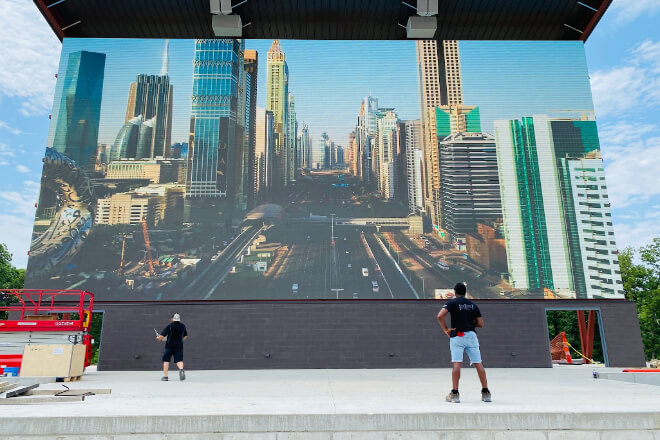
There is no single, universal brightness standard for all outdoor LED display projects.
Factors such as the installation location, 观看距离, and ambient lighting conditions all influence the optimal brightness configuration.
The following are reference ranges for common types of projects; however, the specific values should be determined based on local sunlight conditions, the screen’s orientation, and the product’s performance specifications.
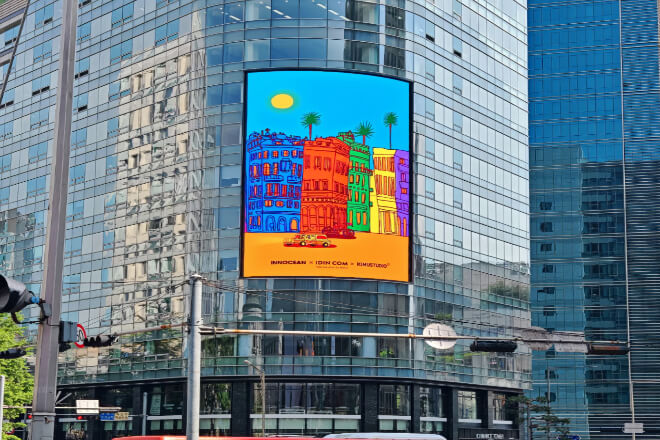
Many businesses fall into a common trap when making procurement decisions: assuming that because outdoor environments have high ambient light, they should simply choose the product with the highest brightness.
However, excessive brightness—much like insufficient brightness—can undermine a project’s effectiveness.
- Insufficient 亮度:
When ambient light is intense and the screen lacks sufficient luminous output, the contrast between the image and its surroundings drops.
It is similar to looking at a smartphone screen under direct sunlight; even if the content itself is clear, it may appear washed out or difficult to see.
For outdoor advertising operators, this means the intended message may fail to reach the audience effectively, diminishing the value of the display.
- Excessive brightness:
Operating an LED display at high brightness typically requires greater drive power.
For large-scale outdoor screens, maintaining high brightness over long periods increases electricity consumption and places a greater burden on cooling systems.
This is akin to driving a car with the accelerator floored—while it delivers high power, it also increases fuel consumption and mechanical strain.
- Excessive brightness at night:
Brightness levels that are appropriate for the day may be unsuitable at night.
If a screen lacks an automatic dimming feature and continues to operate at high brightness after dark, it can cause significant glare, affecting nearby residents and road users.
Therefore, when selecting an outdoor LED display, businesses should look beyond maximum brightness alone.
It is equally important to verify whether the product supports brightness adjustment and whether that adjustment mechanism is stable and responsive.
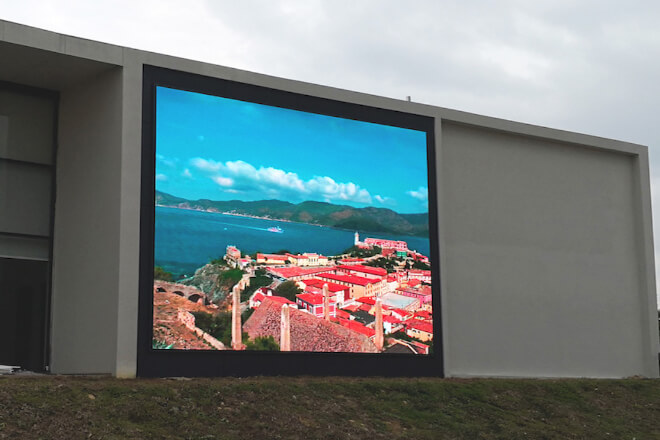
While brightness is a key parameter for outdoor LED displays, it is not the only factor that determines image quality.
First, ambient light and screen orientation.
The same LED display can yield vastly different viewing experiences depending on its orientation.
A screen facing the sun experiences very different lighting conditions from one positioned in the shade.
Consequently, the project design phase should account for local sun orientation, potential shading from surrounding buildings, and daily fluctuations in light levels.
Regardless of how high the brightness is, if the pixel pitch is unsuitable, the image may lack the necessary detail when viewed from a close distance.
For commercial plazas and close-range advertising screens, it is essential to consider both image clarity and brightness; focusing on only one is insufficient.
Third, contrast and color performance.
Outdoor display environments are complex, requiring screens to maintain adequate tonal range even under intense light.
High contrast and consistent color reproduction ensure that text, figures, and product details in advertisements remain sharp and clear.
When purchasing, prioritize the actual visual performance over the brightness figures listed in product specification sheets.
Fourth, heat dissipation and protective design.
High-brightness outdoor LED displays often face significant thermal management challenges.
The cabinet’s heat-dissipation structure, power supply configuration, ventilation design, and waterproofing capabilities must be carefully evaluated.
In high-temperature regions, in particular, heat dissipation capacity directly impacts the long-term operational stability of the equipment.
Fifth, 亮度 adjustment functionality.
It is advisable to prioritize outdoor LED displays that support automatic brightness adjustment.
Using ambient light sensors, the system can dynamically adjust brightness based on changing light conditions throughout the day—from daytime and dusk to nighttime.
This ensures optimal viewing quality at any time of day while reducing unnecessary energy consumption.

For business decision-makers, determining the brightness of an outdoor LED display should be based on the project’s specific requirements, rather than simply opting for the highest available specifications.
First, identify the installation location.
Is it an open plaza, an exterior building wall, or a semi-outdoor space with some shelter?
Different locations are subject to varying levels of natural light, which dictates different brightness requirements.
Second, confirm the primary operating hours.
If the screen is primarily used for daytime advertising, visibility in bright, high-glare conditions is the priority.
If it operates continuously—day and night—the focus should be on automatic dimming to prevent excessive brightness at night.
Third, determine the overall display solution based on 观看距离.
Large-scale advertising screens viewed from a distance require careful consideration of image legibility and content scale.
Whereas commercial screens viewed from a closer range must balance pixel pitch, color detail, and viewer comfort.
Finally, evaluate long-term operational costs.
Brightness configuration affects not only the initial purchase price but also power consumption and cooling requirements during operation.
Businesses can request power consumption data from suppliers for various brightness modes and, by factoring in daily operating hours, estimate long-term electricity costs.
For instance, an outdoor advertising screen that operates for over a dozen hours a day could significantly reduce unnecessary power costs if it can automatically lower its brightness at night based on ambient light levels.
An optimal configuration strikes a balance between equipment investment and operational costs.
Ensuring the display remains clearly visible during the day, comfortable (not glaring) at night, and stable over the long term.


 English
 Español
 简体中文
 Français
 日本語
 한국어
 العربية