
介绍
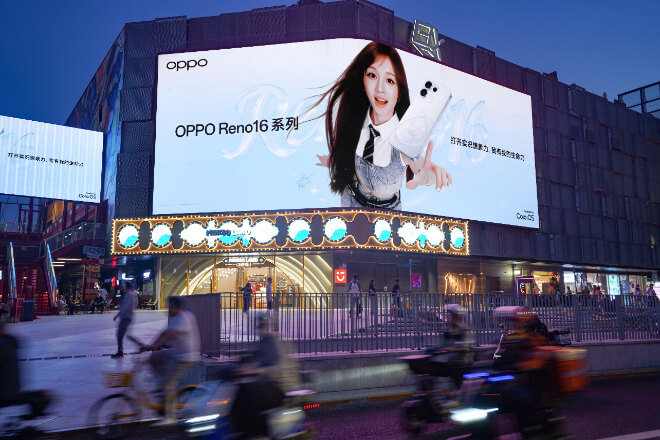
The problem is no longer “not enough information,” but rather “too much for people to see.”
Passing by, scrolling, and getting distracted have become the norm. Much content is ignored before it can even be understood.
In this environment, the role of LED显示屏 becomes very direct—not to say more, but to get people to glance at it first.
目录
1. How to quickly "grab attention" at public space entrances with LED displays?

At entrances to stations, 机场, and parks, the biggest characteristics of pedestrian traffic are fast walking, short stops, and more scattered attention.
This dictates that the task of LED displays is not to “slowly explain,” but rather to first grab people’s eyes, and then deliver the information.
Firstly, these high-traffic scenarios are particularly suitable for replacing static signs with dynamic content.
Static signs are easily “blinded,” but LED screens can create visual pauses for a moment as people pass by using scrolling information, animated prompts, or rhythmically changing visuals.
To illustrate with a relatable example: a standard sign saying “Exit on the left” will likely be ignored by many.
However, if it’s transformed into a dynamic arrow with illuminated guidance and subtle animation, people will subconsciously take a second look.
第二, LED屏幕 can convey information within a short timeframe. For instance, flight information, park guides, and event reminders can typically be scanned in just a few seconds.
The key isn’t “making people remember everything,” but rather “making them grasp the key points.”
More interestingly, in such scenarios, LED screens often “capture the attention window.”
People might only linger for 3-5 seconds, and the screen must complete the process of attracting attention → understanding → remembering within that short time.
For a more intuitive example: at an airport entrance, just as someone looks up to find their way.
An LED screen switches to “departure/arrival dynamic information + large arrow guidance,” instantly becoming more visible than any static sign.
Simultaneously, it encourages passersby to “take a second look.” Even a quick glance at animation, color changes, or scrolling information is more effective than completely ignoring it.
This is the core value of public space communication—increasing the probability of being noticed.
In short, the purpose of an entrance LED screen is not to make people slowly understand, but to make them “take a look before they walk over.”
2. How to Use LED Screens to Capture Audience Attention at Events and Competitions?

At sporting events, e-sports competitions, or exhibitions, there’s a very real situation: audiences aren’t “not watching,” but rather, their attention can be easily diverted by surrounding sounds, crowds, and rhythms.
The role of LED screens is to pull this “distracted attention” back to the main focus.
First, the most direct method is to create a visual focus using real-time visuals. For example, during a match, a large screen simultaneously displaying the main viewpoint, key shots.
Or overall battle situation will instinctively draw the audience’s attention to the same spot, instead of everyone looking at their own things.
A typical scenario: in an e-sports competition, the audience might be chatting, and suddenly the large screen switches to a perspective of “a team fights about to break out”—the next second, almost everyone’s attention will be drawn to it simultaneously.
Second, LED屏幕 are particularly good at amplifying key moments and emotional climaxes.
For example, key moments like goals, kills, comebacks, and victory announcements, enhanced with slow-motion replays, special effects, and close-ups, amplify the emotional impact.
More interestingly, this amplification effect acts like an “emotional amplifier.” An ordinary goal in reality.
When slowed down and enhanced with special effects on a large screen, becomes a collective experience of “re-experiencing the highlight” for the entire audience.
Simultaneously, it helps viewers focus on core content. At an exhibition, there may be a lot of information and many booths, but as long as the main screen continuously emphasizes key content.
Such as new product highlights or core demonstrations, viewers are more easily guided to the crucial area, rather than being distracted by surrounding information.
To give a more relatable example: at an exhibition, people are initially looking around at various booths.
But if a large screen suddenly starts playing a “new product launch countdown + high-definition product demonstration,” many people will unconsciously stop and watch for a while.
In short, the function of LED screens is to transform “people looking everywhere” into “people simultaneously looking at the same key point.”
3. How LED Screens Can Improve Information Comprehension Efficiency in Enterprises and Meetings?

In meeting rooms, press conferences, or training sessions, a very real phenomenon exists: the more content there is, the more likely people are to simply “listen and forget.”
The value of LED displays lies in transforming “unclear and unrememberable” into “easy to understand at a glance.”
First, replacing pure text with visual content is key. For example, a long paragraph of text in a PowerPoint presentation becomes significantly faster to understand when transformed into charts, flowcharts, data comparisons, or dynamic demonstrations.
The human brain is inherently more efficient at processing “images + structures” than long passages of text.
A typical example: when stating “20% growth this year,” a densely packed page of text is less effective than a clearly upward curve.
Second, it significantly improves the speed of information absorption. In press conferences or training sessions, LED screens can simultaneously display key keywords, step-by-step breakdowns.
Or real-time demonstrations, allowing the audience to follow the screen directly without having to “flip through materials while listening.”
Even more interestingly, this makes the meeting rhythm more consistent. Previously, it might have been “the speaker talking, the listeners digesting.”
But now it’s “everyone looking at the same visual focus simultaneously,” leading to a more consistent pace of understanding.
For example, in a training scenario, when an instructor explains an operational procedure verbally, people easily lose focus;
However, if the screen provides step-by-step animated demonstrations, trainees can generally “follow along after watching once.
Finally, it effectively reduces distractions. In a meeting environment, people are easily distracted by phones, surrounding discussions, or other information.
But LED screens continuously provide visual anchors, making it easier for attention to “return to the topic.”
Simply put, the role of LED screens can be summarized as: upgrading “lecture-style meetings” to “visualized understanding of the scene.”
4. How can LED screens facilitate layered information dissemination in urban and transportation spaces?

At intersections, subway tunnels, and bus hubs, people’s state is consistent: they are walking, and their attention is fragmented and constantly shifting.
This dictates that LED屏幕 cannot be “long-winded,” but must learn to speak in layers and express themselves at different times.
Firstly, these spaces are particularly suitable for displaying different content at different times. For example, during the morning rush hour, the screen primarily displays traffic information and route guidance;
St noon, it switches to public service information or city services; and in the evening, it transforms into commercial advertisements or event promotions.
A single screen “switches roles” at different times, making the most of any given window of attention.
To illustrate with a relatable scenario: people rushing to catch the subway in the morning see “transfer information + route guidance.”
Those passing by at noon see “nearby restaurant recommendations,” and those returning home in the evening see “performance or event information.”
Secondly, categorized information displays significantly reduced cognitive load. If all content is scrolled together, people automatically “ignore” it.
However, if it’s divided into different sections like transportation, services, and commerce, it’s as if the information is organized, and passersby only need to “glance at the corresponding area” to understand the key points.
Even more interestingly, this design actually helps people “save their brains.” During fragmented time, people won’t stop to read carefully.
But they will quickly grasp keywords, color blocks, or graphic cues, which LED screens perfectly utilize to deliver information.
For example, in a subway passage scenario, the left side displays “Line and Transfer Information,” the right side “City Activities,” and the middle scrolls “Real-time Announcements.”
Different information items occupy their respective spaces without interfering with each other, allowing for a quick browse within seconds of a person walking by.
Finally, it achieves a “low-interference but high-coverage” dissemination effect. People don’t need to stop specifically, yet the information is naturally seen; this “passive reception” is particularly effective in high-traffic spaces.
Simply put, the role of LED screens in urban transportation spaces is to transform “saying a lot of information at once” into “saying it at different times, in different areas, and with different focuses.”
5. How Content Operations Can Ensure LED Displays "Continuously Attract Attention”?

If an LED screen “first attracts people with its visuals,” then “retaining attention in the long term depends on the operational rhythm.” Simply put, it’s not a static screen, but a window of visual content that is updated daily.
First, adjusting content according to time and pedestrian flow is the most basic and effective method.
For example, during the morning rush hour, it can display traffic/guideline information; at noon, it can switch to lifestyle services or promotions;
And in the evening, it can transform into entertainment or brand events, allowing the same screen to “speak differently to people at different times.”
A very relatable example: the same large screen in a 购物中心 might display “opening information + coffee discounts” in the morning, “restaurant recommendations” at noon, and “event countdown” in the evening—every passerby sees something different.
Secondly, dynamically updated information continuously creates a sense of “freshness.” People easily lose interest in repetitive visuals.
But as long as the content changes, even slightly (such as changing the theme or the rhythm of the visuals), attention will be reactivated.
More interestingly, it’s a bit like “the screen greeting people”—you pass by today, it’s updated, and you’ll subconsciously take another look: it’s changed again.
Furthermore, combining information with trending topics and events for rapid response makes the screen more “present.”
For example, during holidays, sporting events, or city activities, if the content can quickly keep up with trending topics, it will be more easily noticed, discussed, and even photographed and shared.
Ultimately, this creates a continuous exposure mechanism: it’s not a “one-time broadcast, and it’s over,” but rather a “constantly refreshing presence.”
A passerby might only glance at the screen for 3 seconds, but this 3-second exposure is repeated daily, at every time of day, resulting in a significant cumulative effect.
Simply put, it can be summarized as: LED screens don’t “attract attention once,” but rather “constantly refresh to make you look again.”
6. 结论
With a shorter attention span, the competition for information becomes more realistic. Whoever enters the field of vision first has a chance to be remembered.
What LED displays do is essentially this: deliver information to your eyes during a brief pause, and then strive to retain it for a few more seconds.
Finally, if you would like to learn more about LED displays, 请与我们联系。


 English
  Español
  简体中文
简体中文  Français
  日本語
日本語  한국어
한국어  العربية