
Atriums often have high ceilings, open spaces, and multi-layered, surrounding views, making them ideal locations for creative LED displays.
However, different screen designs will create drastically different feelings in the space.
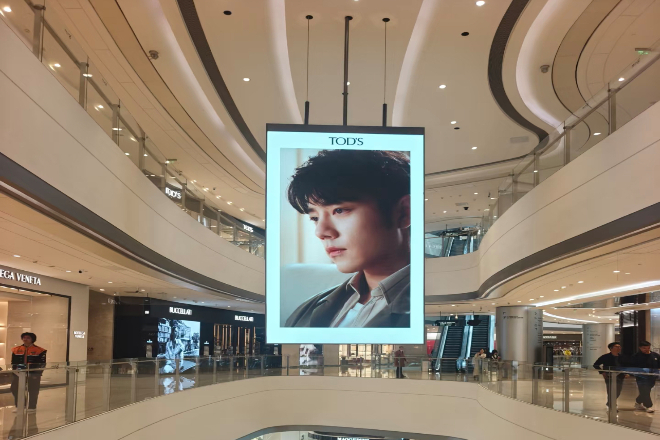
- Suspended LED displays: Creating a visual focal point from above
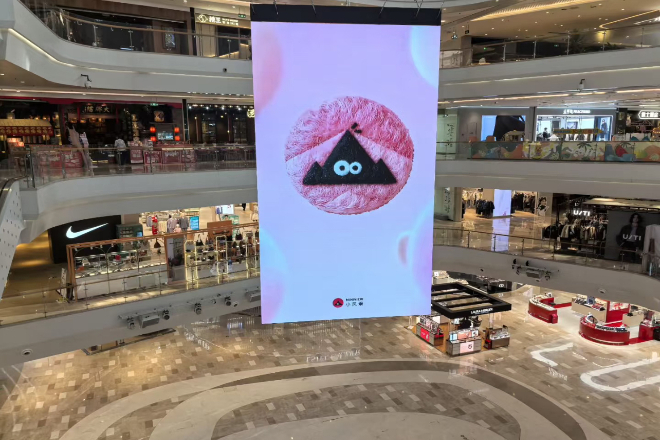
Suspended LED显示屏 are typically installed above the atrium and can be flat, double-sided, or multi-sided.
Their biggest advantage is utilizing overhead space without occupying ground area.
例如, 购物中心 can install a large LED display above its atrium to play brand advertisements, holiday animations, and promotional information.
Customers can see the display while shopping on the first floor and may also see it from upper floors.
If the mall frequently hosts new product launches, brand pop-up events, or holiday celebrations, the suspended LED display can be integrated with a stage and lighting to become the visual centerpiece of the event.
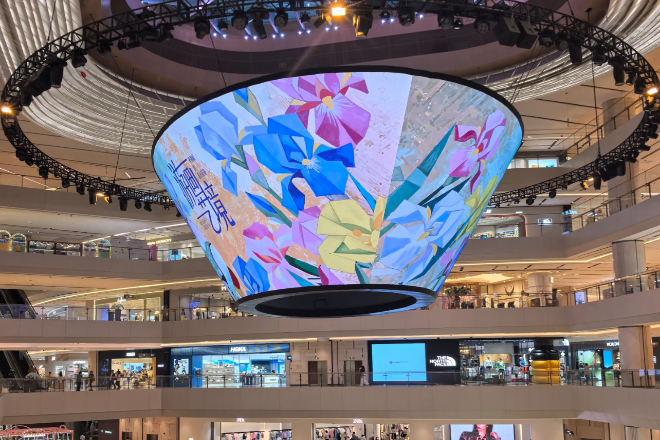
- Ring LED display: This transforms the image from one direction into a complete circle
Ring LED displays emphasize visual continuity. They can create a complete circular visual effect around the atrium, presenting content from multiple directions.
For example, the screen can display flowing clouds, city skylines, or seasonal changes, giving the atrium the illusion of a constantly changing digital sky.
For multi-level, wraparound buildings, the ring screen can also echo the corridors on each floor, making the space feel more cohesive.
Here’s a point of confusion: “suspended” refers to the installation method, while “ring” refers to the screen shape.
Ring LED displays can also be suspended; they are not mutually exclusive.
Therefore, the project team must first clarify: does the atrium need a prominent advertising screen.
Or a digital art installation that encourages people to stop and take photos? Different objectives require different designs.
Atrium LED displays present a unique challenge: viewers might be on the first floor, near a railing on the fourth floor, or even just hurrying past on an escalator.
If the screen only looks perfect from a certain angle in the renderings but is obscured by railings after installation, or if upper-floor customers can only see the edges, even the most beautiful design will be diminished.
First, the screen size must be determined based on the actual dimensions of the atrium.
For spacious, multi-story atriums, larger suspended or circular LED displays can be evaluated, ensuring the image is visible to customers at a distance. However, bigger isn’t always better.
An overly large screen may compress the visual space of the atrium and affect the building’s original sense of openness.
第二, 视角 from different floors must be checked.
For suspended LED displays, front and side visibility needs to be considered, as well as whether the view from below is affected.
While circular LED displays offer multiple viewing angles, if the installation height is inappropriate, some floors may still only see the edges of the screen.
The design team can use architectural cross-sections to simulate viewing positions on the first, second, and higher floors to check if the screen is obstructed by railings, decorative structures, or other facilities.
Third, the 像素间距 should be selected based on the viewing distance.
Pixel pitch is the distance between the centers of adjacent pixels. All other things being equal, a smaller pixel pitch generally results in a more detailed image, but may also increase the procurement cost.
If the screen is primarily used for displaying large advertisements and dynamic images from a distance, the specifications can be selected based on the actual viewing distance;
If customers can view it from adjacent floors at close range, greater emphasis should be placed on the clarity of text, graphics, and details.
For circular LED displays, the continuity of the image should be checked in particular.
A normally smooth light strip that suddenly breaks at the module splicing point may appear visually like a minor glitch in the video playback.
Before purchasing, it is best to test with actual playback content, rather than just looking at the numbers on the specification sheet.
When suspended LED displays and circular LED displays are installed above atriums, structural safety must be the top priority.
After all, customers come to shopping malls to shop, relax, and be entertained, not to browse while worrying about the sturdiness of the screen overhead.
First, it’s crucial to confirm the building’s load-bearing capacity.
Suspended LED显示屏 typically require scaffolding, steel structures, or specialized support systems to transfer the screen’s load to the assessed main building structure.
Ring-shaped LED displays may require a specialized ring frame, and the load distribution must be assessed based on the structural form.
Project teams cannot simply assume a ceiling can support a large LED display based on its apparent sturdiness.
This is especially true for existing building renovation projects, where qualified professionals must verify the building structure, suspension point locations, and fixing methods.
Ordinary decorative ceilings cannot be assumed to be the load-bearing structure for large screens.
Second, the overall weight of the screen must be considered.
Besides the display modules themselves, this may involve the support frame, power supply equipment, and other supporting components.
For ring-shaped structures, the frame connection method and the stress coordination between different components also need attention.
Third, maintenance plans must be prepared in advance.
Suspended LED displays typically require a well-defined high-altitude maintenance plan;
Circular LED displays need to consider the maintenance space for different modules and the safe accessibility of technicians to the parts requiring maintenance.
If replacing even a single module requires extensive disassembly after installation, subsequent maintenance costs may exceed expectations.
Furthermore, atriums are high-traffic areas, and fall protection measures, electrical safety, cabling, and personnel isolation requirements during construction should be assessed based on the project.
For project investors, a truly mature installation solution is one that makes the screen appear lightweight while ensuring a sufficiently reliable underlying structure.
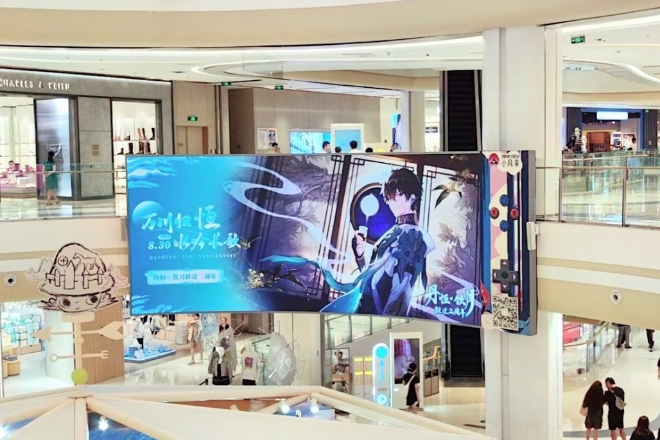
Atrium LED displays are not only decorative but can also serve as a commercial operation tool.
When choosing between suspended and circular LED displays, it’s necessary to consider the content to be displayed and how the screen will integrate with the mall’s daily activities.
If the focus is on advertising, suspended LED displays are generally easier to plan.
For projects displaying brand advertising, product information, promotions, and event announcements, flat suspended LED displays provide a clear main viewing surface, facilitating content creation and playback management.
例如, 购物广场 can play brand promotional videos during new product launches, switch to promotional information during holidays, and display mall activities and brand content on weekdays.
If the goal is for customers in multiple directions to see the product, a double-sided or multi-sided hanging design can be evaluated, without necessarily adopting a complex circular structure from the outset.
If the focus is on spatial atmosphere and visual creativity, a circular LED display screen is more worth considering.
A circular LED display screen allows the image to extend along the entire structure, making it suitable for playing dynamic art content, seasonal themes, and brand visual animations.
For example, displaying blooming flowers in spring, switching to ocean and water ripples in summer, and incorporating holiday celebration themes at the end of the year.
The same atrium can present different visual effects as the content is updated.
However, the content production for a circular screen requires careful consideration of aspect ratio, beginning and ending transitions, and different viewing directions.
Simply stretching a regular rectangular video onto a circular screen may result in distorted figures and unnatural breaks in the image.
Furthermore, shopping malls should consider advertising resource management, content update frequency, and playback plans. A more creative screen does not necessarily mean simpler operation later on.
For the operations team, the ideal solution is for LED显示屏 to serve both advertising and promotional purposes.
Complementing holiday events and spatial design, rather than just providing a stunning debut on opening day and then playing the same content long-term.
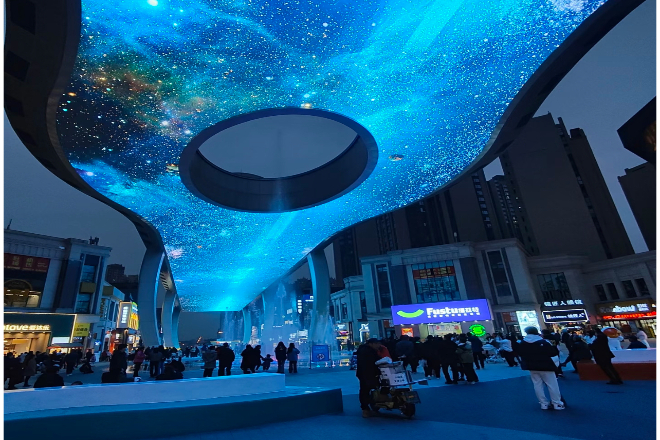
Comparing suspended LED displays and circular LED displays cannot be based solely on equipment quotes.
Installation structure, construction difficulty, content production, and post-construction maintenance also affect the overall return on investment.
First, compare the complete project costs.
Suspended LED显示屏 typically involve the screen, supporting structure, control system, installation, commissioning, and maintenance facilities;
Circular LED displays, in addition to these items, may require special curved structures, custom modules, or additional content adaptation work.
Specific costs depend on screen size, product specifications, installation height, and project complexity; therefore, one cannot determine which is necessarily cheaper based solely on form.
Second, consider the ease of daily maintenance.
Suspended LED displays require clear inspection methods, maintenance equipment, and conditions for working at height.
Circular LED displays require attention to curved module replacement, image calibration, and structural maintenance.
Before purchasing, it’s essential to understand the product warranty coverage, spare parts supply, repair response time, and maintenance space requirements.
If the atrium screen needs to operate for extended periods daily, equipment stability and after-sales support become even more crucial.
Third, energy consumption and content updates must be assessed.
The power consumption of an LED display is affected by factors such as screen area, 亮度 settings, playback content, and operating time.
For projects requiring long-term operation, energy consumption should be assessed based on actual usage, rather than solely relying on peak power to determine long-term costs.
Regarding content, seasonal themes, holiday events, and brand collaborations can ensure the atrium LED display continues to function effectively.
For example, displaying festive animations during the Spring Festival, coordinating with family activities during the summer.
And switching to exclusive content during brand launches can keep the screen connected to the mall’s operations.
Finally, the future usage needs of the atrium must be considered.
If large events are frequently held here, the screen may require integration with a 阶段, lighting, and sound system;
If it’s primarily used for daily advertising displays, then ease of playback management and the readability of the advertising content should be prioritized.
For project decision-makers, the most worthwhile investment isn’t necessarily the most complex in design or the lowest in price.
But rather the one that can serve the space’s operation long-term while also considering safety, maintenance, and commercial value.


 English
 Español
 简体中文
 Français
 日本語
 한국어
 العربية